San Gimignano, the Ferrari version

From many people, we had heard how nice it was to visit the ancient hilltop town of San Gimignano. Gael and I chose to go there on another of our another-day-out-of-Florence adventures.

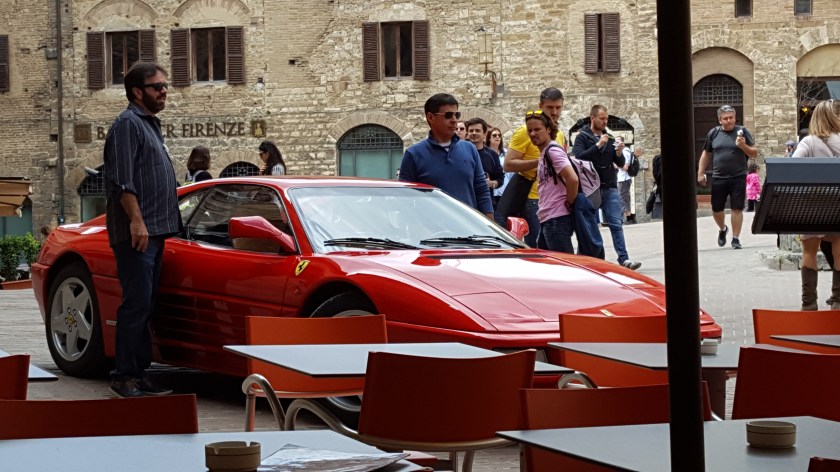
First, I will share the Ferrari event at San Gimignano. The Ferrari event, you say? Well, Gael and I stopped to eat at a restaurant on the piazza. While we were sitting there, a red Ferrari drove up outside the door of the hotel right beside the tables. Since I’m writing a story about car museums, and we have it in our plan to go to the Ferrari museum in Modena later in our visit, I took a picture (well, more than one).

So did another couple, the man posing as those he owned it while the wife shot the photo. They were soon joined by another man, posing as owner….

And another man other men….

and more men….

Oh, and one woman posed like she was the owner, and a little boy (ah, the wonder on his face–bit small to see, but it was there).

Look at the faces of the people in the background looking at the car…

20160422_130142

Of course, I calmly ate my lunch of bufala mozzarella caprese salad and gluten-free pasta. (I don’t confess to taking all these pictures, or sharing a laugh with our waiter about all the people taking pictures, although he finally went and got his phone and took  a photo, too!)


Florence, a little bit

Gael and I decided to get the lay of the land on our first day together in Florence. We saw the outside of a few buildings, walked the streets to get oriented, and tried to figure out public transportation.

We enjoyed walking down and up streets, seeing whatever was in our path…


Tried some public transportation…

(not really these!)

Saw some very famous places…

and replicas of some very beautiful doors

but all in all, I decided that Florence had too many tourist visiting the famous sites

20160426_112125

So, as you have already seen, the next day we headed out of town on day trips (to Vinci and others soon to be posted).


Vinci, home of Leonardo

We decided to save most of the historical city of Florence for our second week and instead take a couple of day trips out to neighboring towns. Our first choice was to visit the birthplace of Leonardo di Vinci. A short train and bus ride brought us to this village in the beautiful Tuscan hills.

20160420_115918

Some scenes from the village…

The church where Leonardo was baptized, although remodeled several times since he was born, was open and we walked in. The baptismal font is the one used to baptize Leonardo.

There were a couple of buildings connected to a museum on Leonardo di Vince, but no pictures were allowed inside. You are  only seeing a few things from outside. Inside they had models of many of his drawings and designs. These models were fascinating (the exterior of the museum art only moderately so).

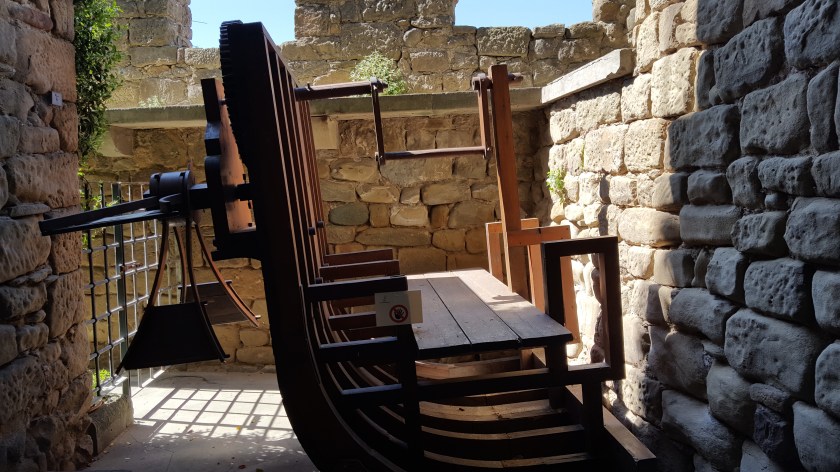
The best model that I could take a photo of…an improved water wheel.

20160420_111947

From the top of an old building used to house part of the museum, I took a video of the bells in the old bell tower playing. I planned to post the video (to learn how to do it) but I can’t make it face the right direction. Later…

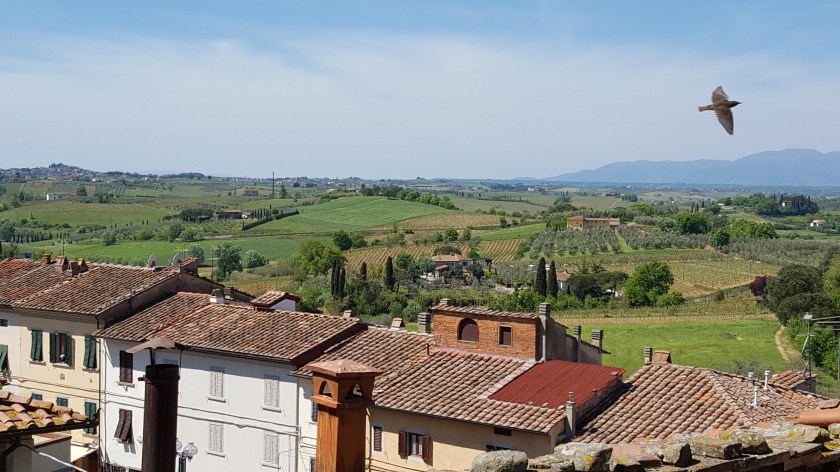
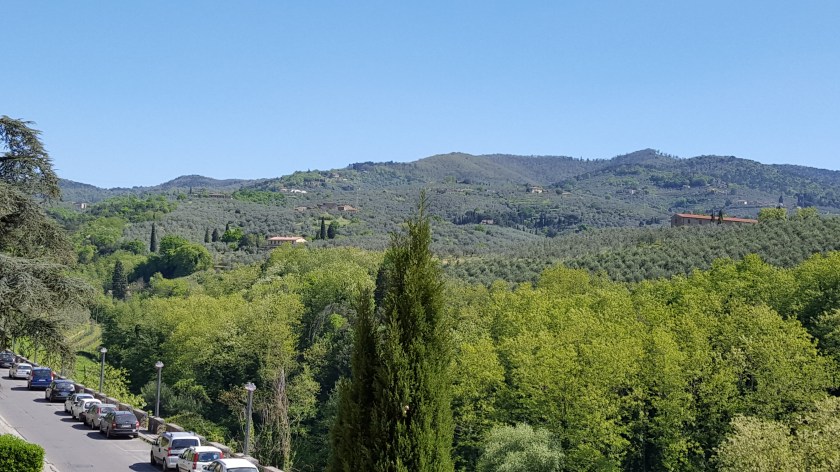
But the view was wonderful…

20160420_115946

20160420_133306

20160420_111158

You could also go to the house where he was born and where he lived for a few of the years of his early life.

But by far the best part of the day was that his house was three kilometers from the village, and if you didn’t have a car, you had to follow the “green path” which took you through the fields up to the house. Ah, now we were exceedingly happy with what we saw.


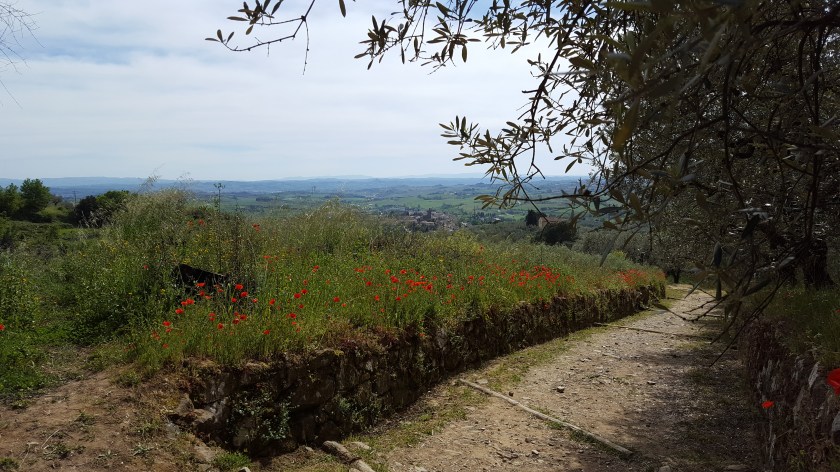
At the beginning of the road, a nice rock wall with wild flowers….

An olive grow, fashioned after one designed by Leonardo di Vinci…

The green path continues…

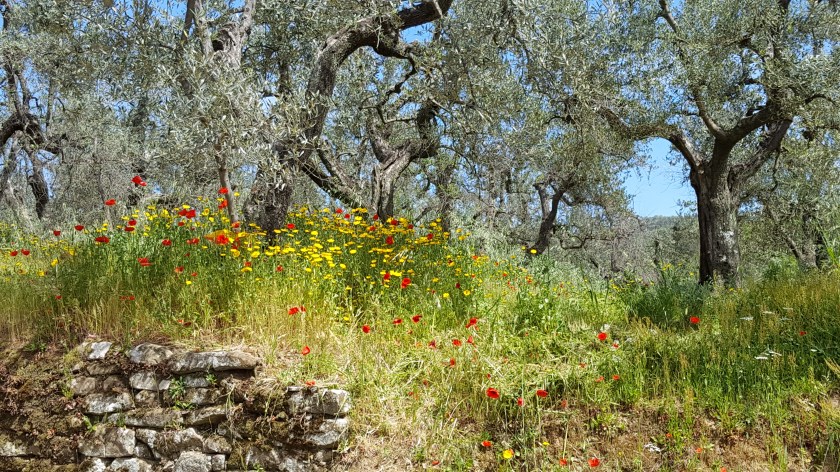
The flowers….first, the poppies….

and more wild flowers…

with flowers growing around the olive groves…

20160420_141431

and even a few cultivated flowers…


and finally the path back to the village again…lovely and interesting day.

20160420_153515

Another church in Rome

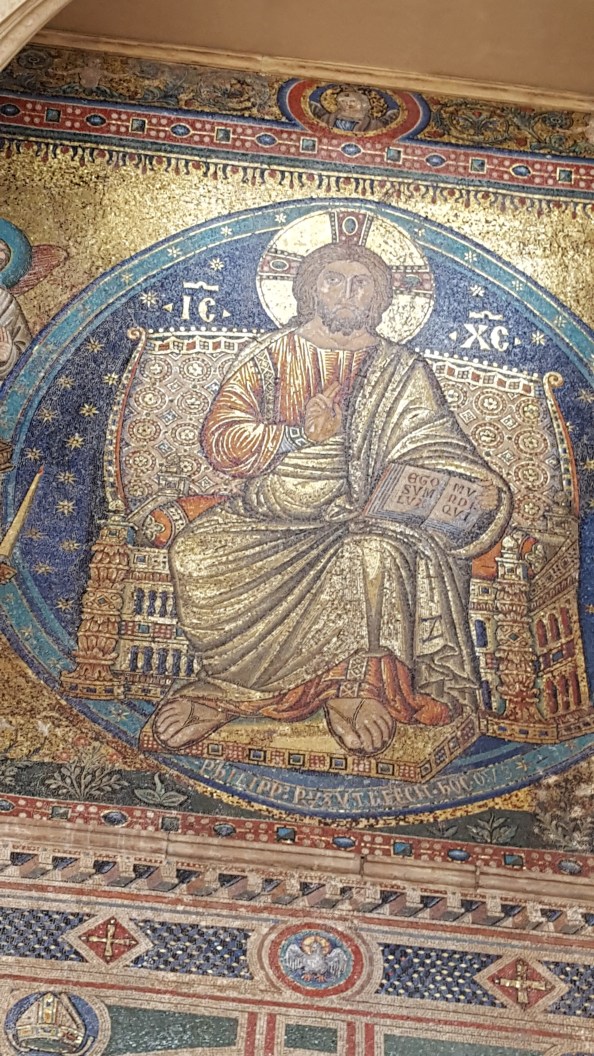
Yes, I’m sure I’ll visit many church, more perhaps than you want to read about. In this church, the Basilica Papale di Santa Maria Maggiore, I paid for a tour to see the mosaics. This post will feature mostly that part of the church.

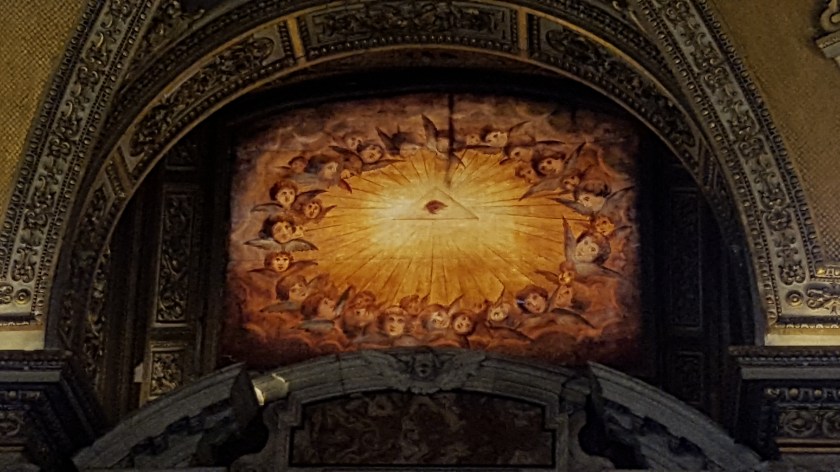
However, first is an overview of the inside. The ceiling and high windows…

Some side aisles and features…

The one on the right had an feature of interest (a bit blurry, since I zoomed in a lot to get this)…

20160416_132848

Of course, the floors are beautiful, too…


20160416_132808


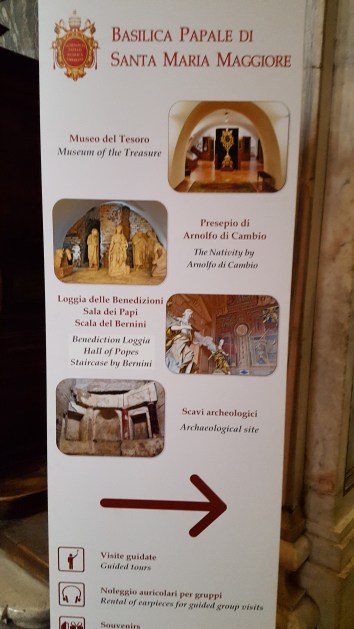
Finally, following signs I found the tour and joined it. All in the group were Italian except me, so I got a shortened version of the tour from the guide.


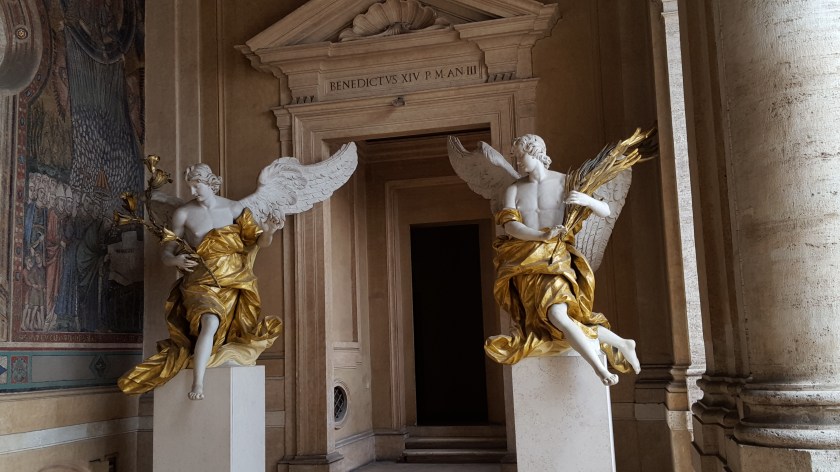
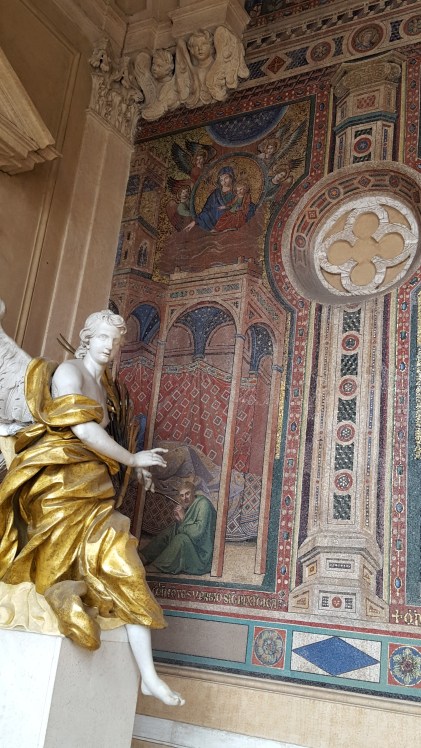
The angels guarding the mosaics (two on each end)…

20160416_140832

The mosaics were created in two different time periods, first in the Middle Ages, showing Byzantine influence.

20160416_141136_004

The original mosaics were on an open porch, but when they needed to be covered, the upper mosaics (earlier ones) were somewhat covered by the structure supporting the roof. On each side of Christ, area several of the early apostles and John Baptist, but really barely show today.

The lower mosaics…

20160416_140748

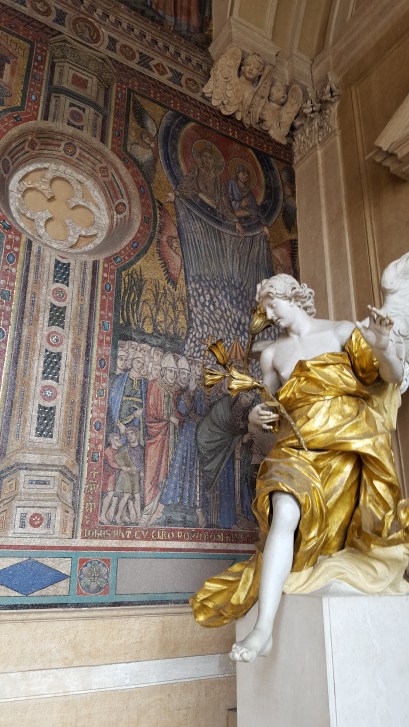
Later, mosaics were add below the original. These featured several scenes of Mary and her life.

They also include the story of the building of the first church.

20160416_142002As the legend goes, two different people dreamed that they should build a church to Mary.


One asked for a sign, and on the 5th of August, it snowed on the hill where the church now stands.

You can see the white snow just above the shoulder of the angel.

Each August, white flower petals are dropped from the dome during mass to commemorate this miracle.


Finally, according to the guide, a magnificent marble staircase running up several floors was designed by Bernini. It has no visible means of support except for the steps placed inside the walls. I enjoyed getting the face of a lovely young Italian girl as she explored the staircase, although she apologized for getting in my way.


From Roman baths to a church

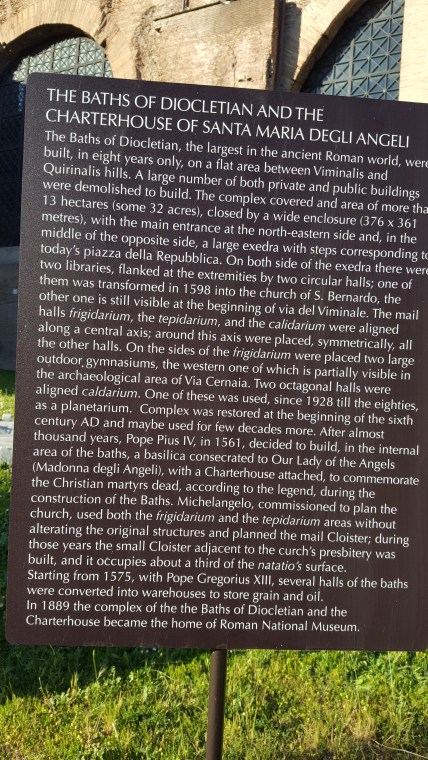
After visiting the temple construction site on our first day in Rome, Jennifer and I took a short walk through the area near the train station on the way to find some food I could eat. We walked past the baths of Diocletian, the largest every built. Large they are!

First, if you are interested, is a photo of the sign giving information about the baths. (I was going to put a smaller-sized photo and then you could click if you wanted to read it, but that didn’t seem to work. I’m still learning to managing this blog hosting program.)

20160414_182439

We were there too late to go inside, so I only have outside shots.

Update, May 2, 2016 (to create the cat series): The cat of the Baths of Diocletian (bit blurry, but they move fast).

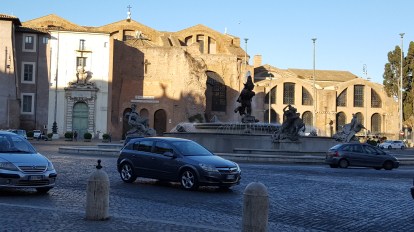
Many years later, Michelangelo was commissioned to turn the ruins of the baths into a church, the Basilica of Santa Maria degli Angeli.

20160414_184114

It is, according to a sign in the church, his last unfinished project. (Picture taken in the late afternoon doesn’t show it very well, but you can see the basilica on the left and the Roman bath buildings to the right.)

A few inside shots the basilica…

Michelangelo did want, however, to preserve the simplicity of the Roman arches in the ceiling and wouldn’t have them covered with decoration, marble, or paintings.

He also left the layout of the building intact, so the nave runs “crosswise” from the alter. That is, the alter is in the middle of the long nave as you walk in the front door and not at one end of the nave. (I don’t have a good picture of this effect, but it made the room appear quite different than other churches I have been in.)

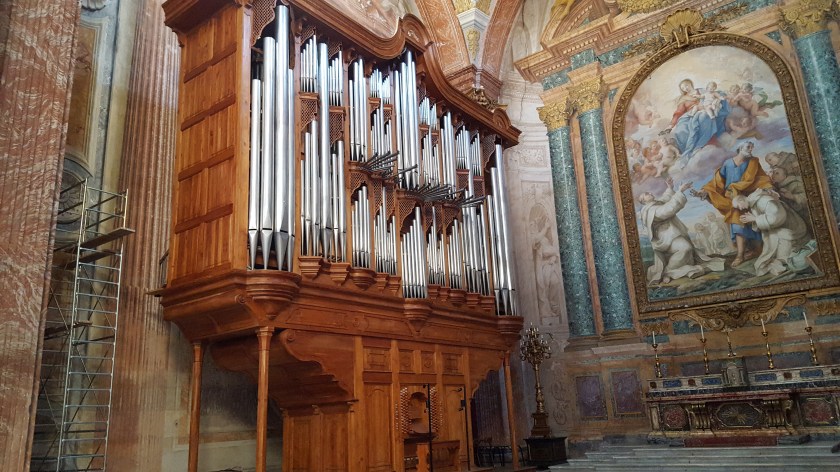
For those who play the organ, would you like to try this one?

20160414_183148

The floors are as beautifully decorated as the walls.


This was a pleasant place to visit and I would have stayed longer only they closed the doors on us and Jennifer and I went in quest of, you guessed it….

20160414_190008

I had baked fish, which was delicious but not a colorful picture, and so you have been spared having to look at it.


Ancient Rome

Rather unexpectedly (or at least not as a part of my original plan) I got two and a half days in Rome.

20160415_101949

On the first day, Jennifer and I went to view the temple site (see earlier post). She left early the next morning, and I bought a hop on/hop off ticket for Rome….and then spent nearly all day at one drop off point–the Forum, Palatine Hill, and the Coliseum.

For one who studied Latin in high school, this was a treat.

20160415_112447

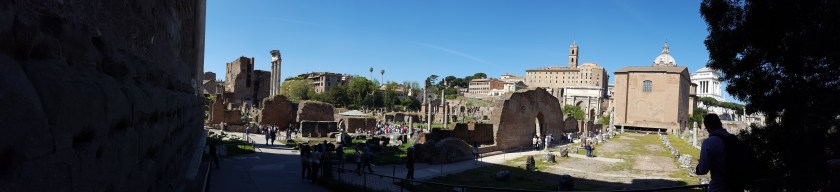
(My first attempt at a panoramic shot on my phone camera.)

Some scenes from the Forum…


20160415_113556

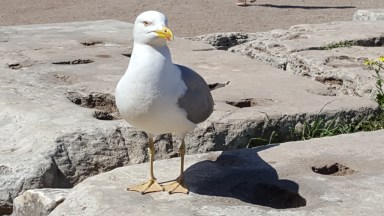
A rather saucy bird was pestering a young boy, who, when he waved his coat at it, jumped a few feet away and looked so nonchalant.

The boy was not laughing, but I did and took a shot (not zoomed in either, so the bird was not afraid of me either.) How you get food from millions of tourist I guess!

Playing with the camera to get some shots….

20160415_120856

I got rather intrigued by the arches and the framing by the arches of other scenes.

I took a few photos of a church from the Middle Ages built over some of the ruins…(couldn’t take pictures inside of the best preserved mosaics and frescoes).

The second attempt at panoramic from the top of the ramp above the church, and I think I selected wide-angle instead….or it was so long the camera condensed it into this shot.

20160415_123905

And from the Palatine Hill

The remains of the once rich, power, and famous….just a pile of stones (but still there!)

In a small museum on the Palatine Hill, they had a representation of the type of houses lived in by pre-Roman people. It looks a little like a Samoan fale, eh?

20160415_131308

My first good view of the Coliseum was a morning look  from the outside when I first got off the hop on/hop off bus.

20160415_105804

I had to wait until 2:30 pm to get in, though, so the rest of the photos were in mid-day sun.

I had stopped to help a couple of young ladies from some place in Scandinavia get a picture of themselves, and they offered to take mine.

20160415_144303

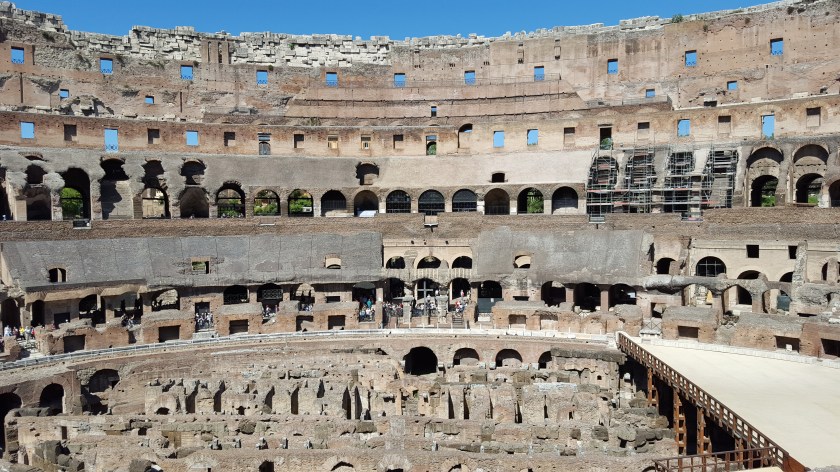
Where the crosses are now (a bit small in this photo, but in the center) is where the emperors used to sit….something I overheard from someone else’s guide.

In full sun, another panoramic shot.

20160415_142654


Pompeii

Ah,what to say about Pompeii. The excavation was bigger than what I expected and  with several hours (4 or 5) we couldn’t see it all.

It is ancient and yet still around to been seen. How amazing.

You can see routines of daily life, like street-side eating establishments and the water supply (where I filled up my bottle for a drink of “ancient” water).

The Roman bathhouses for men and women were quite well persevered.

20160411_101900

The baths were well decorated, best preserved in the women’s bathhouse.

The wall frescoes attracted my camera (and my mind)… to think that after 2000 years we can still see them so well. (What kind of paint did they use for it to last so long, even though it was covered by ash and mud for nearly 1500 years.)

My favorite fresco (that I could get a photo of that is, and still the photo is not as good as what the eye can see) is said to represent the way in which many of the walls in the homes were fully covered in art.

20160411_111028

For example, here is a house with quite a number of  frescoes preserved.

A few mosaics were also still visible (although some of the best of the frescoes and the mosaics are in the National Archaeological Museum in Naples).

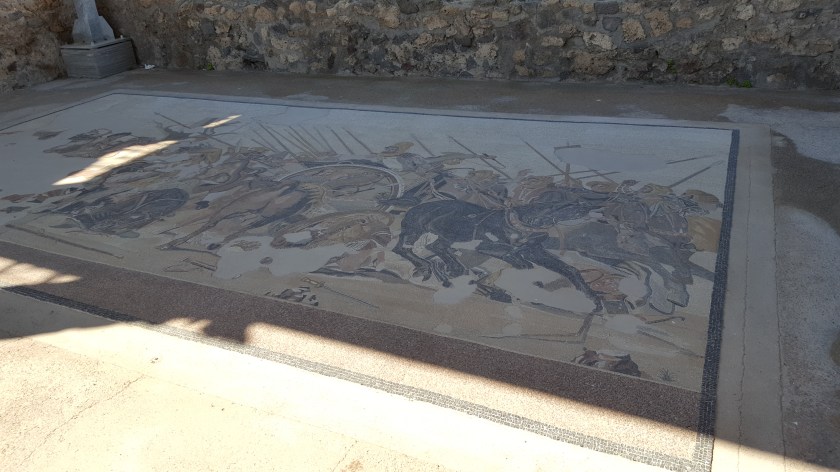
The mosaics included the rather famous “beware of dog” mosaic (which was hard to get a good photo because of the light and the protective covering). We also saw the replica of the Alexander the Great Mosaic (also hard to photograph), the original of which is in the National Museum
20160411_141807

We walked on the ancient roads, built with large paying stones, with ruts still showing from the carts. We used the crosswalks (and imagined the stink from the drainage ridges).

20160411_105451


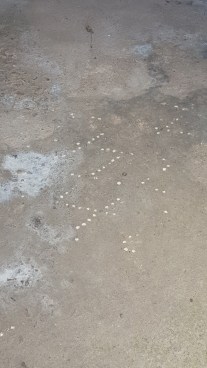
The road actually had lighter stones (called “cats eyes”) as part of the paying process to make the road show up at night.

I didn’t get a good photo of this in the roads, but I did get a picture of the cat’s eyes in a house.


As you enter Pompeii today you immediately see the Forum, the center of city life in a Roman city, with temples to the Roman gods. (It was full of early arriving groups when we first entered, so we set out for the other end of town and saw the Forum at the end of our visit…not nearly as crowded.)

Pompeii had two theaters, the larger on the left and in the center. (In case you are seeking more punishment, I have more photos you could see.)

Some businesses, in addition to the food sellers, were still evident. The best preserved was the fuller, or the laundry business.

Lastly, the beautiful looking volcano that caused the sudden death of so many thousands living in this and other towns, but preserved for us as an ancient city.

20160411_142132

Vesuvius, presiding over the ruined city for thousands of years…with many more thousands currently living on her flanks.


Via San Gregorio Armeno

A few people here in Italy mentioned to me Presepe Street in Naples. This street is the Christmas nativity makers street, officially called Via San Gregorio Armeno. Naples, I discovered, has had this tradition of creating creche (presepe in Italian) since the time of St. Francis of Assisi.
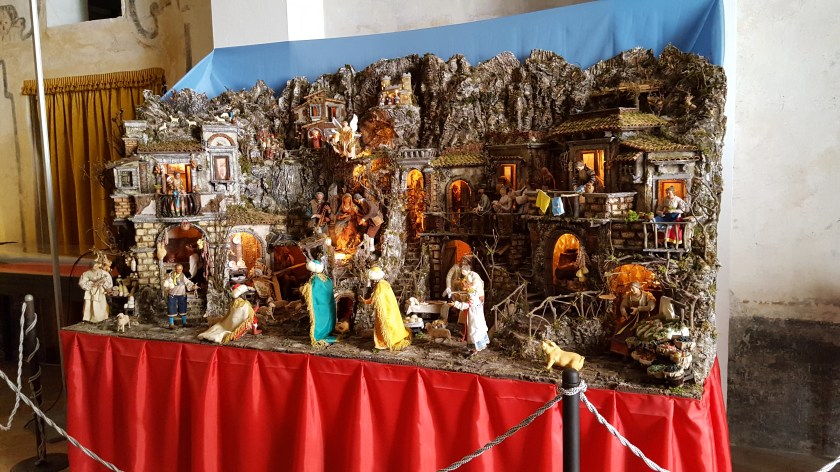
It has become a tradition of families in Naples to have a presepe and to make it the center of their Christmas celebration, leaving the Christ child to appear on Christmas eve. I understand that some families make their own or add to it each year. Here you can see two examples from a close up shot of the Holy Family and the Wise Men.

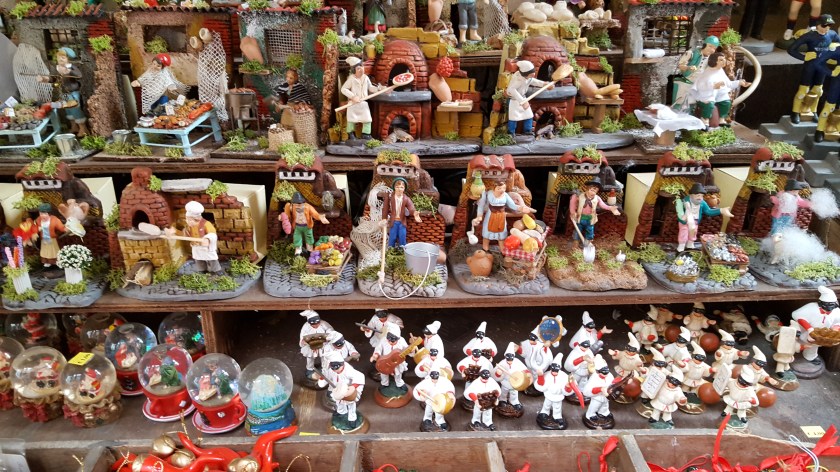
The presepe come in many sizes, both simple and amazingly elaborate. First the simple…

20160413_174903_001

And now the elaborate…

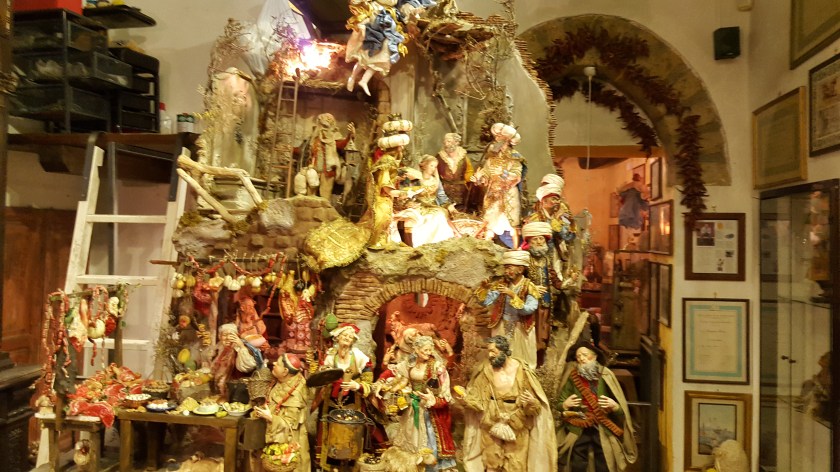
The top picture is from a shop in Via San Gregorio Armeno. The second picture is from a museum connected with one of the ancient churches. With Jennifer standing on the left side, you can get some perspective on the size.

20160412_152125

20160412_155119

The Holy Family from these museum piece are those posted above. Look at the details of some of the other characters in the presepe. Don’t you love the pizza maker? (click on them to see a larger image)

They also make contemporary characters to include in some presepe. I didn’t take many pictures of these, but you can get a flavor from this photo.

20160413_174843

There was evidence on the street of how these wonderful creations are made. First, they make the “barns”–though you can see they hardly seem like our simple mangers.


Then they begin to add the characters, artifacts, and, in some cases, moving parts. First, the basic parts of the characters. The bodies have terracotta heads and limbs, with the torso made of wire wrapped in string and then covered in silk clothing.

The variety in the clothing…

Of course, these people need props, and so they also are added, and some are even made to move. The pizza man from above is taking pizza out of the oven if you saw it as I did.

Another look at the museum nativity…

20160412_154546

An added touch….

While the museum at the church had an example of a very large nativity, it also had some related creations by similar artists. These marvels were walnut shells filled with very small characters from the Old and New Testaments.

The museum had no information about the dating of these walnuts, but they were nearly my favorite. Below, the picture on the left is the ascension of Christ. On the right are Isaiah and Jeremiah.


Catacombs in Naples

Naples is an ancient city settled many centuries before Christ, but named the new city (Neapolis) by the Greeks in the 6th Century BC. We saw, therefore, many very old things in and nearby Naples. I’ll share in another post about our visit to Pompeii and Herculaneum.

This first post features some catacombs we saw, the Catacombs of San Gennaro, within the city of Naples itself.


These were initially pre-Christian burial grounds.

20160409_105154

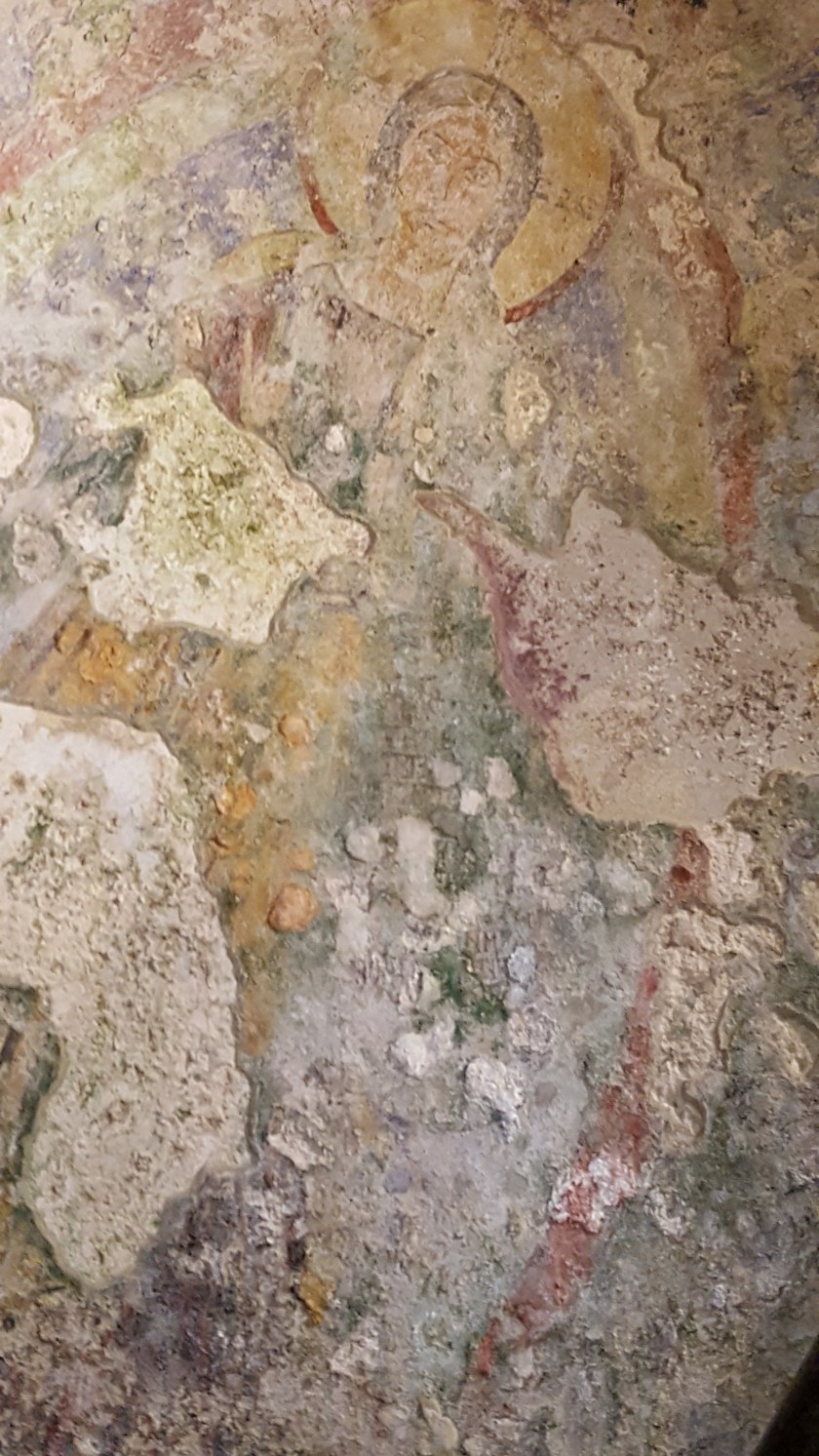
Later these catacombs became Christian burial grounds, and even included a Church. The photo on the right is a fresco of Peter and John, with John holding a scroll, which, the guide said, was the word of God.

One of the earliest, best preserved baptismal fonts in Naples is in the Catacomb.

20160409_104750

The wealthy families had “rooms” of their own, nearly always fully decorated with frescoes.


The poor people were buried in smaller graves, often four layers or more deep.

I’ll end this post with an ancient fresco of Christ.

20160409_104419_001


The temple in Rome

Jennifer and I chose as our first priority for Rome to go out to see the temple. We took the subway and the bus….well, we took the bus a couple of times because we missed the stop the first time. (We actually think now that the driver didn’t stop even though we pushed the button requesting a stop.)

It was worth the effort even though the security guard would not let us in the construction gate to take even one pictures (which is, of course, his proper job.) He did tell us how to go up the slight hill next door for a picture. That worked. We got these pictures.

Then we headed back down the hill to catch the bus back to Rome city center and discovered that across the street from where we got off the bus you could get a good view of the temple.

You could also see the rooftops of the new stake center and some of the other buildings in the temple complex.

Finally, we took a few pictures of the area immediately surrounding the temple. It looks quite empty, but there is a major shopping complex nearby and several (relatively new looking) sections of housing.

The Rome Temple, what a miracle, what a wonderful site to see.

20160414_141647