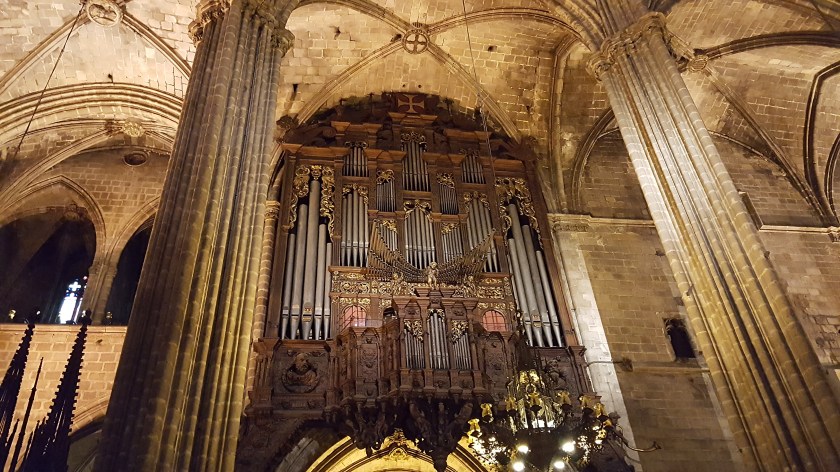
If I can make a post for the freighters in my family, I thought I should do one for the musicians, too. Let’s start with the magnificent organs in some of the churches. The first photo is from the Santa Maria del Mar Cathedral in Barcelona.
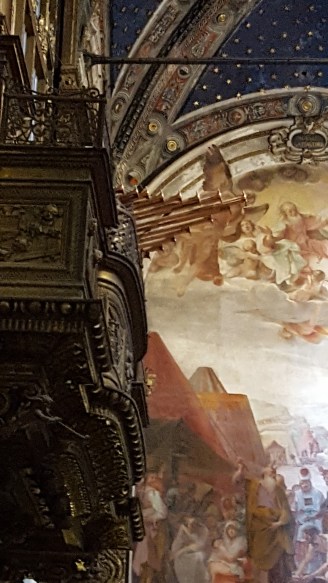
The second organ is in the Sienna Cathedral (with pipes on opposite walls, hence two photos). Notice that the pipes on the right have a great set of trumpets. I tried a second shot to highlight them, but it was hard to make the trumpets show very well with the painted walls in the background (at bottom).



Because making music books was difficult and time consuming during medieval times, often only one or two books were created. Therefore, the church choir music was printed in very large books. The books were then placed on equally large stands, big enough so that all the singers could read from the same book. The music stand in the photo is from Santa Maria Novella Cathedral in Florence. You can judge the size of the stand by comparing it with the people in the photo.
Below are some examples of the music books from the Sienna Duomo. Again, you can gauge the size by comparing the book in the case with the woman standing at the left.


These music books were highly illustrated (and beautiful). Here is a larger picture of one of the books. The books were all protected by glass, as you can see in the photos. It was, therefore, hard to get a clear picture. Most of the pictures reflected the colorful ceiling paintings.
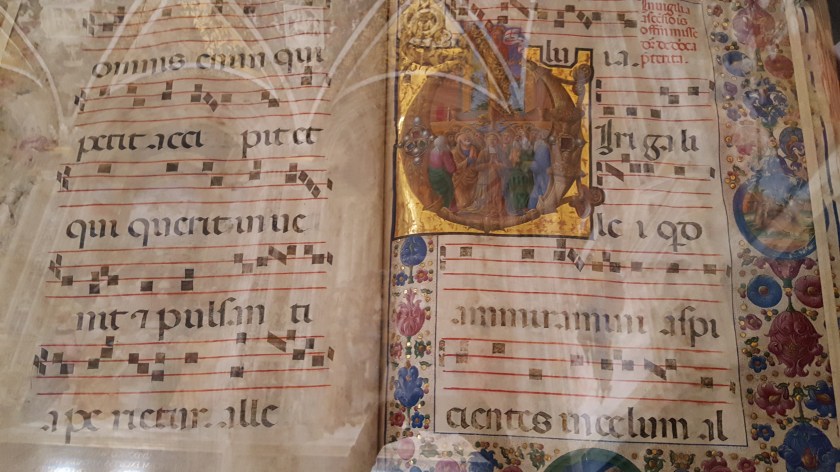
Just to illustrate, in the photo (on the right) I deliberately tried to get the ceiling to reflect on the music. To help you see it, I’ve posted a picture of the ceiling by itself on the left (see how elaborately it was painted,) and then a close up of the book of music and the accompanying illustration. You can see the side arches of the ceiling showing in the glass over the music.(You may have to click on the photos to enlarge them enough to see it.)


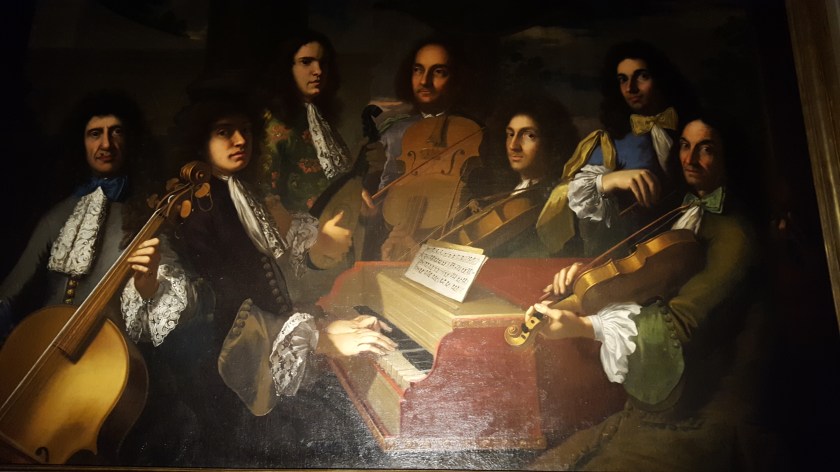
In many museums, some musical instruments were on display. First, the building housing the David (Galleria dell’ Accademia) also previously held the Academy of Fine Arts. A collection of musical instruments belonging to the Academy were on exhibit. The musical instruments were from the”Granducal Collection.” Along with the instruments, a painting, Musicians of Grand Prince Ferdinando (about 1685), was displayed, which set the style and time frame for the instruments, I thought.


(Left to right, top to bottom)
Stradivari Violin, 1716; Piano-guitar, 1793; Brass instruments, early 1800s
Collection of woodwinds, 1800s; Percussion, mostly 1800s
The Academy also had an amazing keyboard collection; I’ll post only a few examples, but notice the first keyboard with the soundboard sticking straight up perpendicular to the keys!


Finally, the Palazzo Zuckerman Archaeological Museum in Padua also had some musical instruments.


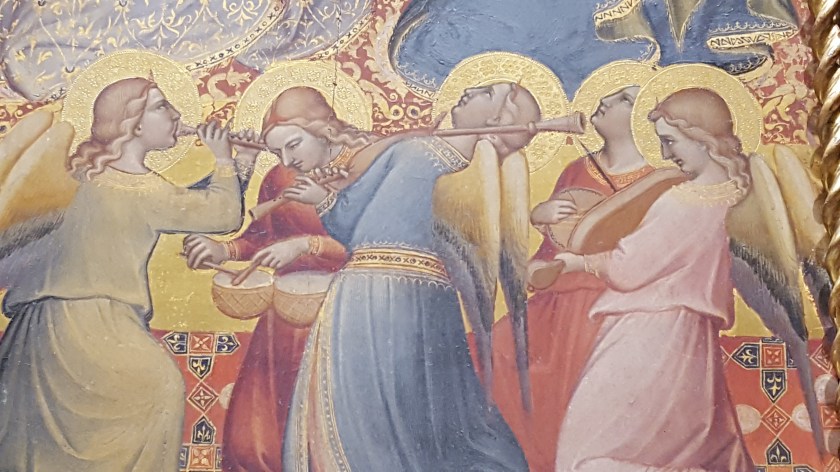
Not to be forgotten, though, as a postscript, are paintings of musicians…this one of angels in paradise playing songs of praise, from the Medici Chapels in Florence.



























 bunkerwrites.com