Money in the Zuckermann Museum

As mentioned in a earlier post (before I came home), the Zuckermann Museum, part of the Civic Museums of Padua, had a collection of early coins. They arranged these coins somewhat within historical order, so that the development of the use of money could be observed.

20160518_174604

I tried to remember to also take a photo of the information sign on the coins, but I didn’t always remember or take them in order. Still, here is a brief selection of historical coins for those of you that might be interested.

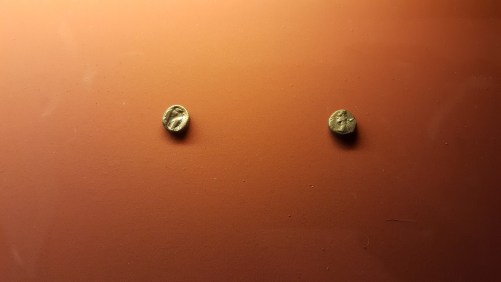
The earliest coins that were in the collection at the Zuckermann Museum in Padua were these two coins from the reign of Darius I (521-486 BC).

Darius

The museum also had on display a coin press. The press is a modern reproduction of one in use in Italy between 1355 and 1388.

In addition to the coins, they also showed some examples of the introduction of bank notes, which the sign in the museum claimed started in 1661 in Sweden.

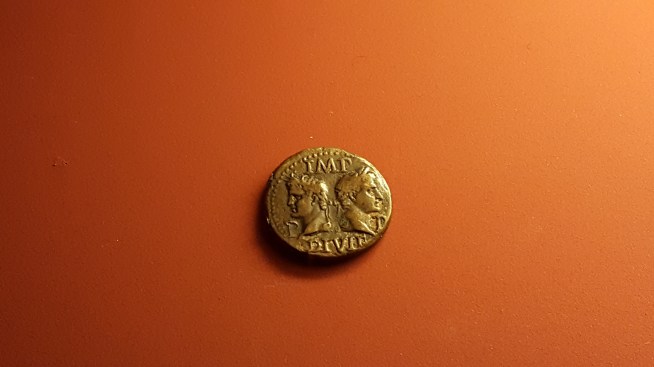
The most impressive coin to me in the end was one which I missed on my first turn through the cabinets of coins. My niece Lisa brought it to my attention. The coin below had a sign saying it was from the time of the rule of Augustus and Agrippa’s between 10-14 BC.

20160518_174918

20160518_174929

Lisa pointed out that people living at the time of Christ might have seen such coins.

Ah, money! Haven’t we always wanted money in some form? (below) Byzantium coins from around the 6th century.

20160518_174820

Corinth

After these things Paul departed from Athens, and came to Corinth” (Acts 18:1).

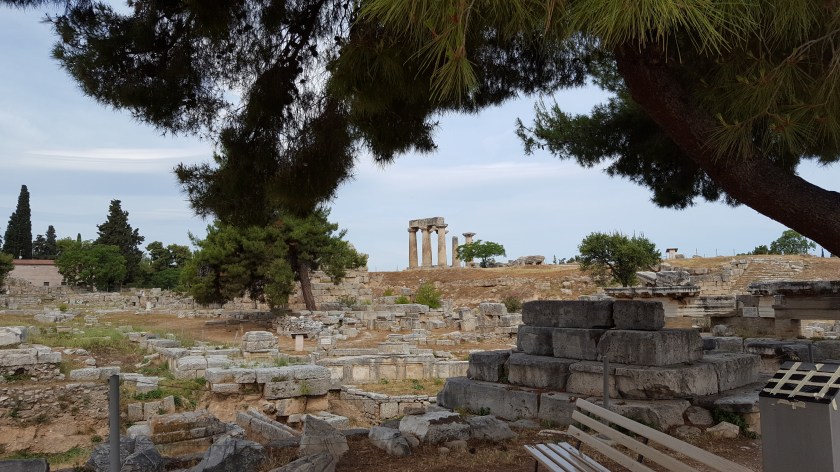
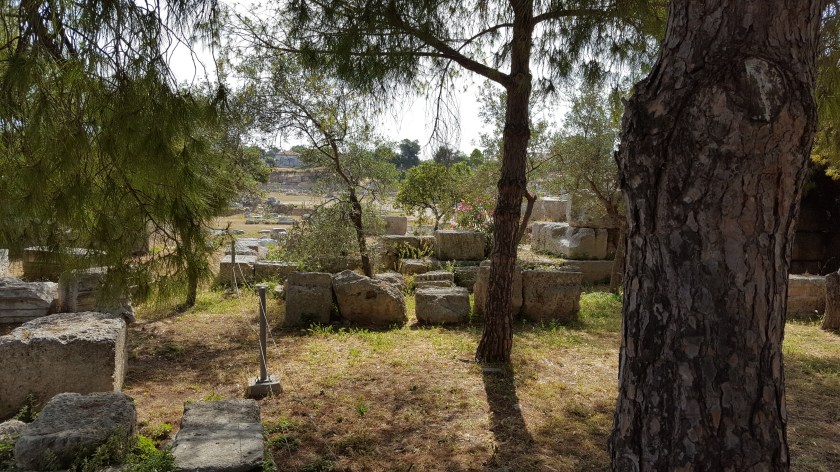
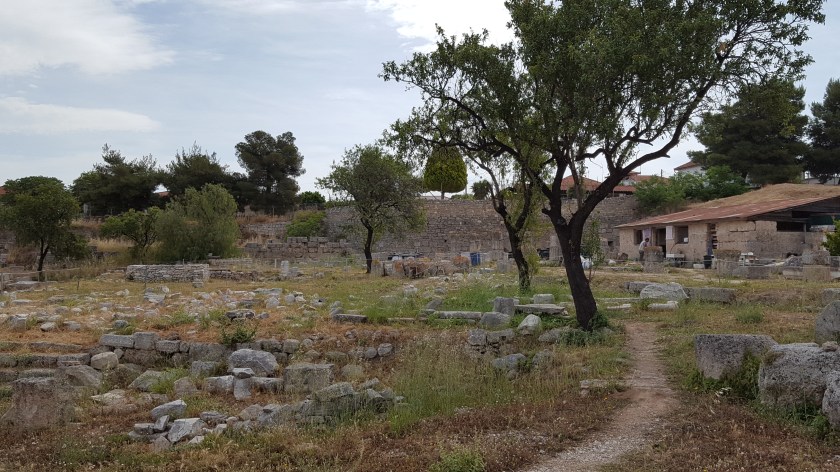
20160524_092058Corinth has been inhabited for more than 5,000 years. Much of the ancient Greek city was destroyed and rebuilt by the Romans, the city where Paul would have lived (about 51-52 AD). Paul stayed in Corinth nearly 2 years.

20160524_085137

While in Corinth, Paul was accused before the Gallio, proconsul of Achaia (Act 18: 12). The Bema (photos below) was the rostrum or platform for public hearings, celebrations and judgment, and tradition gives this as the site of the trial. Archaeologists have uncovered or rebuilt part of the Bema. In the Byzantine period, a church was constructed on this site. You can see a cross on one of the stones in the top right photo (if you enlarge it).

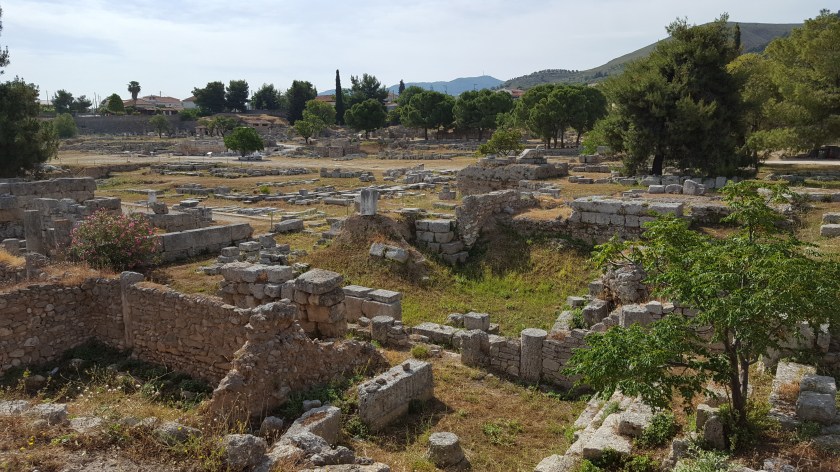
Since Corinth was a busy international seaport, the main market street (Lechaion Road) would have been an active, busy place. Individual market stalls and houses, as well as the gutters for the streets and public toilets are visible (more visible in person than in my photos, but still there nonetheless, I promise!)

20160524_092248

Greece was much more desert-like than I expected (being an Arizona native), so Corinth must have had access to water to support life for so many thousand years. The ancient fountain of  Peirene (photos below) was uncovered by archaeologist more than 100 years ago.

Some photos I took of the information signs at the site show what the buildings around the fountain looked like during excavations in 1899 (photo on left) and what the Greek and Roman structures built around the Peirene Fountain might have looked like (top and bottom on the right respectively).

A small museum was located on the site. One rather humorous display, as told by the guide, is the mass produced statues in a courtyard. She claimed only the Romans did this–prepared bodies  for the addition of head and hands; when a statue was requested, hands were added to the body by sticking a pipe into the hole in the arms. A head, carved for the person for which the statue was ordered was then placed on the neck. Mass produced statues by the Romans, not damage caused by the ravages of time, those headless statues!

Paul preached first in the synagogue in Corinth before he turned to doing missionary work mostly among the Greeks. In the museum are two stones, one showing the beginning of the word “Heb” (Hebrew) and another with three menorah. evidence of Jewish life anciently.

With a photo such as below, you can image how a city might have looked at the height of its prosperity in Roman times.

20160524_085253Corinth is an ancient, thought-producing place to visit.

20160524_084612.jpg

20160524_091256

As an after thought, there seemed to be an abundance of dogs among the ruins, rather unconcerned by the tourist walking near by.

Ha!

A one-day visit to Montenegro

As mentioned in the overview post on the cruise back in June, we stopped at Kotor in Montenegro. As I was doing a bit of reading to refresh my memory today, I saw a post that claimed Kotor is the most beautiful city in Europe; it is a UNESCO World Heritage site, and deserves to be,  I must say. Take a look. The first photo is a panoramic part of the Bay of Kotor.
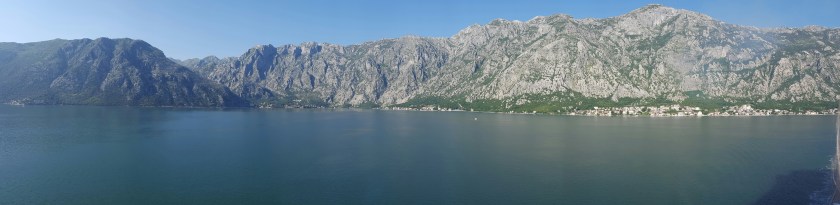
20160818_134353 crop


Take another look at some features of the city of Kotor, starting with one of the old churches. Can you see the date on the left tower (1166)?
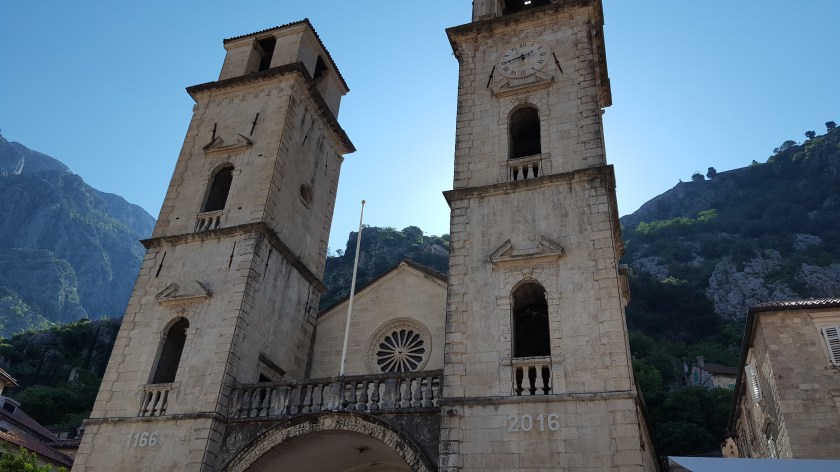
20160522_084535Part of the striking nature of the town is the mountains that surround it in the back, which you can see behind the church towers, along with the water in the front. The mountains were used for defense, with fortifications built along the ridge. There are over a thousand steps if you want to climb to the top.The town also had moats and walls at sea level.

In the early days (starting in the 7th Century), Kotor was part of the Republic of Venice. Some remnants remain from that time, including the symbols on the flag.

The town had the narrow streets of so many medieval towns.

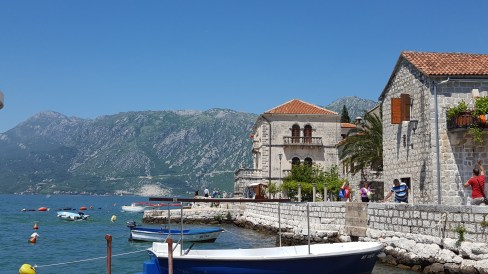
We took a bus to another area where we caught a ferry out to an artificial island created over many hundreds of years. The island was made by throwing rocks and wrecked ships into the bay. (Photo is of the dock area where we caught a boat out to the island.)
20160522_114651

I managed to sit by a break in the railing on the boat ride to and from the island and took photos coming and going, beautiful all the way. The island with the church has a neighboring island with a monastery (not open to the public), third photo from left.

The church, Our Lady of the Rocks, was first built on this artificial island about 1452, but has been rebuilt a couple of times. It was dedicated to the safety of sailors. You can see some from the tour group listening to the guide in one photo.

The inside of Our Lady of the Rocks Chapel had beautiful paintings and marble alter, but also had gifts from brides (second photo from left) who chose to be married in this church and silver votive tablets from sailors and their families (fourth photo on right).
20160522_111926


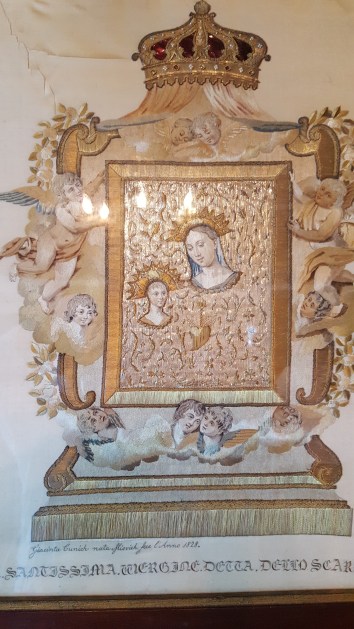
A unique  item was a tapestry with gold and silver threads. The woman who made (it took her 25 years) used hair from her own head for the hair of the Virgin Mary.


We also went to another town, Badva. You can see our guide in the red shirt in the bottom right photo, a young graduate of a university tourism program. He was excellent.

We shortened the journey back to Kotor and our cruise ship by putting the bus on a ferry along with cars and people who were walking (you can ride on the ferry for free is you are walking). I enjoyed getting off the bus during the ride across the bay and snapping a few photos (for a future book on transportation?).

But the drive also produced some beautiful photos.

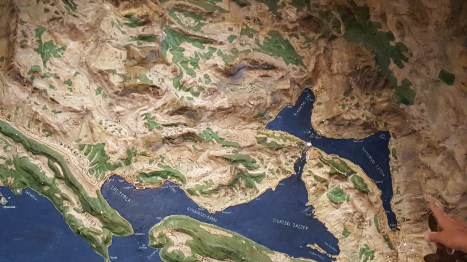
20160522_154914When I saw on the map the complex shape of the bay, I determined I was going to the top deck of the cruise ship to watch our departure (since I had missed the arrival during the night). 20160522_091812_001
We were helped out by pilots in guide boats (according to a member of the crew).


I never did find out if the helicopter was also helping to guide us out.

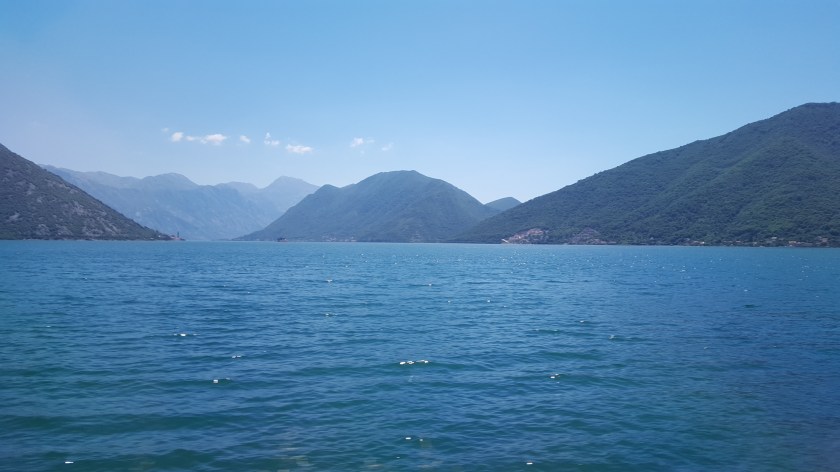
So beautiful!
20160522_120739

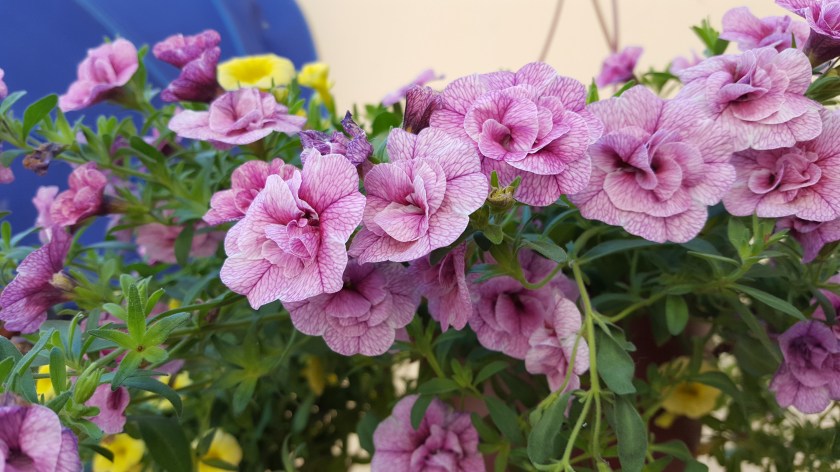
(The cities sported flowers, too; did you think I would forget?)
20160522_09430220160522_094402


Canal on the Isthmus of Corinth, Greece

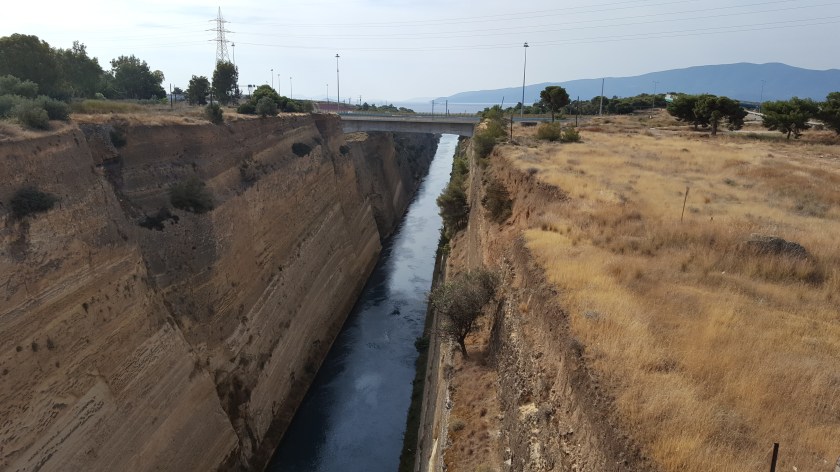
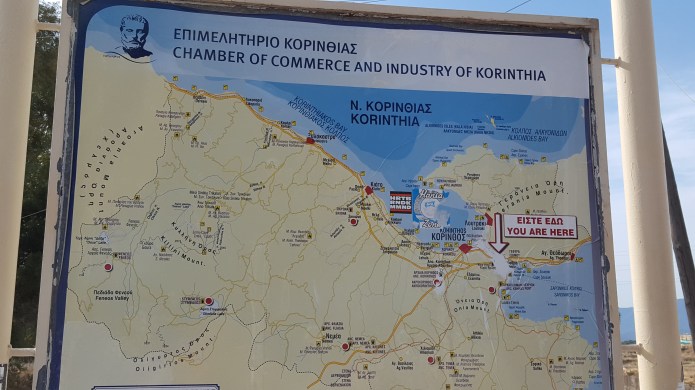
This might be a brief post, but during a stop in Greece on the cruise, and on our way to visit the ruins of ancient Corinth, we stopped to see a canal which was dug through the Isthmus of Corinth. Below is a photo of a map displayed at the site which can give you an idea of the shape of the Corinthian Isthmus (at the “you are here” spot on the map). This helped me understand why it would have been desirable to build a canal through this area and shave off days of sailing between the Gulf of Corinth and the Gulf in the Aegean Sea. The canal is a little over four miles long.

20160524_075620

The canal was contemplated in ancient times (as early as the 7th Century BC) and an attempt was actually started in the first century AD. However, the canal you see in my photos was not started until 1881. The two photos below look in opposite directions at the canal and were taken from the modern bridge used by road traffic crossing the canal. The top photo is facing north and the bottom facing south. You can see from the map we were near the center of the Isthmus.

20160524_07491720160524_075359

The canal is quite narrow at the bottom (70 feet) and cannot be used by most modern ships. The walls were cut quite straight and after construction did collapse a few times.

At one of the shops near the bridge, I saw some posters showing boats on the canal. The photo on the left was what they think the older ships looked like and the one on the right shows modern tourist ships passing through the canal. (These are photos of posters in a store.)

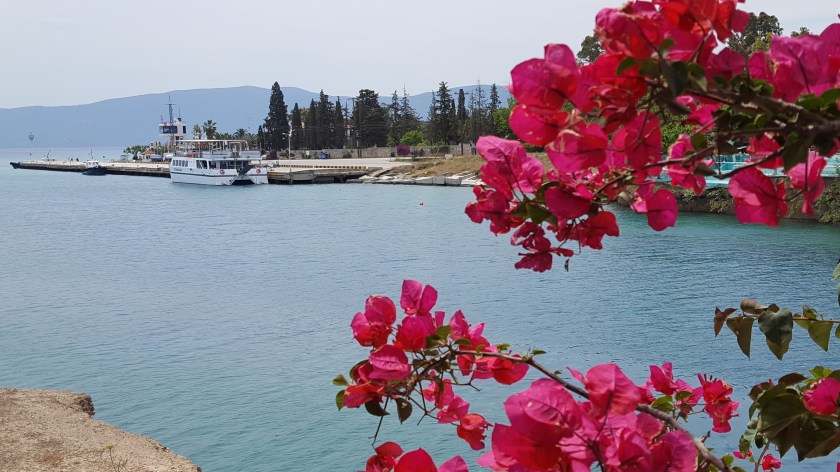
We stopped to see the canal on our way to the site of ancient Corinth. On our way back towards Athens after our morning at the ruins, we stopped for lunch at a restaurant on the canal. Scenic, no?

20160524_111415

We dropped down near the water, and, although promised that we might see the bridge lift to let one of the tourist boats through, alas, all was quiet while we were there.

We enjoyed good food and a lovely view (although I enjoyed eating the food so much I didn’t stop to take a picture of it).

I got a shot of some men fishing just below the restaurant, along with a Greek flag flying near our tables, and, again, lovely flowers, brilliant in the sunshine.

So many places full of beauty in the world and so much history to learn!

Nuremberg/Nürnberg

Stephanie and I definitely enjoyed this city, although I confess to now knowing much about it than before we went. It is one of the oldest cities in Germany and a delight to visit, from the ancient city walls,  to the old churches, the rebuilt parts of town, and the markets.
Within the old town, there were many great streets to explore (we just needed more time because we didn’t even make it to the castle!)

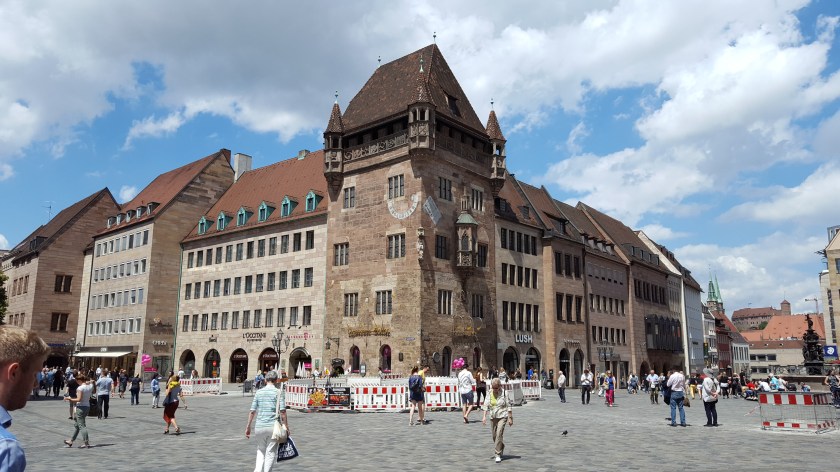
Quite a few town squares were interesting, some having buildings from the Middle Ages. The part of the building in the middle is the oldest section and, back in the day, was a private home/fortress for one family.

20160701_125019

Of course there were churches to visit, first St. Lawrence Church as an example.

With church art to enjoy, including this altar with a carved Last Supper.

20160701_111814_007

There was more…

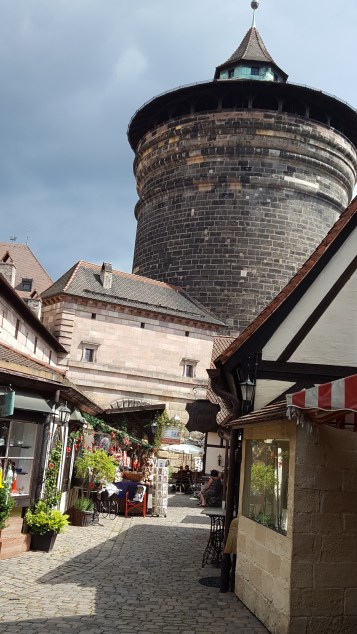
including these “remodeled” round towers. When they figured out that cannon balls hitting a round wall would more likely hit at an angle than the direct hit on a straight wall, they rebuilt the square towers as round ones.


Our guide book said these shops near this round tower are newly built (for us tourist) but it was a fun shopping area with nice local crafts.


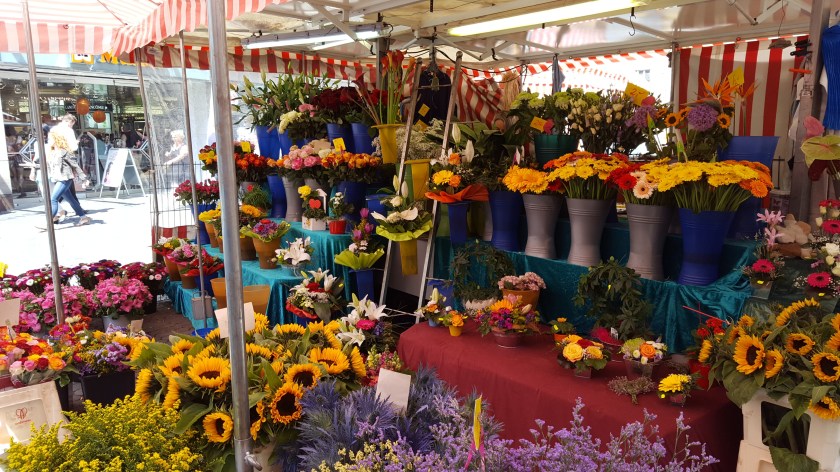
You know from previous posts that I enjoy the open air markets and those in Nürnberg were no exception.

Of course, there were flowers in the market.

20160701_121911

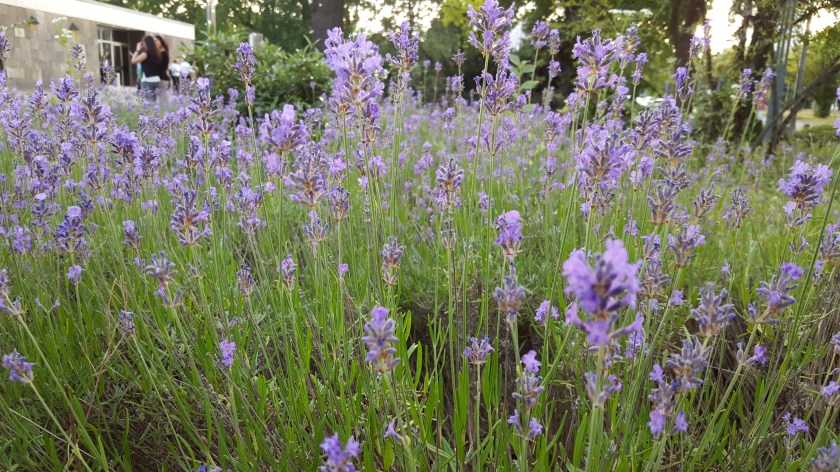
Other flowers were growing throughout the town, including these lovely beds of rosemary at the concert hall. Who knew rosemary could  flowers so profusely?

20160701_190553

Anciently, they had a hospital called the Holy Ghost Hospital (on left) near the river running through town.

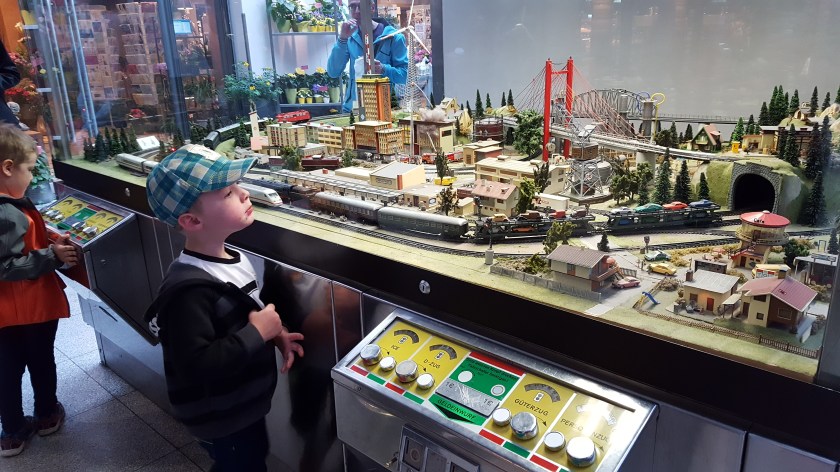
We found an entrancing model train display (to the children) at the trains station.

20160702_093309

Of course, there were the famous brats with either potato salad or sauerkraut (and delicious water in the blue bottles).

20160701_143136

[Note: Finally, getting back to blogging after returning to work at BYUH!]