“After these things Paul departed from Athens, and came to Corinth” (Acts 18:1).
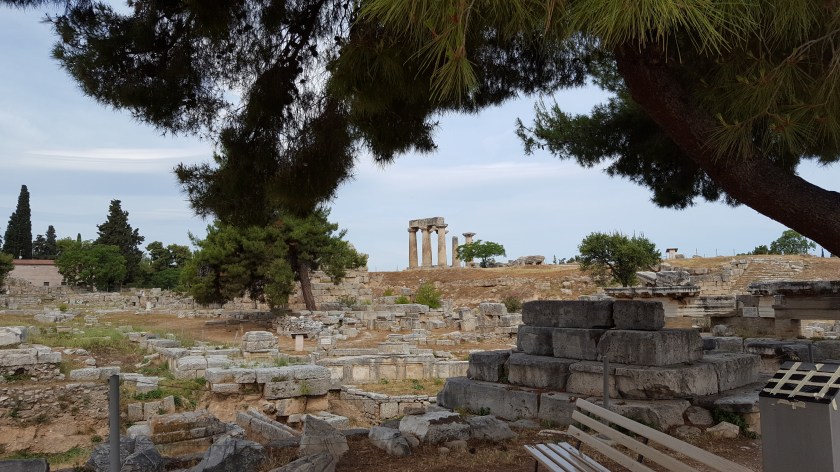 Corinth has been inhabited for more than 5,000 years. Much of the ancient Greek city was destroyed and rebuilt by the Romans, the city where Paul would have lived (about 51-52 AD). Paul stayed in Corinth nearly 2 years.
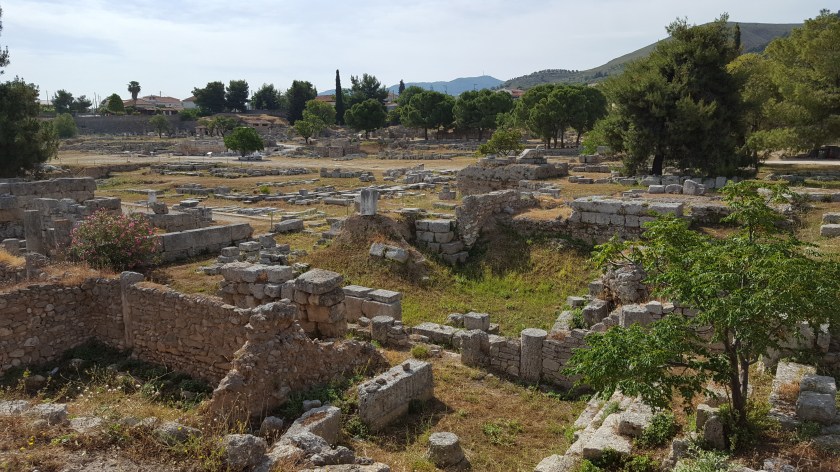
While in Corinth, Paul was accused before the Gallio, proconsul of Achaia (Act 18: 12). The Bema (photos below) was the rostrum or platform for public hearings, celebrations and judgment, and tradition gives this as the site of the trial. Archaeologists have uncovered or rebuilt part of the Bema. In the Byzantine period, a church was constructed on this site. You can see a cross on one of the stones in the top right photo (if you enlarge it).


Since Corinth was a busy international seaport, the main market street (Lechaion Road) would have been an active, busy place. Individual market stalls and houses, as well as the gutters for the streets and public toilets are visible (more visible in person than in my photos, but still there nonetheless, I promise!)


Greece was much more desert-like than I expected (being an Arizona native), so Corinth must have had access to water to support life for so many thousand years. The ancient fountain of Peirene (photos below) was uncovered by archaeologist more than 100 years ago.


Some photos I took of the information signs at the site show what the buildings around the fountain looked like during excavations in 1899 (photo on left) and what the Greek and Roman structures built around the Peirene Fountain might have looked like (top and bottom on the right respectively).


A small museum was located on the site. One rather humorous display, as told by the guide, is the mass produced statues in a courtyard. She claimed only the Romans did this–prepared bodies for the addition of head and hands; when a statue was requested, hands were added to the body by sticking a pipe into the hole in the arms. A head, carved for the person for which the statue was ordered was then placed on the neck. Mass produced statues by the Romans, not damage caused by the ravages of time, those headless statues!


Paul preached first in the synagogue in Corinth before he turned to doing missionary work mostly among the Greeks. In the museum are two stones, one showing the beginning of the word “Heb” (Hebrew) and another with three menorah. evidence of Jewish life anciently.


With a photo such as below, you can image how a city might have looked at the height of its prosperity in Roman times.
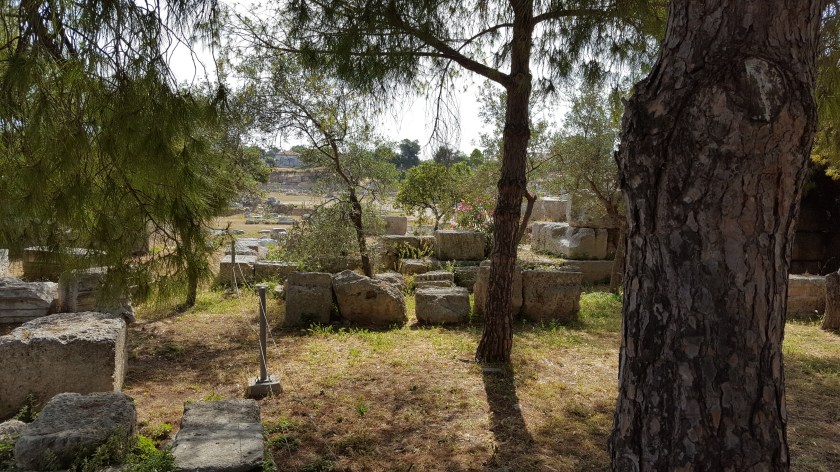 Corinth is an ancient, thought-producing place to visit.


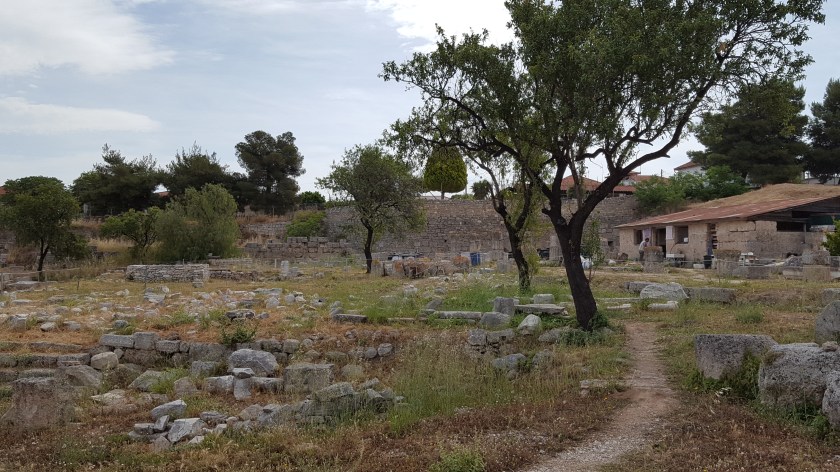
As an after thought, there seemed to be an abundance of dogs among the ruins, rather unconcerned by the tourist walking near by.


Ha!
 bunkerwrites.com