As mentioned in a earlier post (before I came home), the Zuckermann Museum, part of the Civic Museums of Padua, had a collection of early coins. They arranged these coins somewhat within historical order, so that the development of the use of money could be observed.

I tried to remember to also take a photo of the information sign on the coins, but I didn’t always remember or take them in order. Still, here is a brief selection of historical coins for those of you that might be interested.
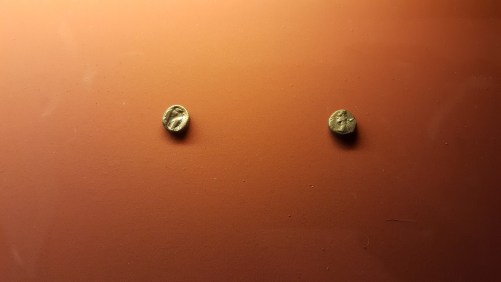
The earliest coins that were in the collection at the Zuckermann Museum in Padua were these two coins from the reign of Darius I (521-486 BC).
The museum also had on display a coin press. The press is a modern reproduction of one in use in Italy between 1355 and 1388.


In addition to the coins, they also showed some examples of the introduction of bank notes, which the sign in the museum claimed started in 1661 in Sweden.


The most impressive coin to me in the end was one which I missed on my first turn through the cabinets of coins. My niece Lisa brought it to my attention. The coin below had a sign saying it was from the time of the rule of Augustus and Agrippa’s between 10-14 BC.
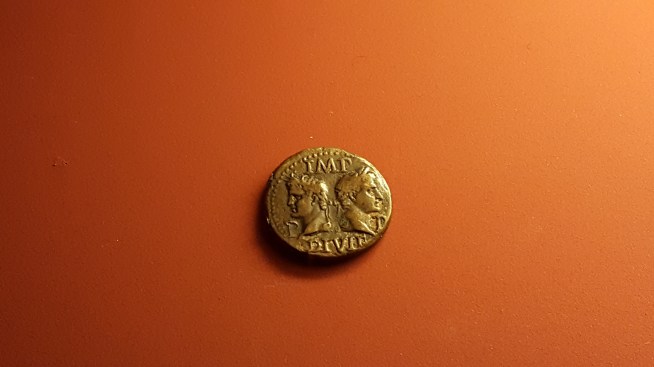

Lisa pointed out that people living at the time of Christ might have seen such coins.
Ah, money! Haven’t we always wanted money in some form? (below) Byzantium coins from around the 6th century.

 bunkerwrites.com