Celebrating Chinese New Year in New Zealand

To celebrate Chinese New Year, I went with Holbrooks (a missionary couple on the School Team) on Thursday to the 20th Annual Chinese Lantern Festival in Auckland. We went on the first night, partly to avoid the crowds. I heard on the news they expected 200,000 to attend this year’s festival. Holbrooks, who have gone each year, waited one year to go on Saturday. They assured me it seemed like 200,000 attended that night!

The lanterns are amazing, and for me, unexpected in their complexity and ingenuity of design. Take this amazing one below that we saw as we left, the White Snake Legend. The White Snake falls in love with a man and so appears to him as a woman, but….you’ll have to look the rest of the story up for yourselves!
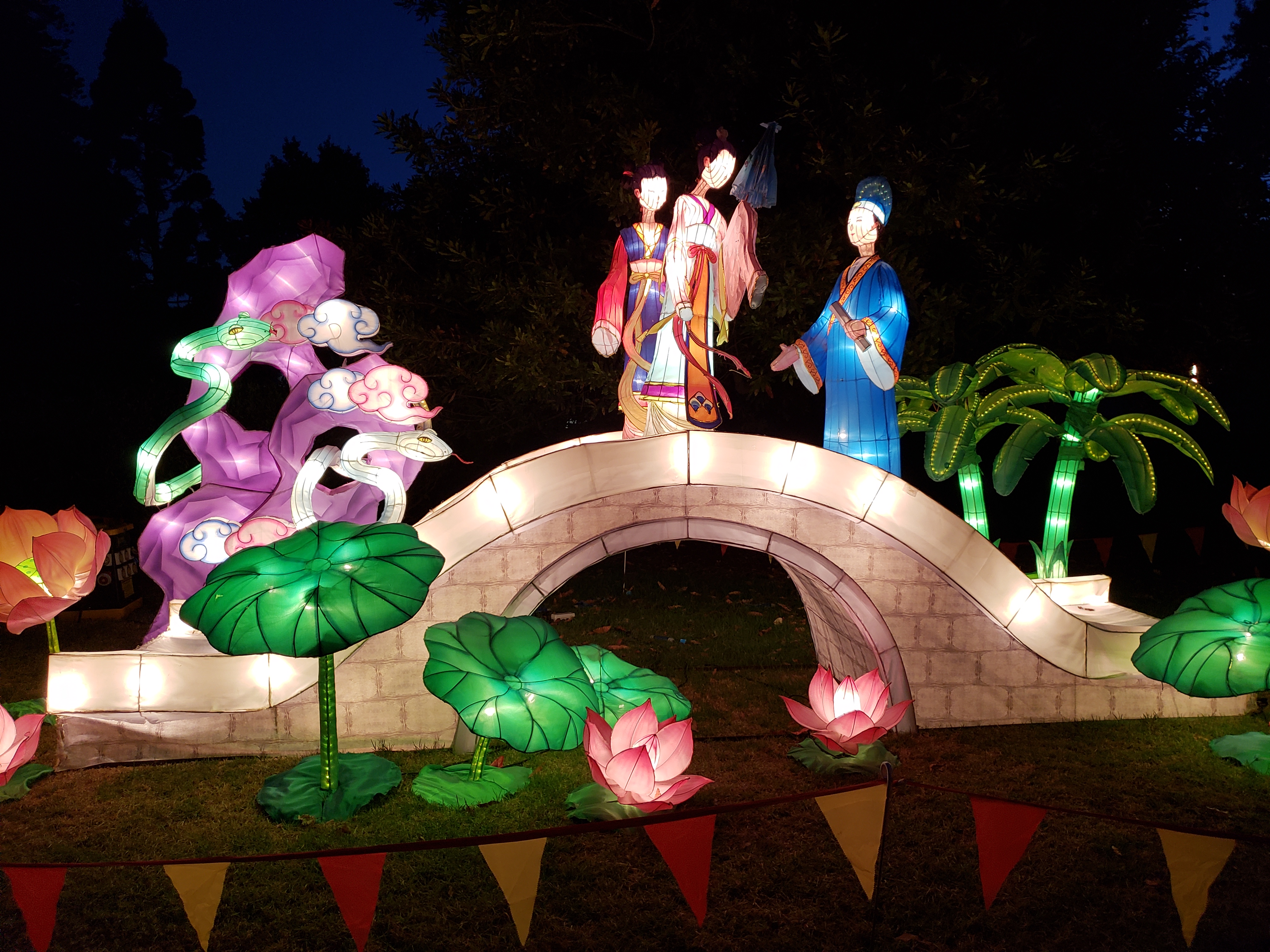
The White Snake Lantern

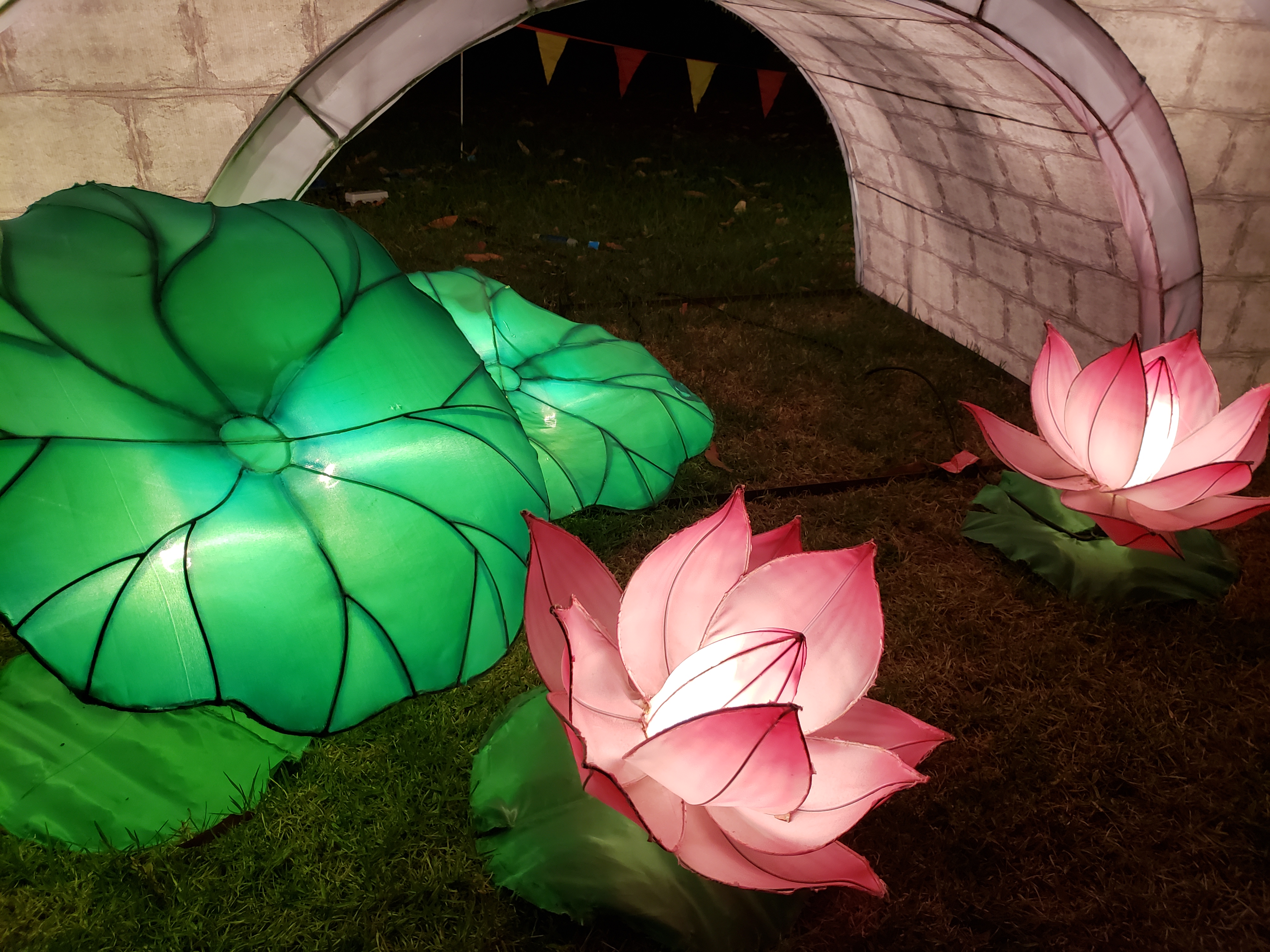
I mentioned that I had gone to the Chinese Lantern Festival to a Chinese couple in my ward. They told me that a TV series had been made from the story years ago and was one of the most popular on TV in China. They also noted that the white snake had a sister, the green snake. Notice the snakes on the left above. Below is a close up of some of the flowers.
I decided if I was going to use these photos to write something for the Church Schools English curriculum, I might tell these stories. So, besides the story about the White Snake, here is the story of the the Crab Commanders and the Shrimp Soldiers. This one was harder to get good photos of, but I tried. These rather made me laugh.
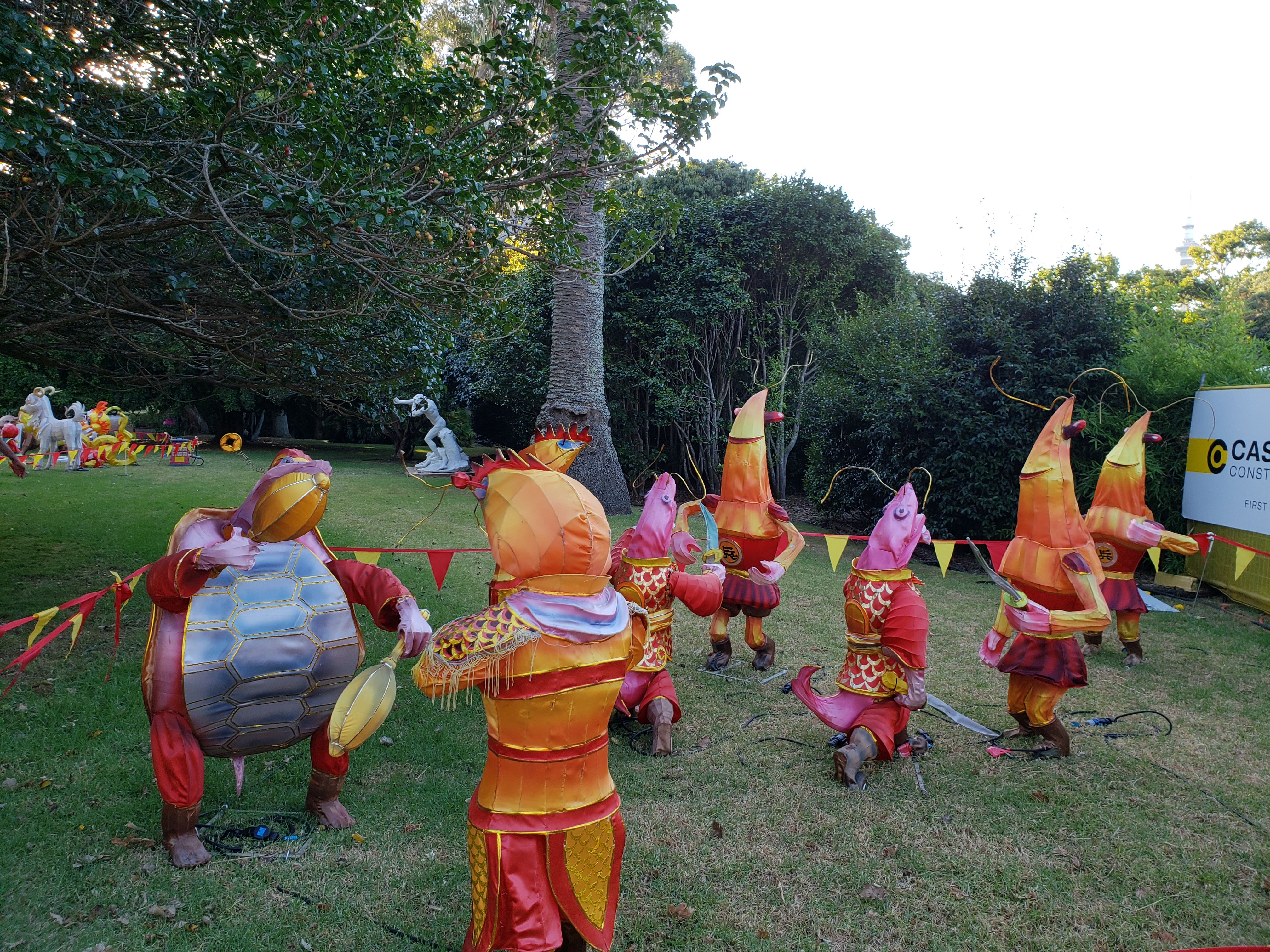
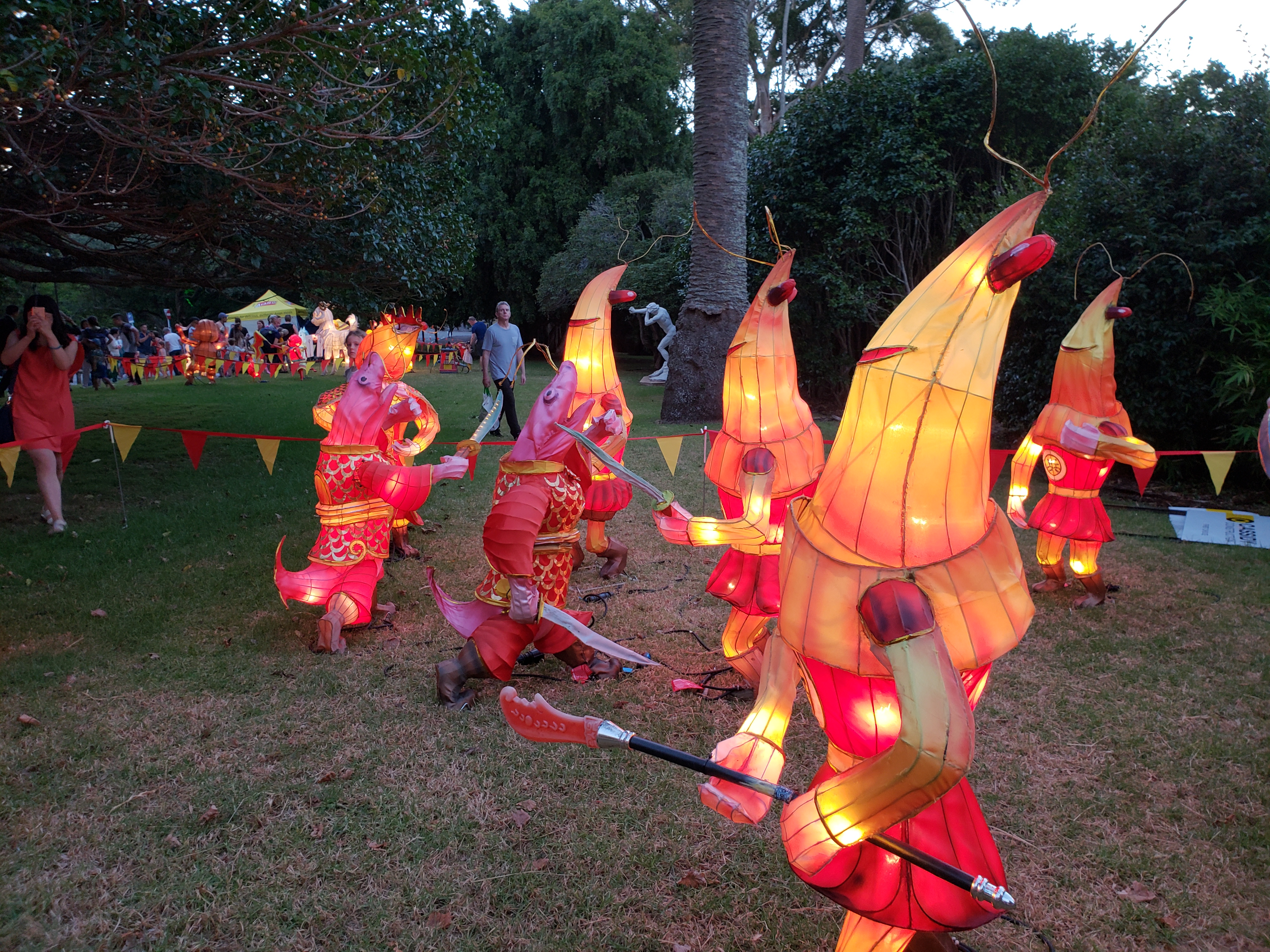
The story also originally comes from a Chinese legend. The sign on this lantern said that the crab and shrimp represents “ineffective troops” and has become a common Chinese idiom.

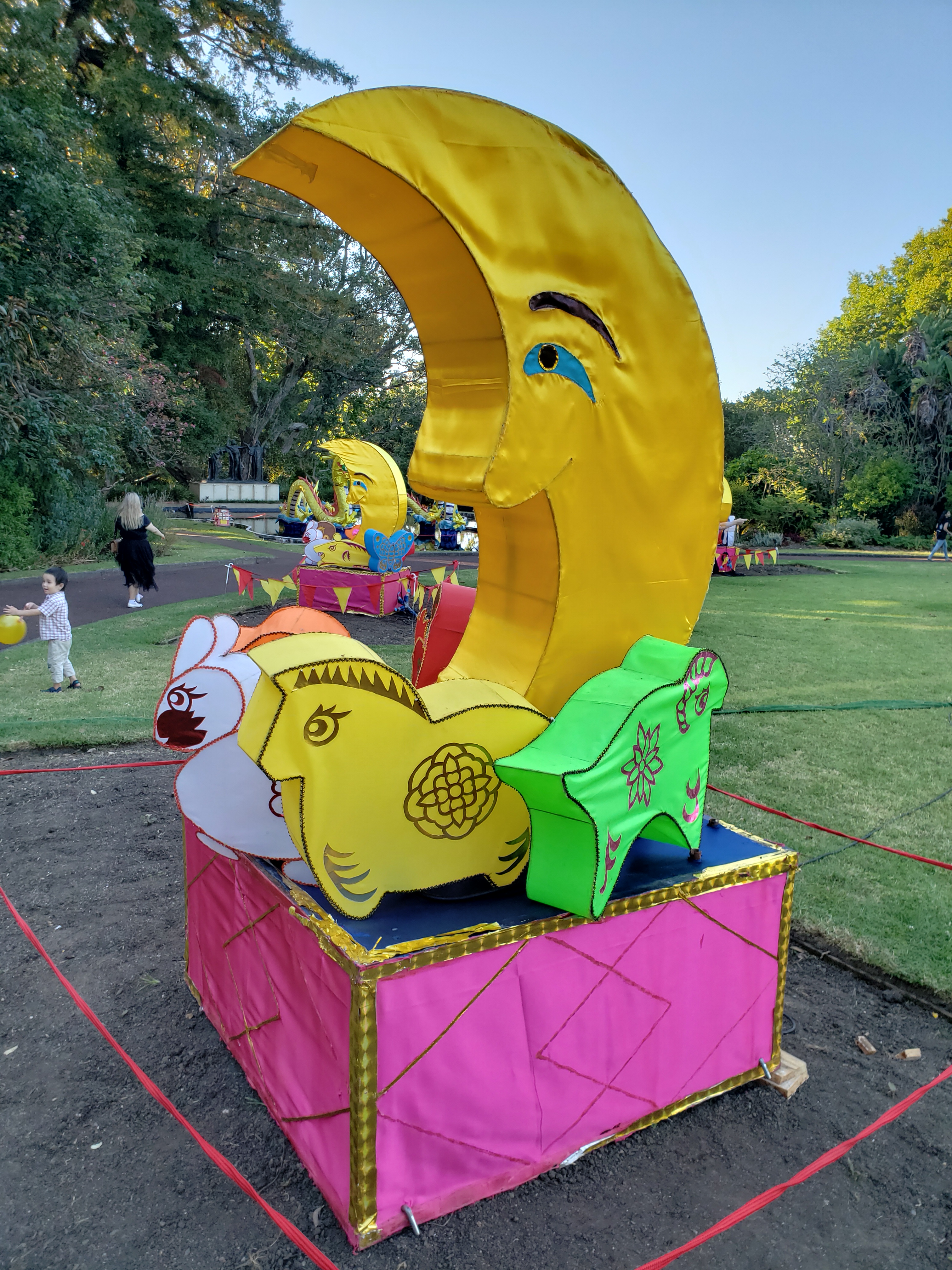
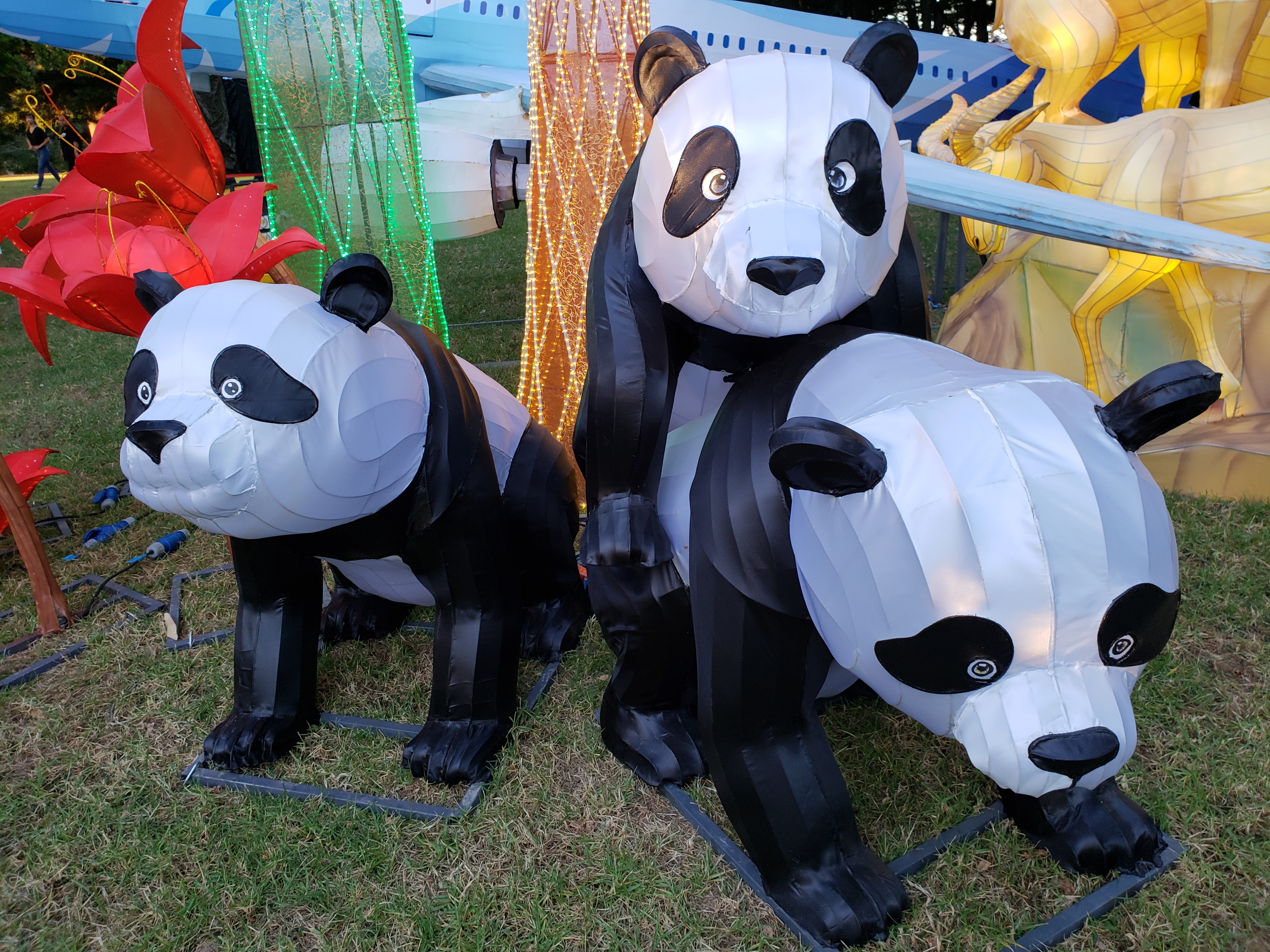
Another popular feature was representations of the animals of the Chinese zodiac. Some of these were close together and some had individual lanterns. Of course, this is the year of the pig, so the samples must include the pig.
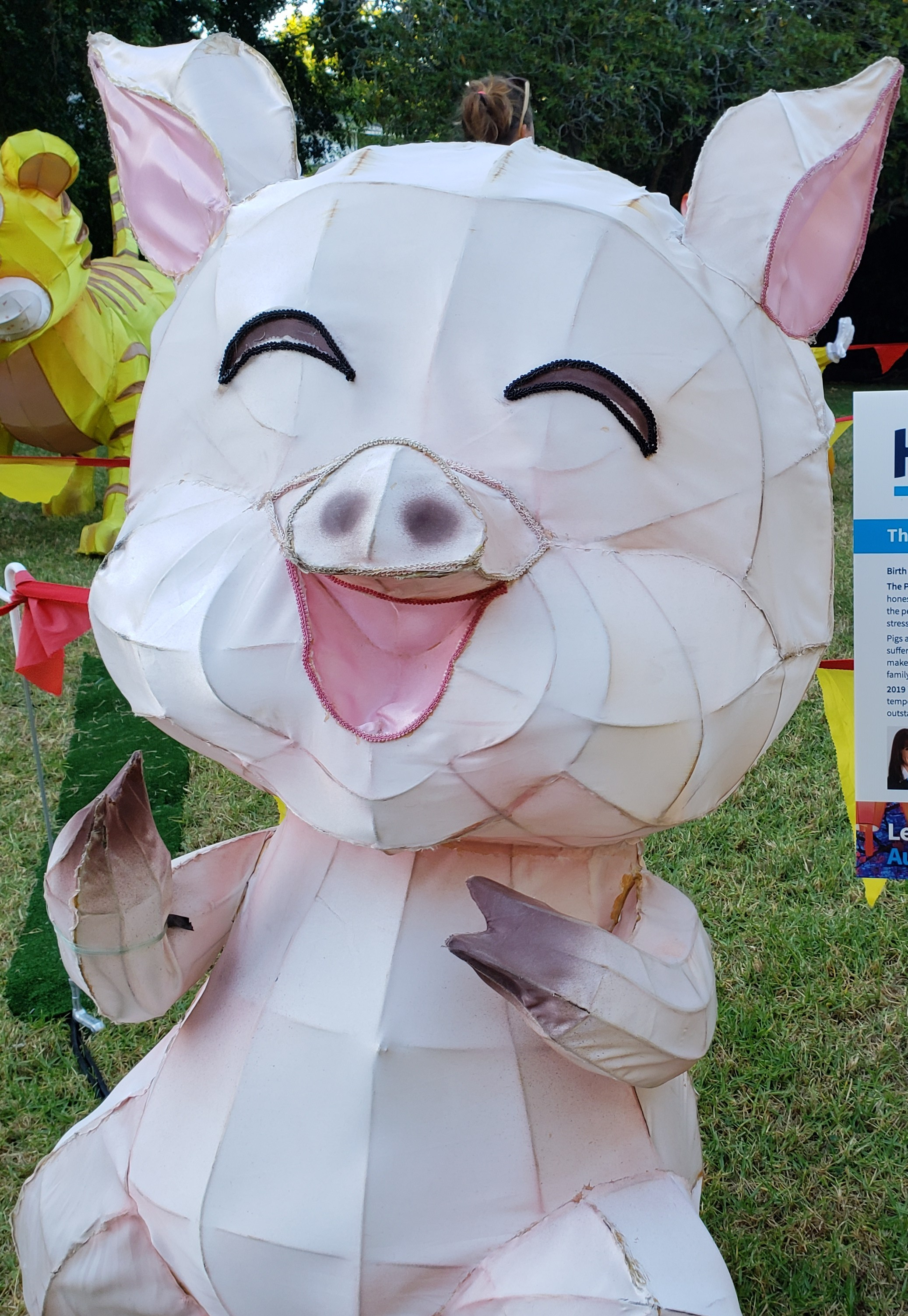
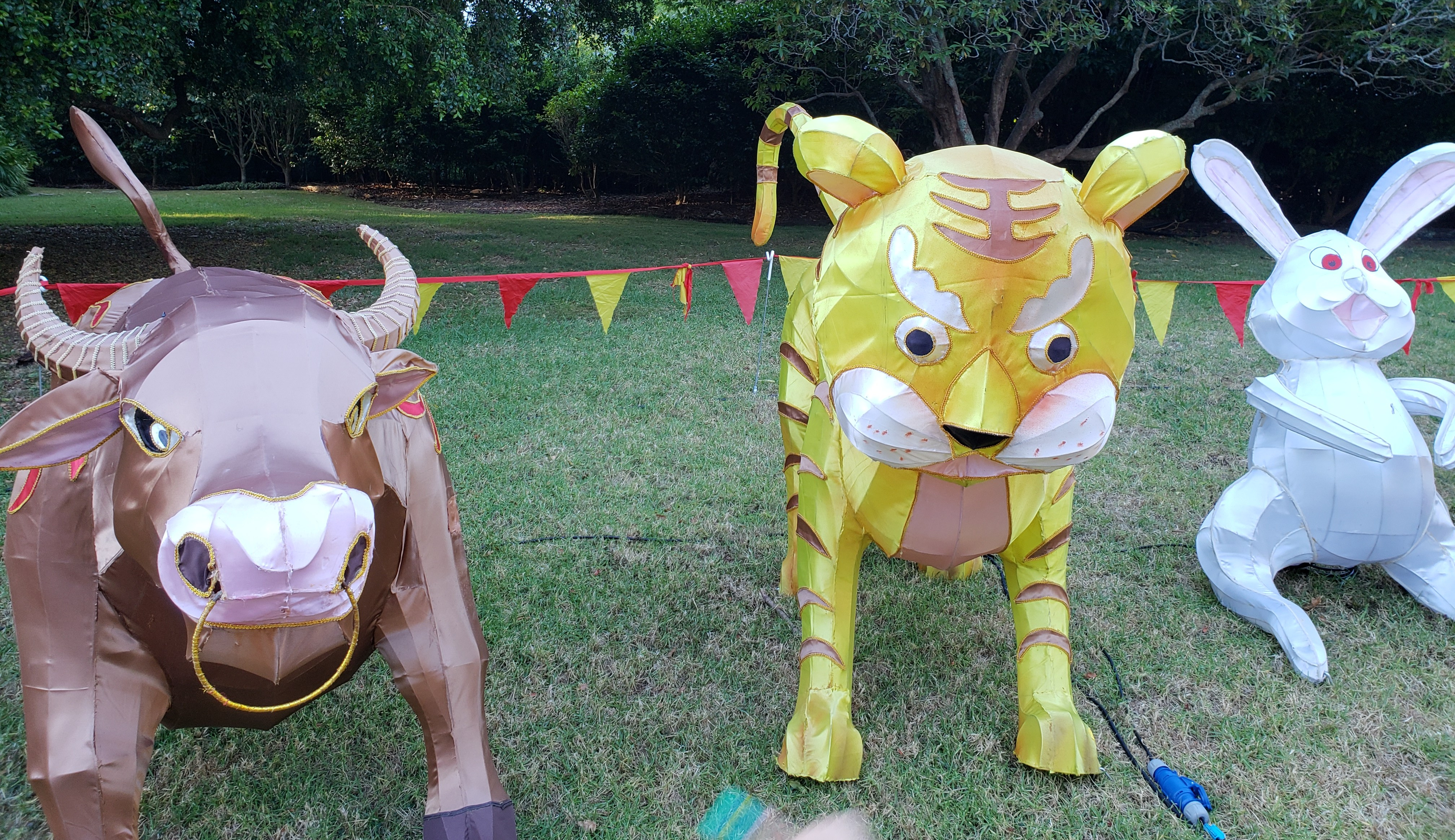
Some of the zodiac animals were scattered throughout the festival. Below is the dog, standing guard over one of ponds on the Auckland Domain, where the festival was held.
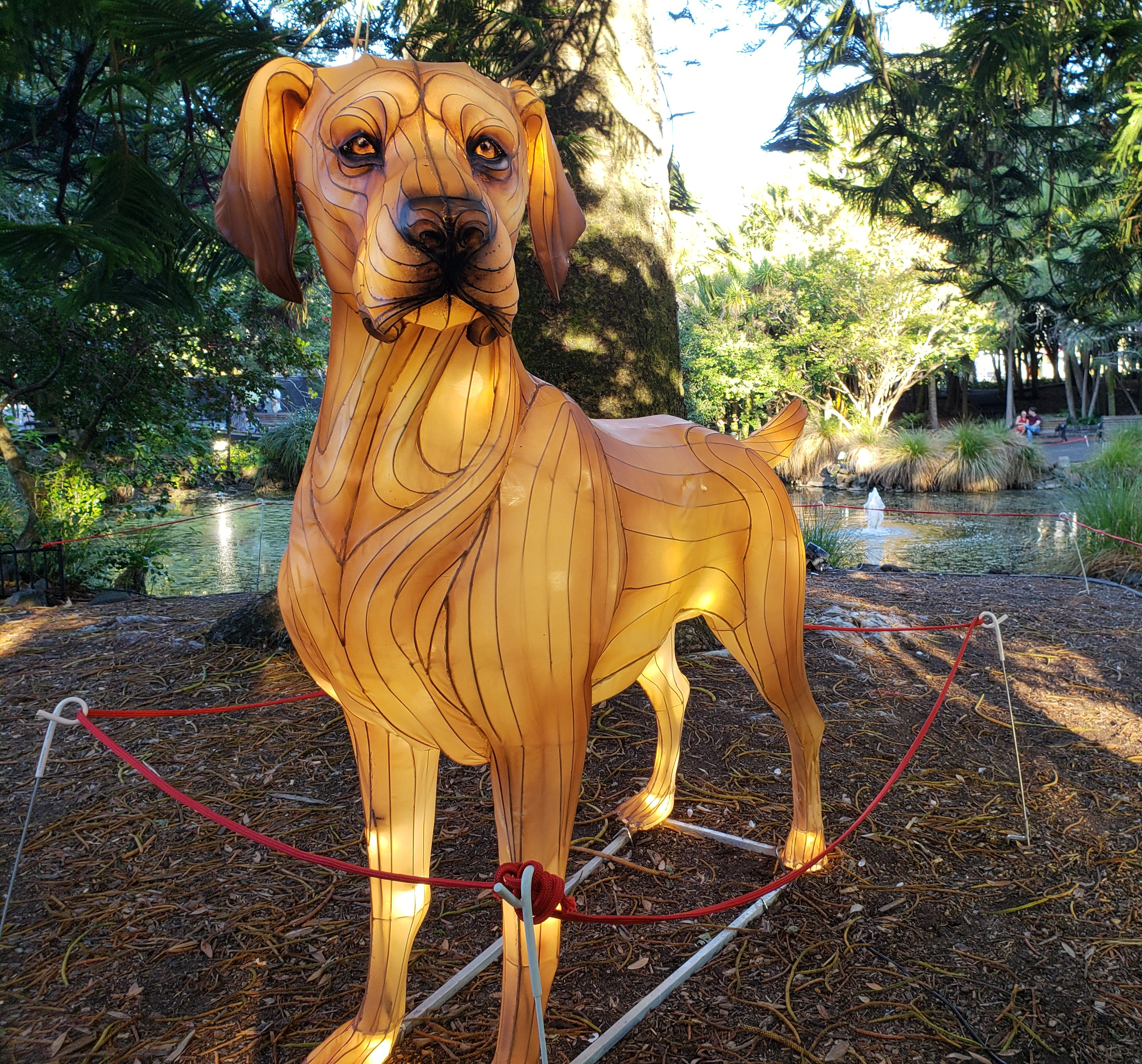
If you want to see the size of this dog lantern, here is Elder Holbrook
standing next to the dog. He estimated that the dog had to be at least 6 feet 4 inches tall.

I bet the size of the dog surprised you.

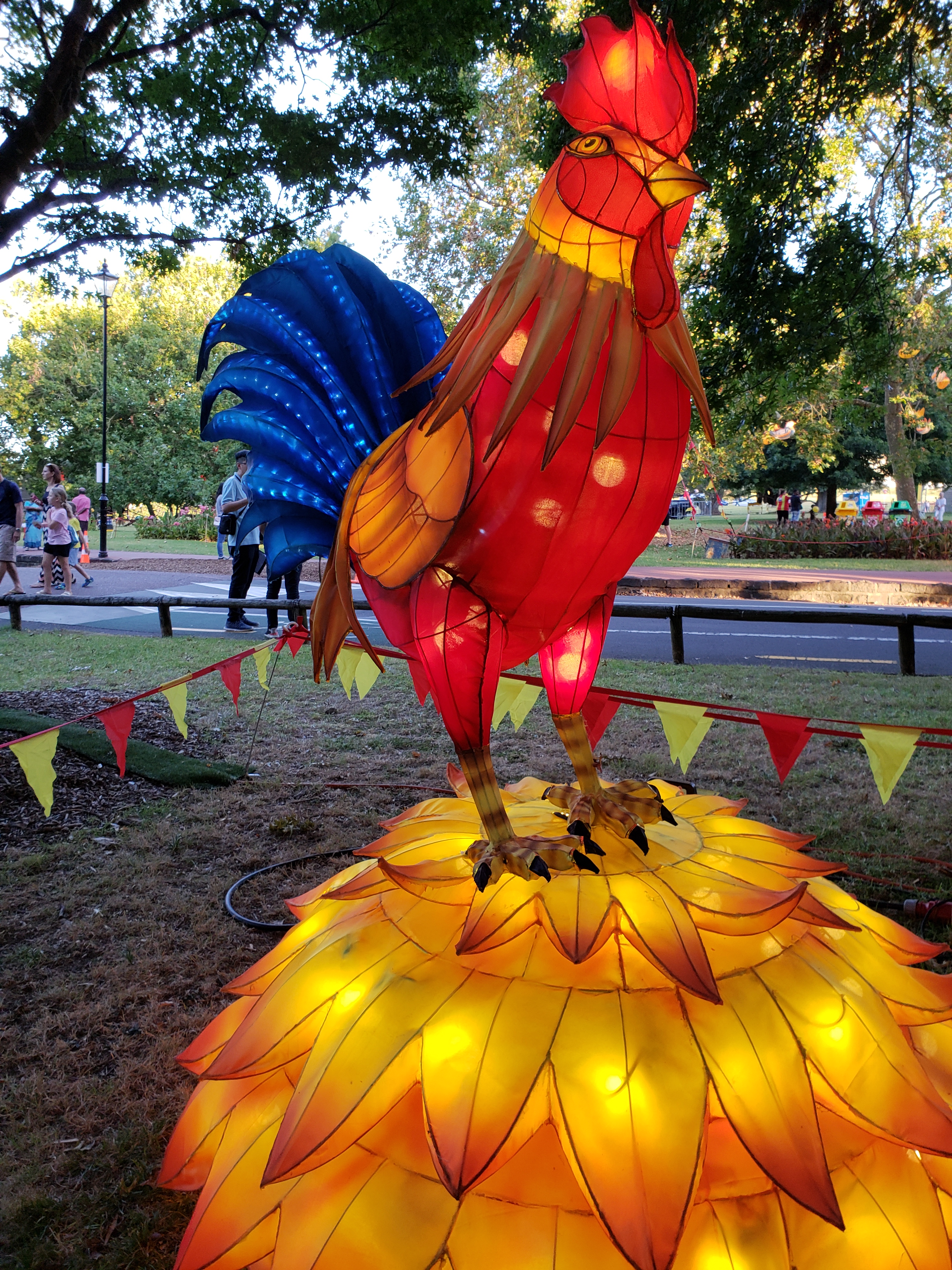
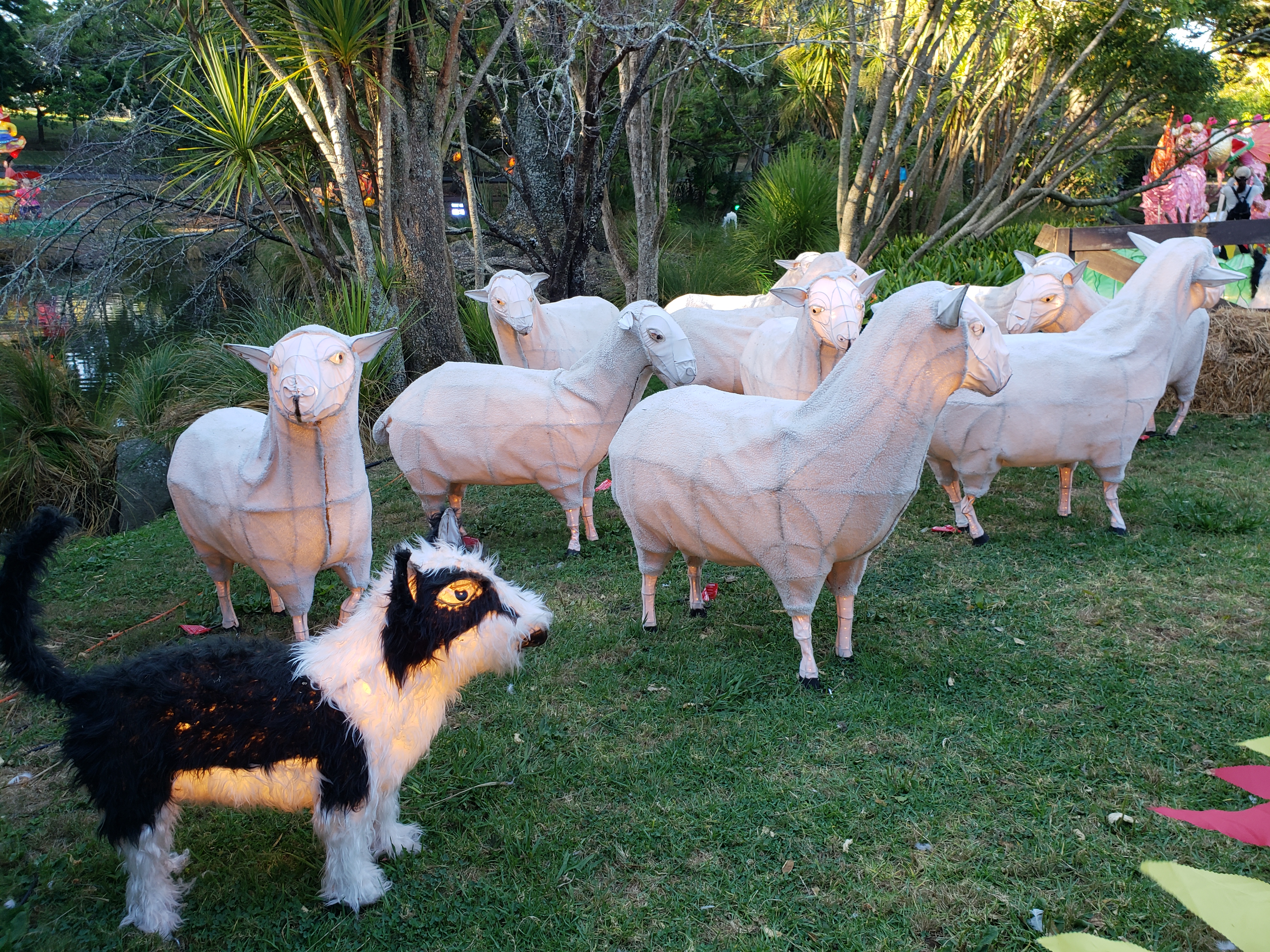
Below is the rooster. The festival also included animals that are not one of the twelve in the zodiac. I enjoyed the sheep dog guarding the sheep, since this is a country of many, many sheep. (Click to enlarge photos.)
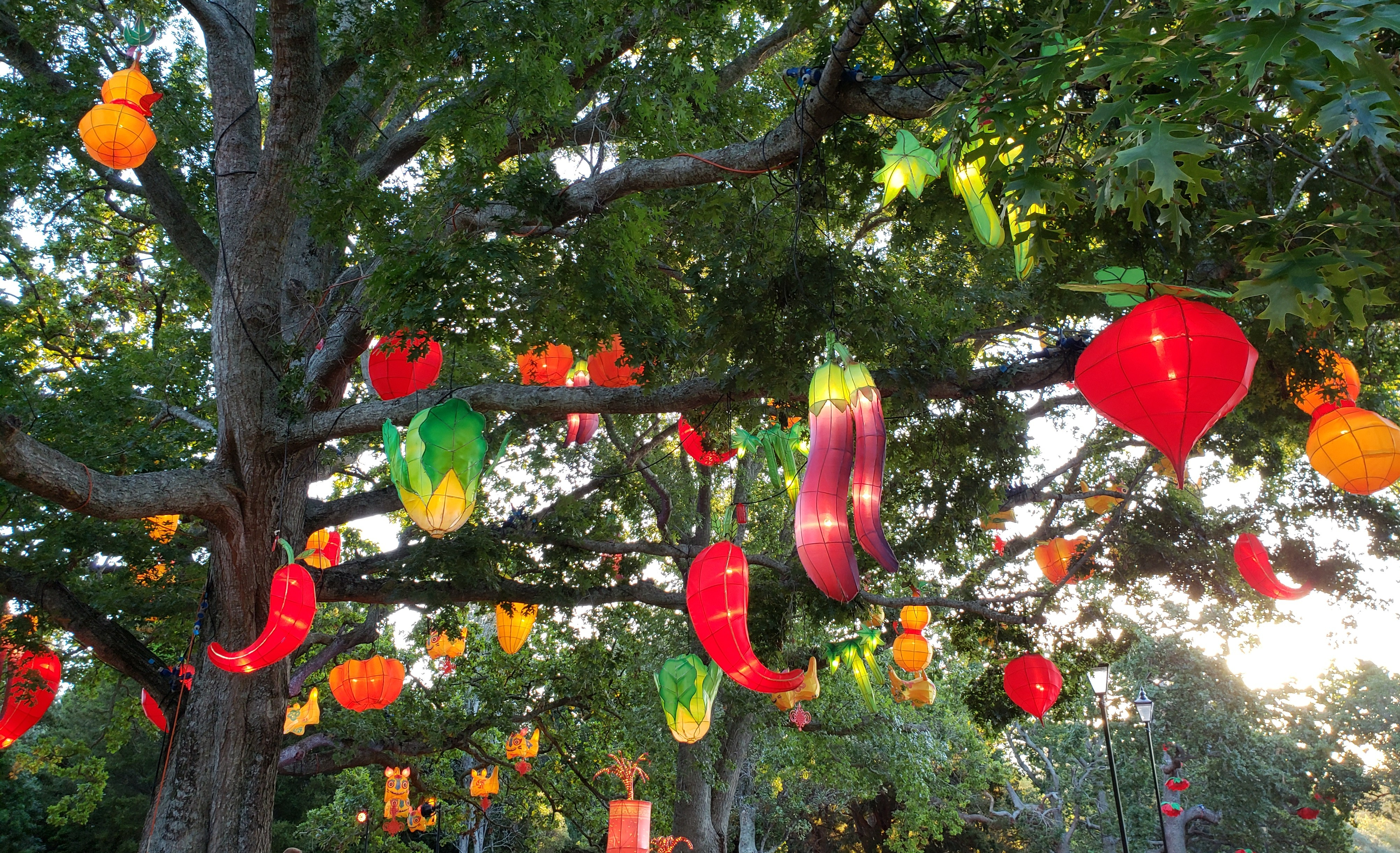
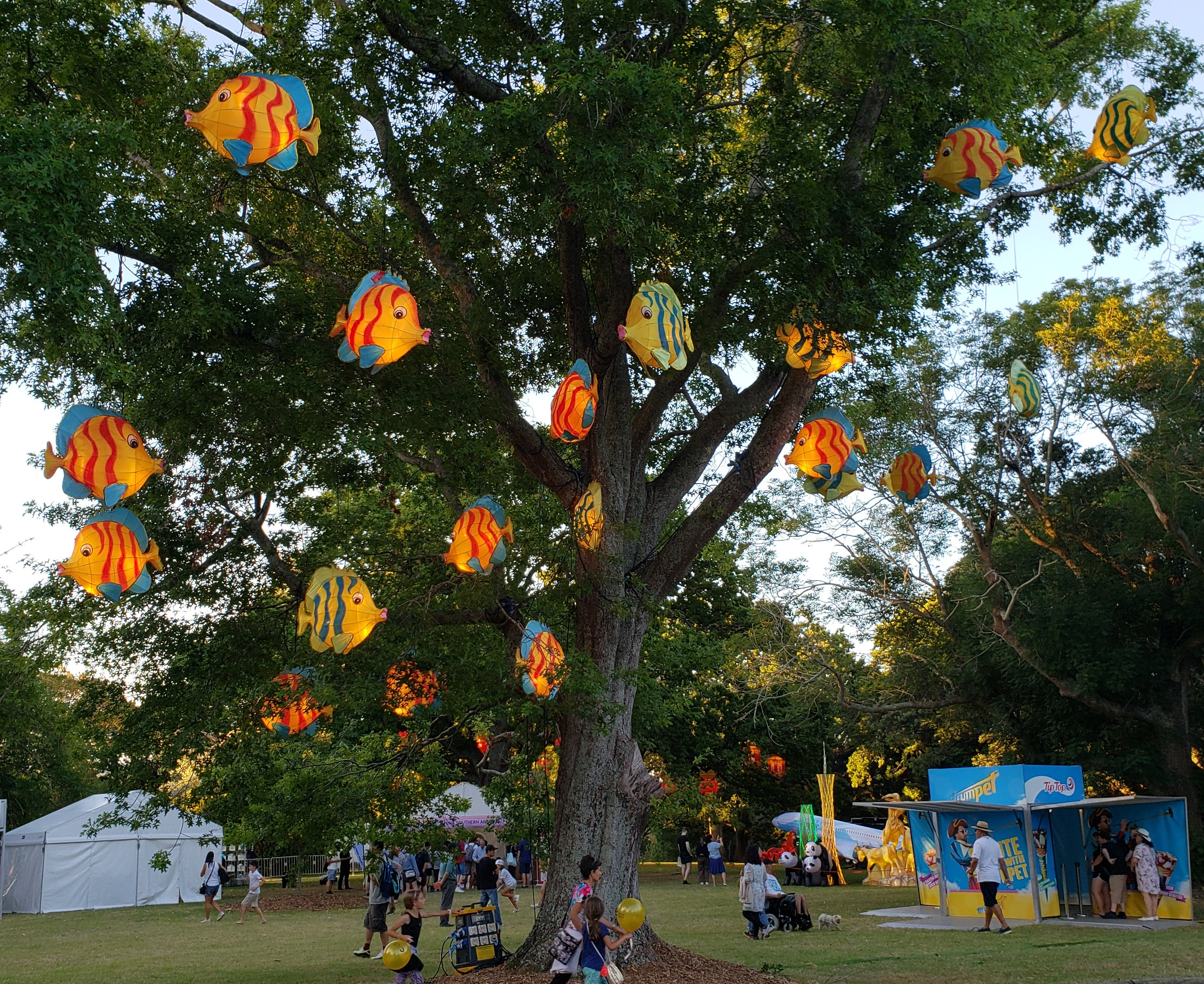
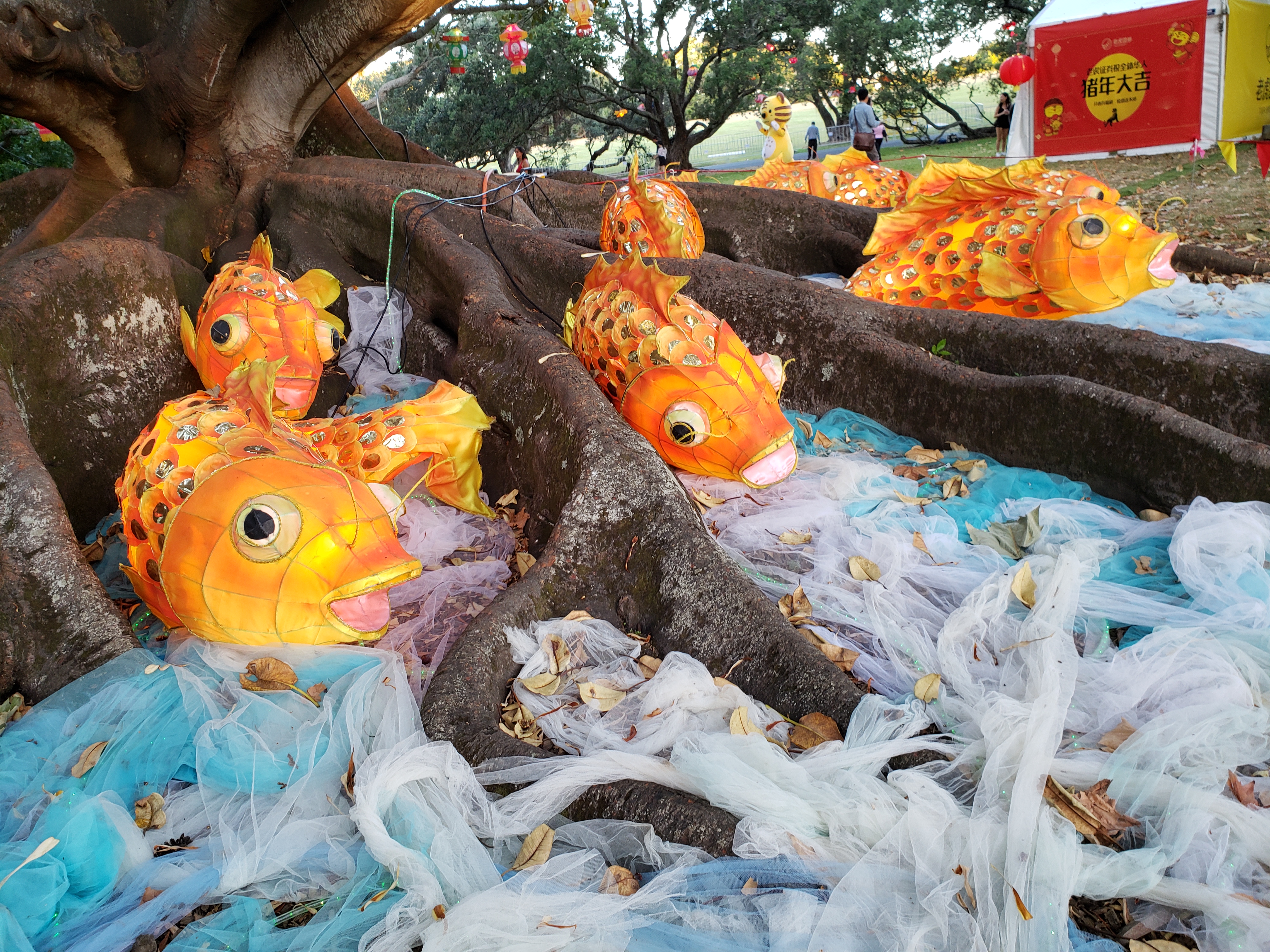
Other animals appeared in strange places, like these fish. If fish can swim in trees, can vegetables grow there, too?
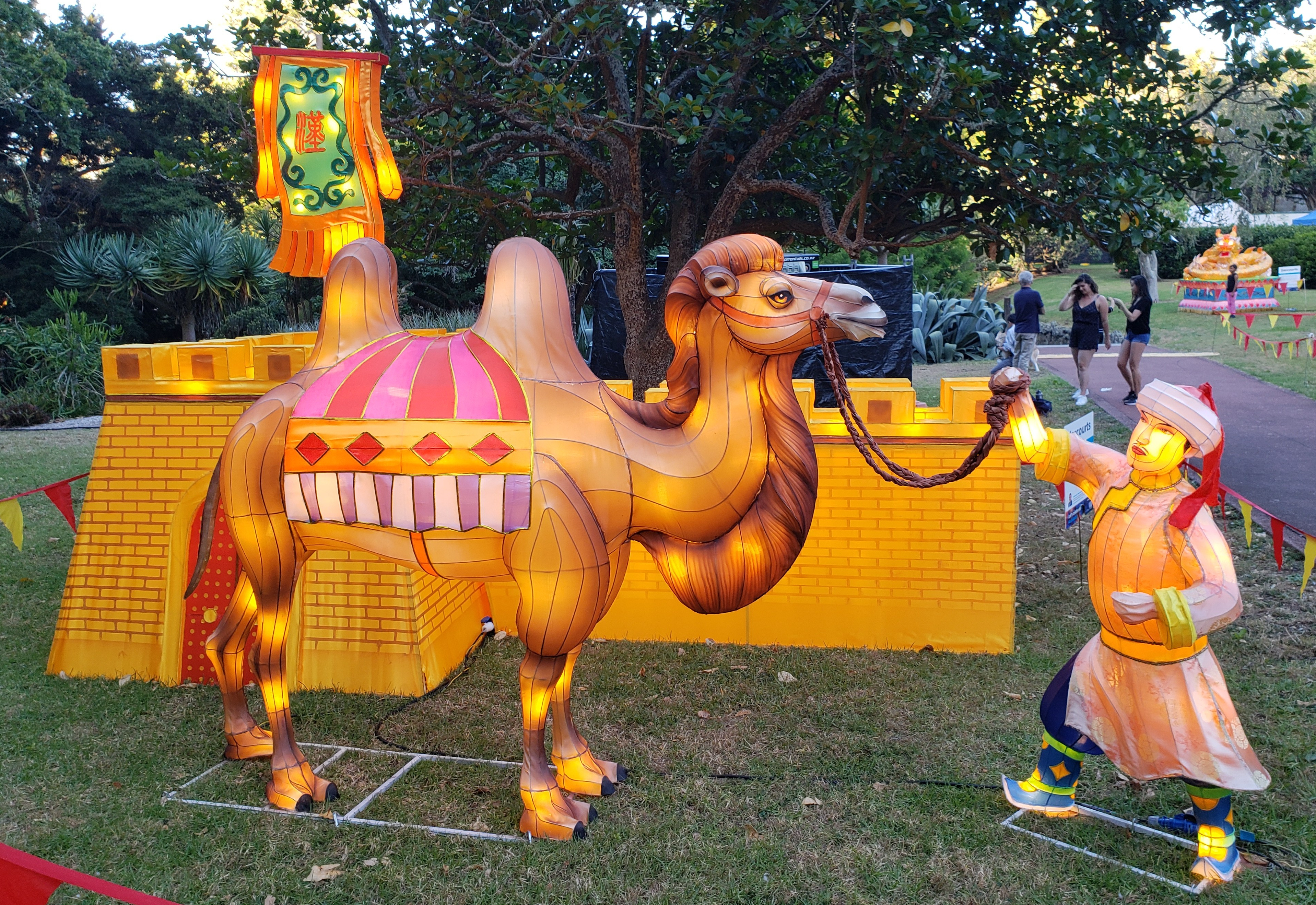
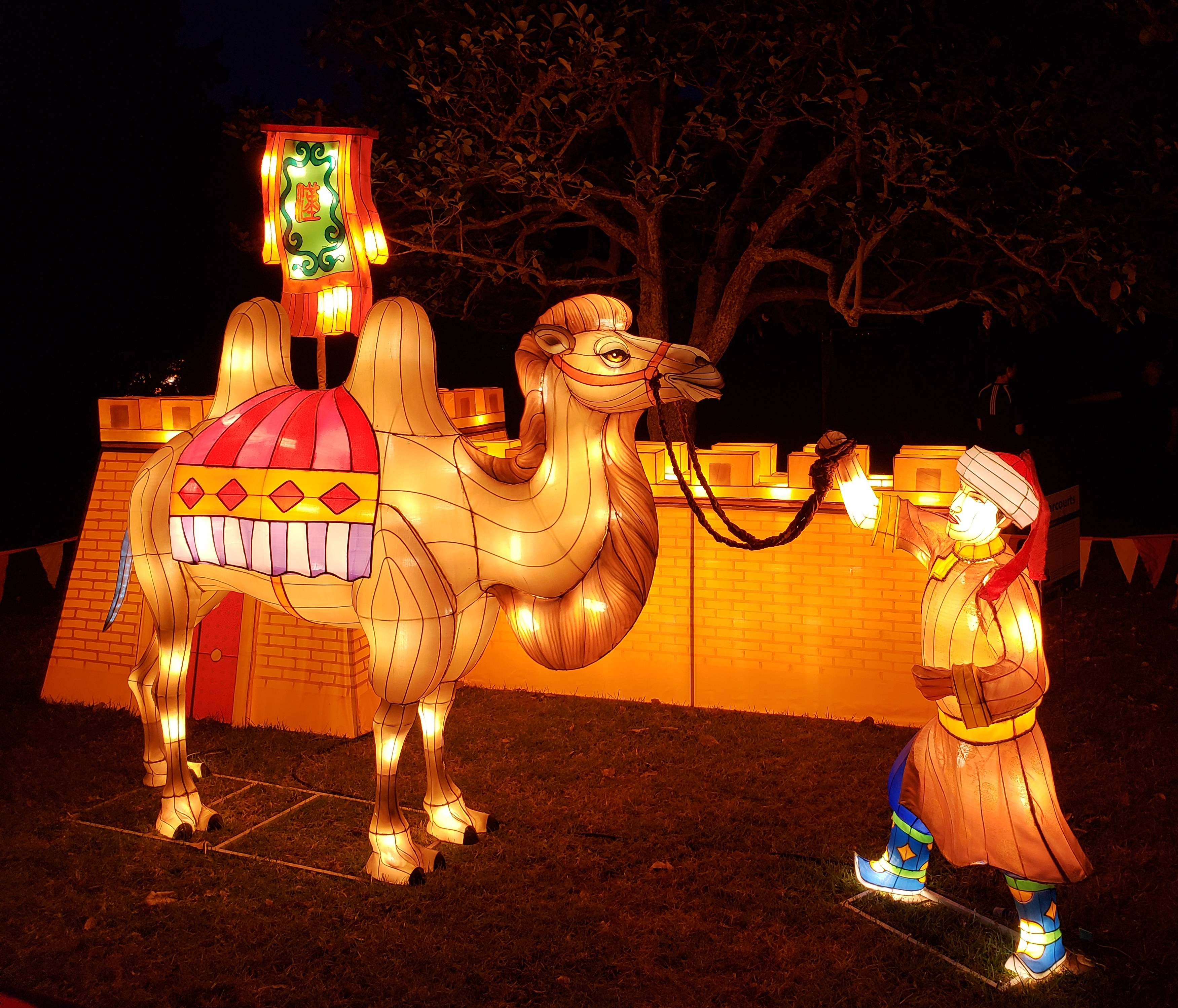
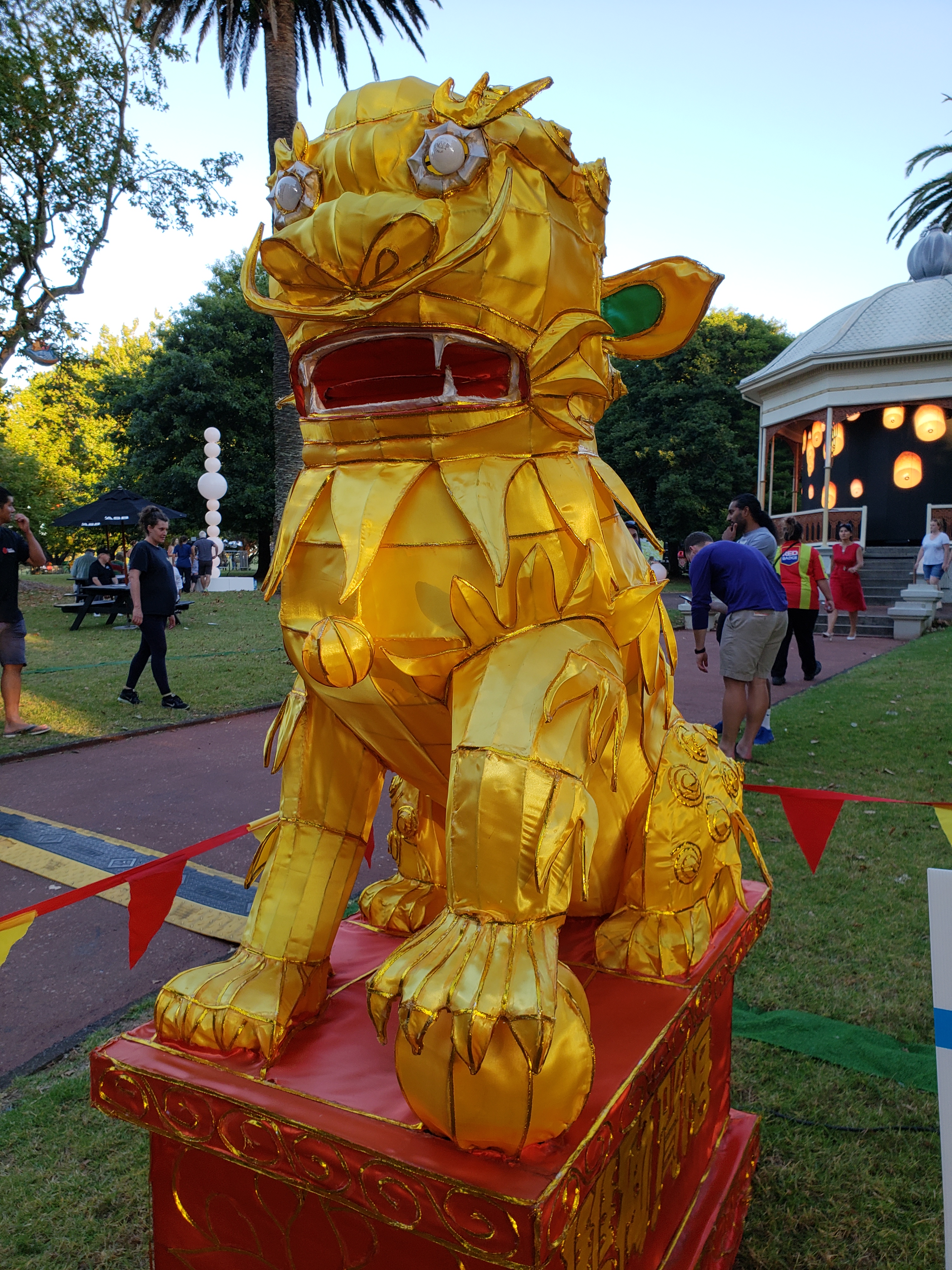
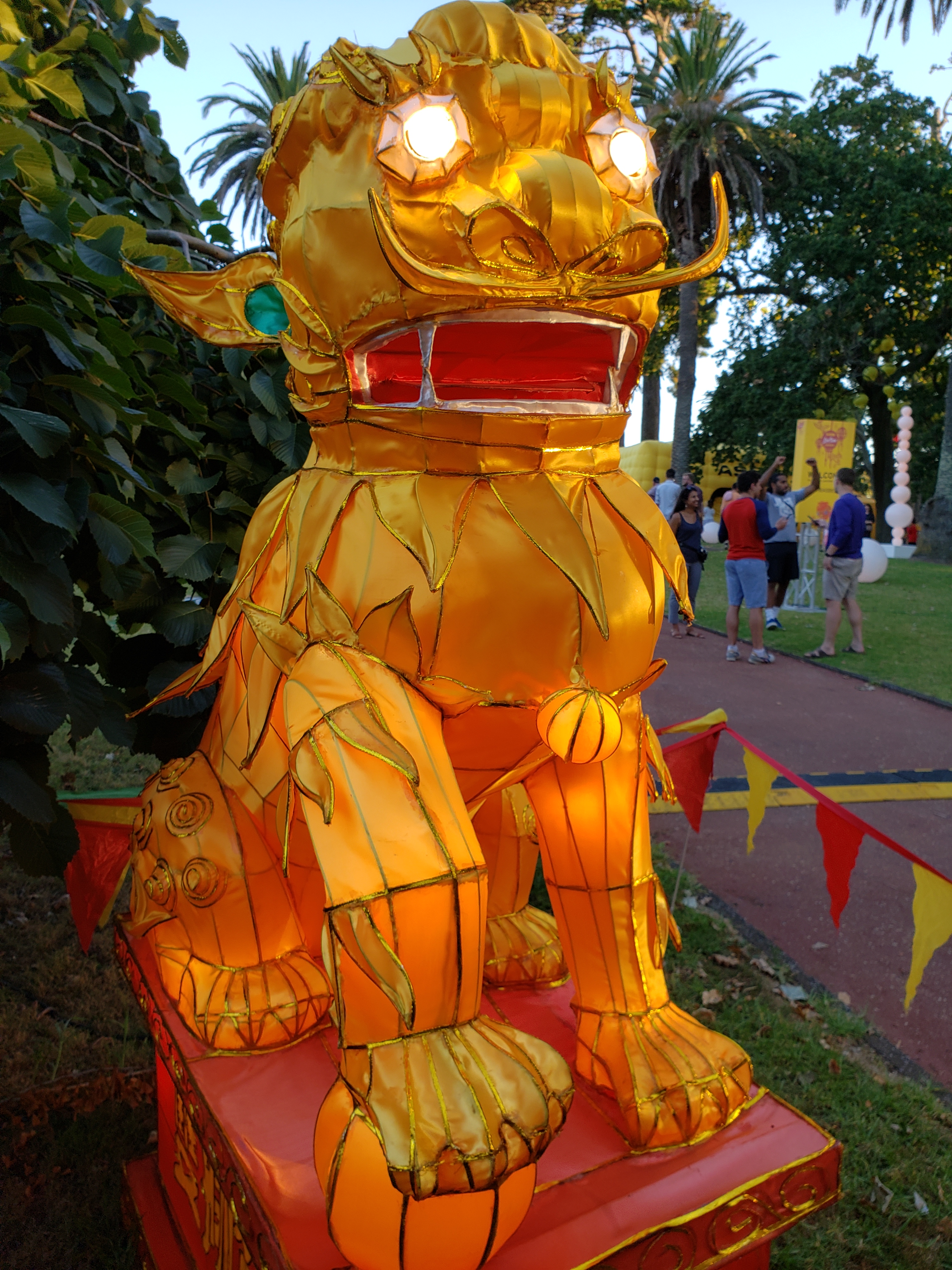
Now, before I use up all my size allowance on this one post, I’ll include some photos that I’m thinking about using in a comparison activity for the English curriculum. We arrived before sunset in order to beat the crowd; it worked. It was easy to walk around, but then the generators were not on, so the lanterns were not “lit.” Here are a few photos from both times–before the sun was down and after the lanterns turned on. First, a camel in front of the Great Wall of China.
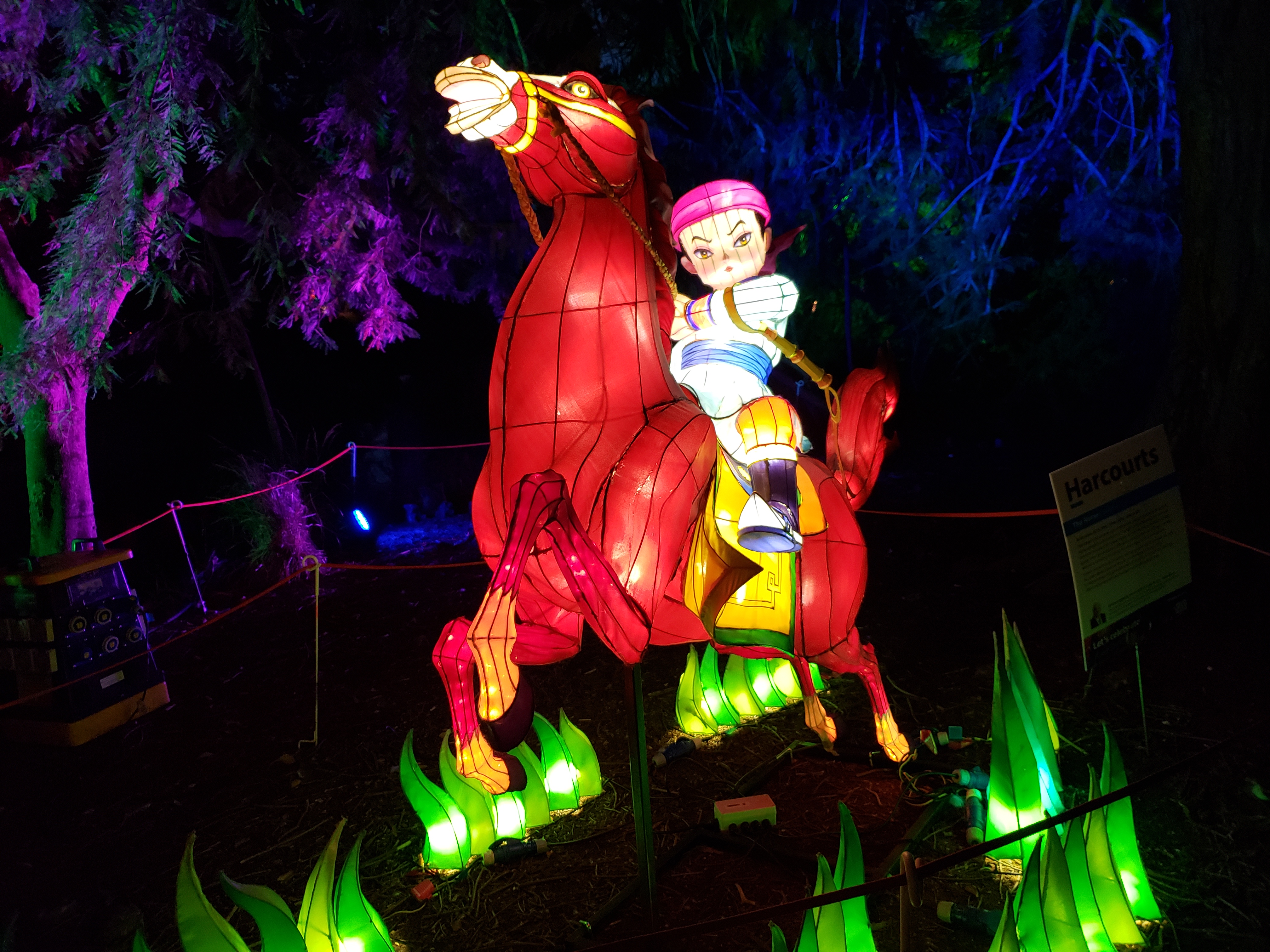
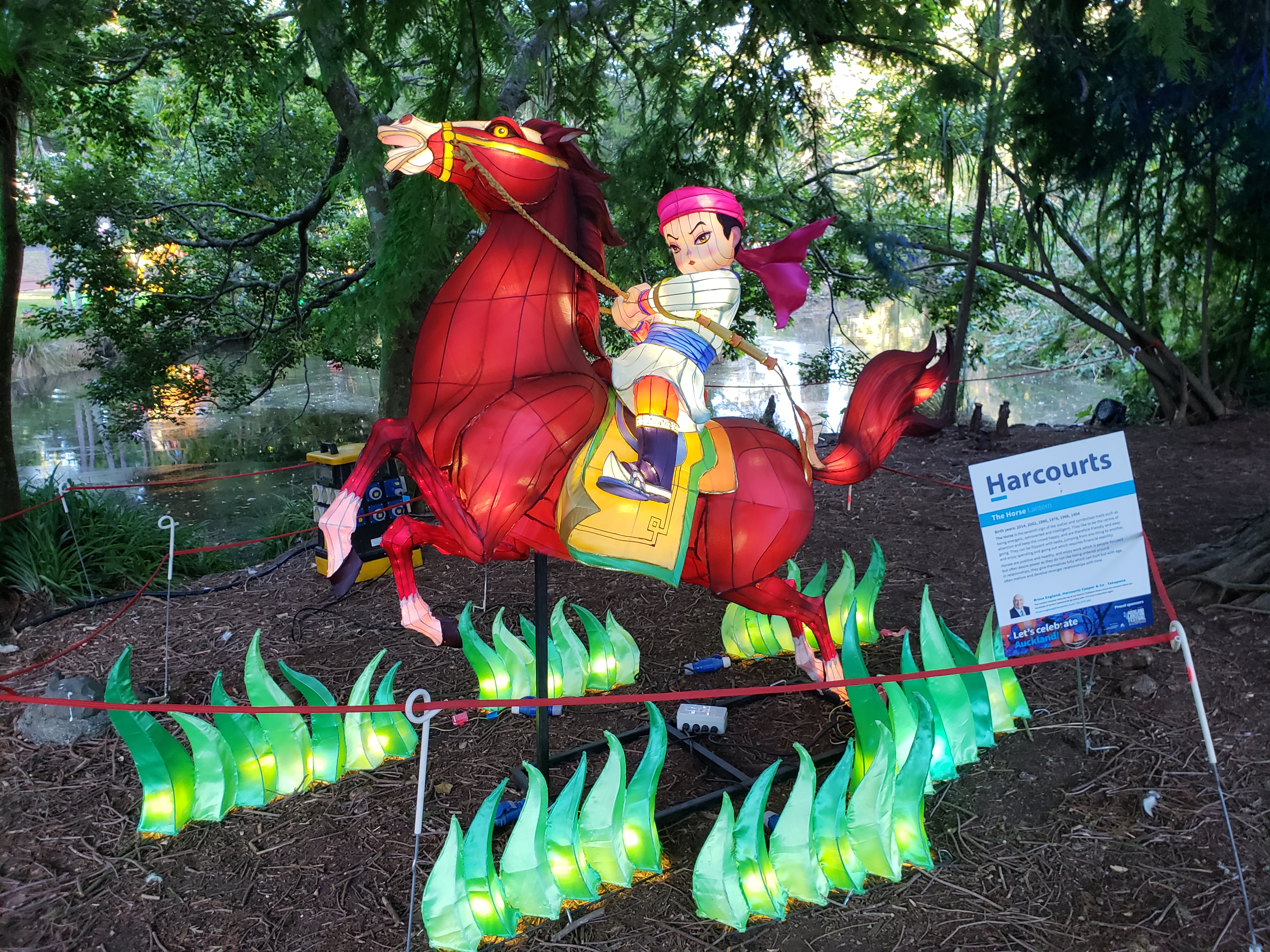
Another choice, with my birth year animal, the horse.
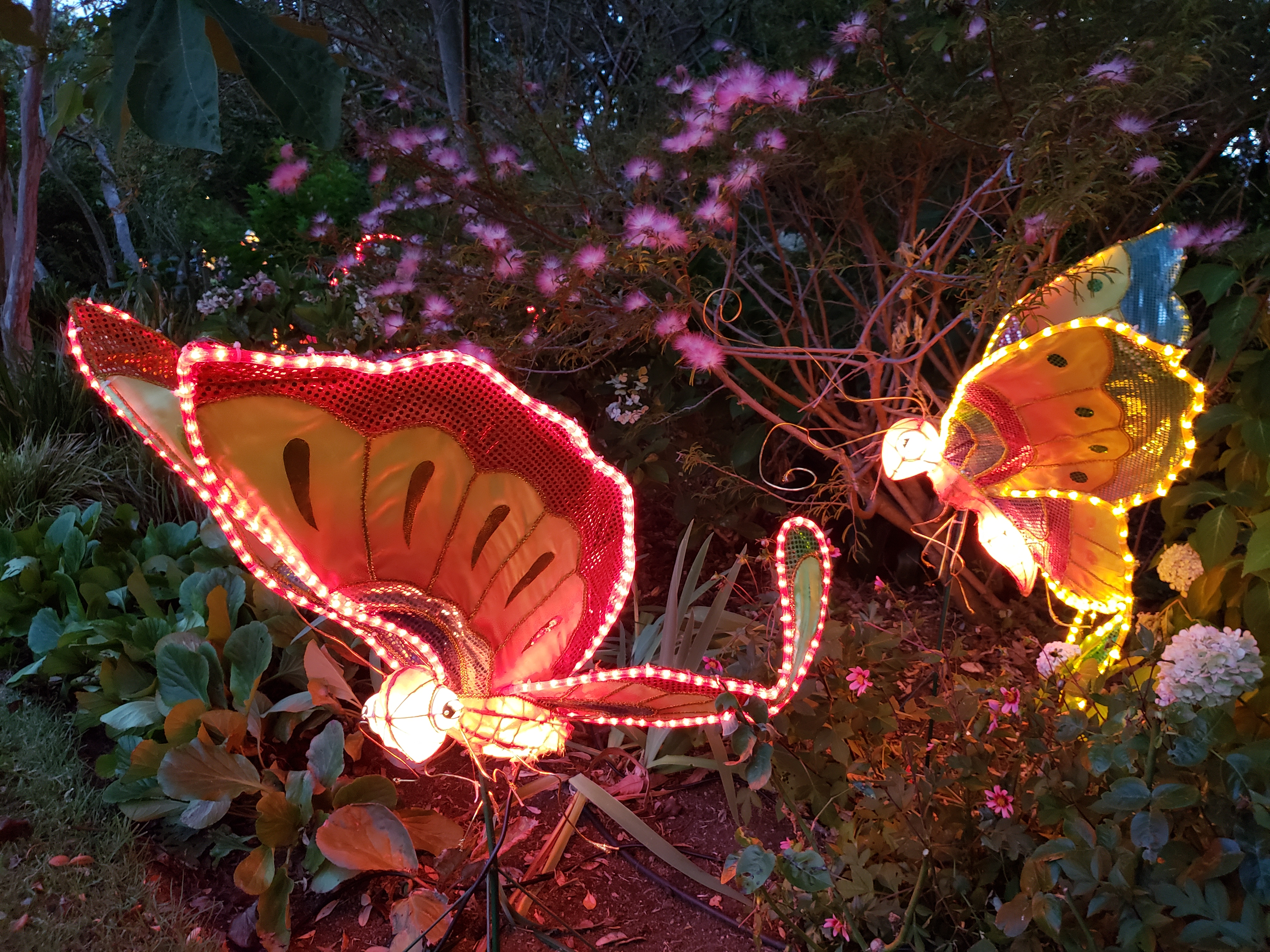
Here are some royal lions, guarding the palace. I noticed a worker turning the generators on just after I took the photo on the left. After the lions, there are two photos of a few of the many butterflies in the bushes.
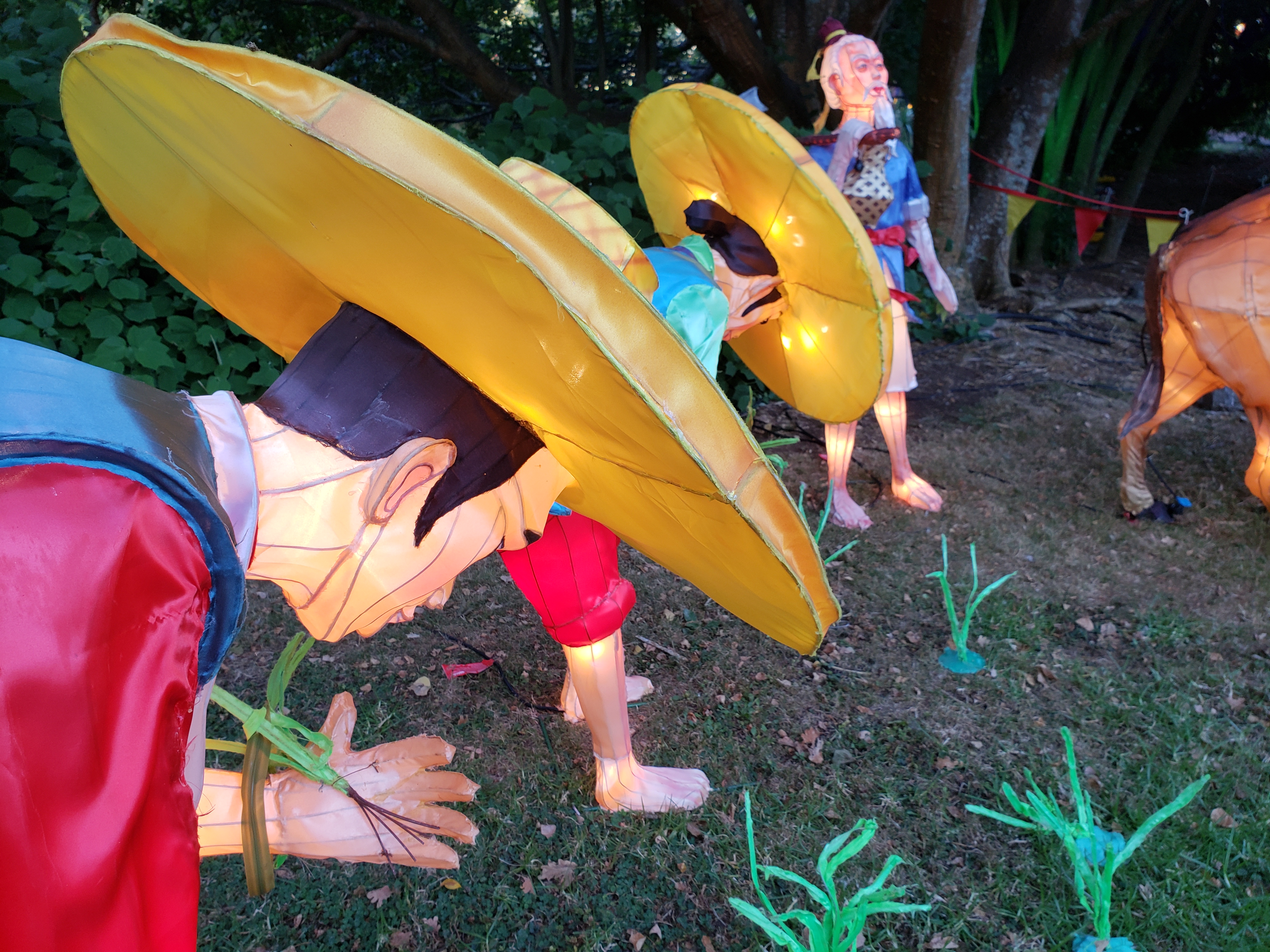
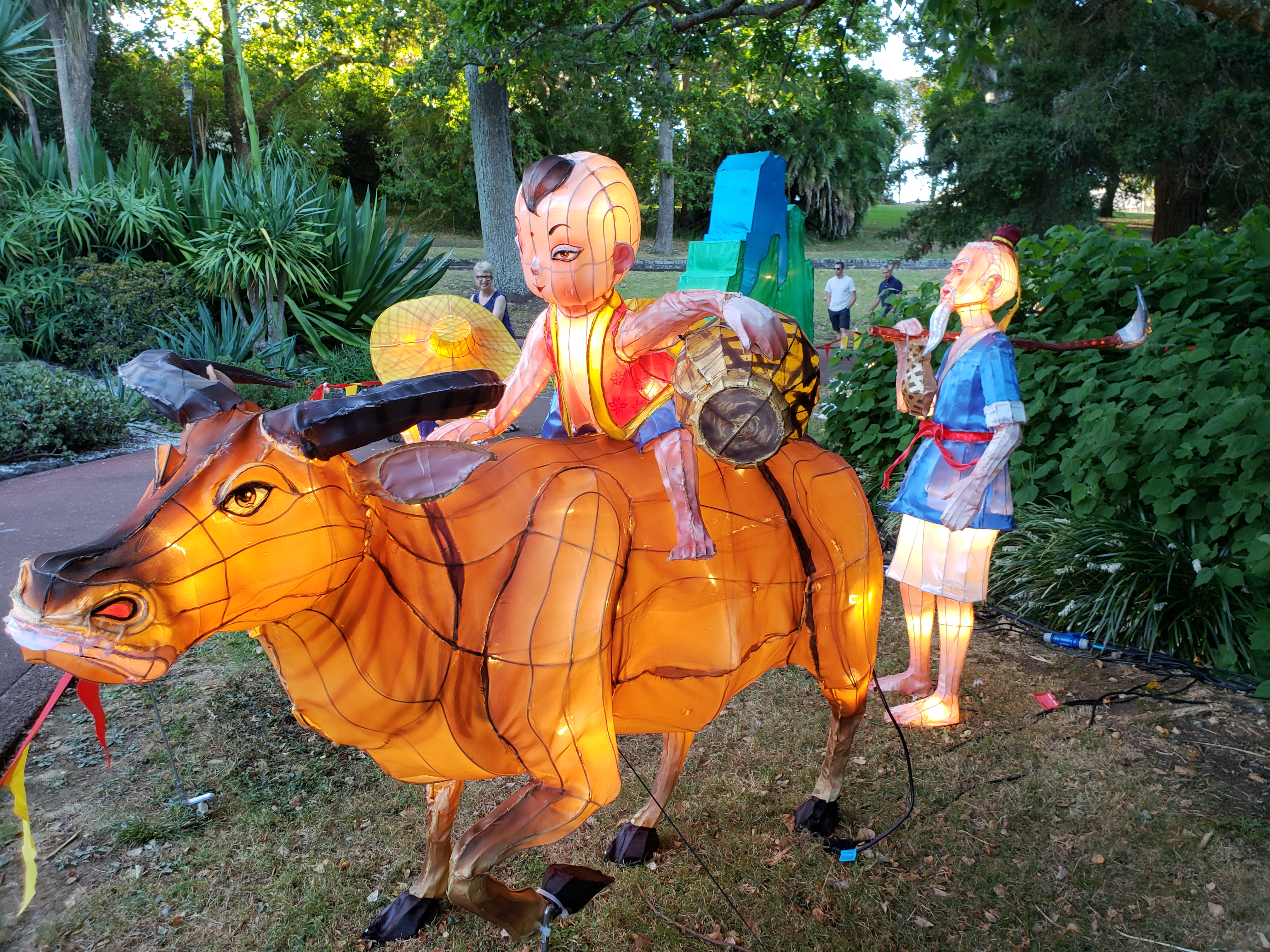
Finally, a few more wonderful lanterns I didn’t want to leave out. I hope you are as impressed as I was with the artistic quality of these Chinese lanterns. Planting rice, with the small boy on the water buffalo reminded me of my time in the Philippines on my first mission. (I even rode a water buffalo once for a few minutes.)
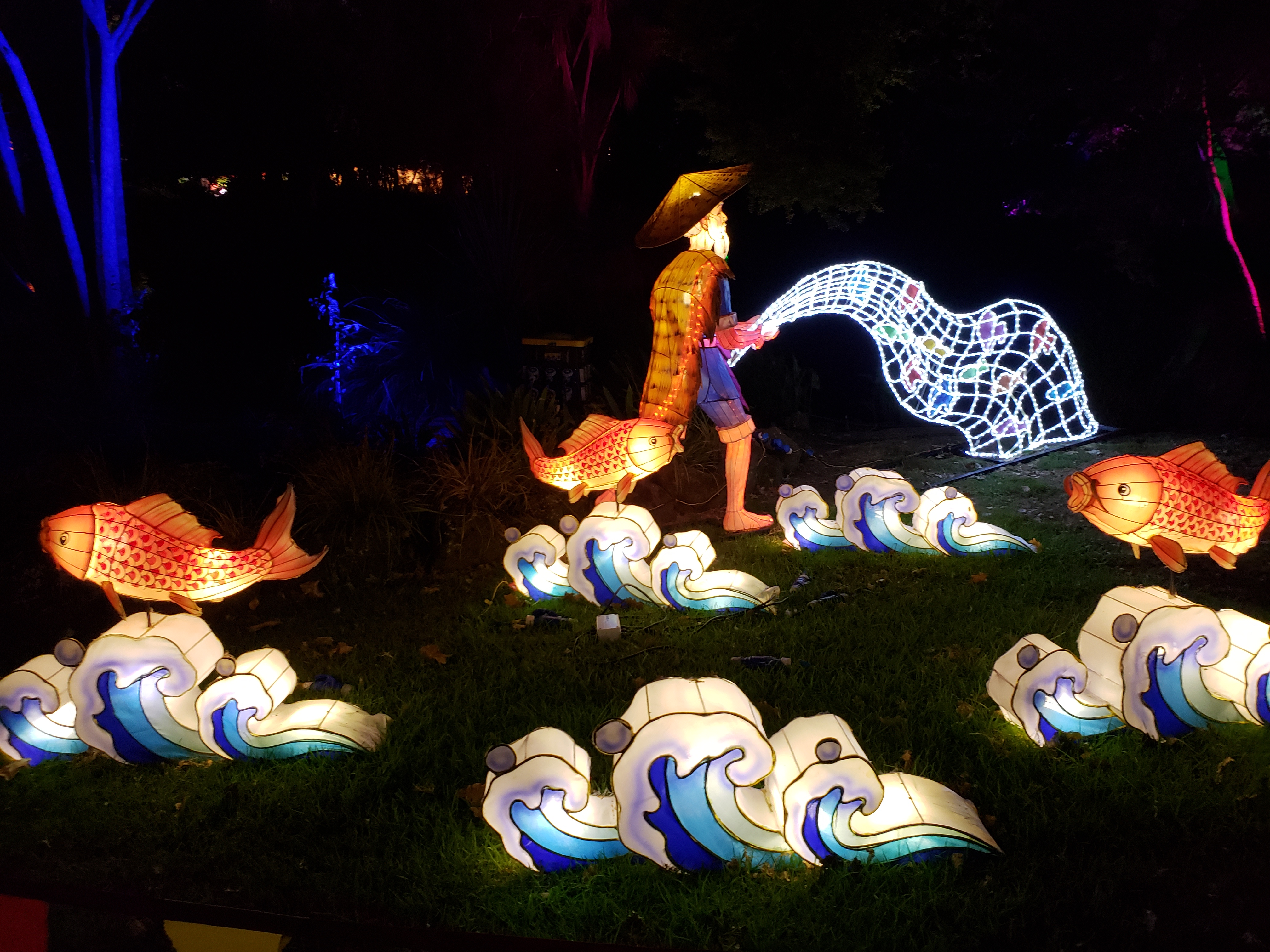
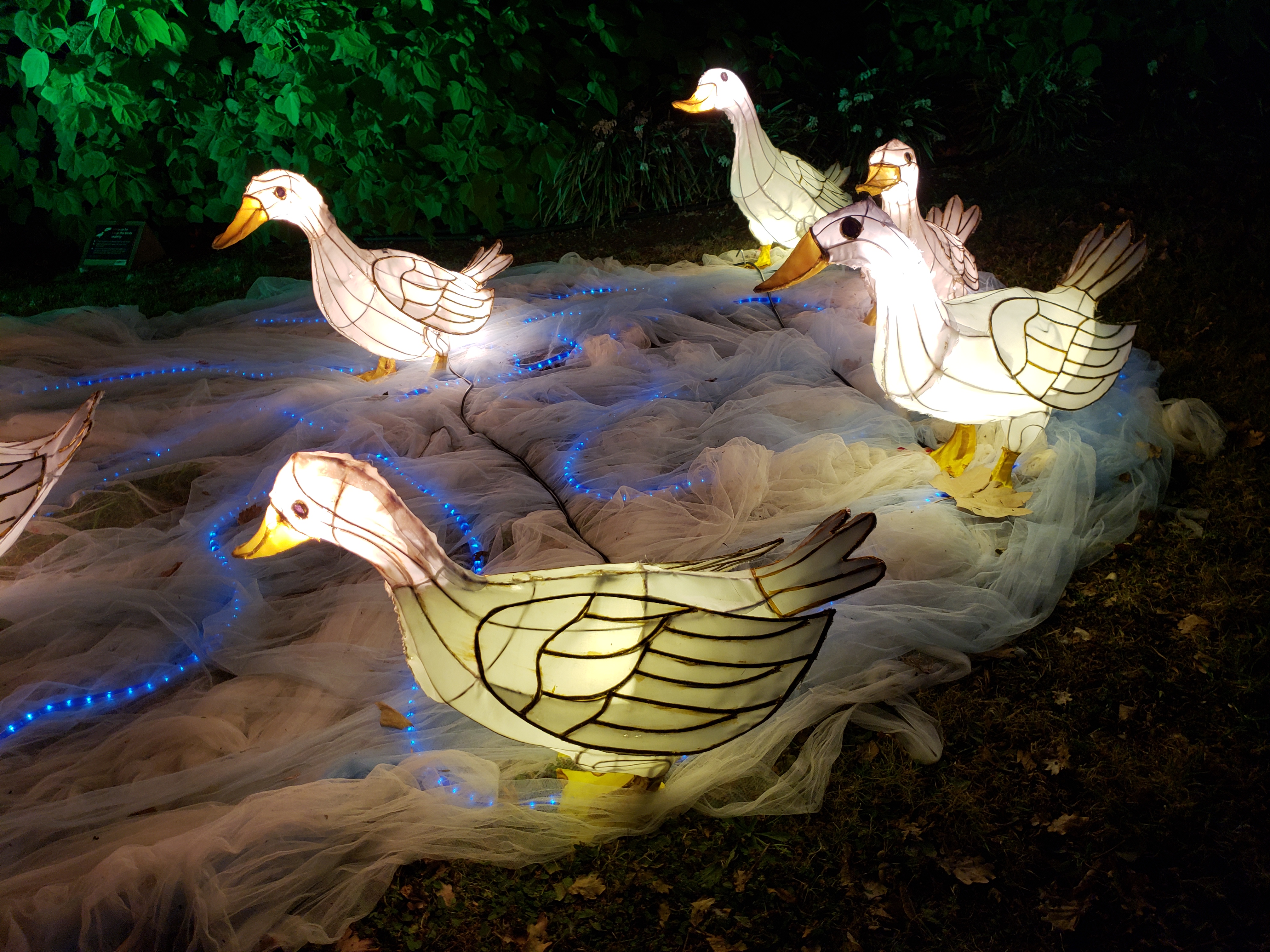
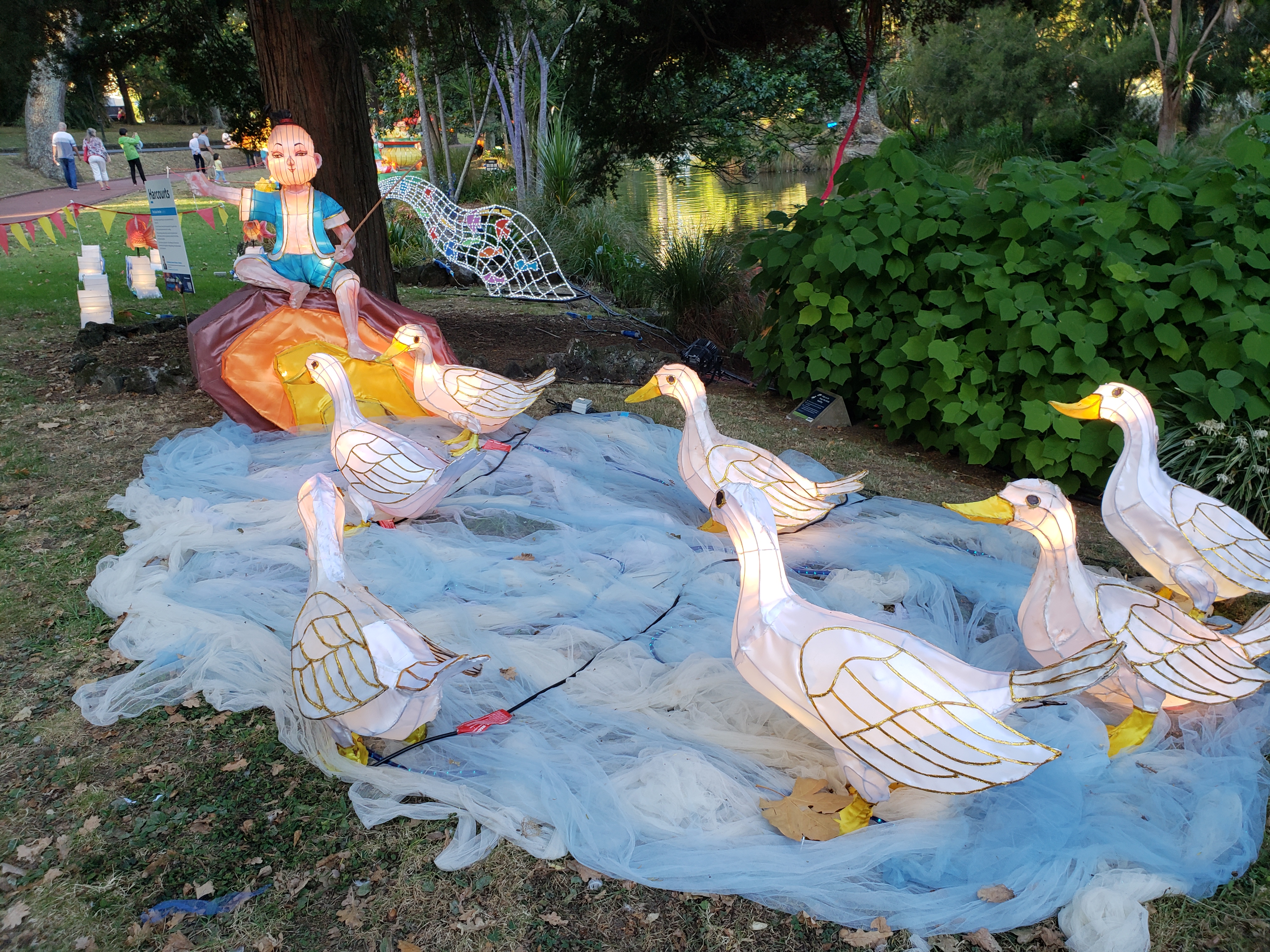
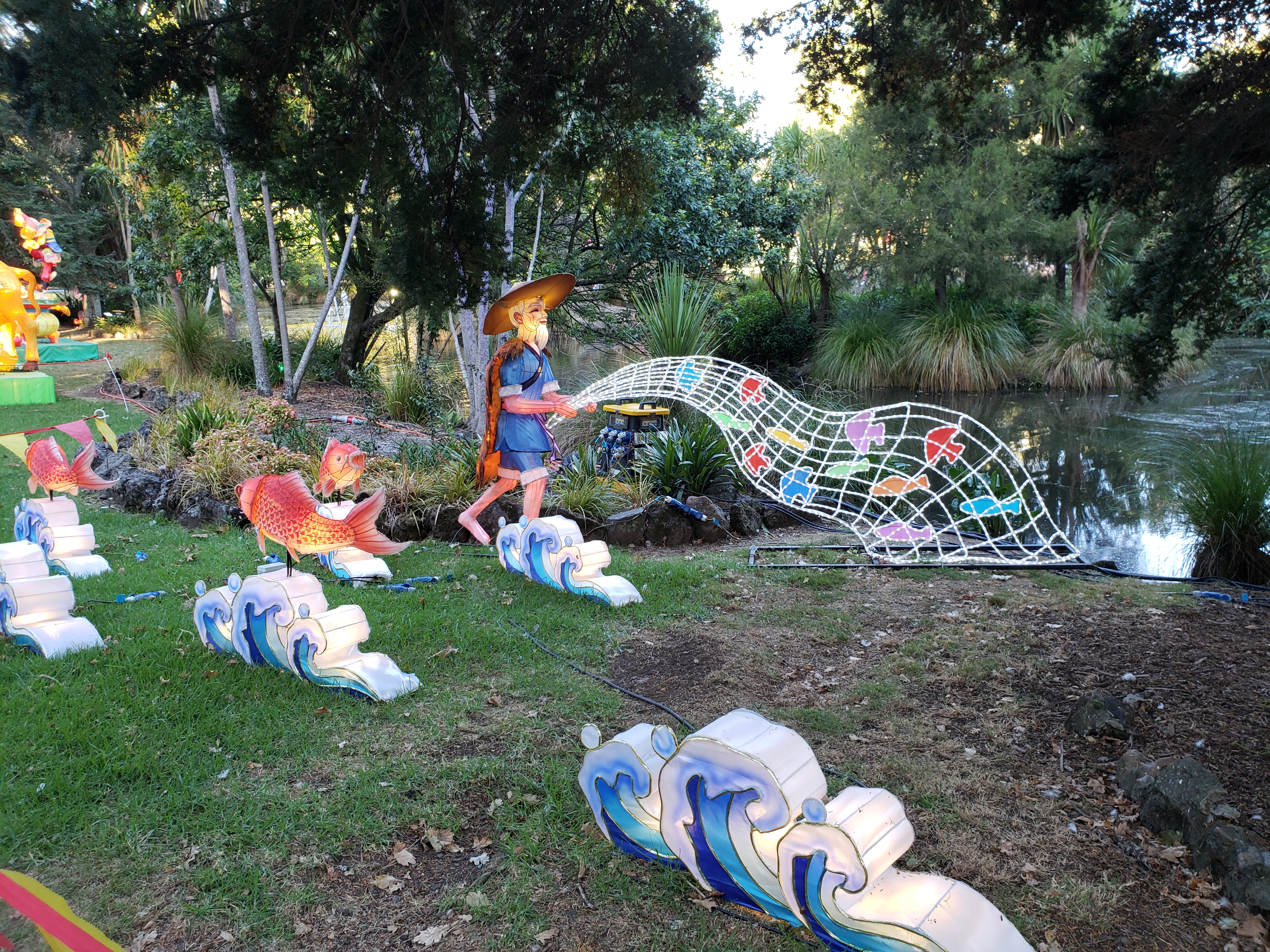
A duck herder and a fisherman in this set, both before and after dark. (Again, click to enlarge.)
My favorite, the swans!

The swans in front of Buddha

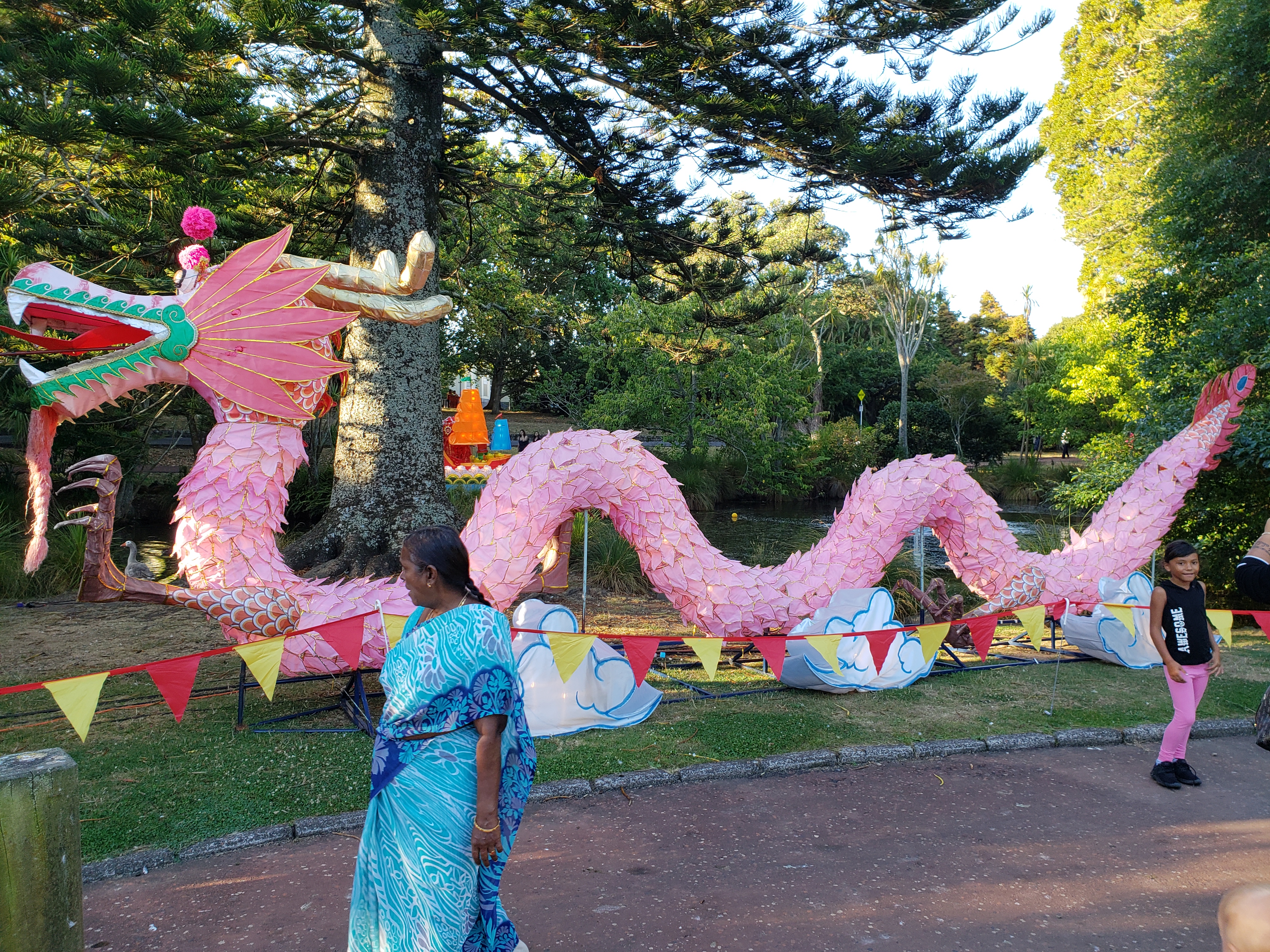
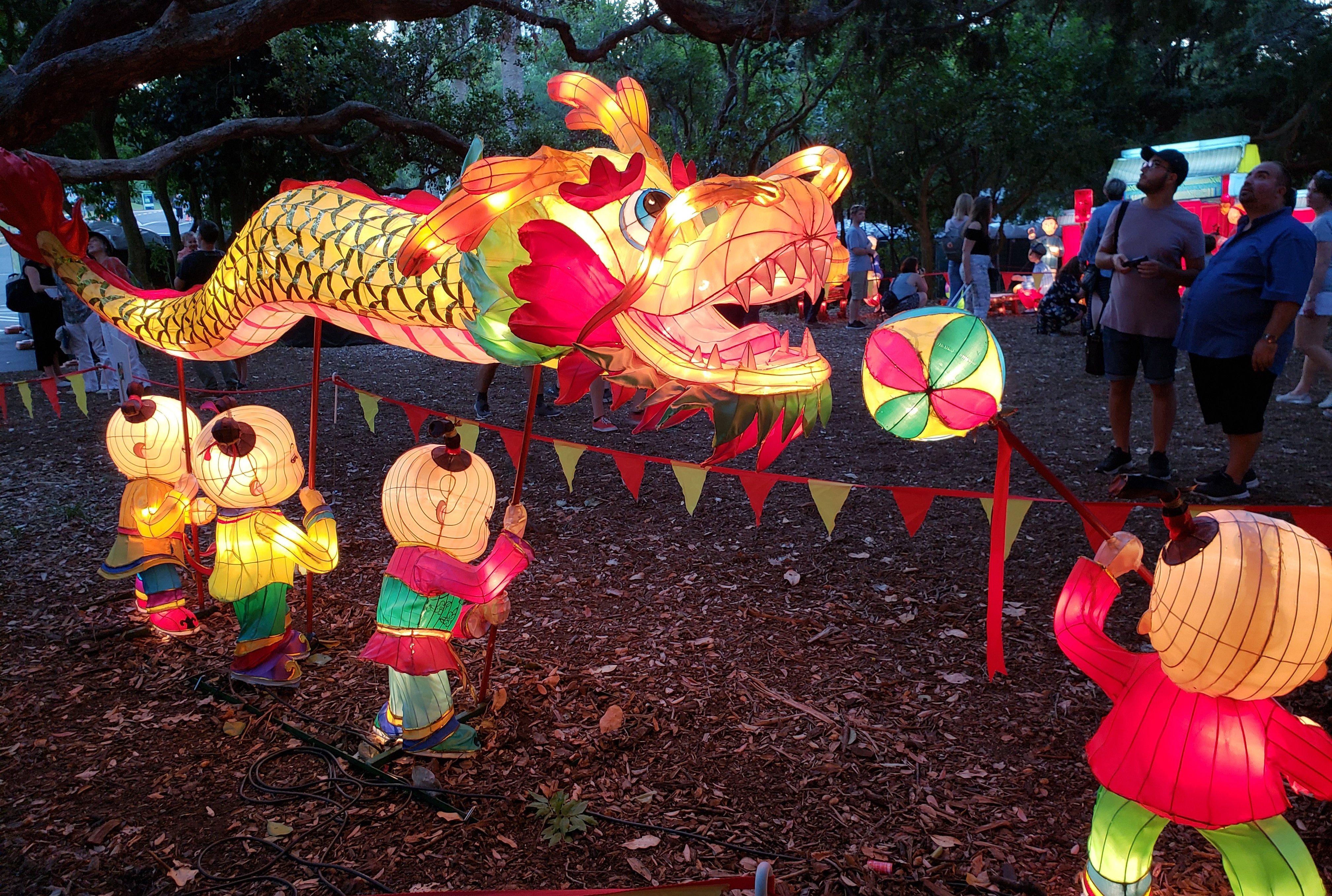
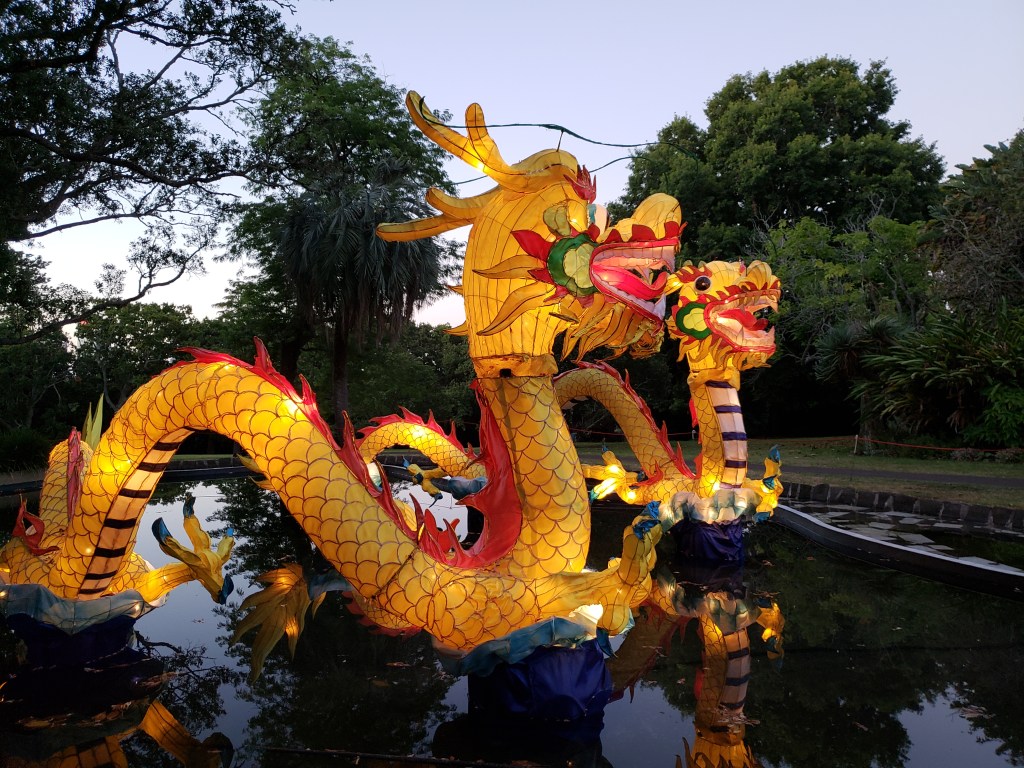
But what is a Chinese festival without the dragons? I took a video of these because they were moving, but somehow didn’t get the video transferred to my computer from my phone. Enjoy the still photo.
Happy Chinese New Year!

A return to Samoa after nearly 40 years

The last week of January found me heading to Samoa after many, many years. You can suppose that I was excited to be returning.

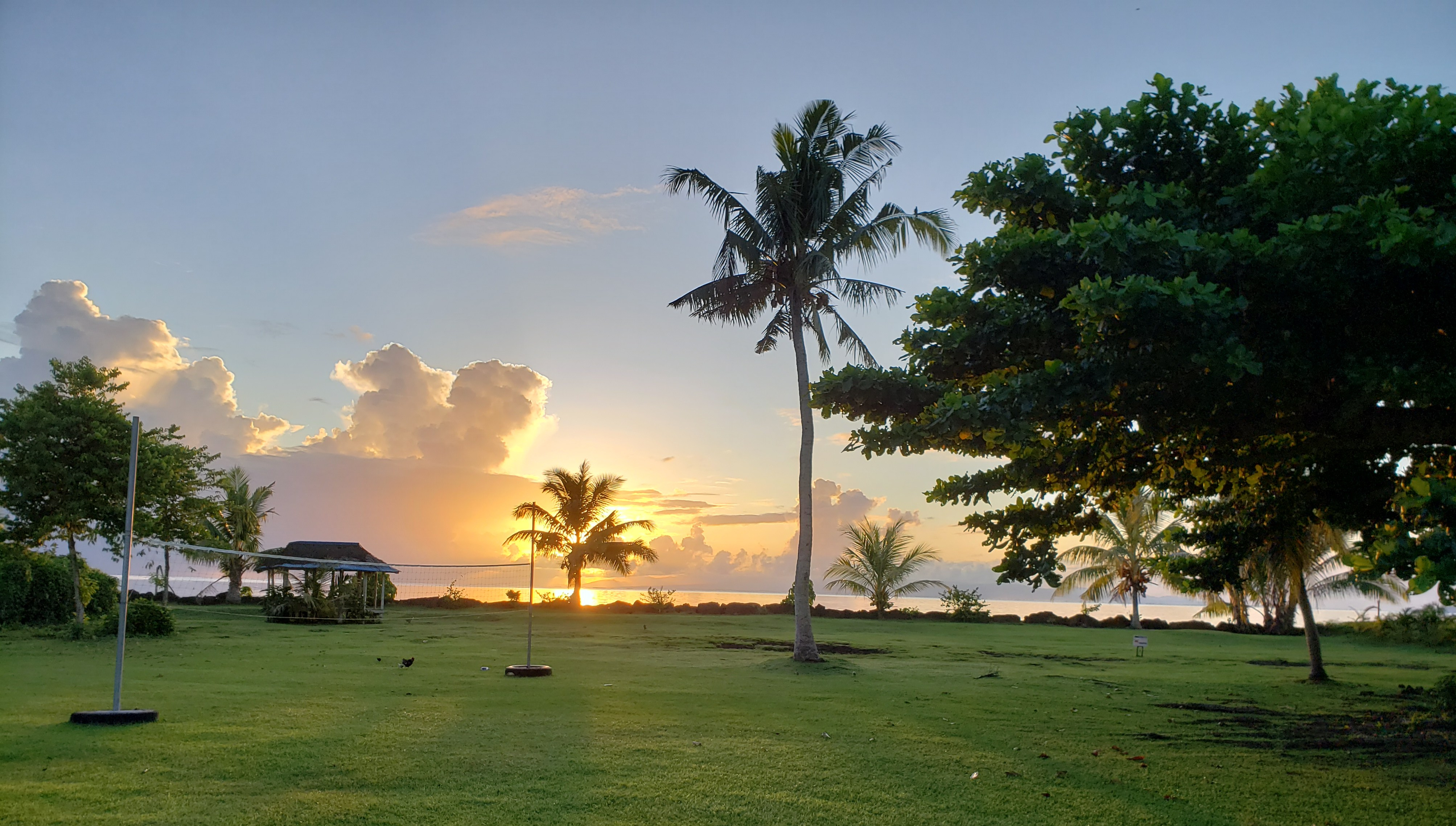
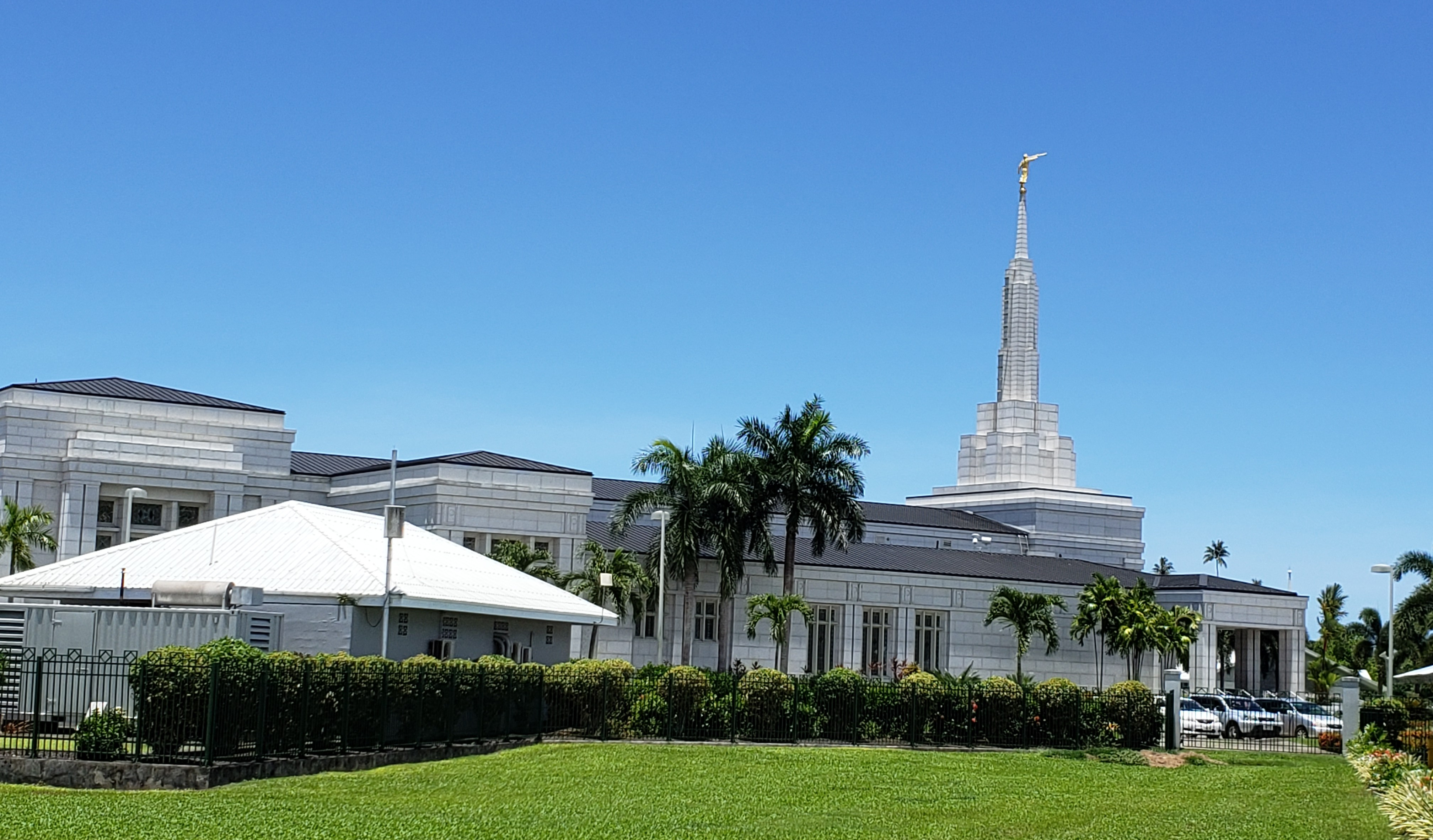
Samoa was lovely and beautiful, if a bit hot. If you don’t think so, then look at these photos. After the view of the temple from the grounds of the Church School at Pesega (above), I’ll start with a photo of a sunrise one morning. We were staying at a small resort near the school called the Savai’ian (on the island of Savai’i).

I suppose I should try for some chronology. We arrived Sunday evening and spent Monday at Pesega Middle School teachers pre-service meetings. Pesega is located in Apia on Upolu. For some reason, I didn’t get my camera out there to take any photos. The teachers and school leaders had some good discussions of test data and other current needs in the school. I did some training on the new resources that were coming soon (perhaps they are sitting on the dock?). These are mostly books we have ordered for the students and teachers–English graded readers, dictionaries, and so forth.

Leaving port on Upolu, Samoa

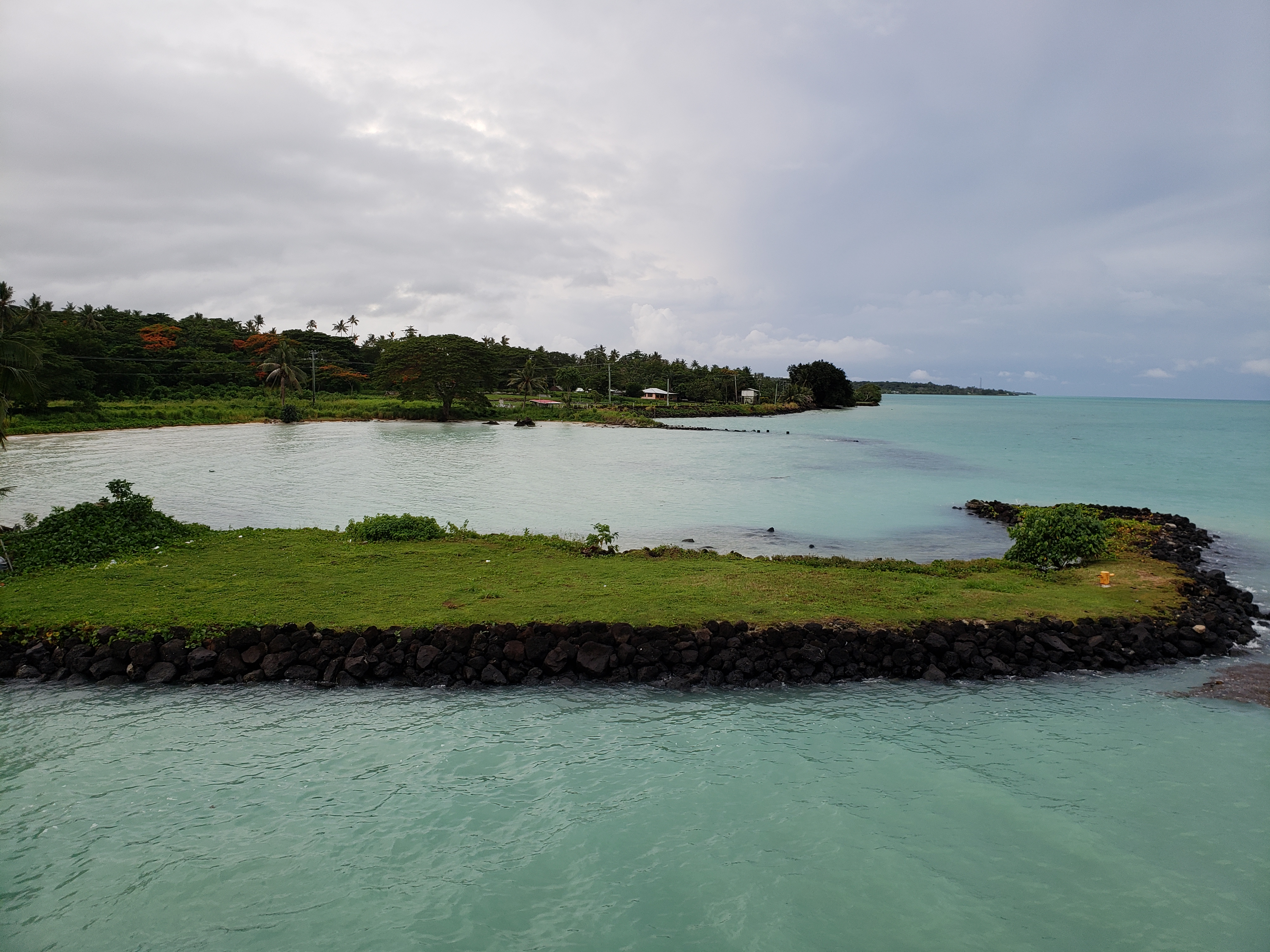
As we left of Upolu for Savai’i on Tuesday morning, I took this photo on the left. The color of the ocean was stunning.

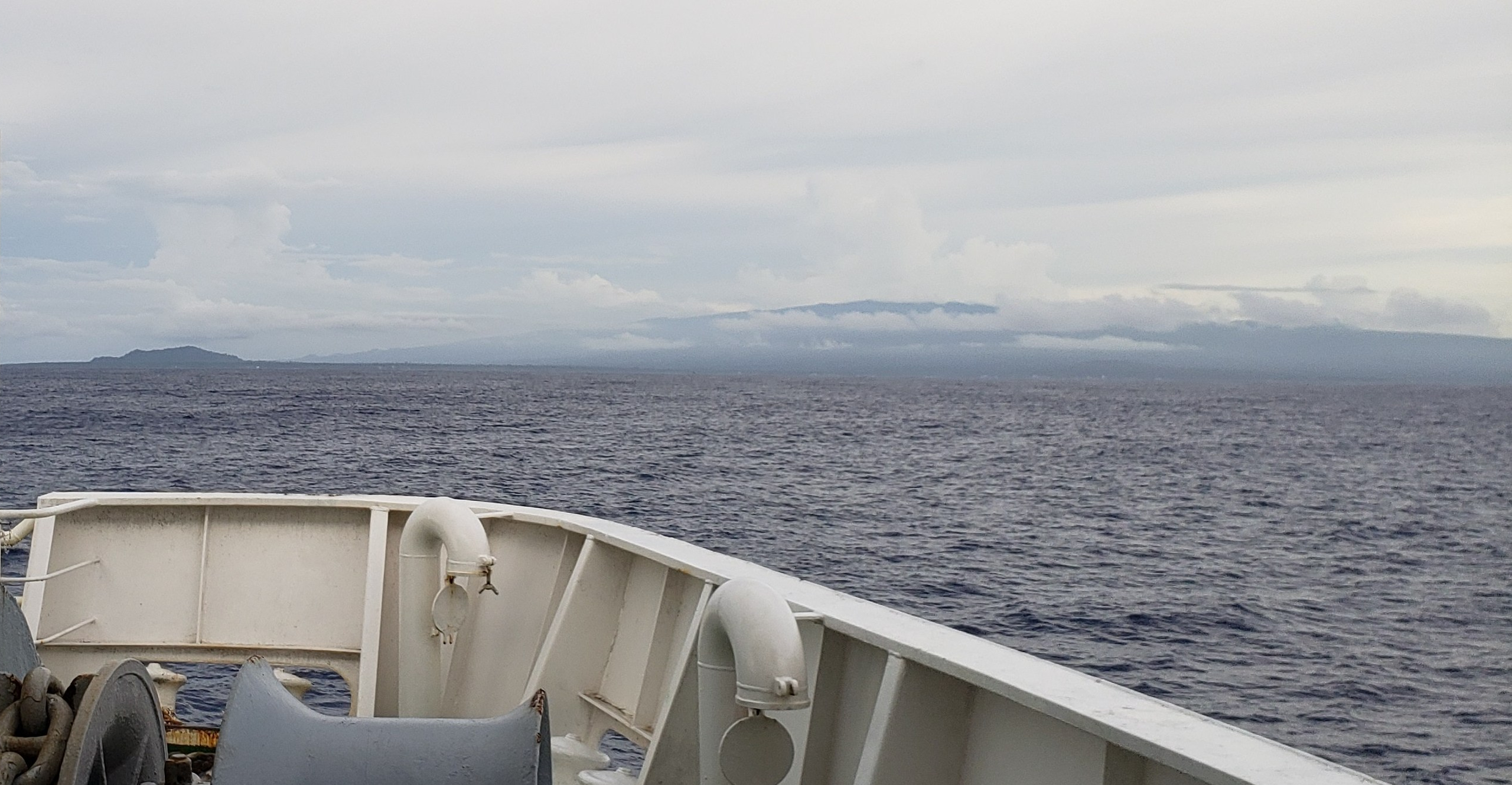
Savai’i is the land mass on the right covered in some clouds.

In the the next photo, the island of Savai’i can be seen on the horizon. It is the land on the horizon, mostly covered with clouds. The ferry crossing between Upolu and Savai’i took about an hour.

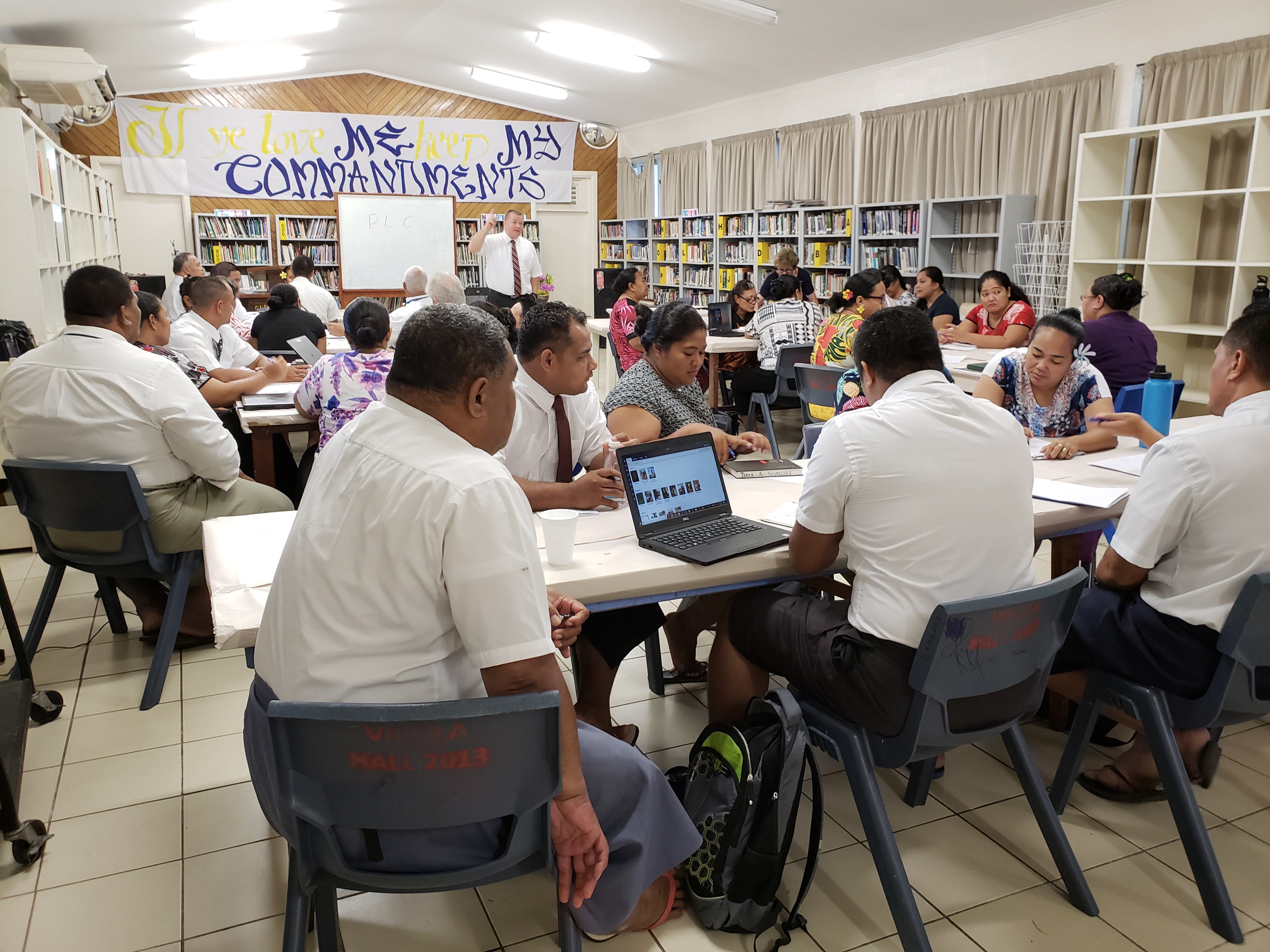
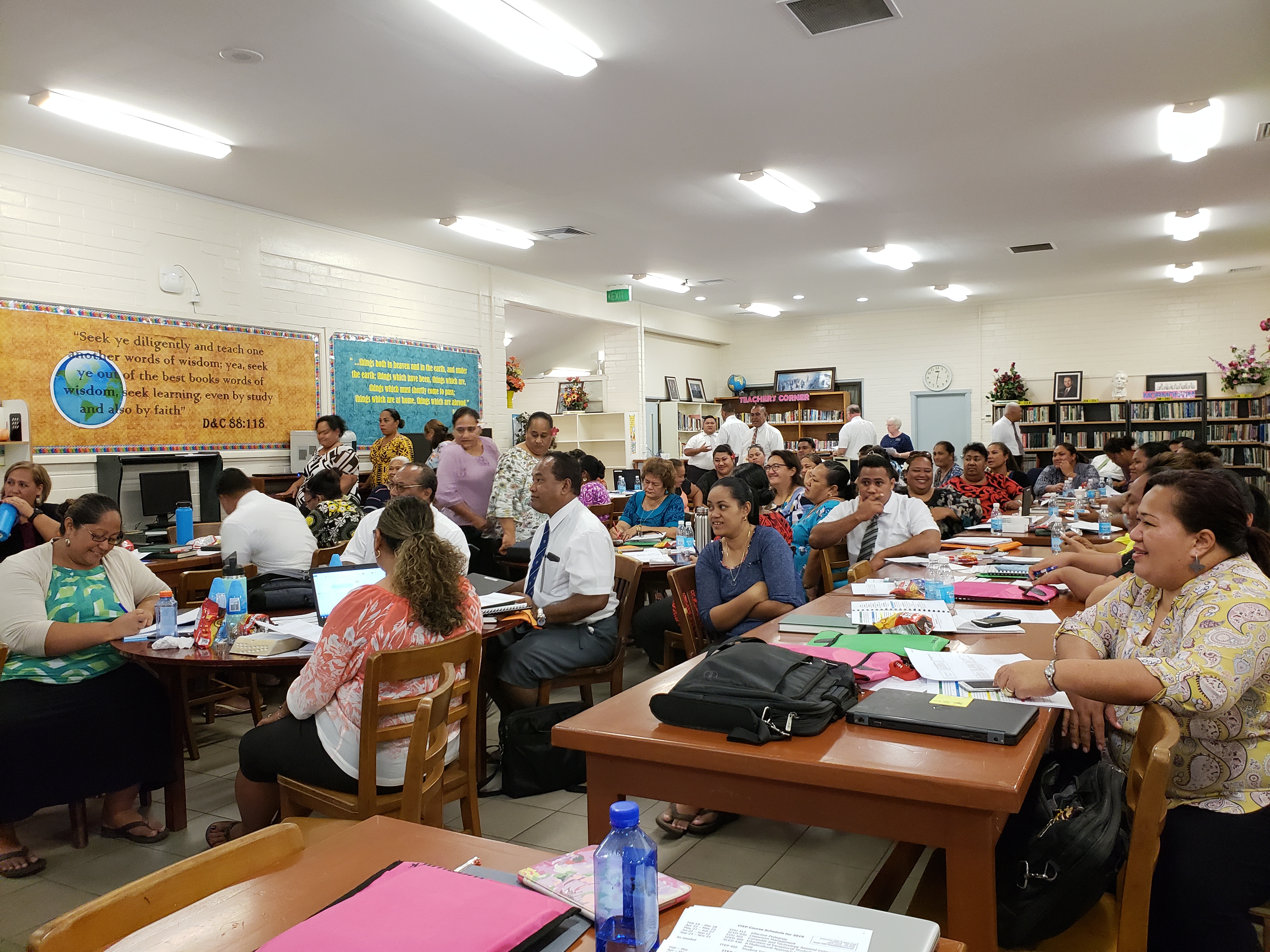
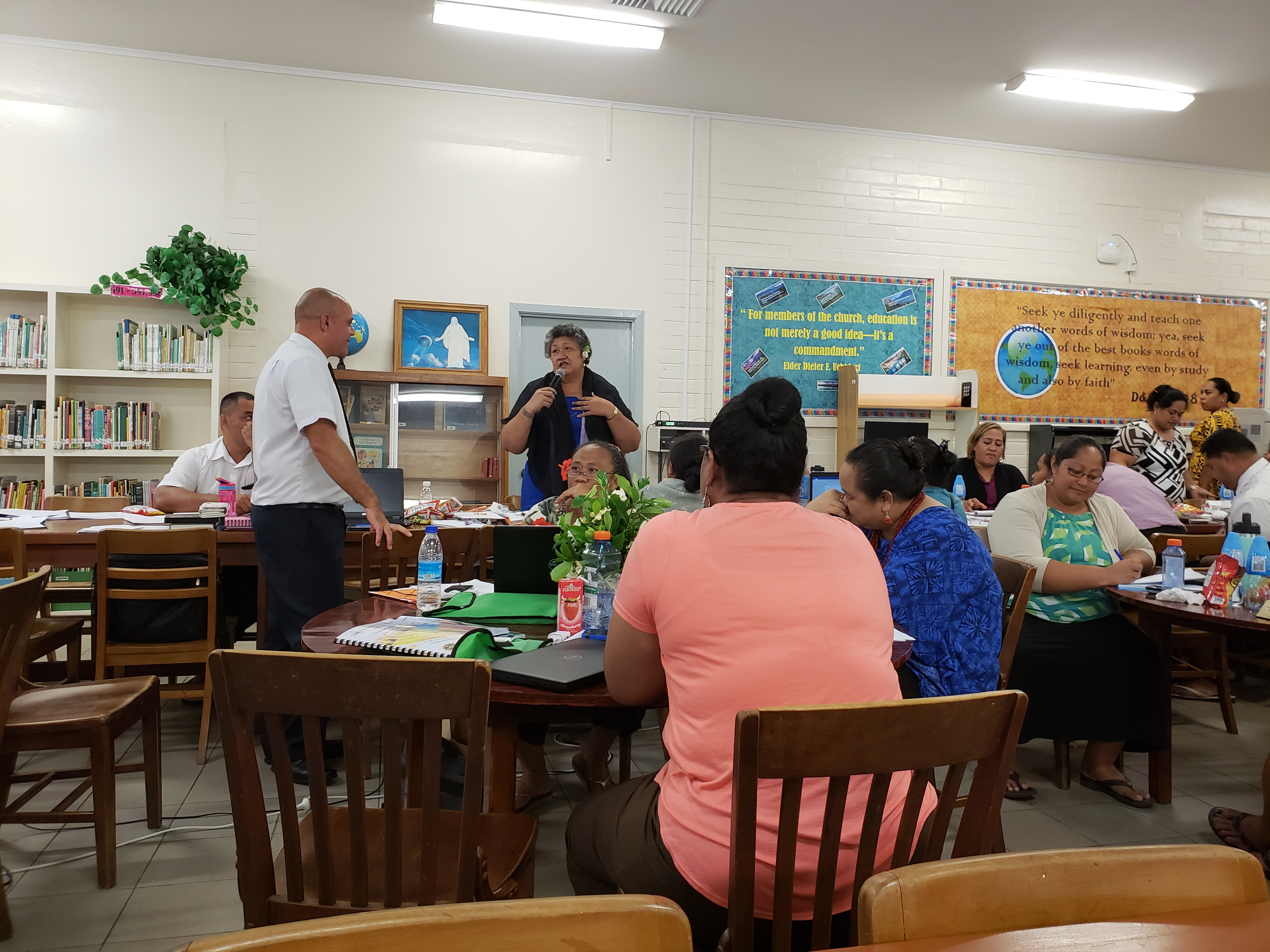
As part of the trip to Samoa, the team from the Pacific Area Office both participated in and led training sessions. Here are some photos of the teachers at Vaiola at one of their in-service gatherings. The room is the school library.

Teachers discussing together in academic teams at the in-service training at Vaiola

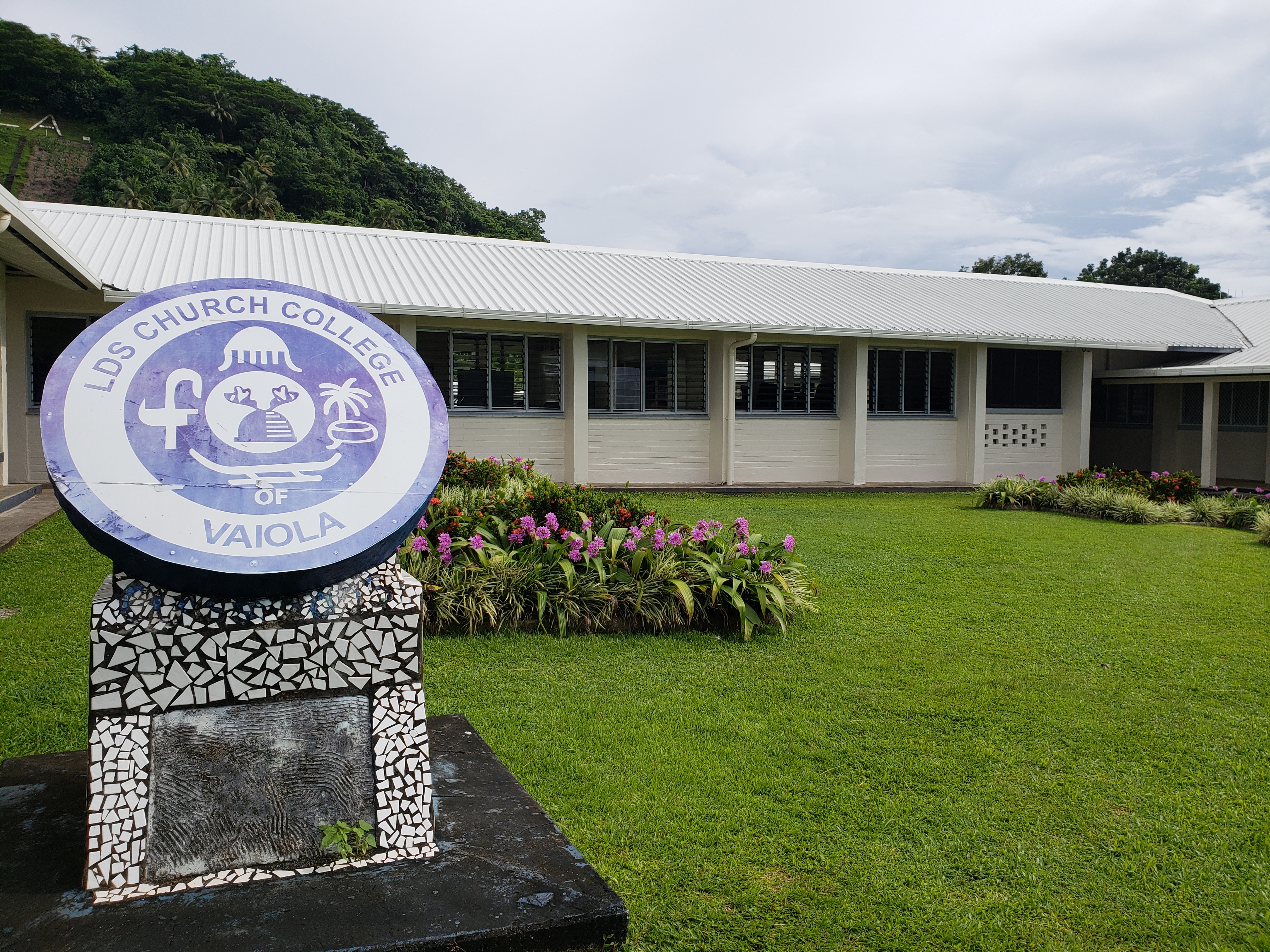
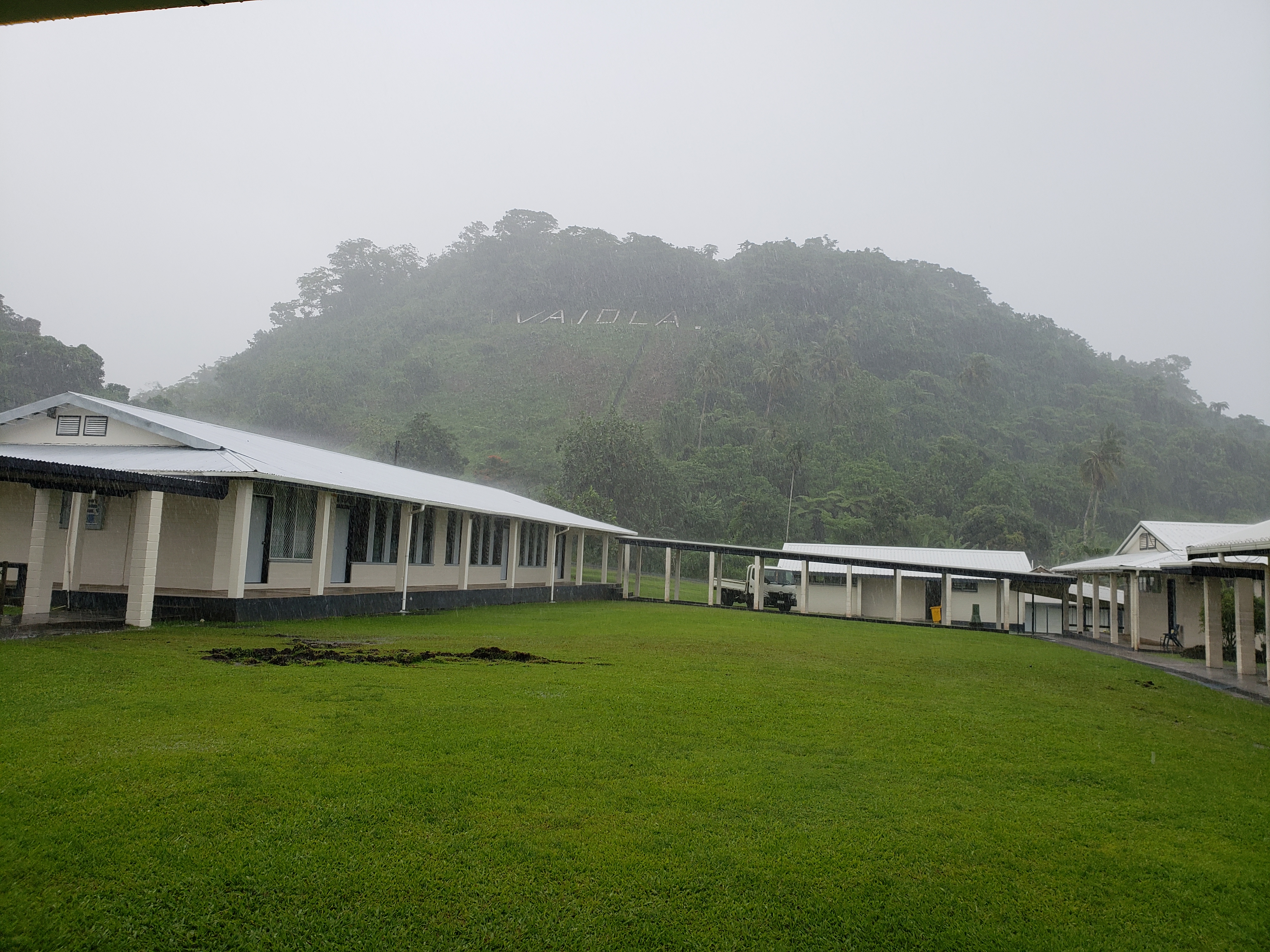
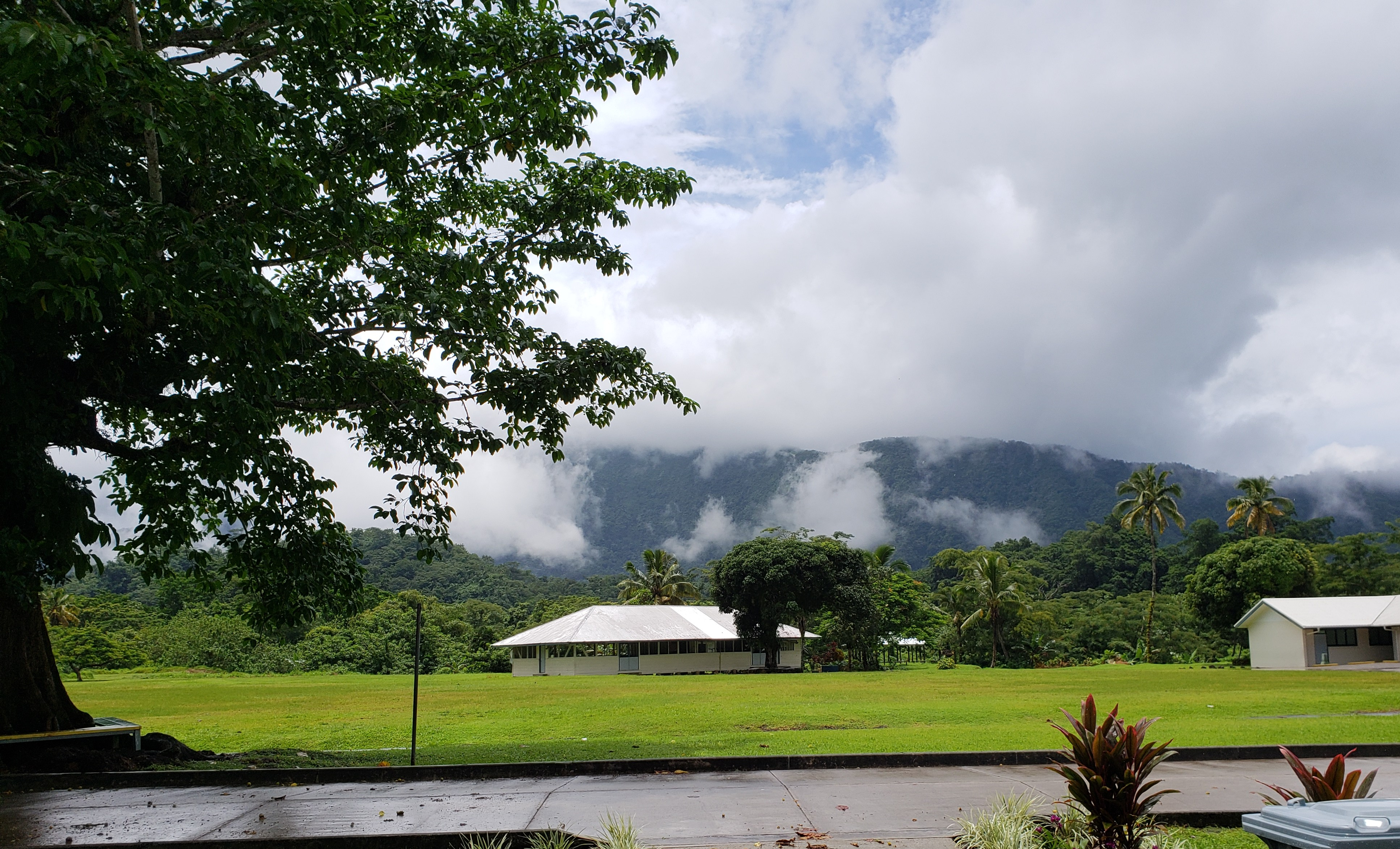
Above are some photos of the outside of the Church Schools in Vaiola on the island of Savai’i. In the photo on the right, the hill behind the buildings has a nice sign with the name Vaiola spelled out. There are over 100 stairs up to the sign and I have heard the view from up there is magnificent. We all planned to hike up there before we left, but as you might be able to tell from the photo, it was raining very, very hard when we got out of our training session. We didn’t climb the stairs!

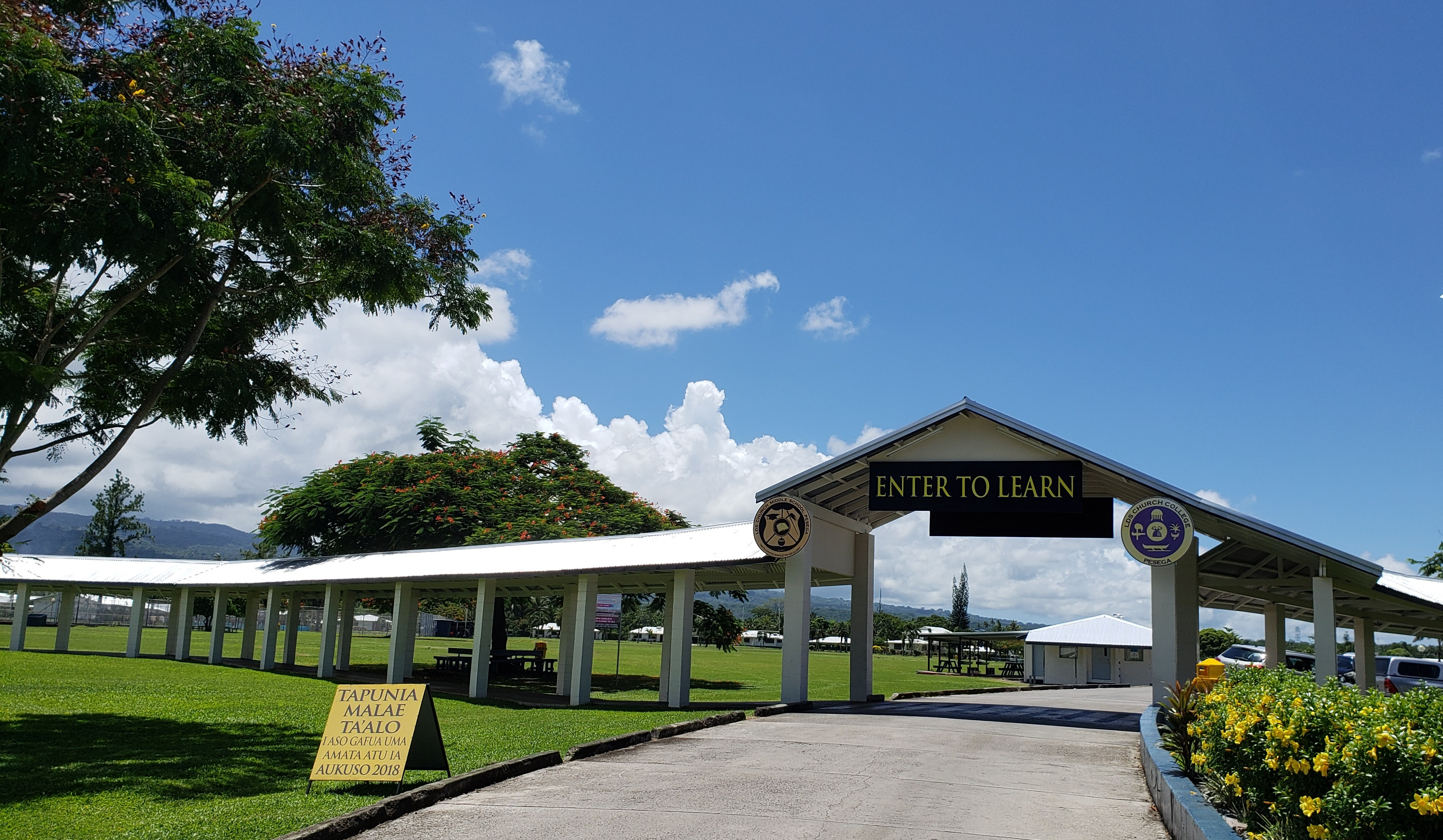
Pesega College with our teachers (below)

Above are some scenes from Pesega, the church schools near the temple in Apia. They have the typical “Enter to Learn, Go Forth to Serve” that is on many of the Church Schools, including the campuses of BYU. In the photo on the right, Jonathan Warwick is conducting some training. He is the employee over curriculum and instruction for the Church Schools whom I work with on a daily basis.

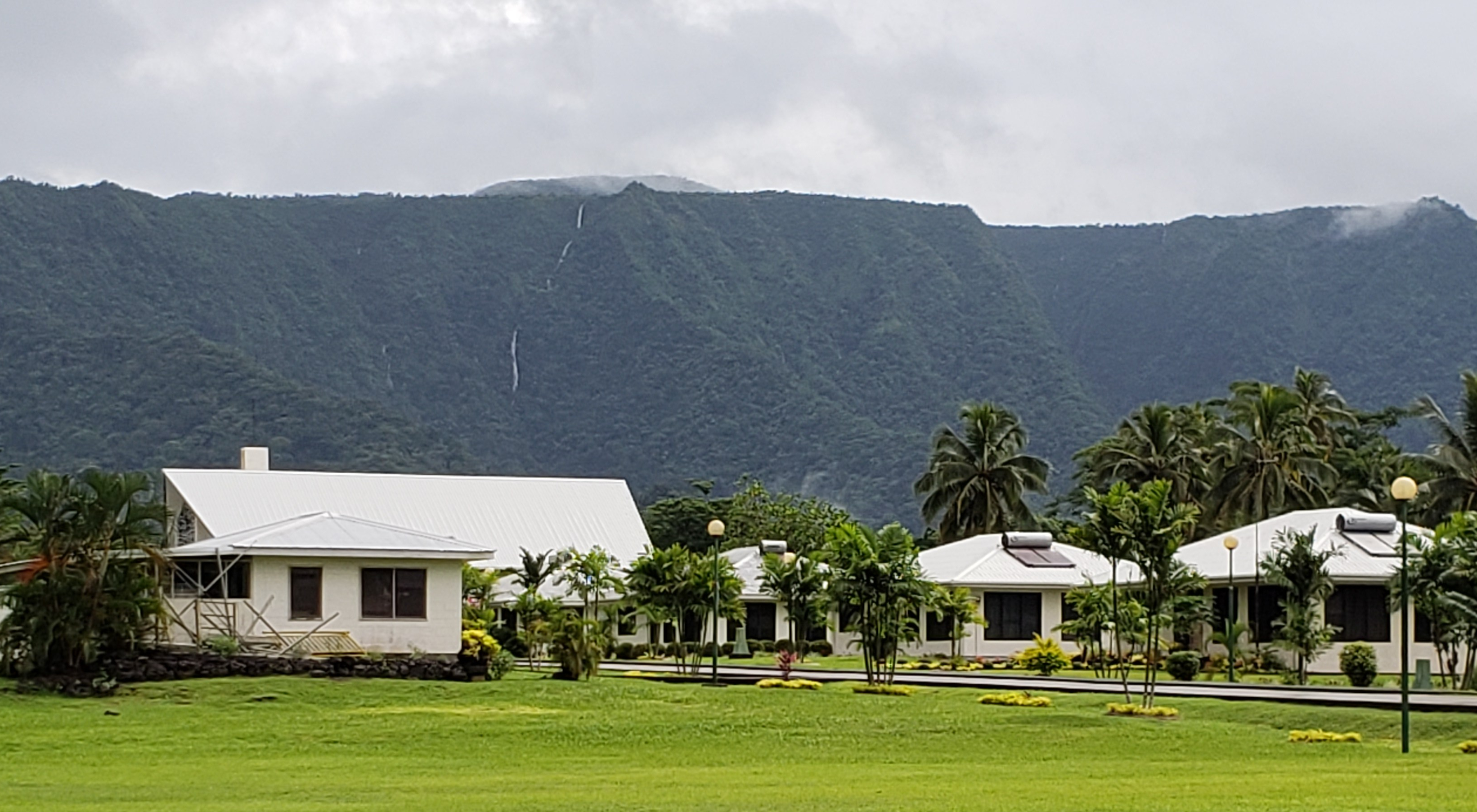
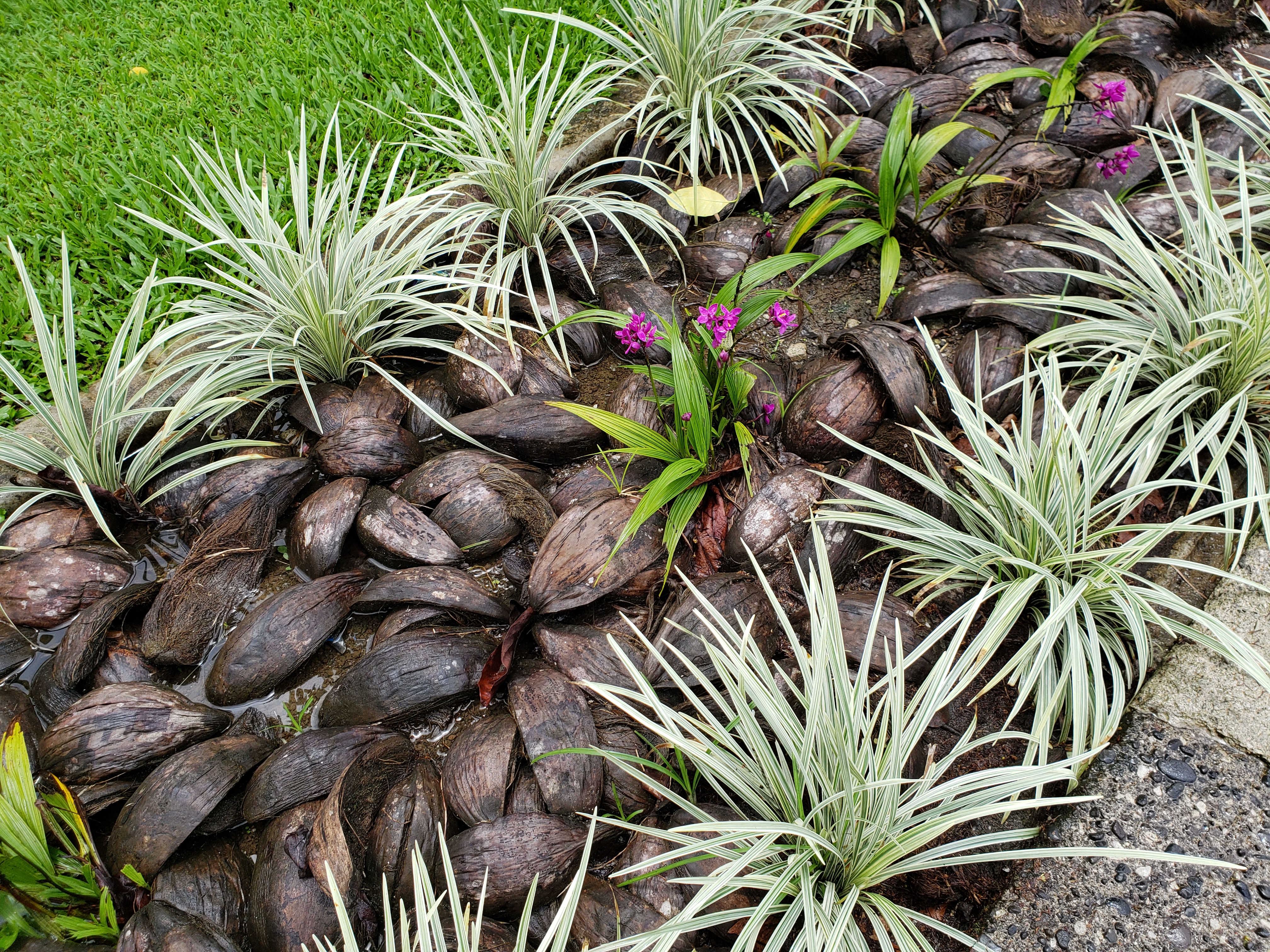
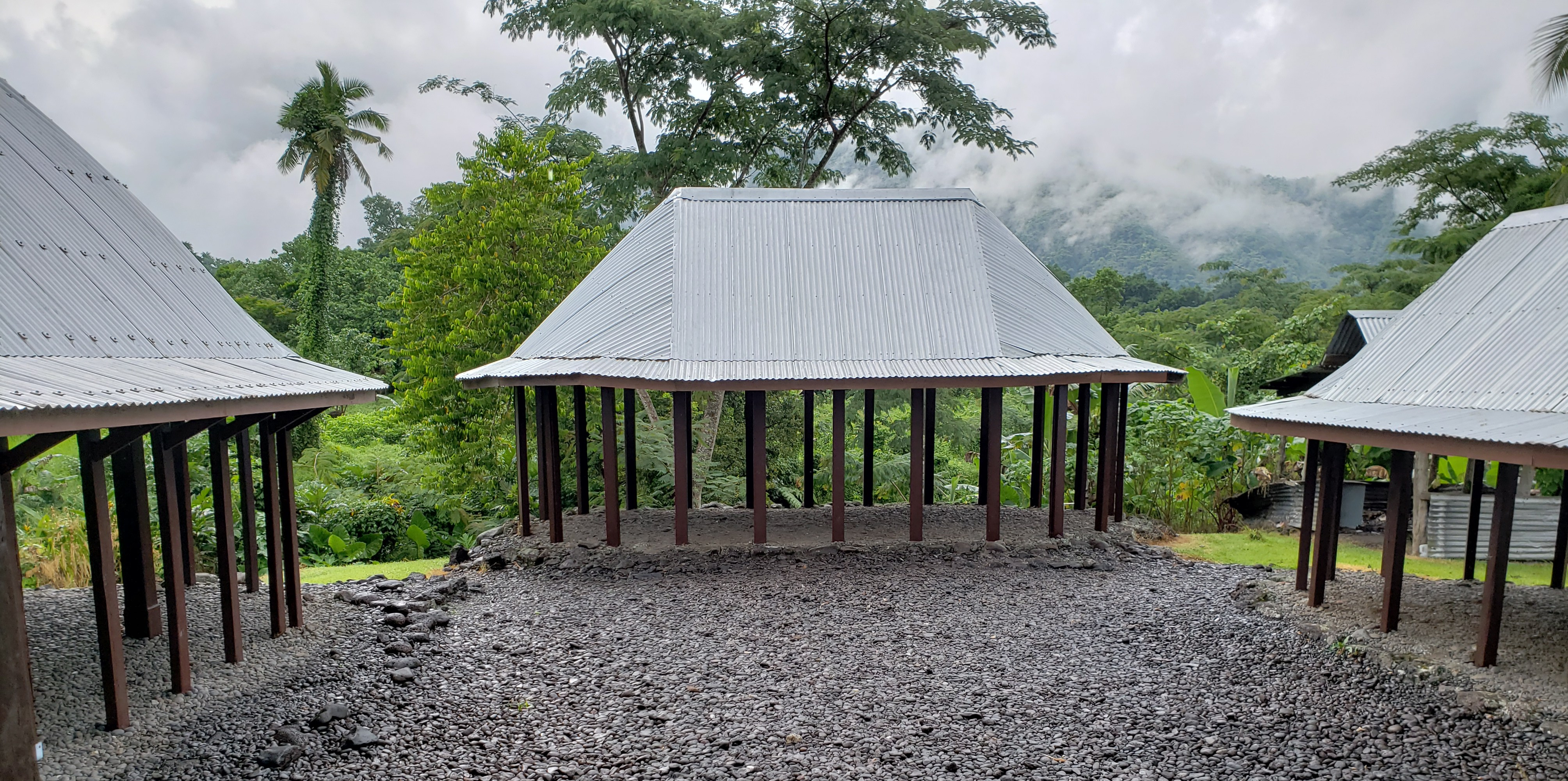
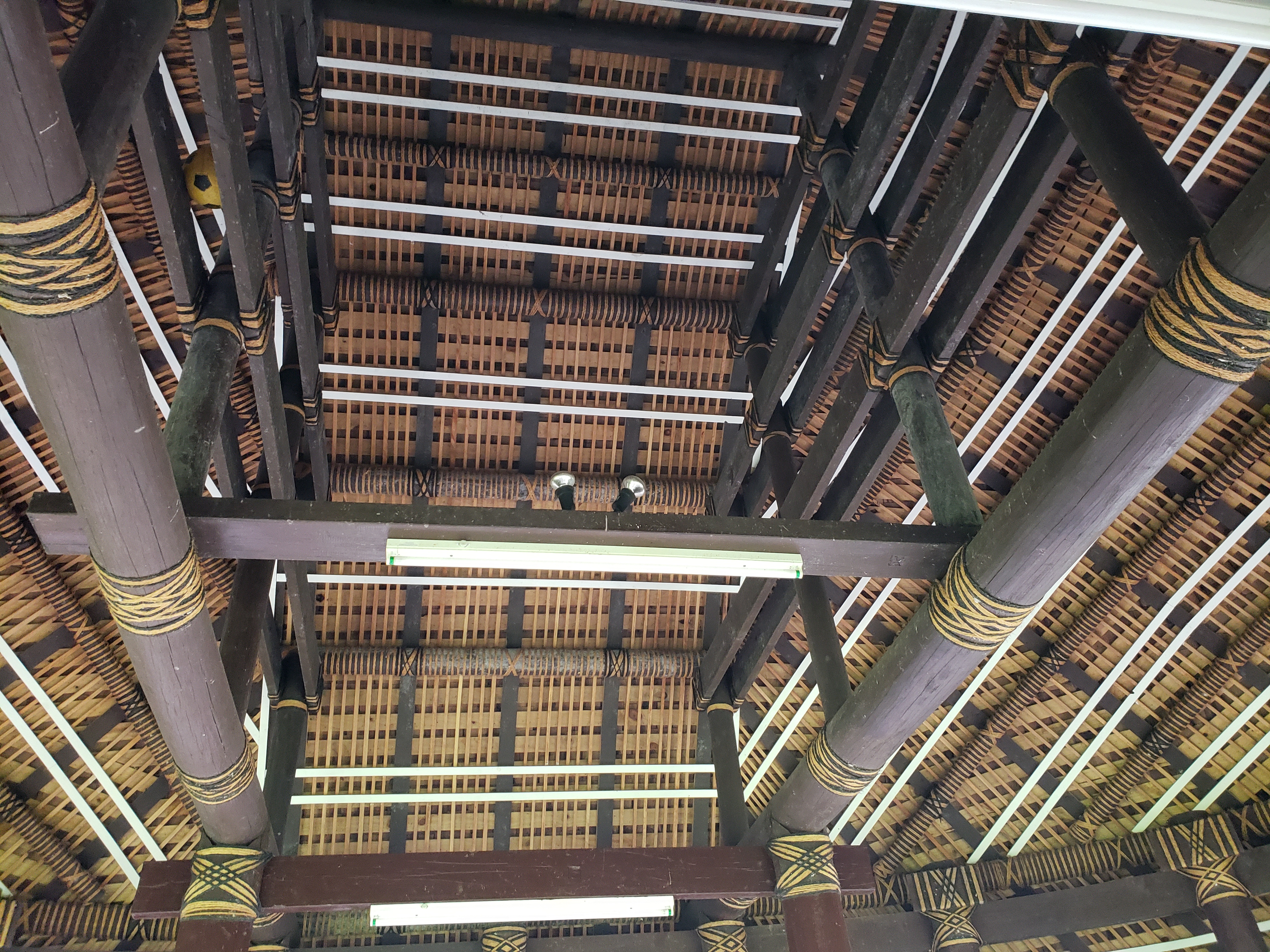
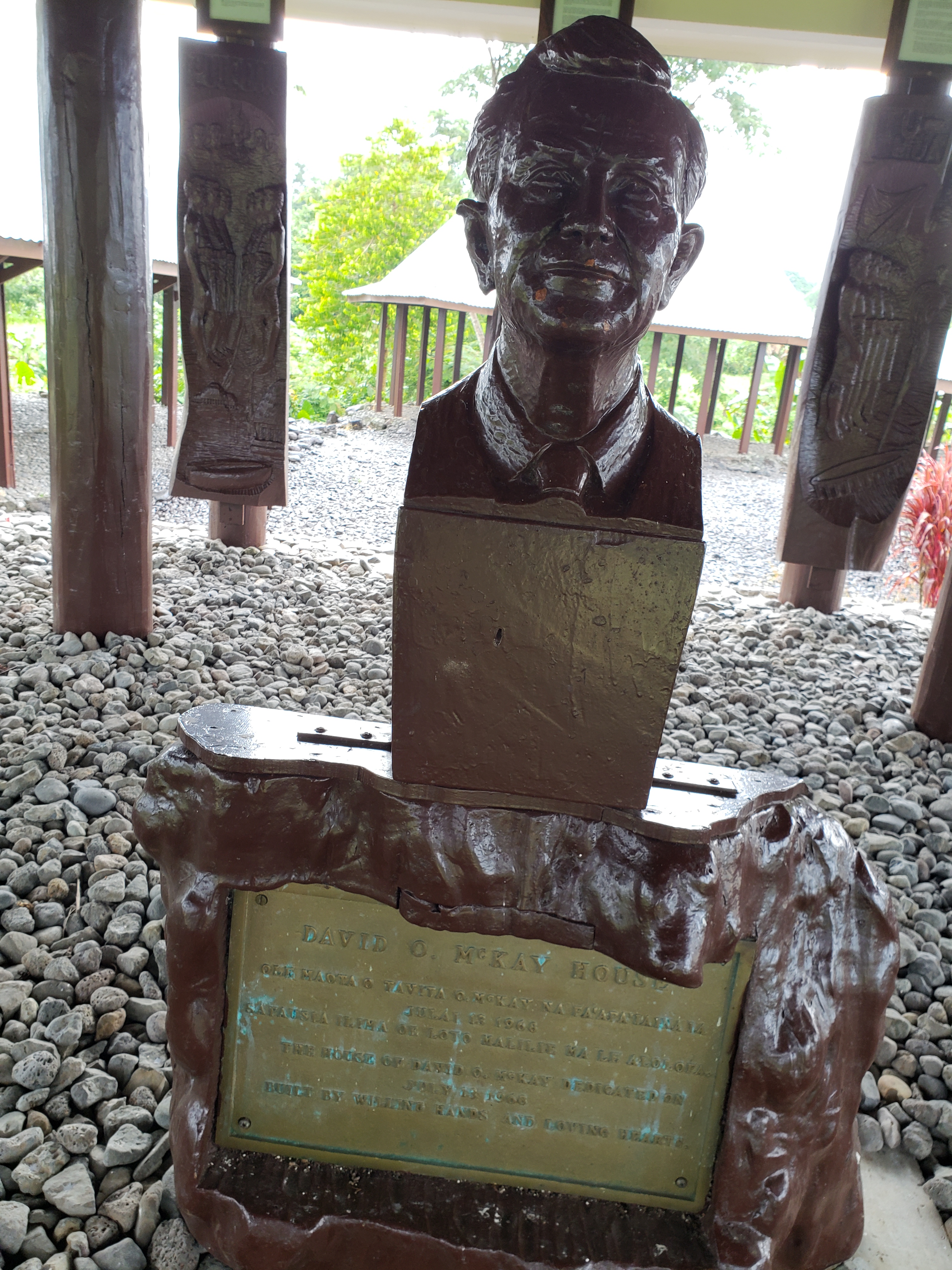
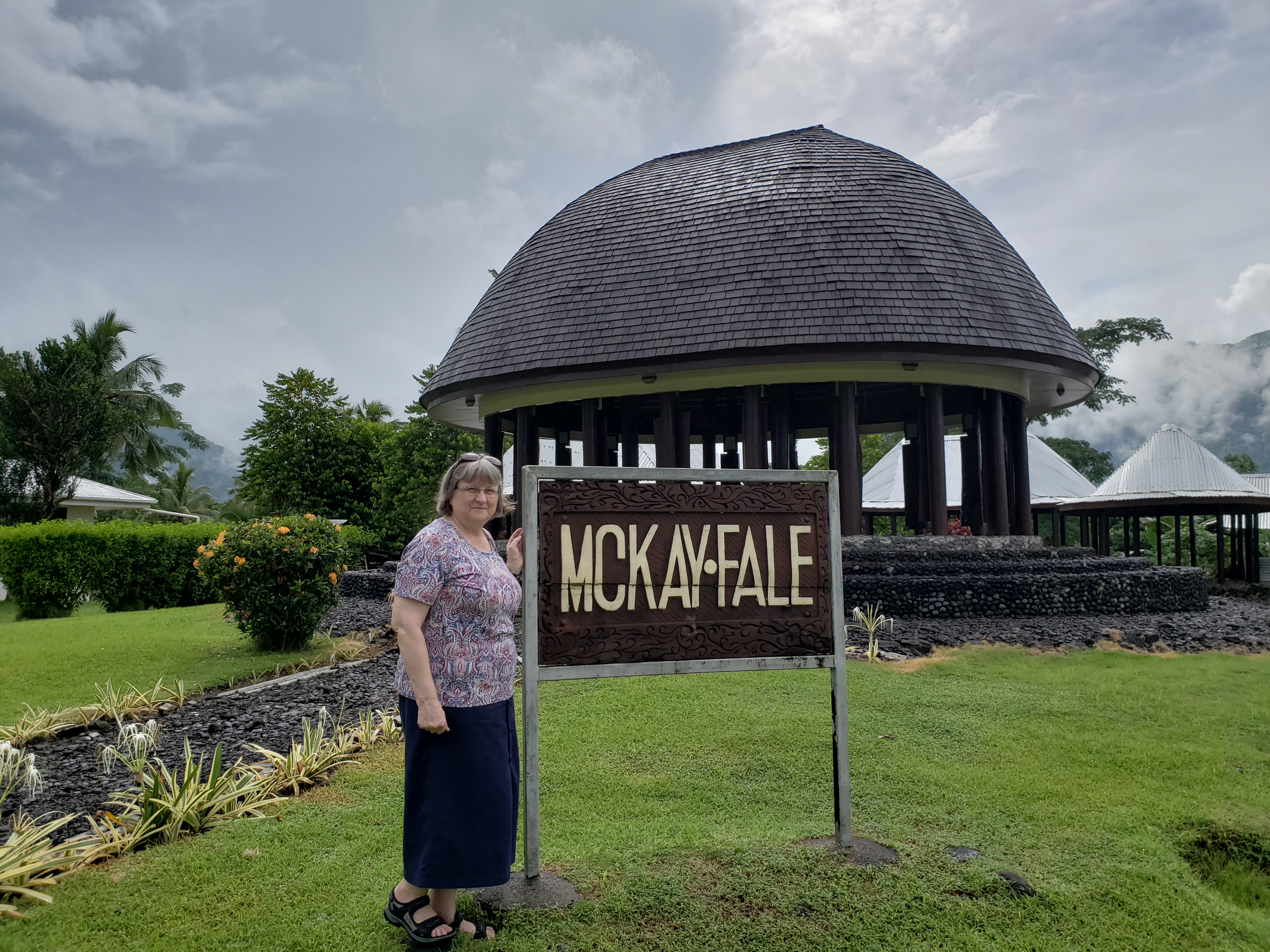
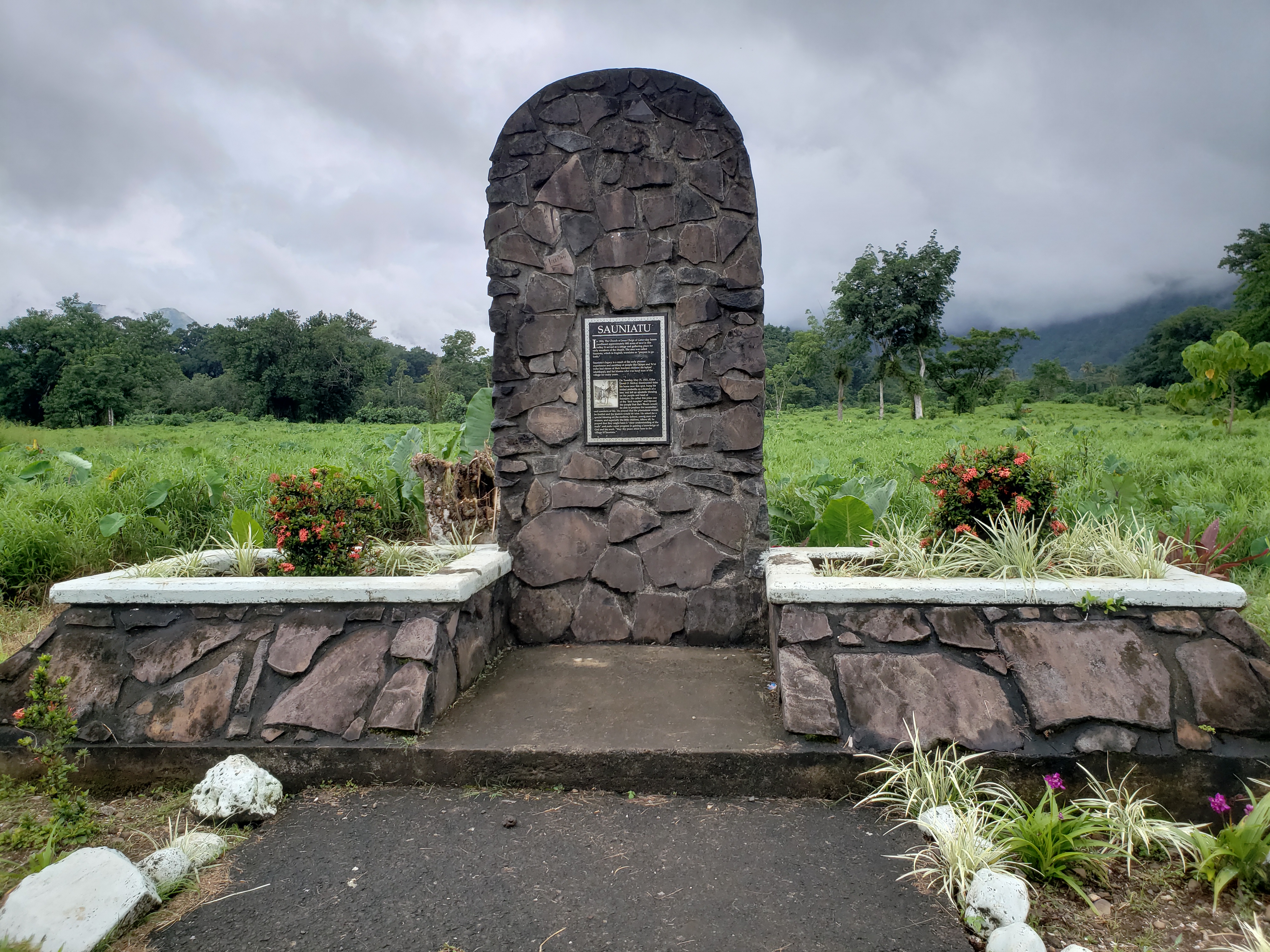
Finally, after hearing about another place in Samoa for many, many years, I made it there–to lovely Sauniatu. President McKay visited here many years ago (1921). He loved the place, called it one of the “first temples”, and blessed the people that lived there. As you can see, the place is beautiful, spectacularly so. Enjoy a few photos. It was hard to only chose a few. The first row are campus shots. Notice the waterfall down the cliff behind the buildings, which appeared after another hard rain. Also, notice how they have decorated the flower beds with coconut husks.
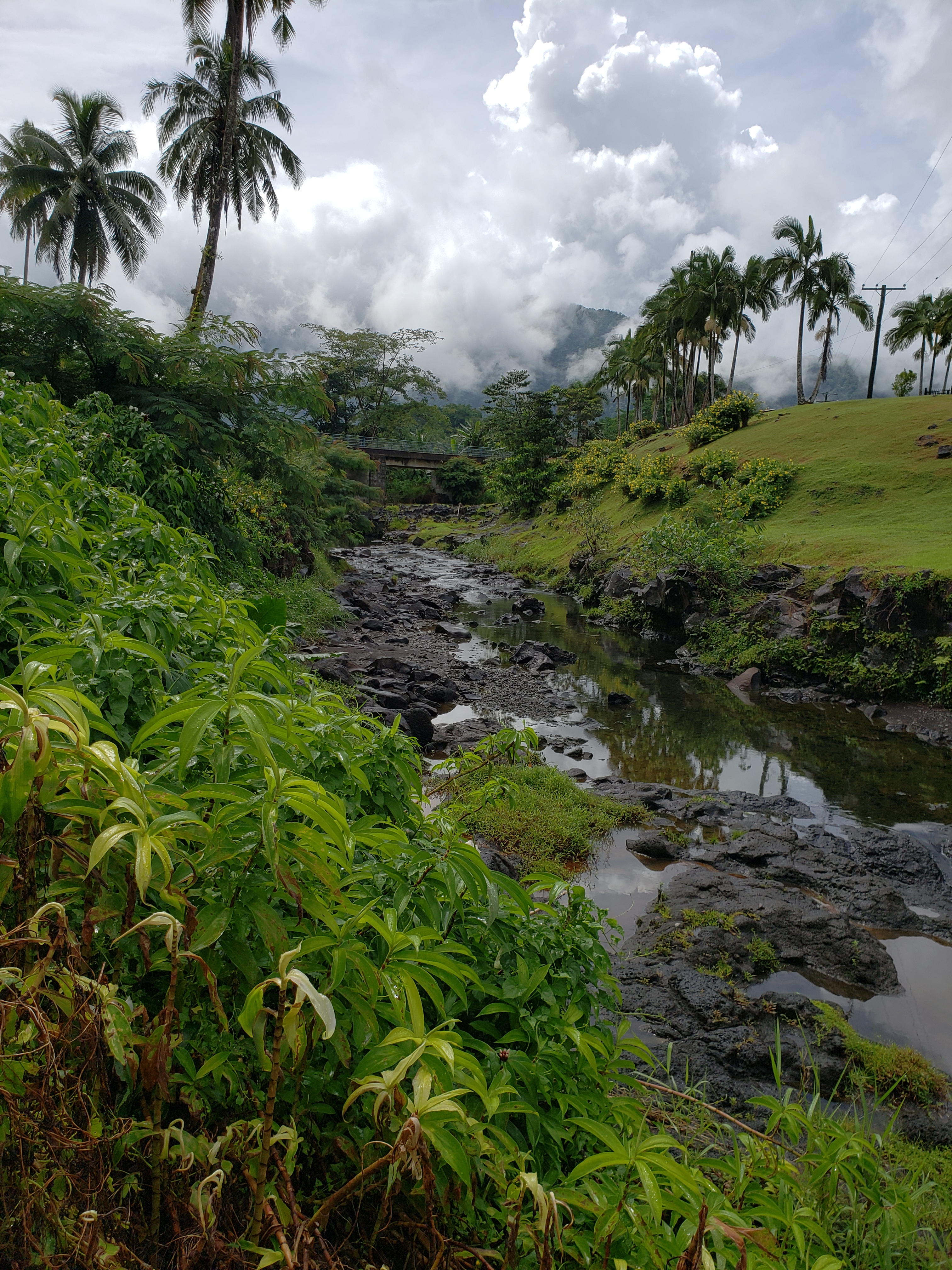
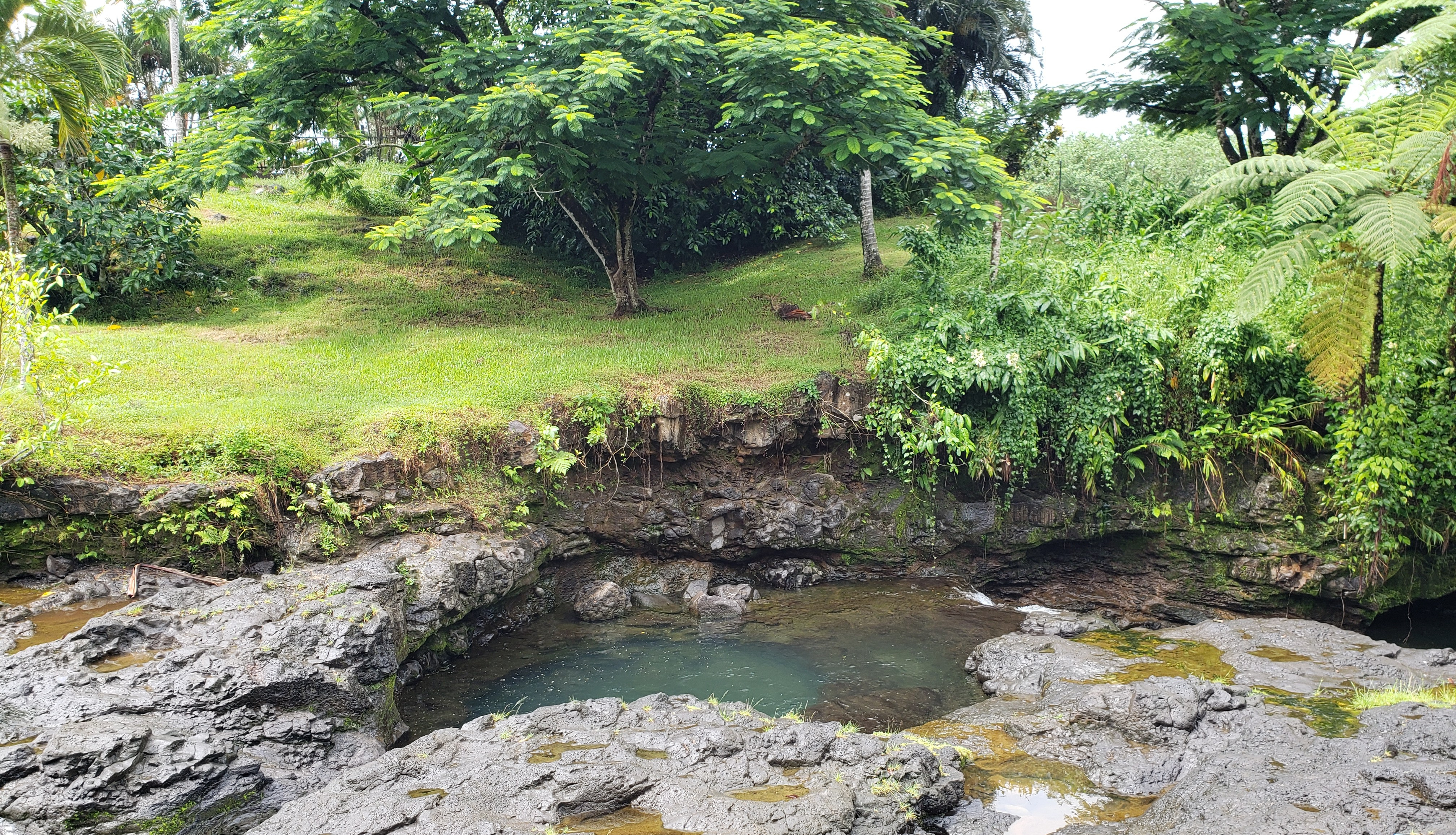
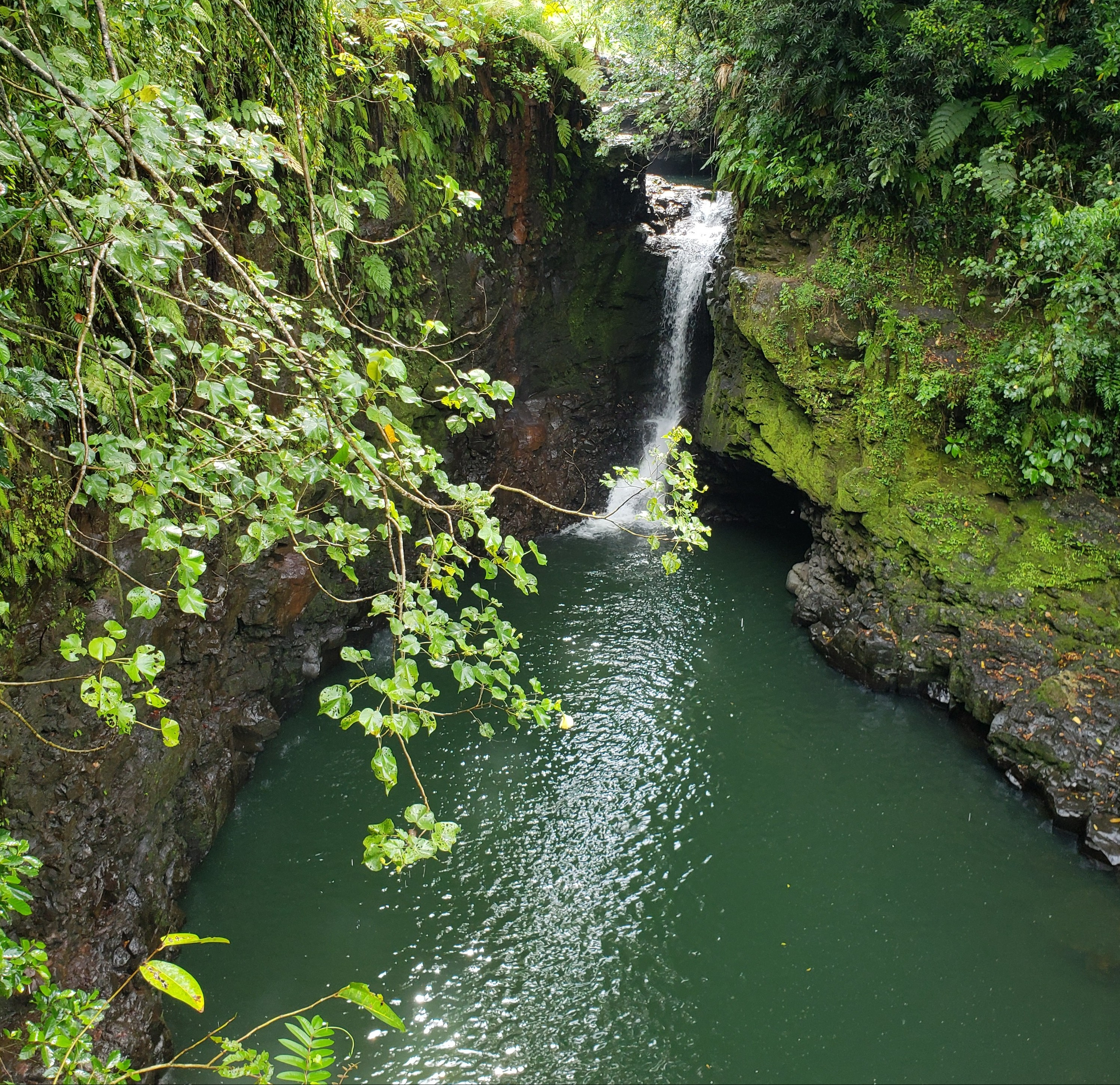
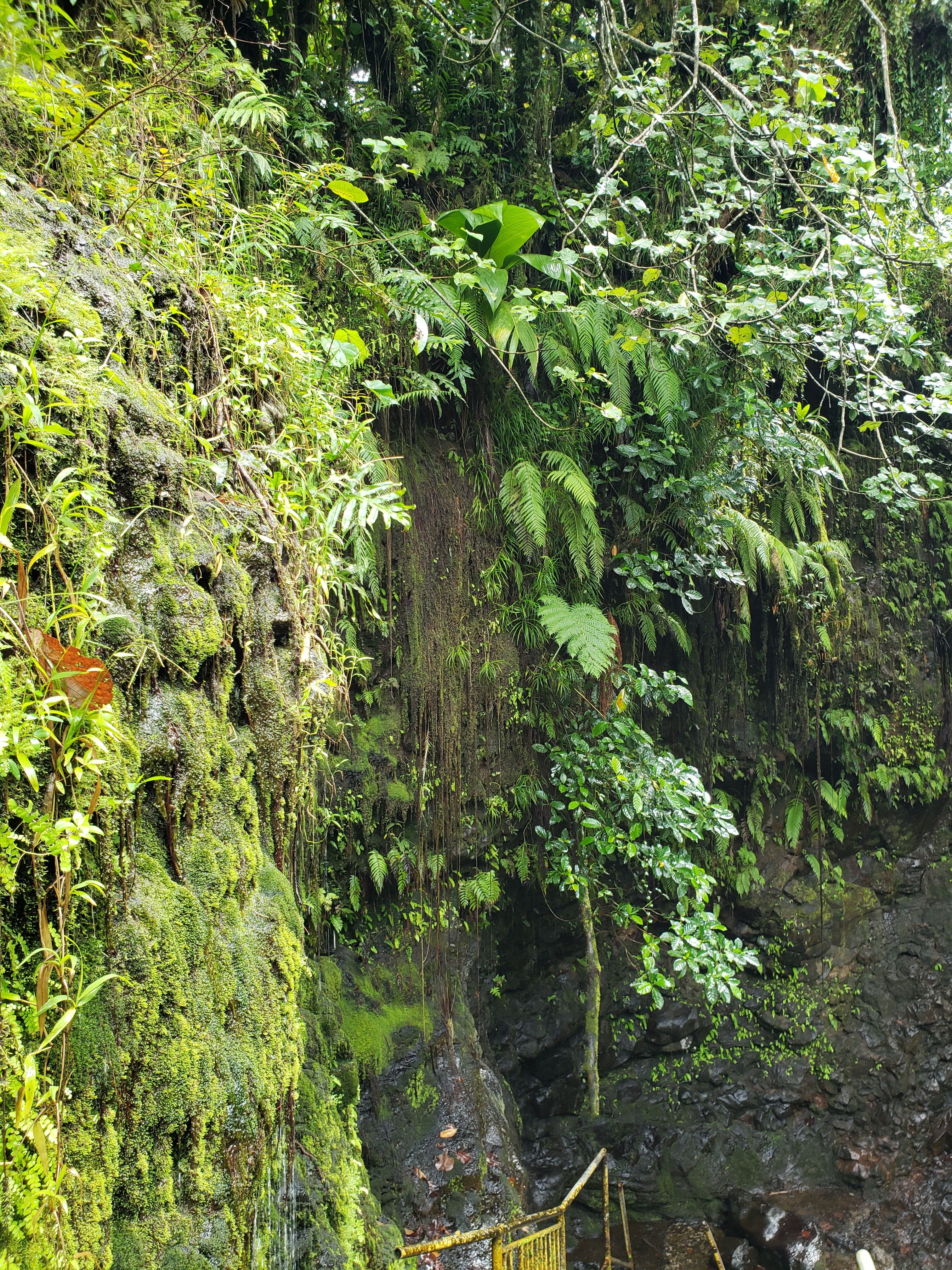
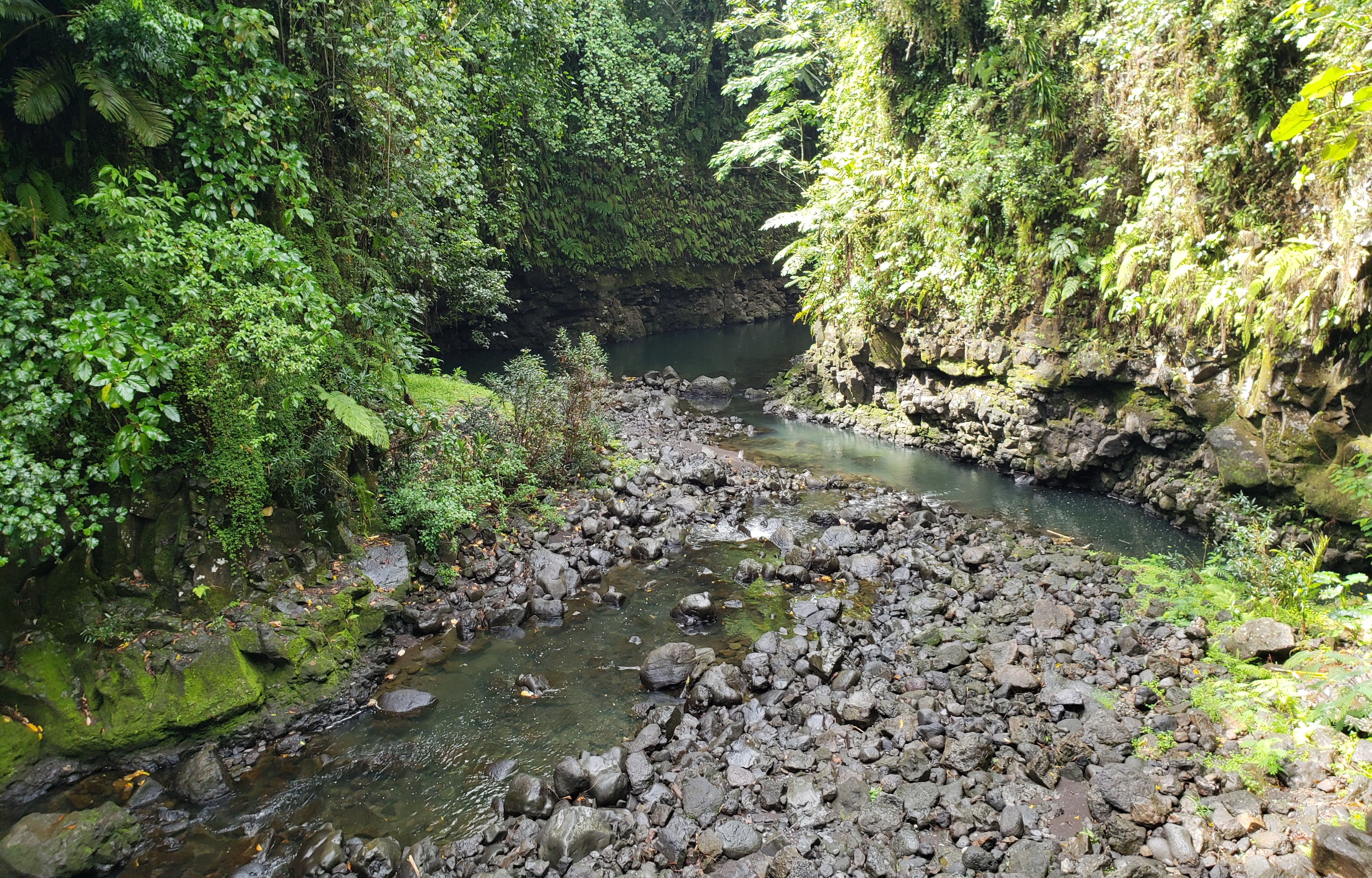
I’ll end with photos of the stream that runs through one part of the village. On the upper part of the stream (nearer the school buildings) is one of the bathing pools. A little farther down, there is a nice waterfall. The rock face is covered in green plants and moss, too.

The stream at Sauniatu
Bathing pool for women (used in “olden” days)
Waterfall at Sauniatu
Downstream from the waterfall at Sauniatu
Memorial to the visit of David O. McKay in 1921

A gannet colony

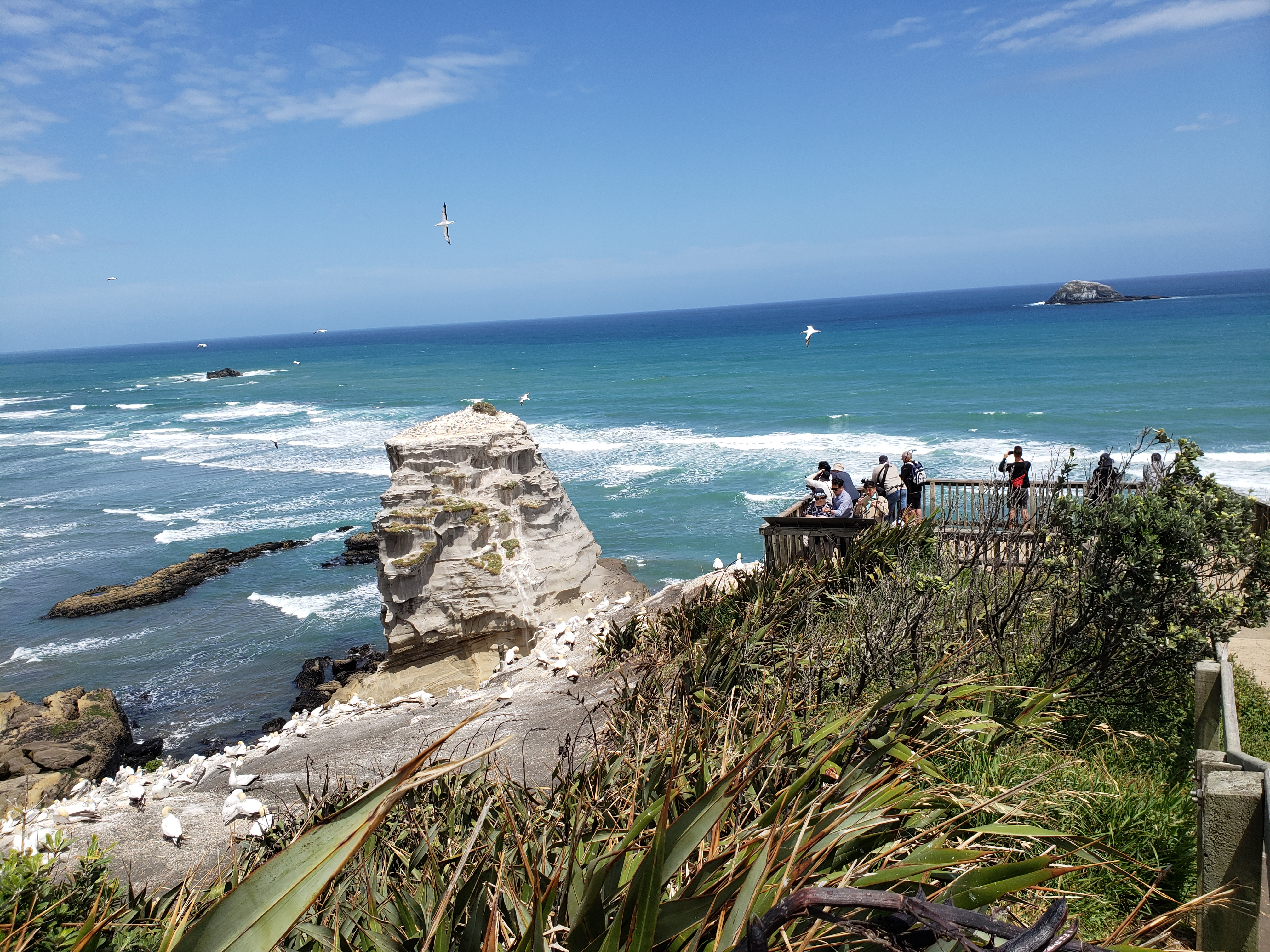
In several places in New Zealand, gannets come to breed and spend the summer months in a cooler clime before they return to Australia for winter. Last Saturday, we went to visit the colony at Muriwai.

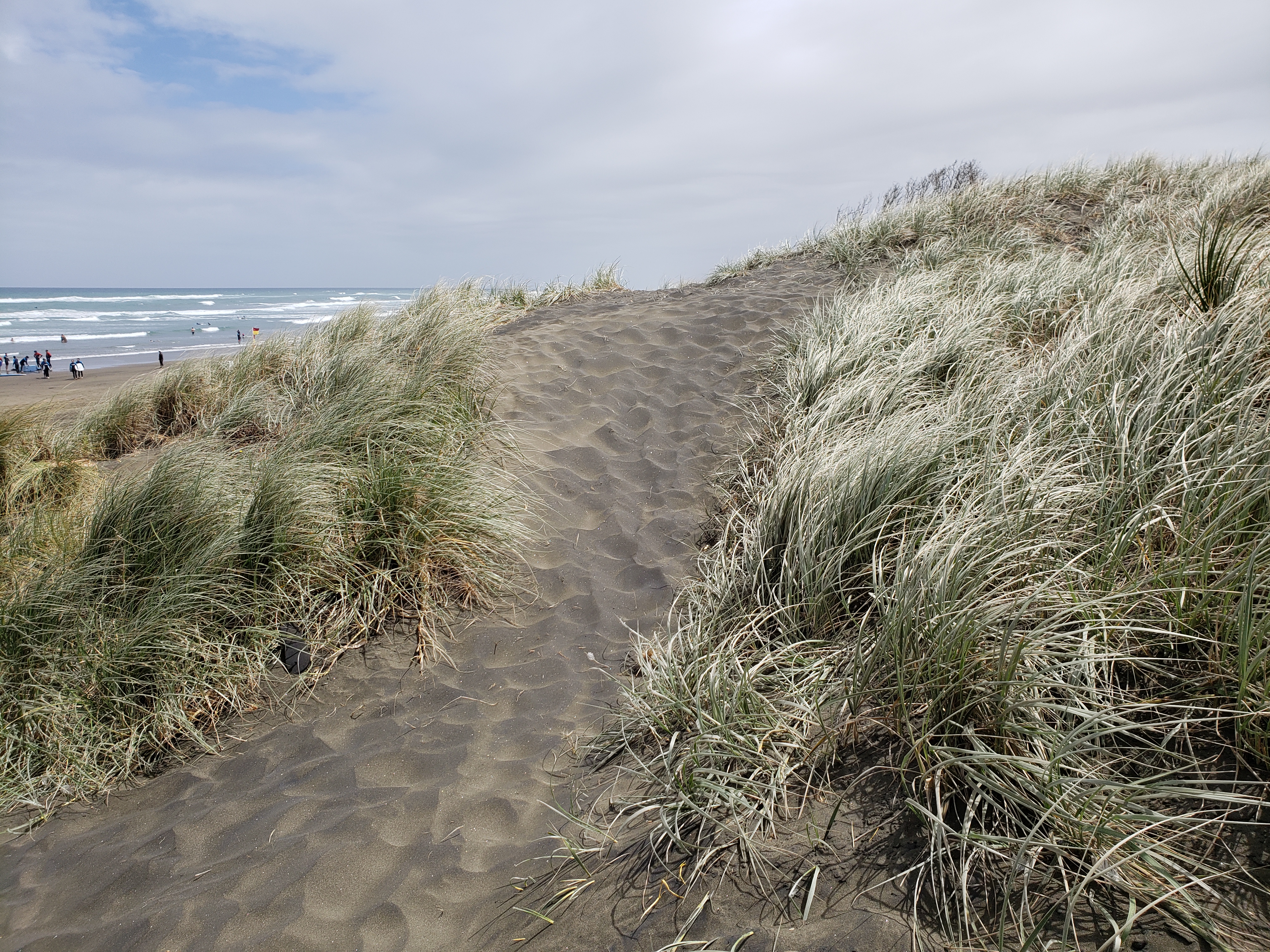
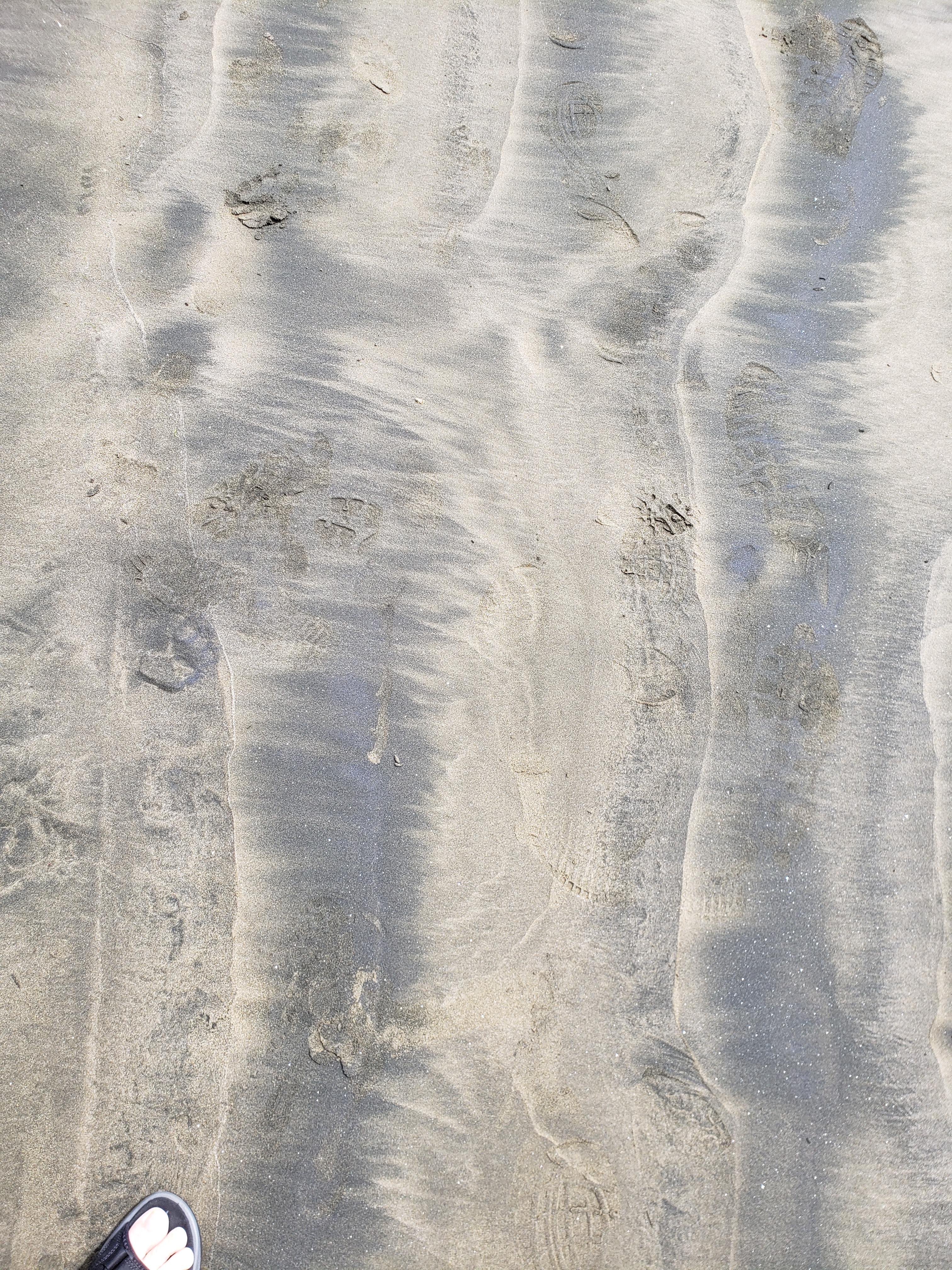
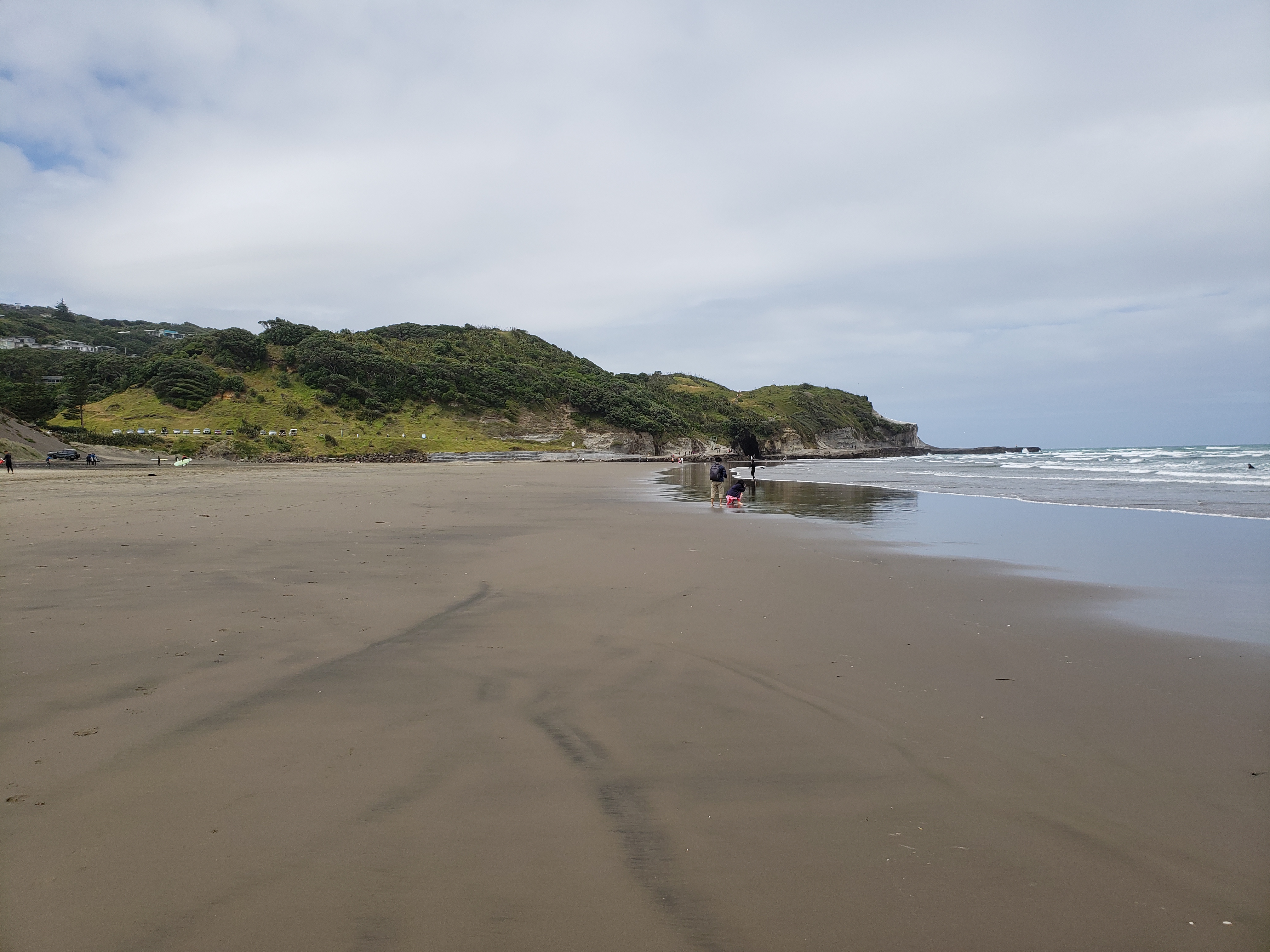
First we stopped at the black sand beach. Okay, it was not as black as some I’ve been on before, but these photos were taken at noon which shows the reflection of the sun. The beach doesn’t look very black at all. From higher up, with a photo I took later, it looks a little darker.

While we didn’t spend much time right at the beach, we did spend a couple of hours with the birds. The panoramic photo below is a first view from up above the colony as we approached.

View at Muriwai (approaching gannet colony)

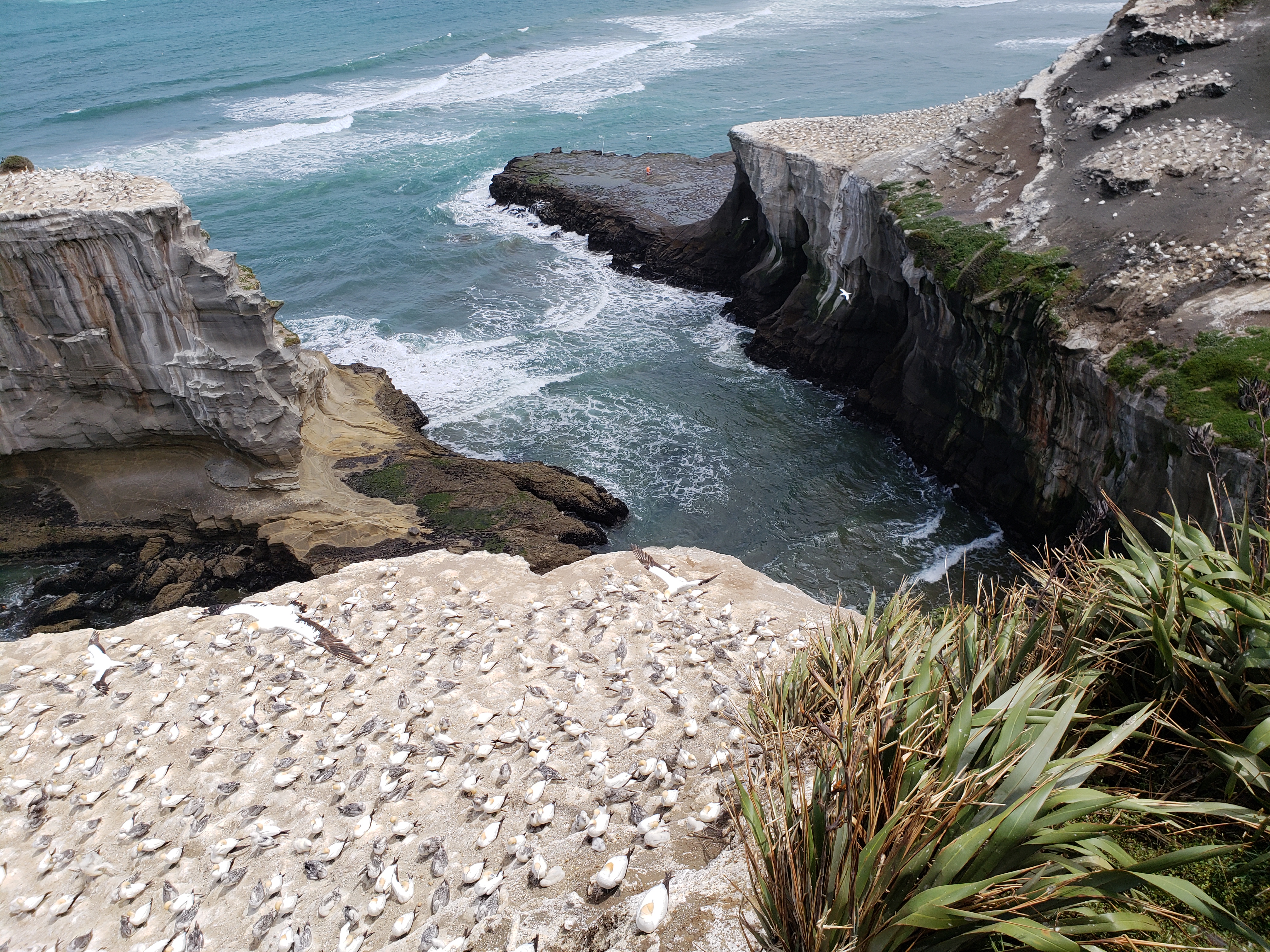
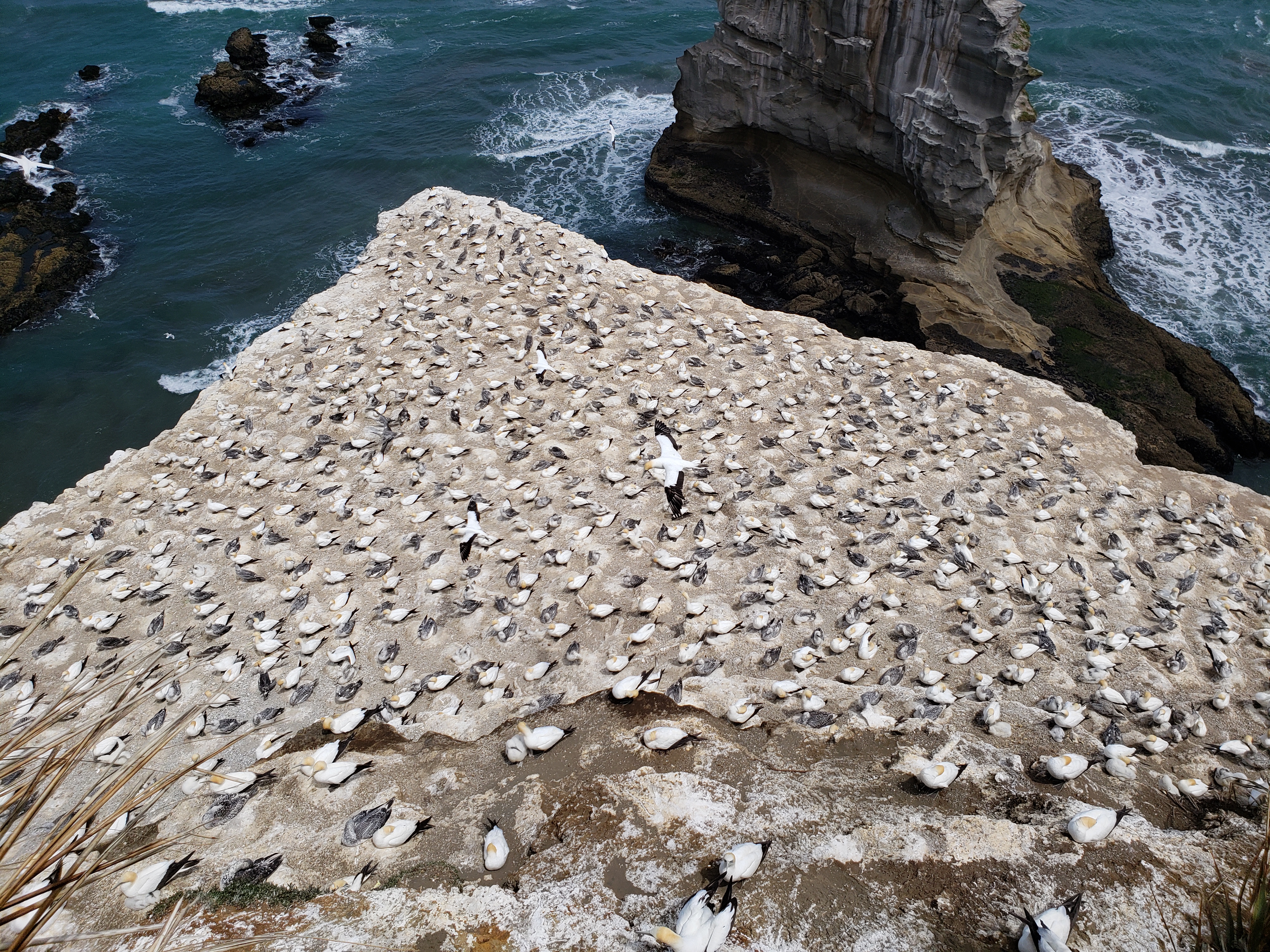
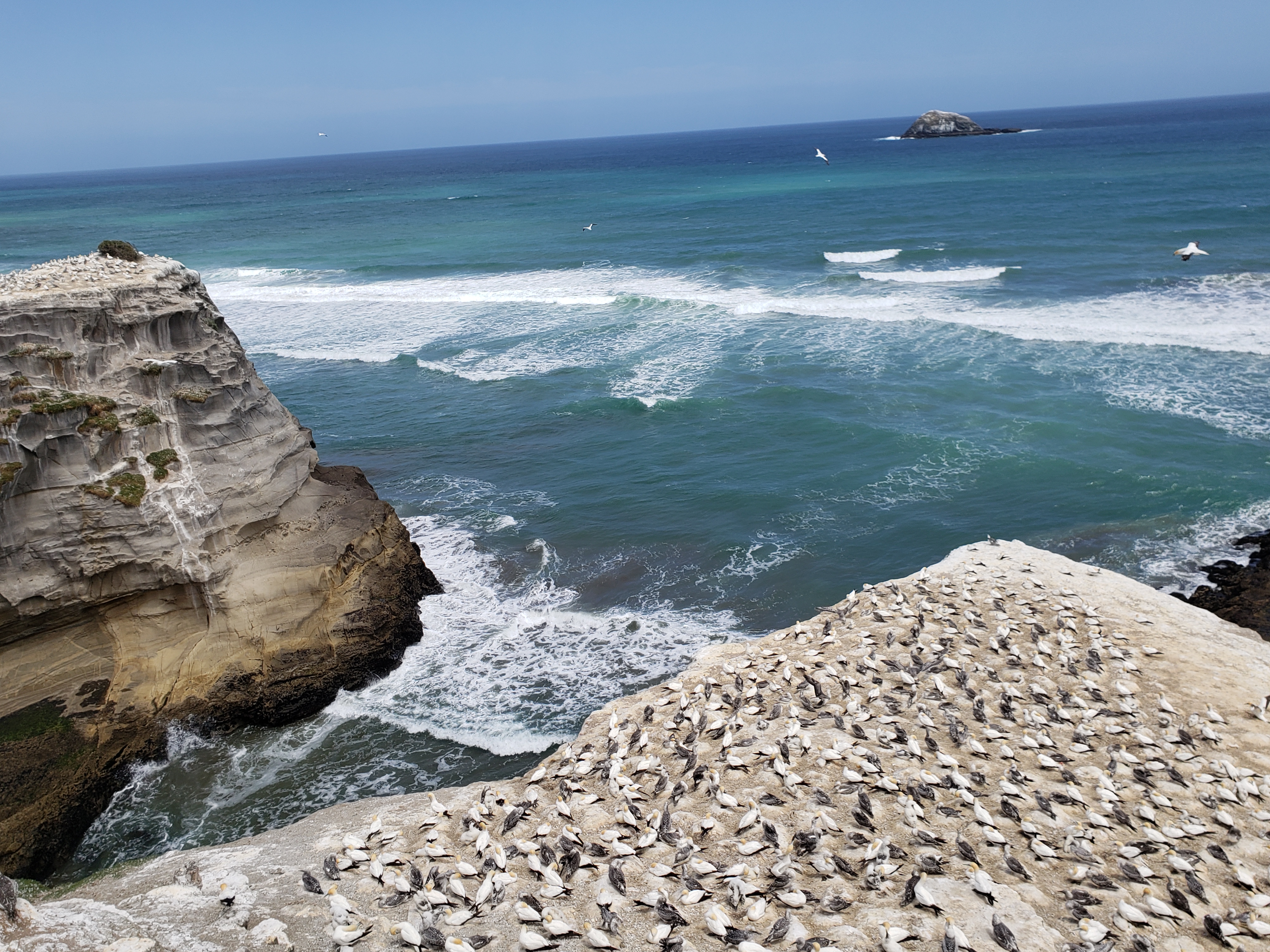
Thousands and thousands of birds were on the rocks and cliffs and in the air. Notice how many were nesting on each of the three sites in the photo below.

Here is a closer shot of the number of birds. All those white spots are adult birds (the babies are harder to see from this distance).

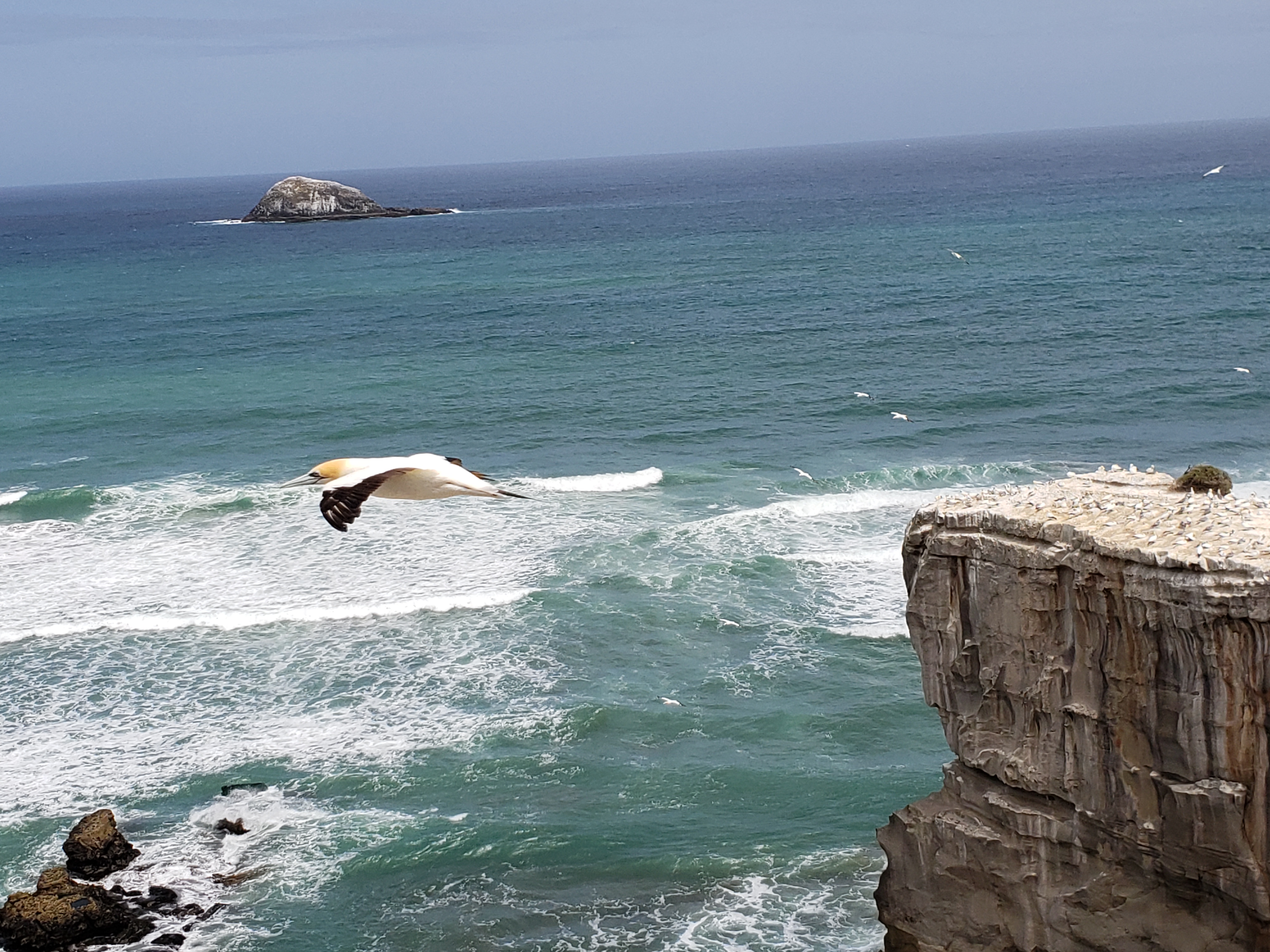
It was fun to try and catch some birds in flight. Mostly they made small dots on the camera, but I did get a few in full flight. The wing span is about 2 meters.

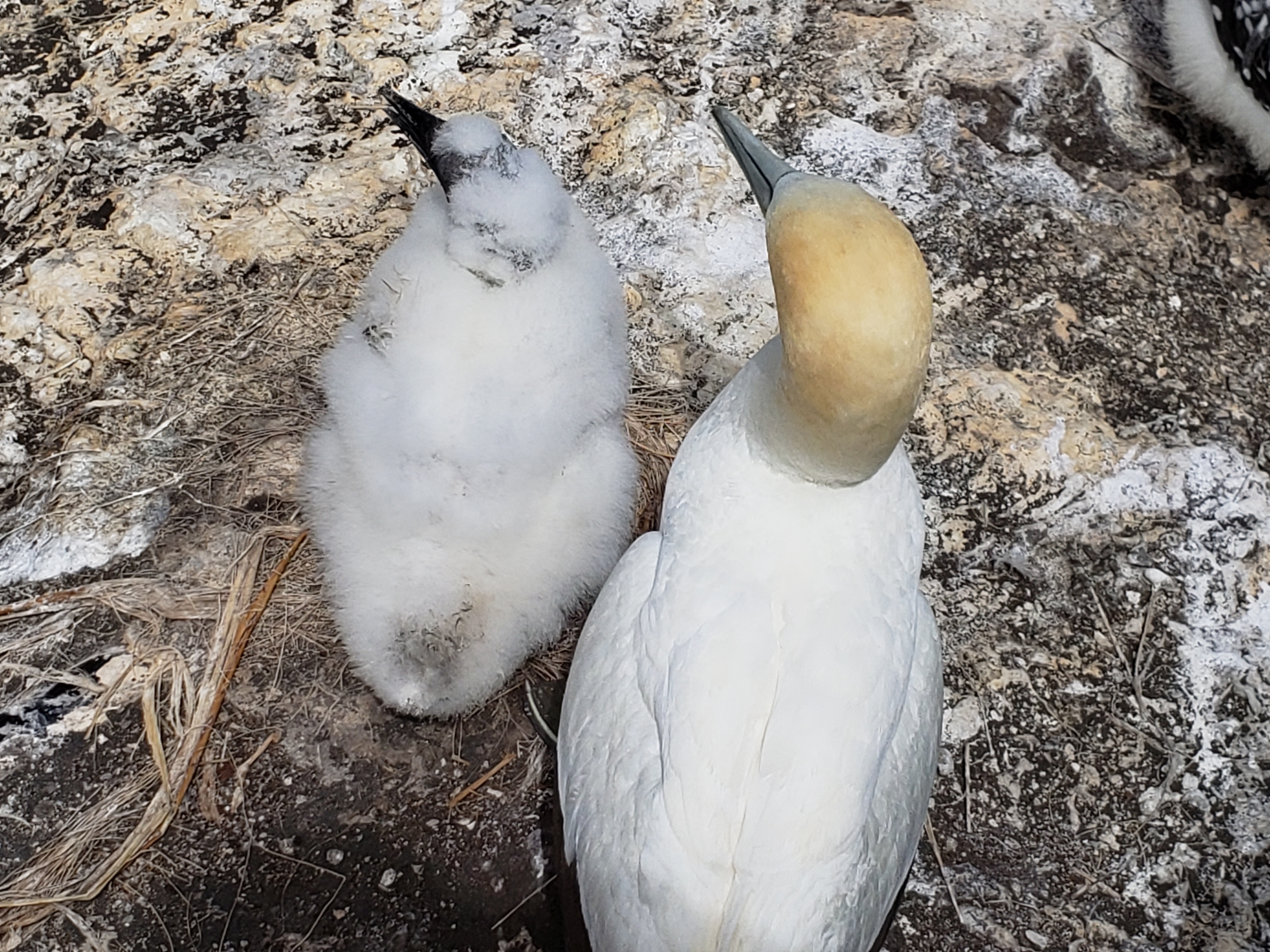
Adult gannet with a fairly new young one

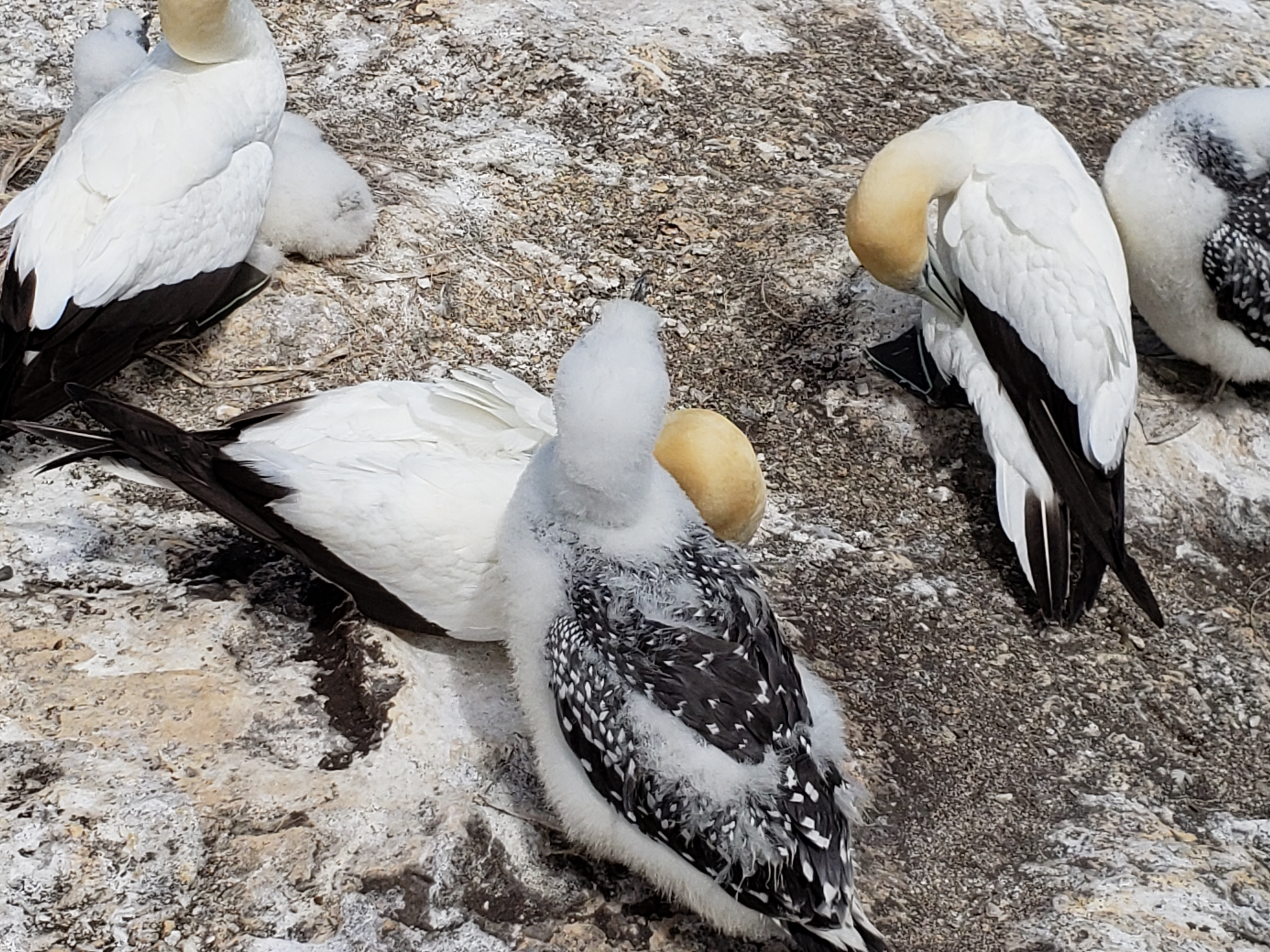
The colony had adult birds (with mostly white wings except for the tips), juveniles (with mostly dark wings), and young birds with white fluff.

It was a wondrous site (a bit smelly when you got directly down wind…before I could stand to eat lunch I had to wash off my face, lips, and hands!)

All together a beautiful site and a wonderful place to be. Here is one last view of the Muriwai beach and gannet colony.

Okay, I couldn’t do just one more. Here is another one.

[Update: Decided to add a video from the gannet colony]