Maths English

While you are rather accustomed to having nice photos with my blog posts, this time you are going to get lots of words–maths words. With lots of problems!

Formula: Math x English = Problems.

In British (and Kiwi and Australian) English, math becomes maths. But that is only the beginning of the problems with math in English; or in terms of teaching math in the Church Schools, English is a big problem! (Since some of you in the family have taught math, I hope these examples make you laugh.) Take these recent discoveries as examples.
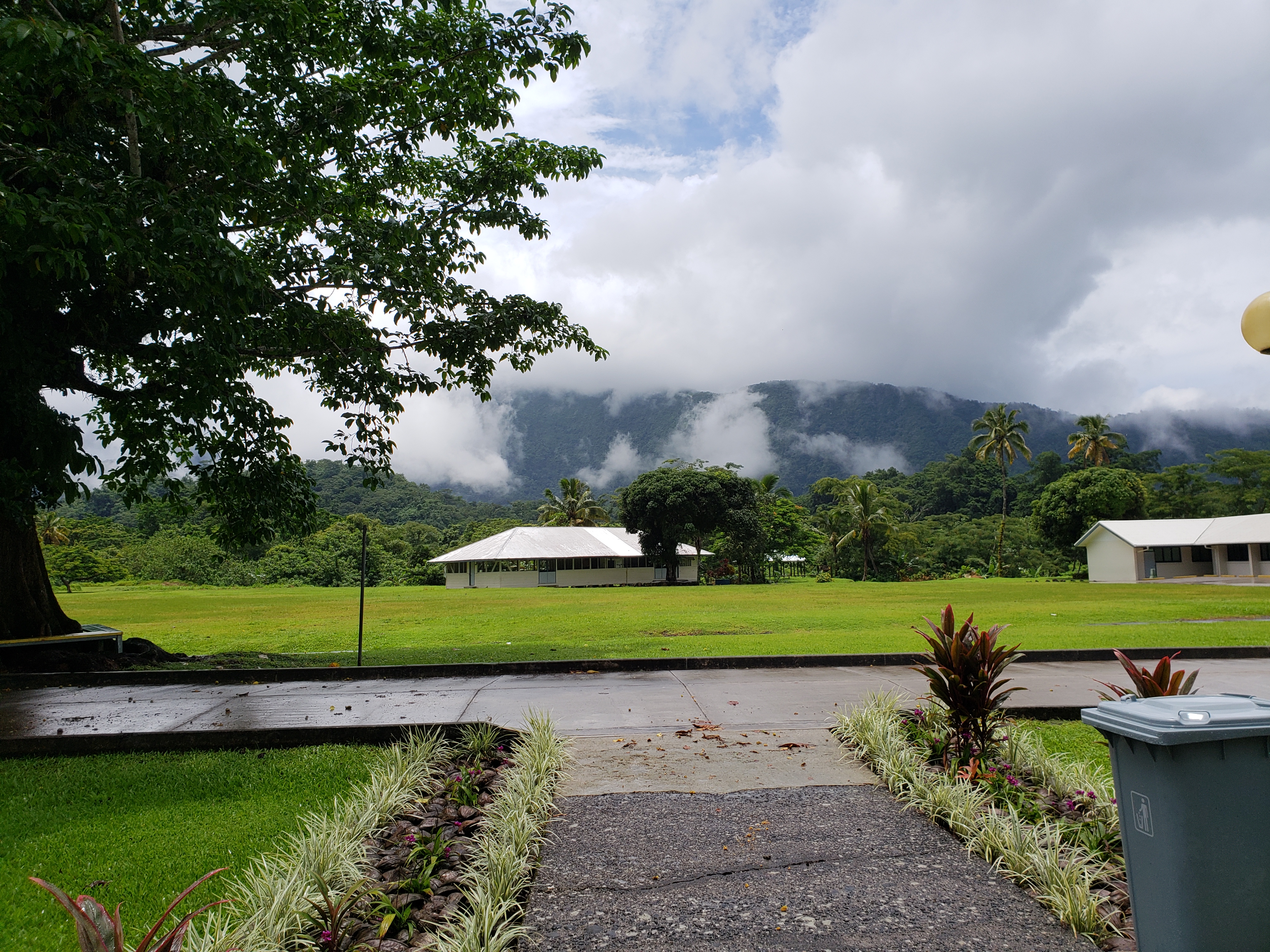
Sauniatu Primary School, Samoa

While we were doing training in Samoa, we talked about the problem of teaching math in English with some primary school teachers. In primary school, the students do not really know very many words in English. However, some easy, simple words in English have math meanings–is, and, more than, less than, in [a set], makes, times. The students might know “What time is it?” but not know that times is a synonym for multiply.

In the training, the teachers added more words to our list. I could tell they understood the problem a little. Later in the afternoon after our training, however, Jonathan (from the Schools Team) asked some teachers what at least meant. Four teachers were in the room when he asked. They didn’t know, even with an example given as a math word problem. If the teachers don’t know, the students cannot know either.

Teacher training in Samoa

Native speakers of English might think that phrases like at least are very easy to understand. The teachers all thought it meant the opposite of its meaning: equal to or less than rather than equal to or greater than.

Other examples of English word problems for math might be take away (for subtraction) or count up (for addition). Research shows that the 10-12 most common verbs + prepositions can equal at least 40,000 meanings!

Look at this example of the word come. Using a dictionary for English language learners, here is an analysis of the complexity of using the “easy” word come. (From Longman Dictionary of Contemporary English Online: https://www.ldoceonline.com/). Idiomatic definitions include meanings for phrases such as: have come a long way, come clean, come as a surprise, etc. Phrasal verbs are verbs plus a preposition (or two), such as come up or come over.
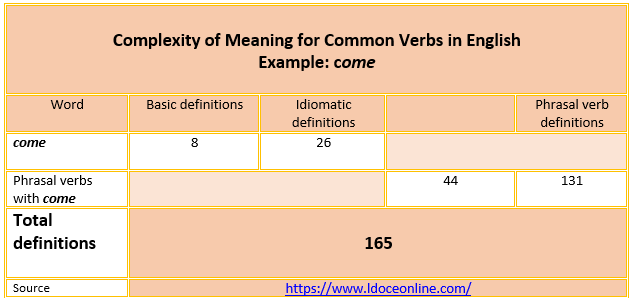
As you can see, a simple word like come, which is usually learned very early, can be more difficult than you might think. Within the 165 possible meanings for the word come, some definitions give math meanings (or senses) for that word. For example, come can mean “order,” as in “She came in third in the 200 meter race.” This meaning could easily be used in a math word problem. Here is another example: come to, with the meaning of “add up to,” as in “The total bill came to $54.31.”

How do math teachers come to know [a rather difficult use of the word come] these are “math” words and need to be taught by them and not English teachers? And because there are many simple words like come that can have a math meaning, the problem could be overwhelming for teachers. Can you, for example, think of a math usage for any of these words?

find get give go let make take
(don’t forget adding prepositions might make them math words, too, such as take away or go into)

That is the problem I’m working on now. (Which, at times, is driving me crazy.)
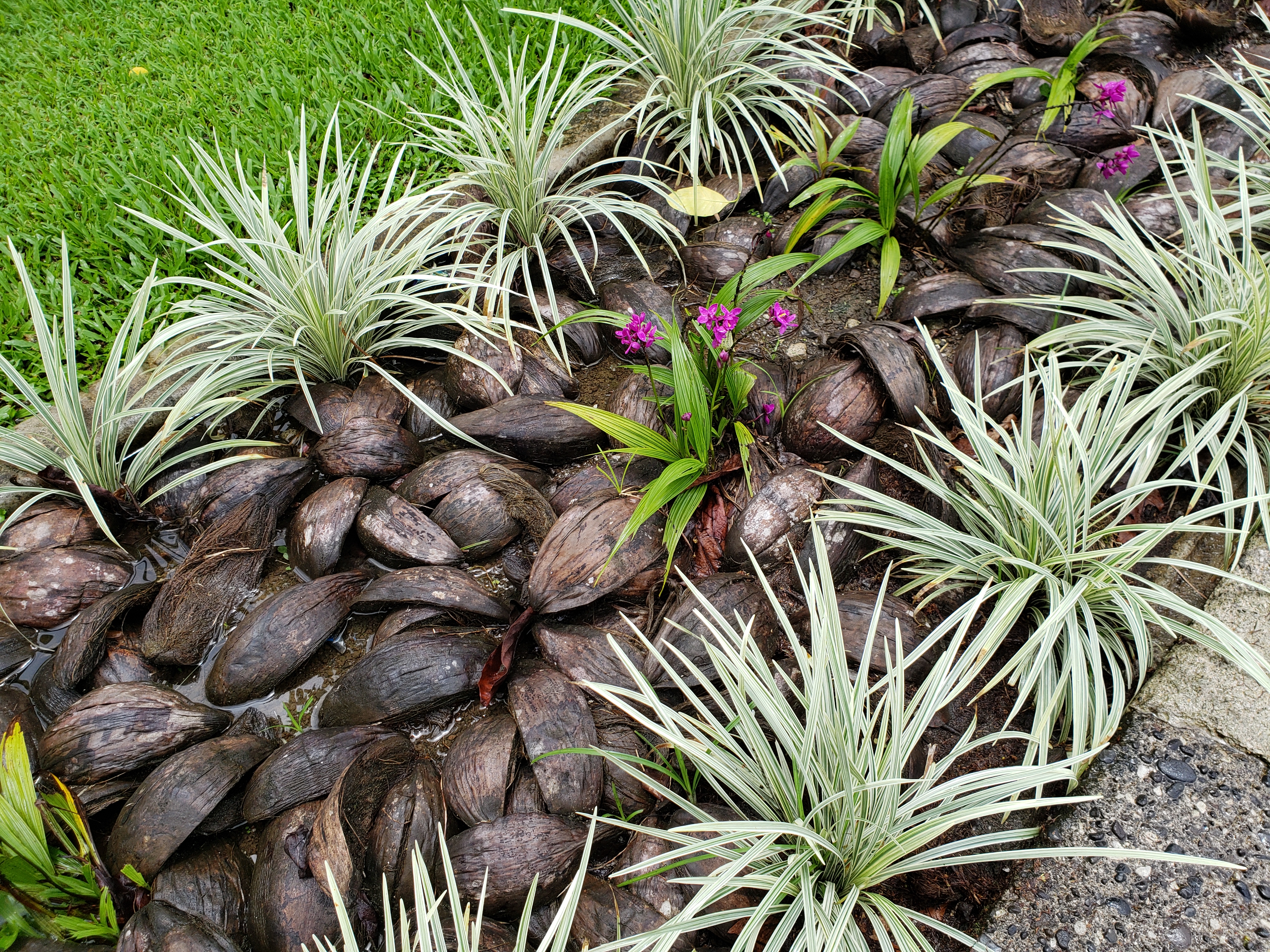
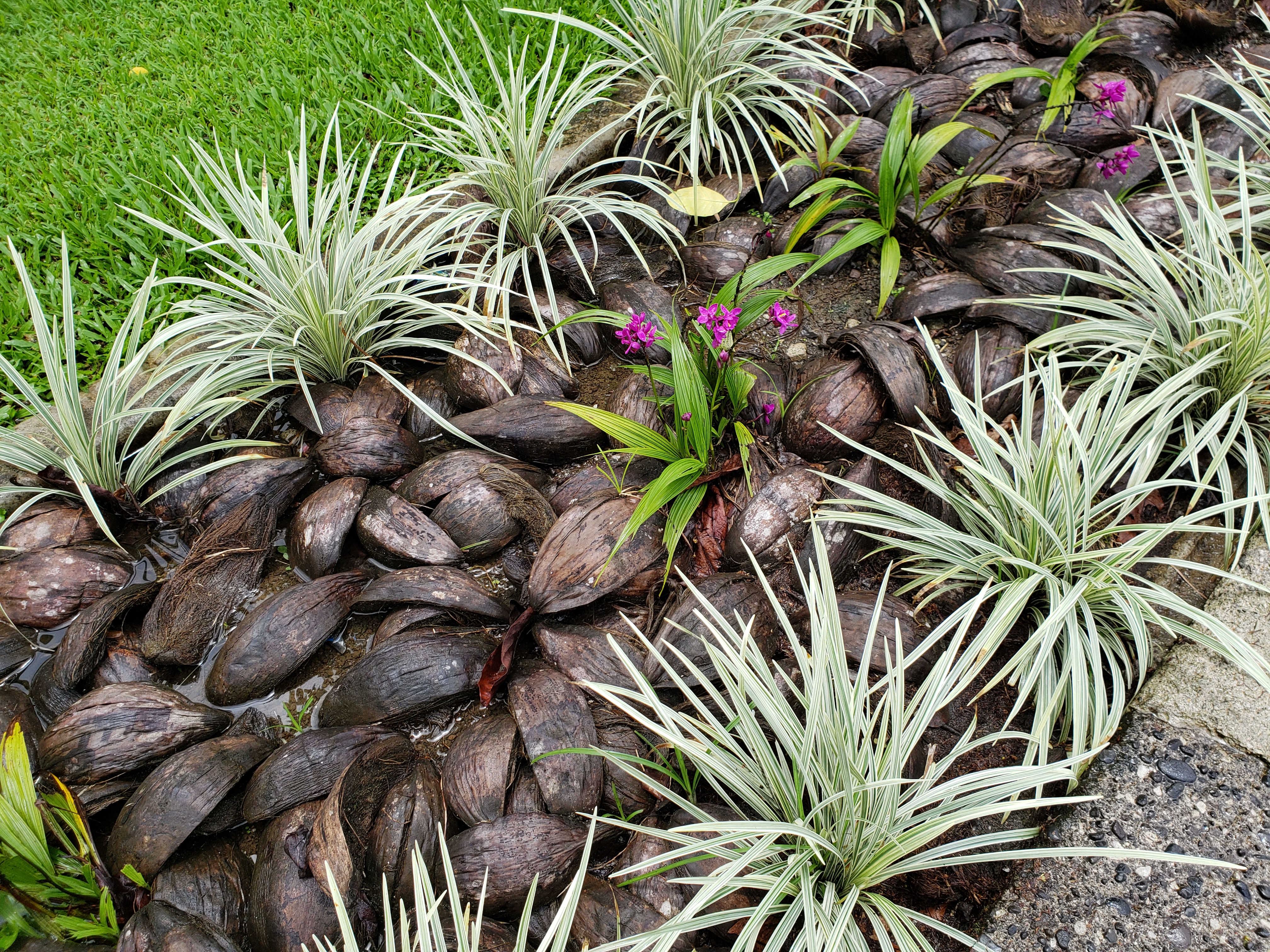
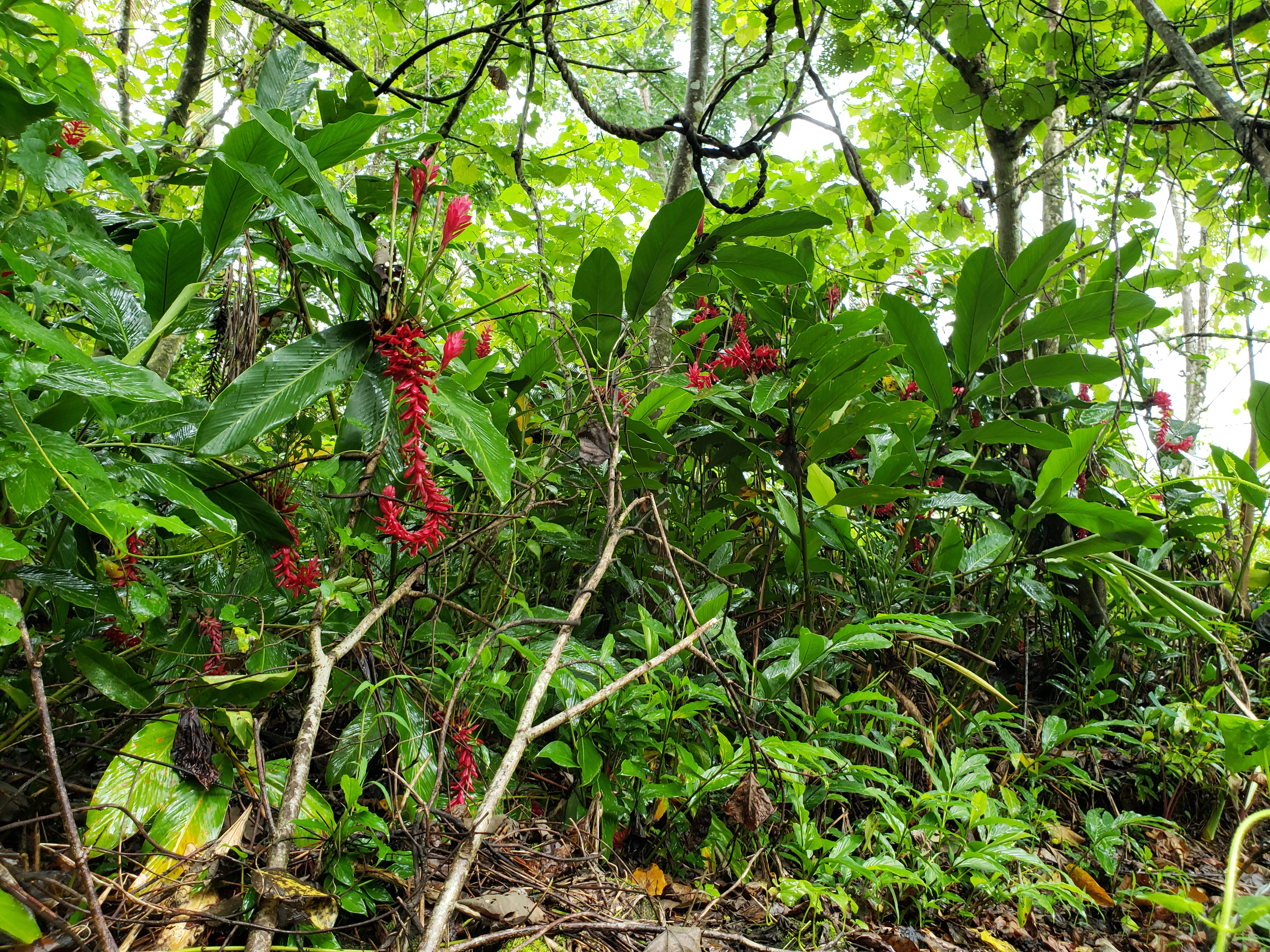
Coconut and plants decorating a walkway, Sauniatu, Samoa

I have added the photo to the left just to give some color to my post, but perhaps I could turn it into a math problem. Count the plants? Subtract the plants with flowers from the plants without flowers? Determine the number of coconut husk parts required to make a full coconut husk. Crazy.

Another problem I’m working on is the problem of synonyms for words that are clear math terms. Here is a problem we encountered. One of the members of the Schools Team was giving a diagnostic math test at a middle school in Tonga. While giving the test, the school principal (a former math teacher) was wandering the classroom, watching the students take the test. One question on the test asked the students what “something minus something” was. Most of the students were missing the question. The proctor heard the principal tell the students that minus meant subtract. After receiving that information, all the students got that question correct when the tests were graded. Since it was a diagnostic test and the proctor heard what happened, it didn’t really interfere with our diagnosis of what might be important difficulties in teaching math in English. The key takeaway: The students do not know common synonyms for essential math terms.
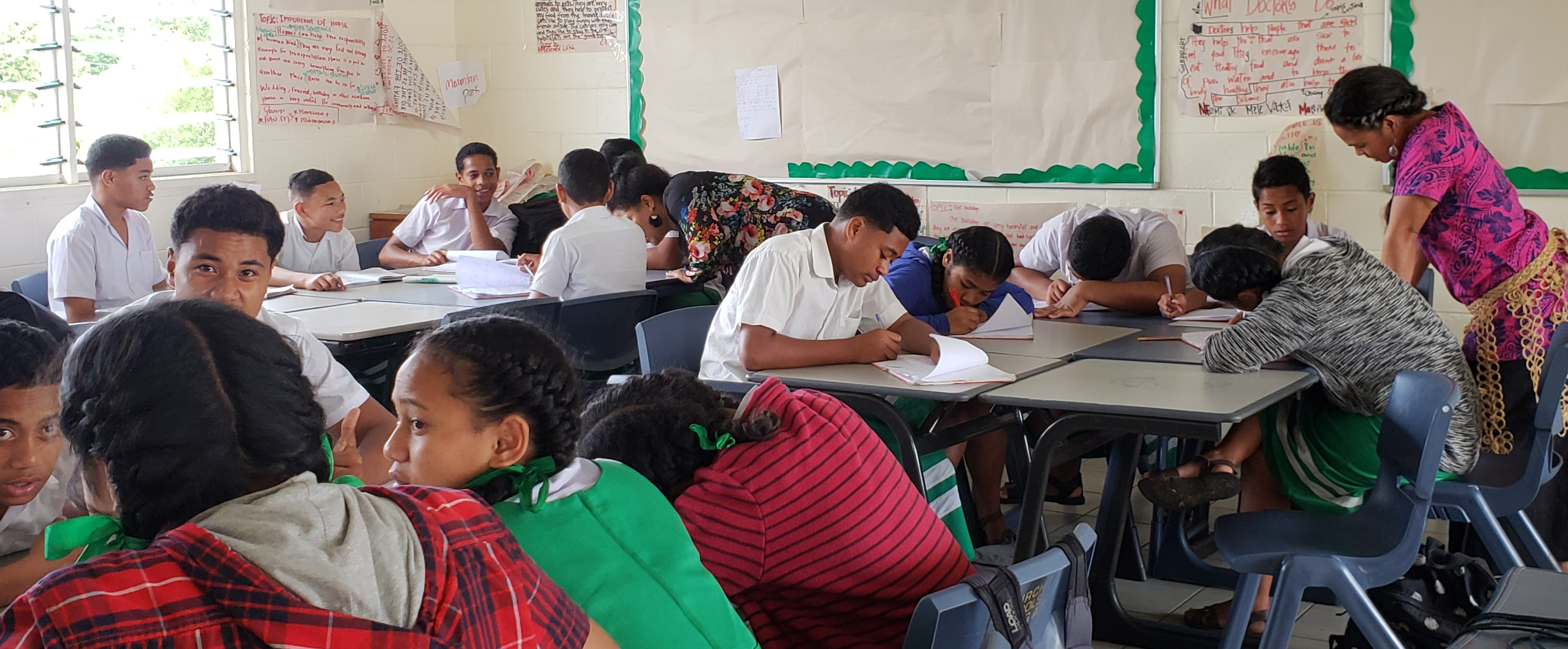
Middle school students in Tonga

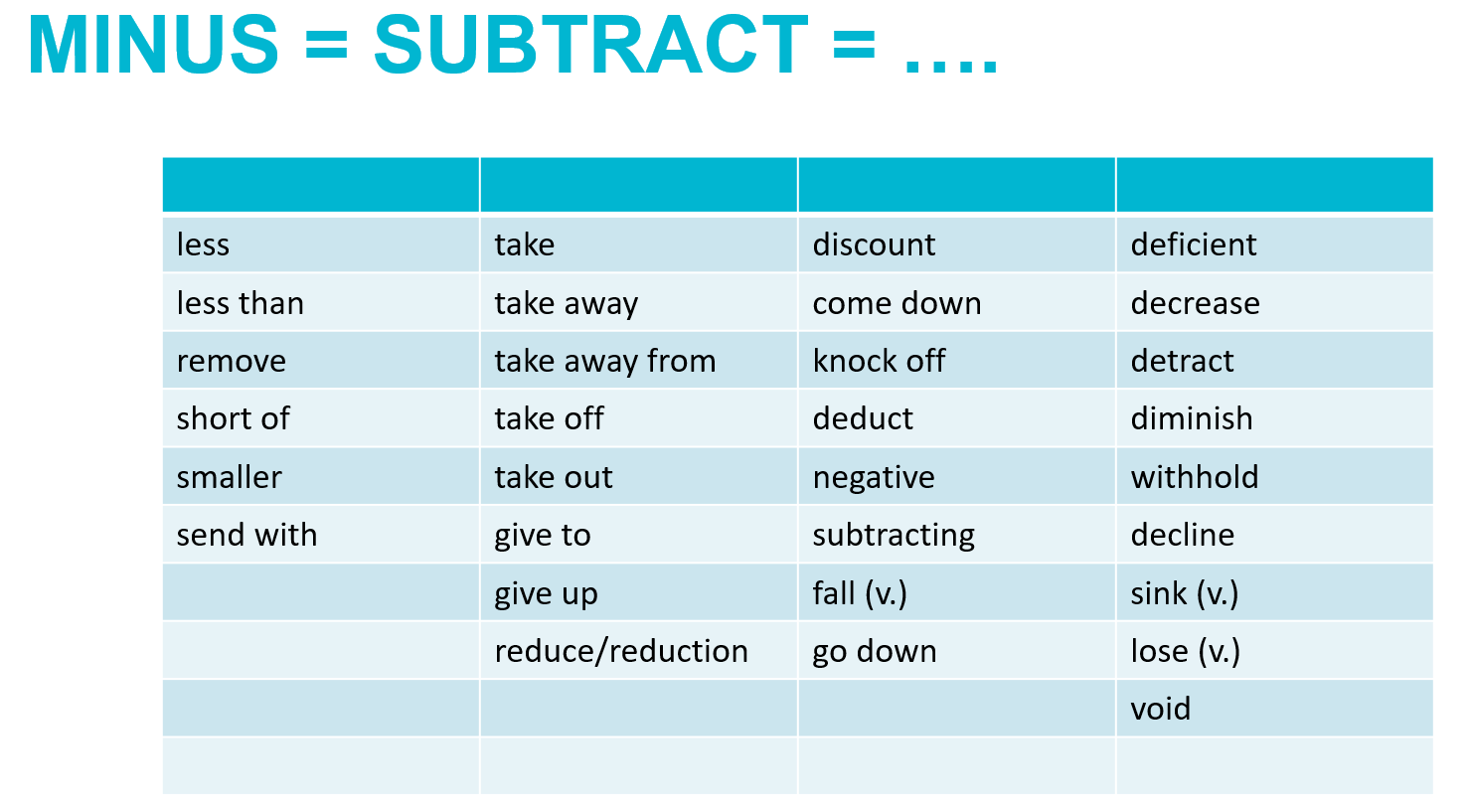
Hearing that story sent me on a quest for finding useful synonyms for common math terms. Here is my list (right now) for synonyms for minus/subtract. I keep finding more to add (and then I have a list of words that mean add, multiply, divide….)
C

Here is an example of a math problem I found in a textbook for New Zealand students. Can you see what might make this difficult for students that are still learning English?
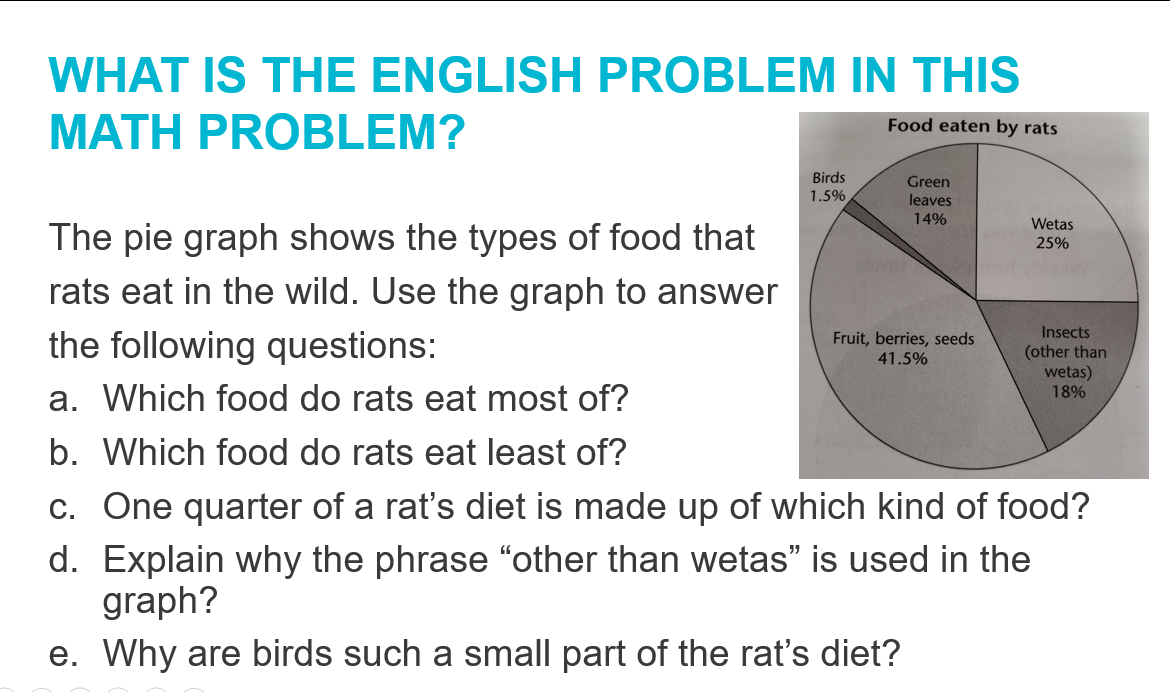
The first English problem that most teachers would see is the unusual word wētā ? Look wētās up on the Internet because you will be amazed at them. I have only heard these insects singing at night but have never seen one myself and, therefore, don’t have a photo. Wētās are some of the largest insects in the world and are endemic to New Zealand. They seem mighty big to me. (I hope to see one before I depart, but I’m not sure I would like one to hop on me.)
https://www.doc.govt.nz/nature/native-animals/invertebrates/weta/
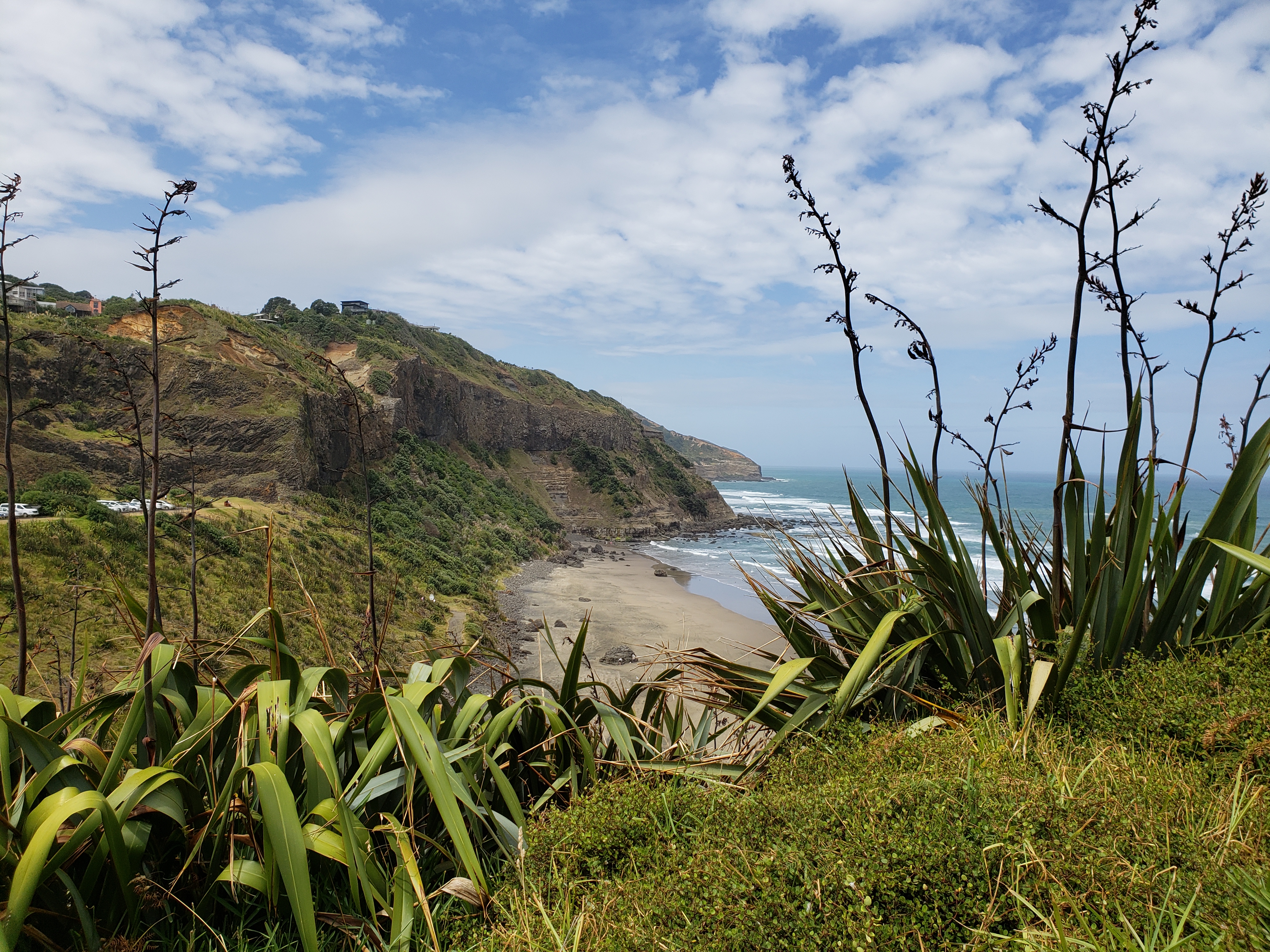
Muriwai Beach, New Zealand

Back to the math problem… wētā is not really the most difficult problem. It is a word where the math can still be done without knowing the meaning. I see a list of other English words that are more likely to cause difficulties with Year 7 students (who may have studied English for only a few months). Words they might not know yet include pie used as other than food, graph, in the wild, quarter, and diet. A little harder are two-part words like most of, least of, other than, and part of, or the three-part phrase made up of.
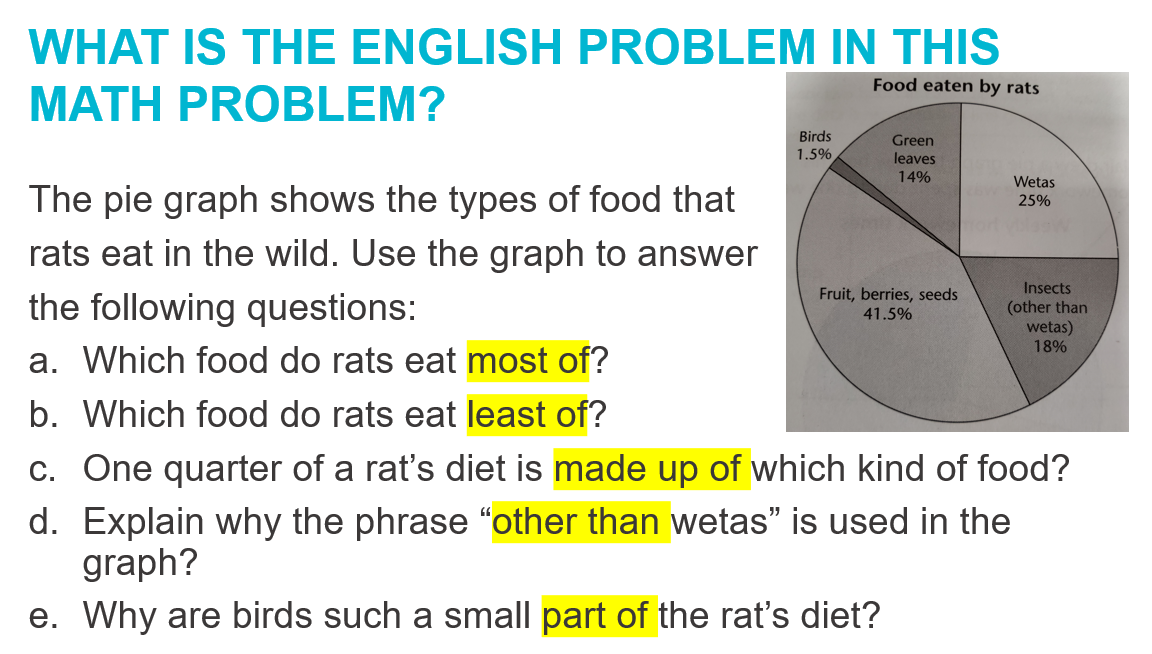
But really! Can anyone tell me why the last question, “Why are the birds such a small part of the rat’s diet?” is a math question? It sounds more like a science question to me.

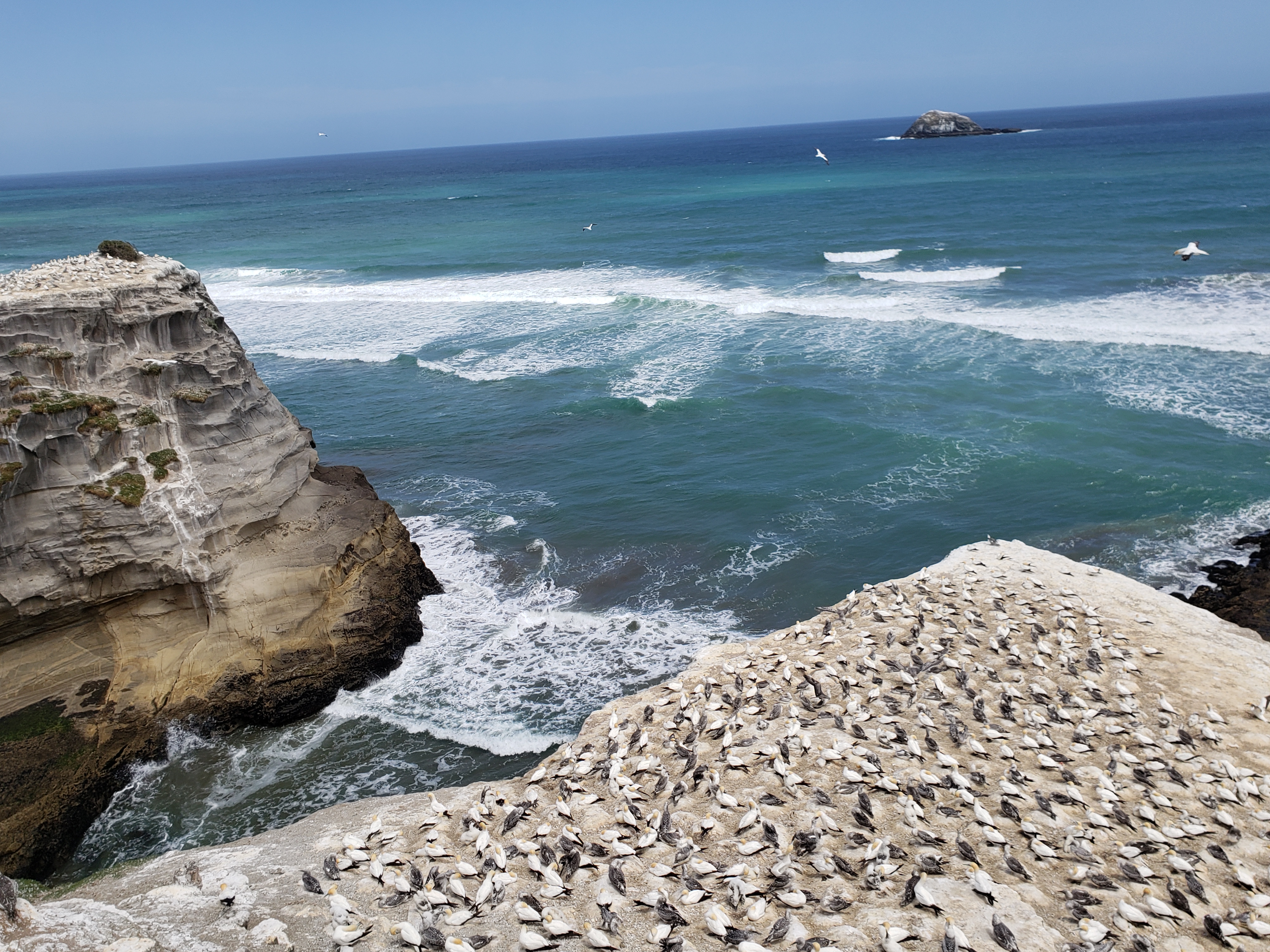
To close out this crazy maths post, let’s have another photo of the lovely gannet birds (who are not “at home” in New Zealand right now). Do you know why rats in the wild don’t eat these birds? (Neither do I, although gannets are quite large birds, which might keep them safe even if they do nest on the ground.)
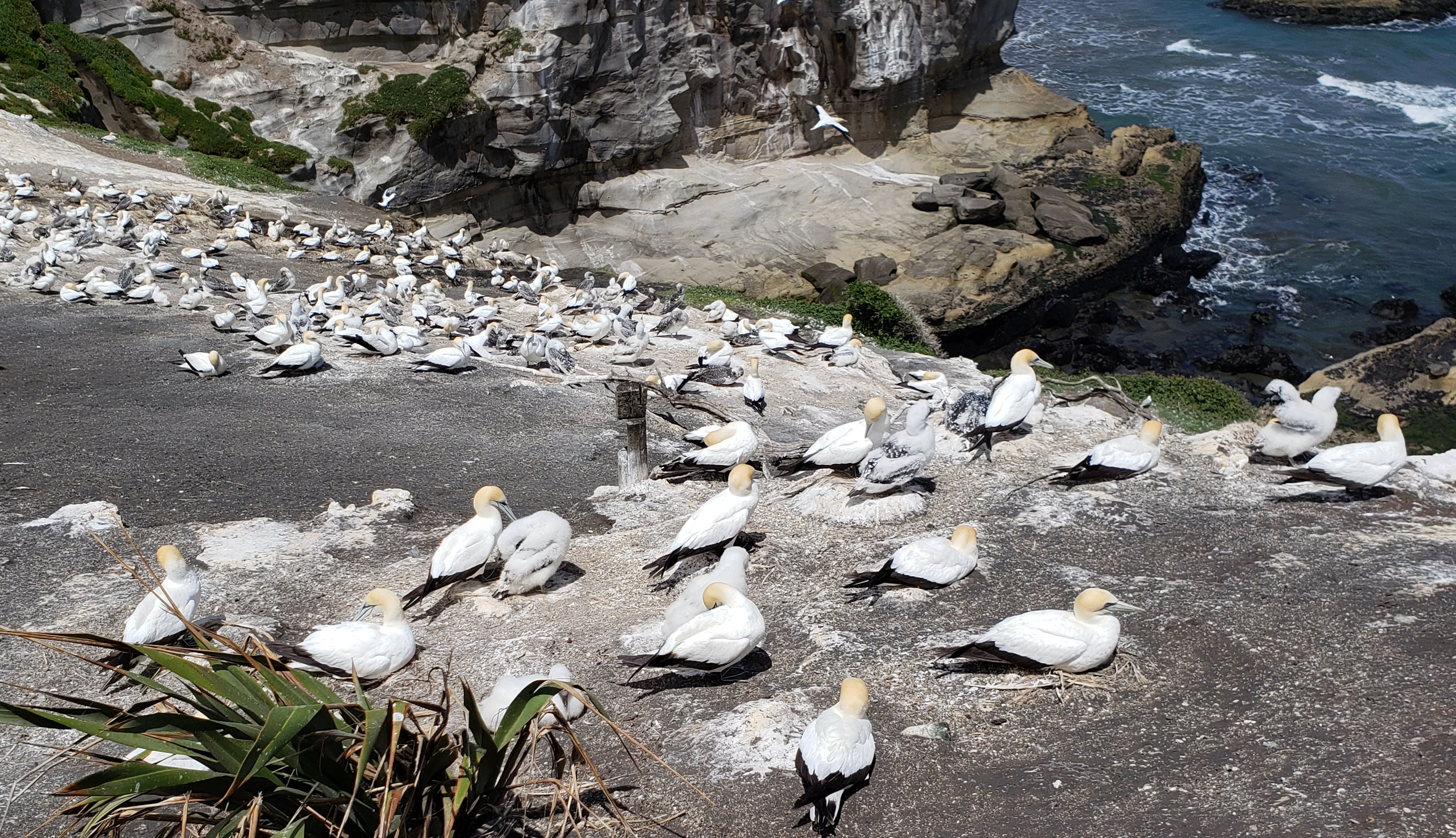
Gannet colony at Muriwai Beach, New Zealand

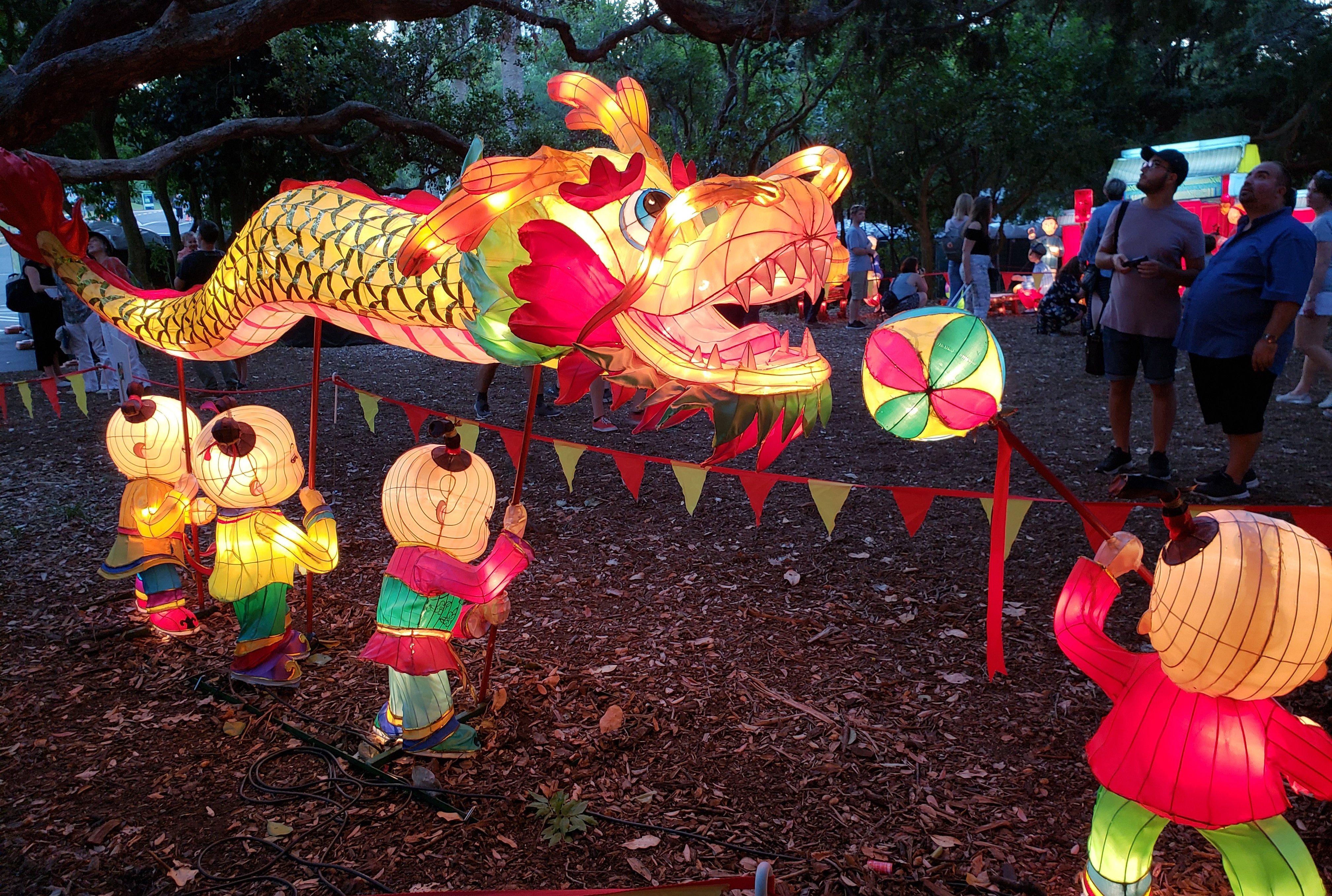
Celebrating Chinese New Year in New Zealand

To celebrate Chinese New Year, I went with Holbrooks (a missionary couple on the School Team) on Thursday to the 20th Annual Chinese Lantern Festival in Auckland. We went on the first night, partly to avoid the crowds. I heard on the news they expected 200,000 to attend this year’s festival. Holbrooks, who have gone each year, waited one year to go on Saturday. They assured me it seemed like 200,000 attended that night!

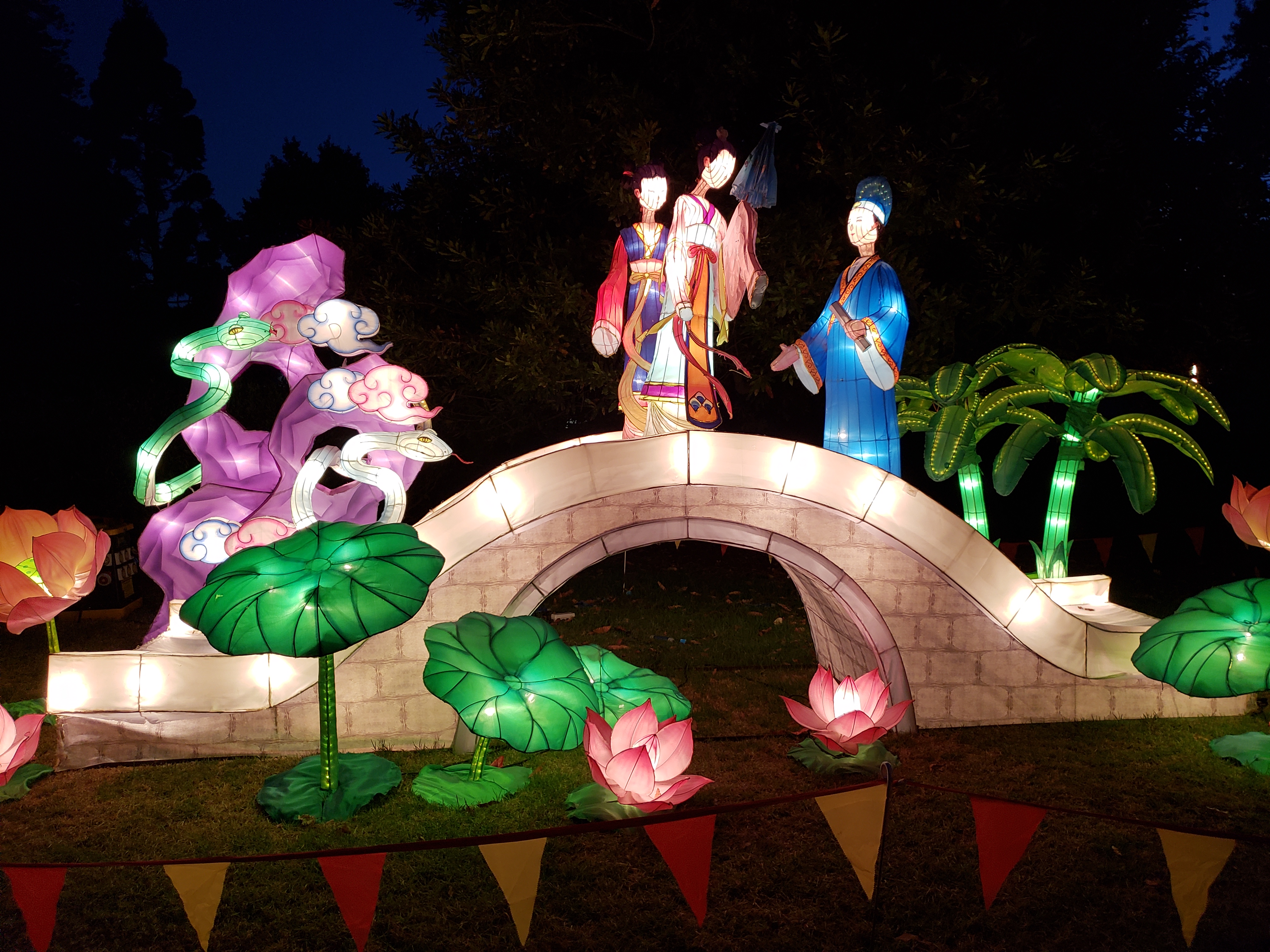
The lanterns are amazing, and for me, unexpected in their complexity and ingenuity of design. Take this amazing one below that we saw as we left, the White Snake Legend. The White Snake falls in love with a man and so appears to him as a woman, but….you’ll have to look the rest of the story up for yourselves!

The White Snake Lantern

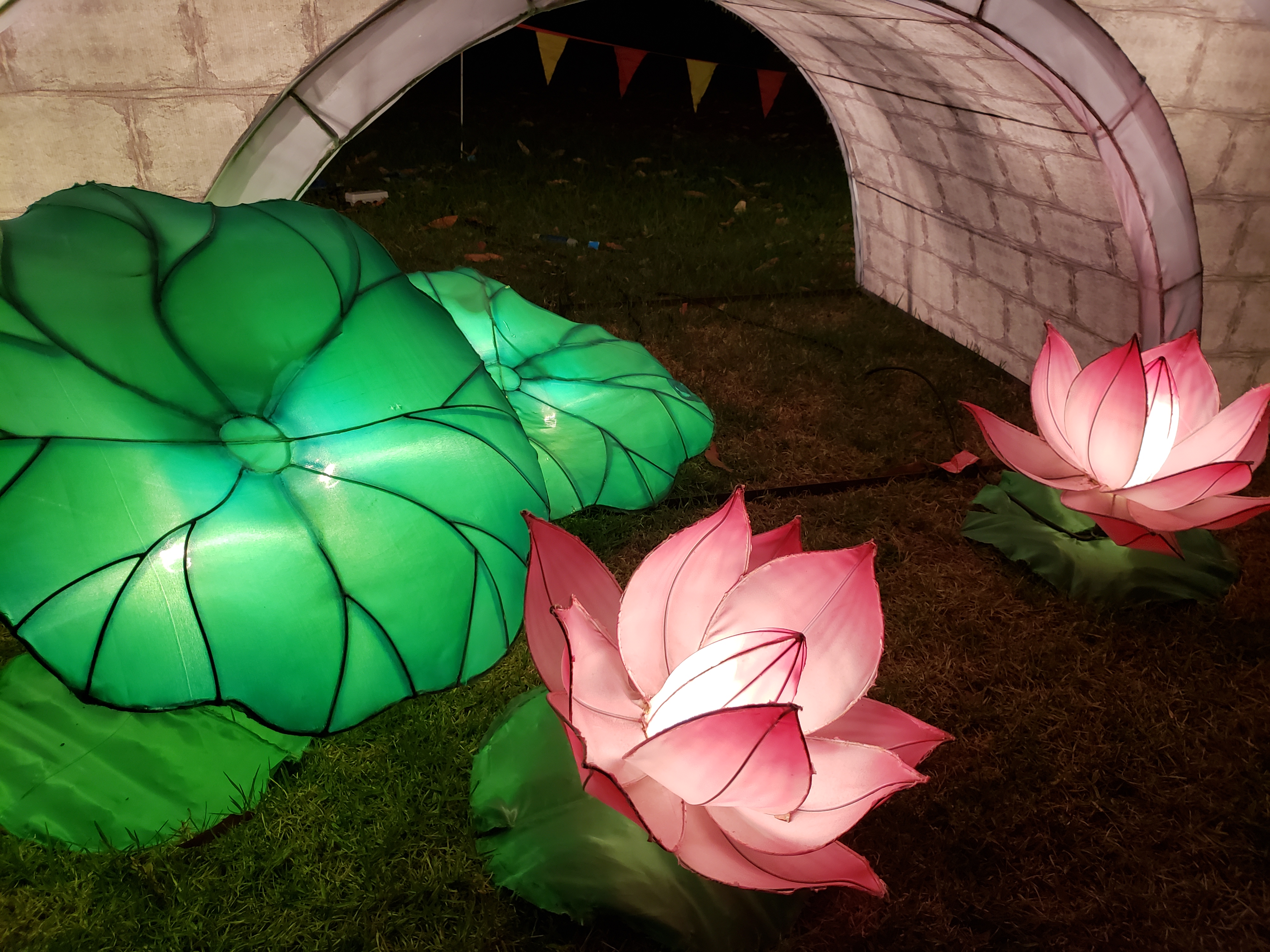
I mentioned that I had gone to the Chinese Lantern Festival to a Chinese couple in my ward. They told me that a TV series had been made from the story years ago and was one of the most popular on TV in China. They also noted that the white snake had a sister, the green snake. Notice the snakes on the left above. Below is a close up of some of the flowers.

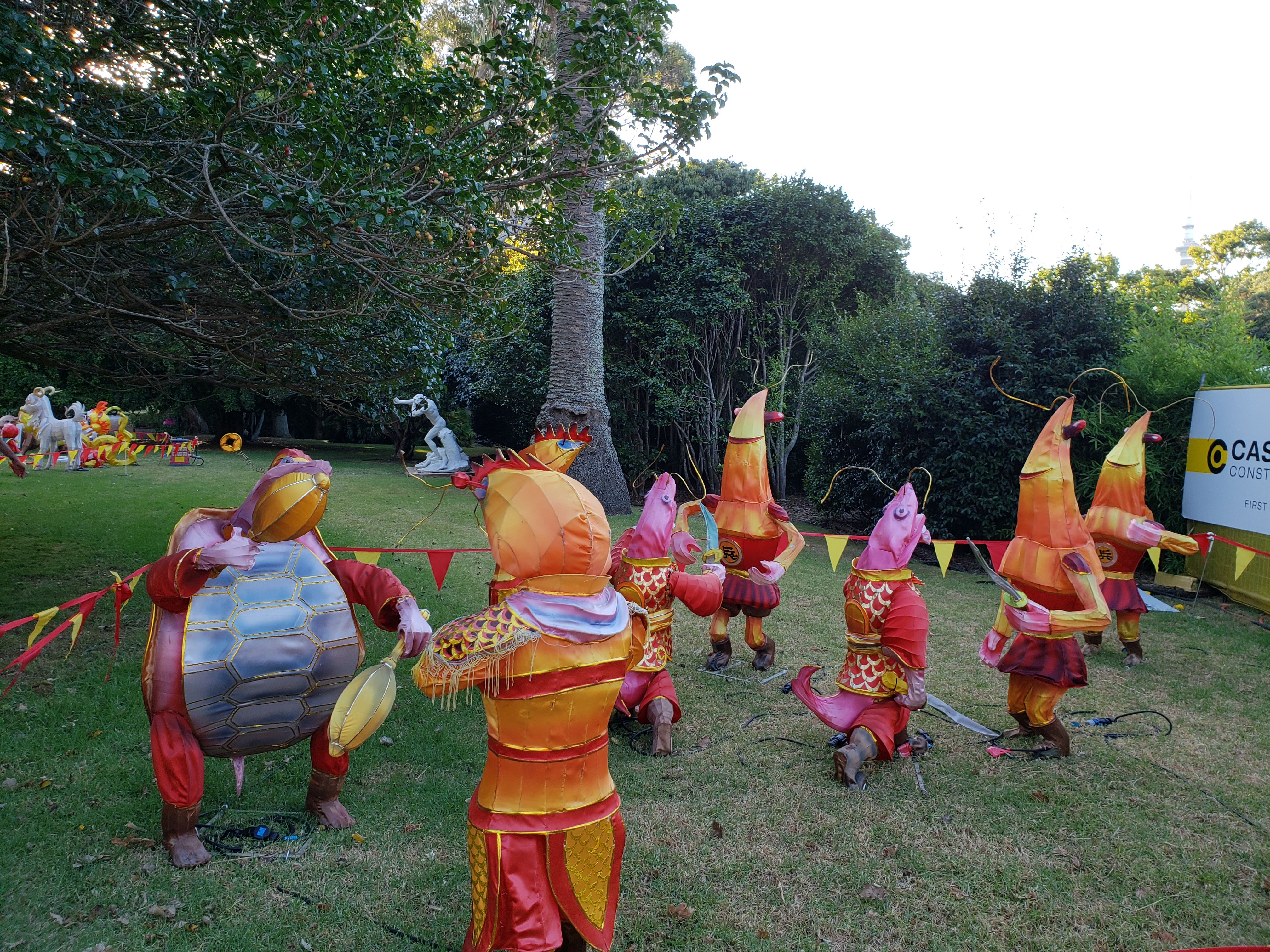
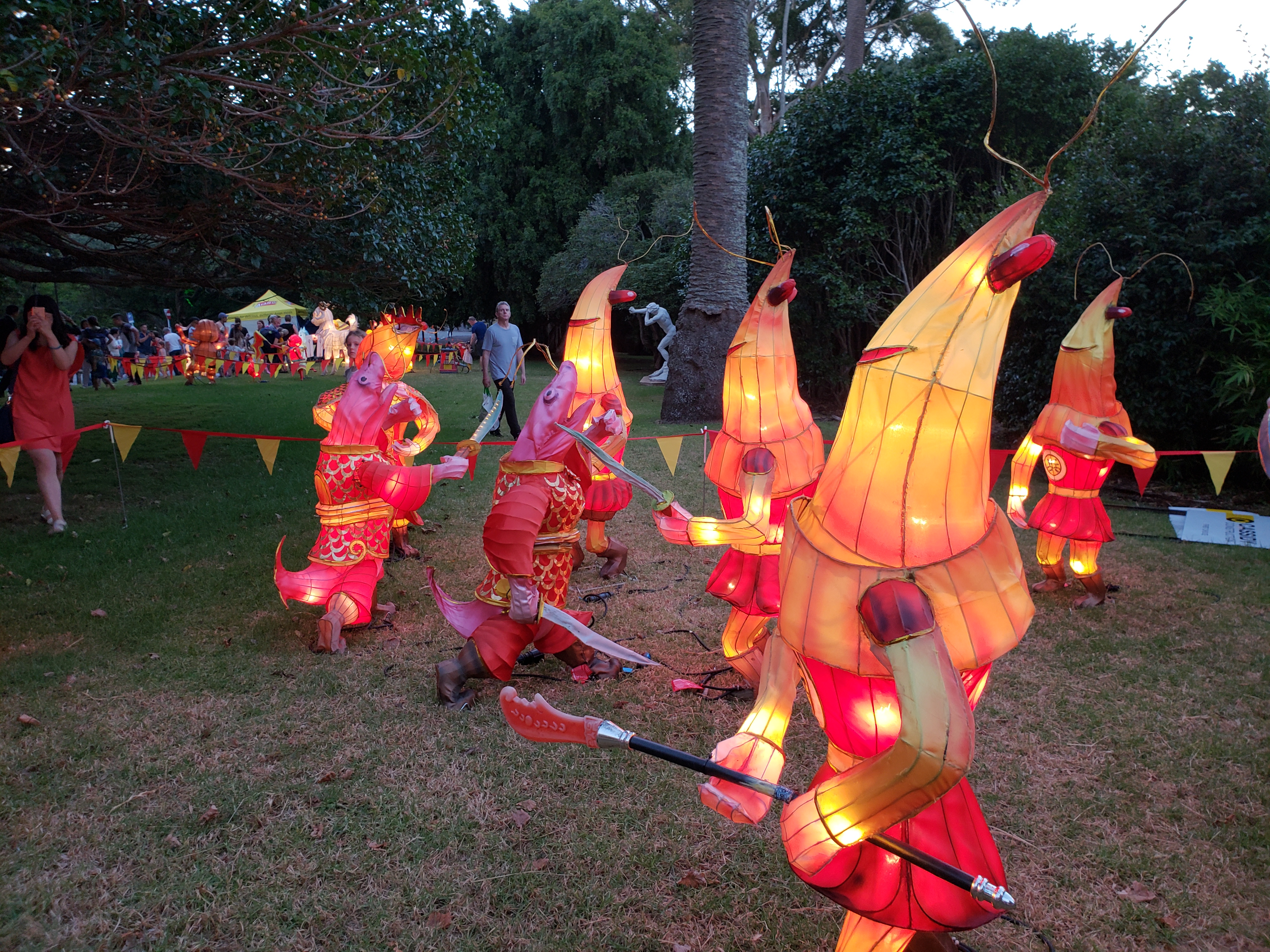
I decided if I was going to use these photos to write something for the Church Schools English curriculum, I might tell these stories. So, besides the story about the White Snake, here is the story of the the Crab Commanders and the Shrimp Soldiers. This one was harder to get good photos of, but I tried. These rather made me laugh.


The story also originally comes from a Chinese legend. The sign on this lantern said that the crab and shrimp represents “ineffective troops” and has become a common Chinese idiom.

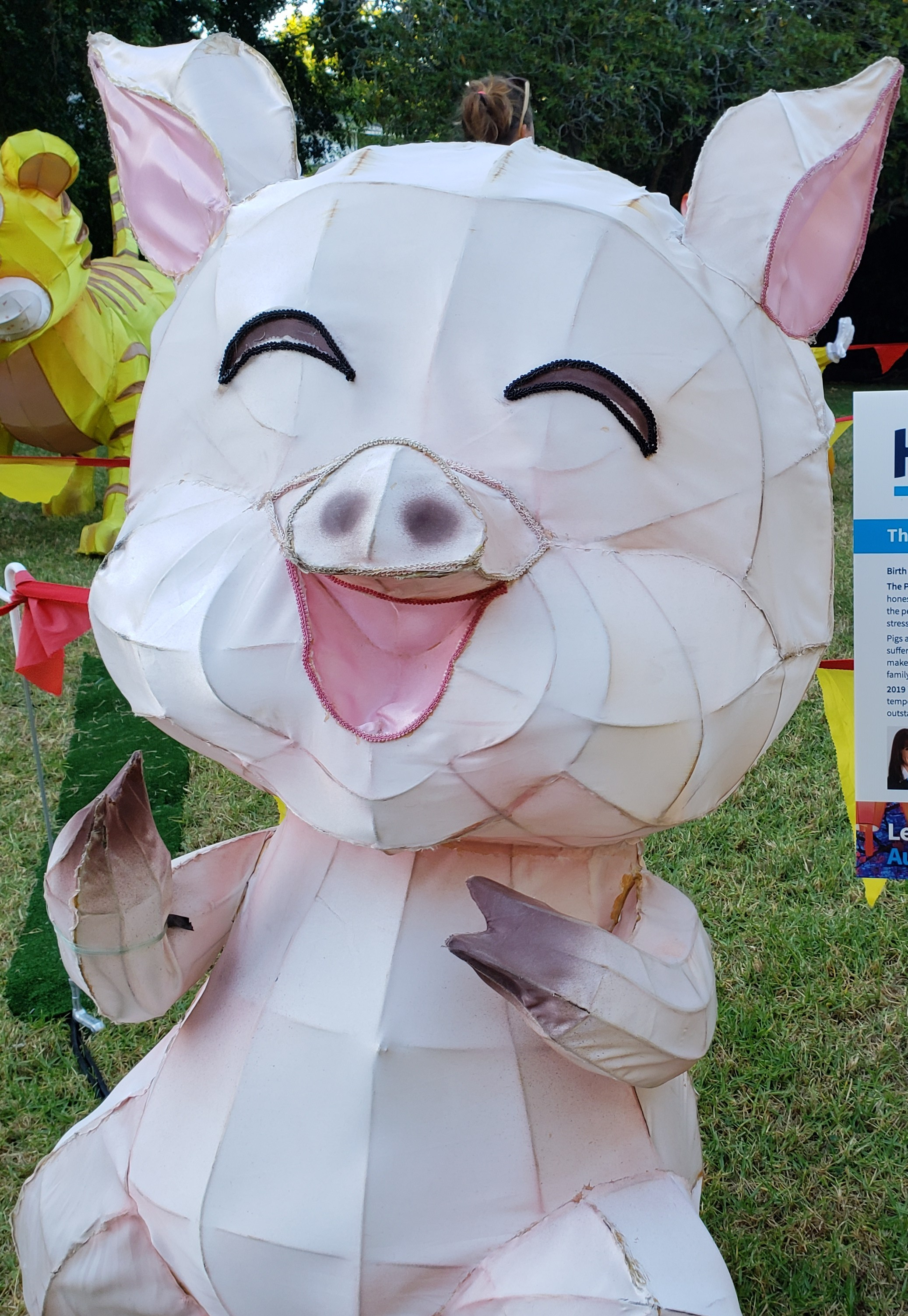
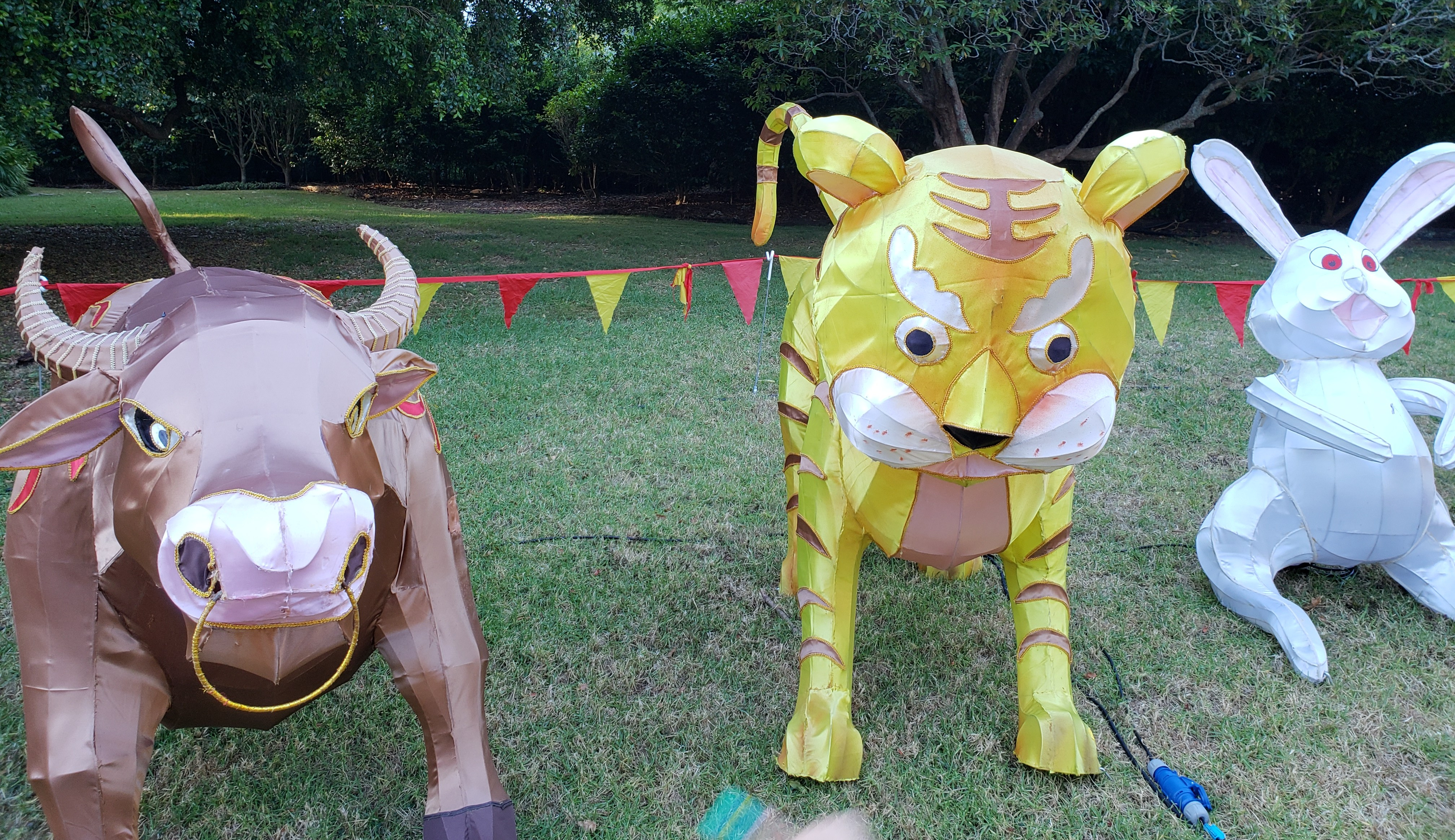
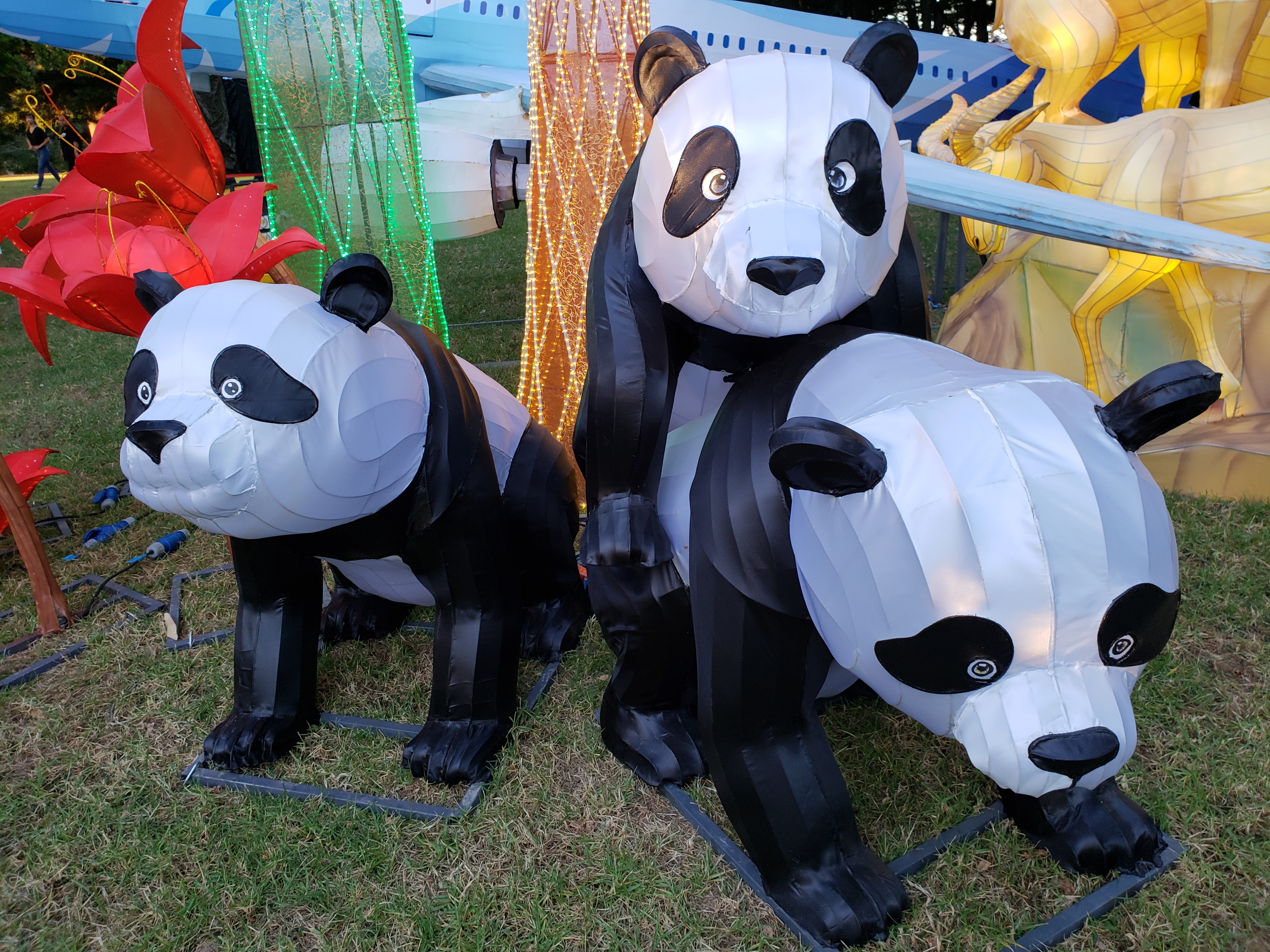
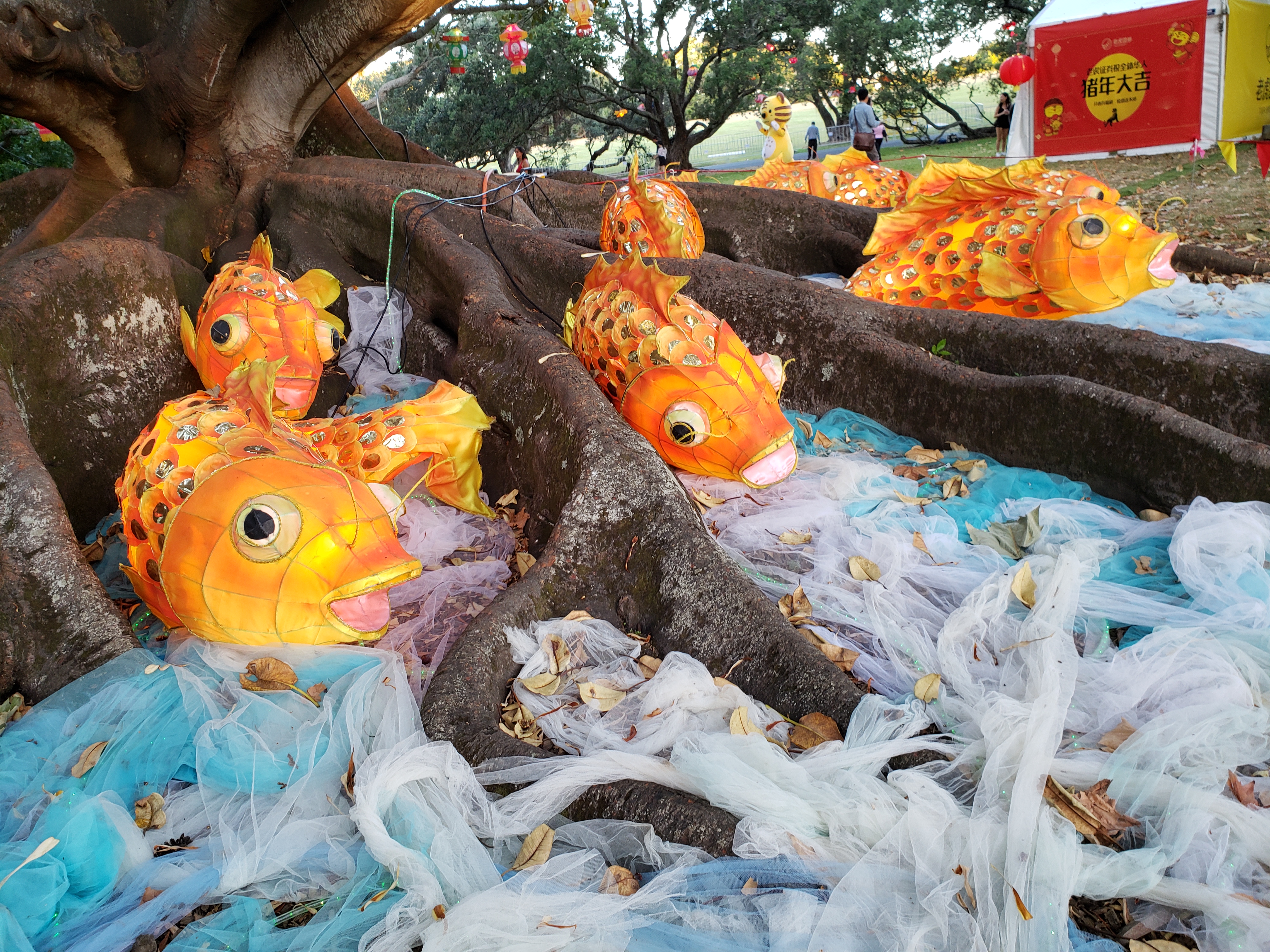
Another popular feature was representations of the animals of the Chinese zodiac. Some of these were close together and some had individual lanterns. Of course, this is the year of the pig, so the samples must include the pig.

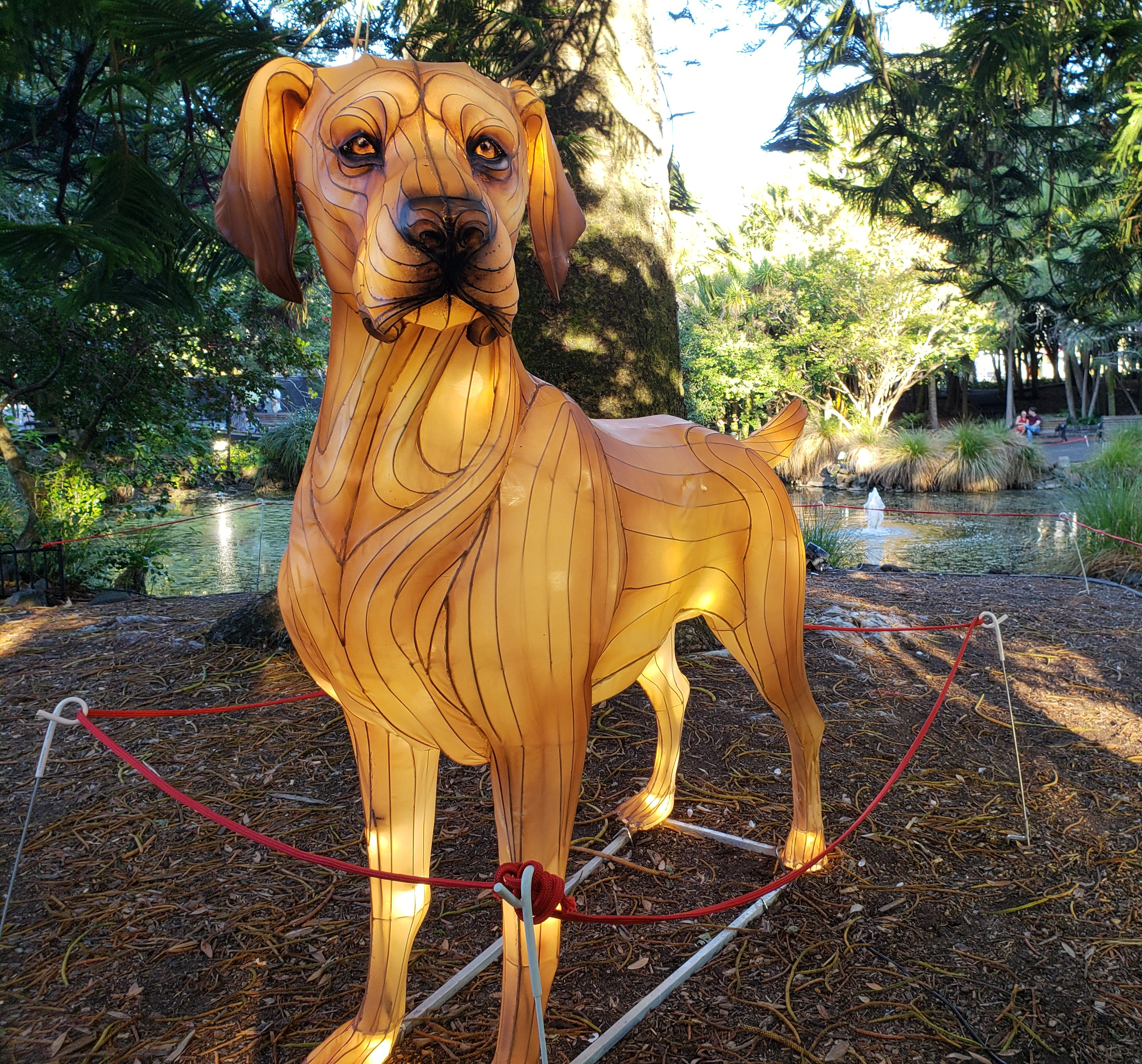
Some of the zodiac animals were scattered throughout the festival. Below is the dog, standing guard over one of ponds on the Auckland Domain, where the festival was held.

If you want to see the size of this dog lantern, here is Elder Holbrook
standing next to the dog. He estimated that the dog had to be at least 6 feet 4 inches tall.

I bet the size of the dog surprised you.

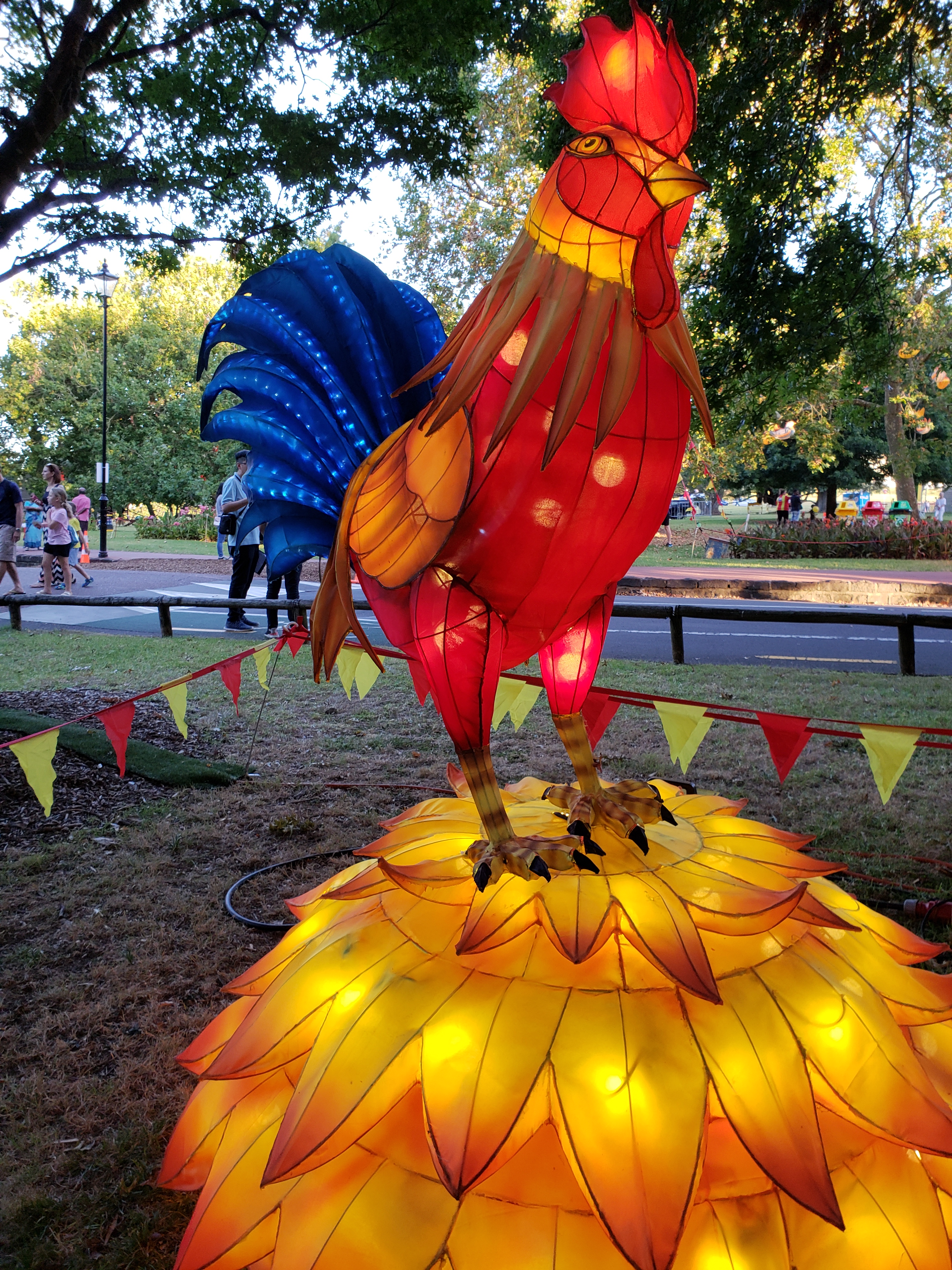
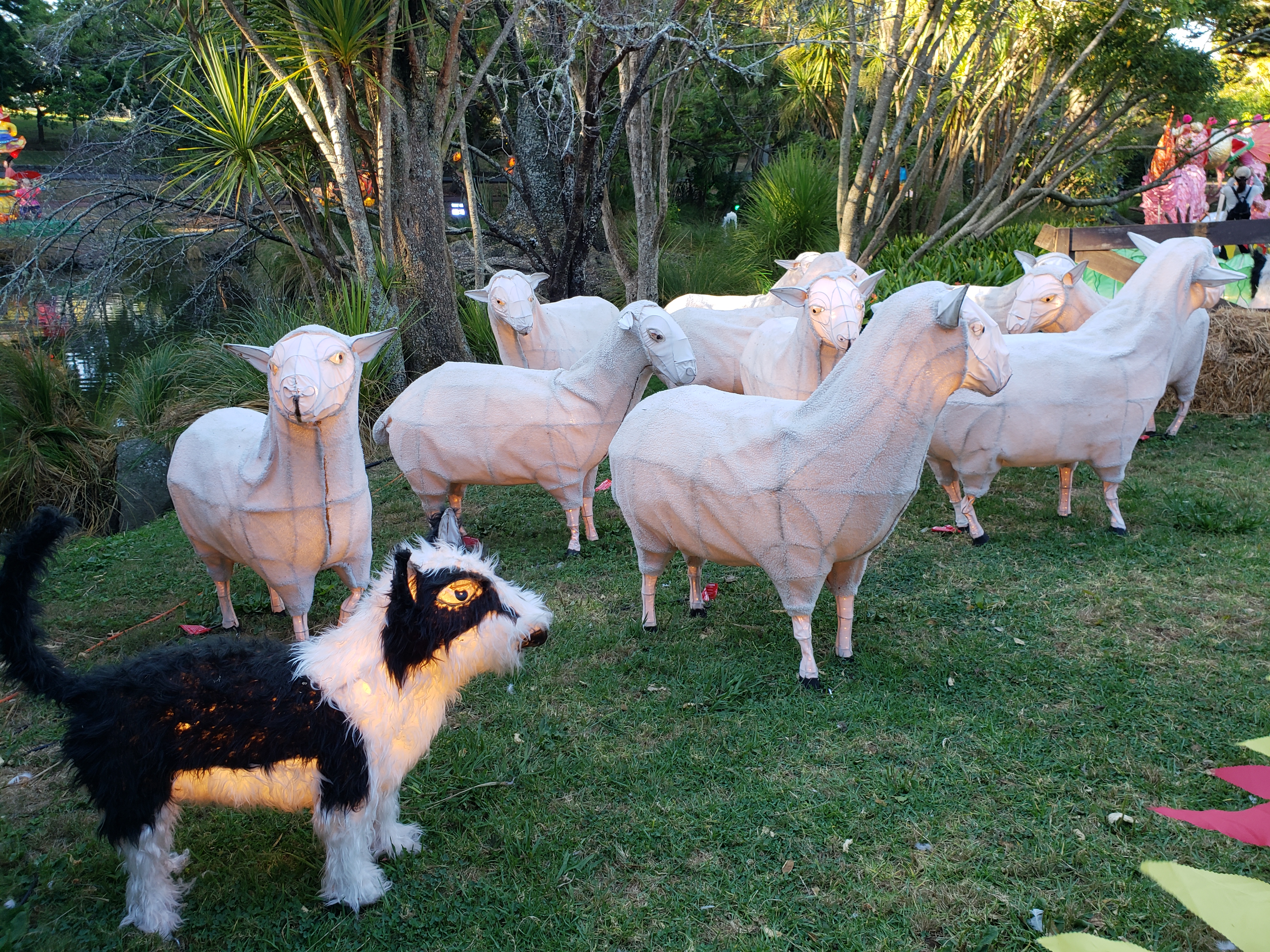
Below is the rooster. The festival also included animals that are not one of the twelve in the zodiac. I enjoyed the sheep dog guarding the sheep, since this is a country of many, many sheep. (Click to enlarge photos.)

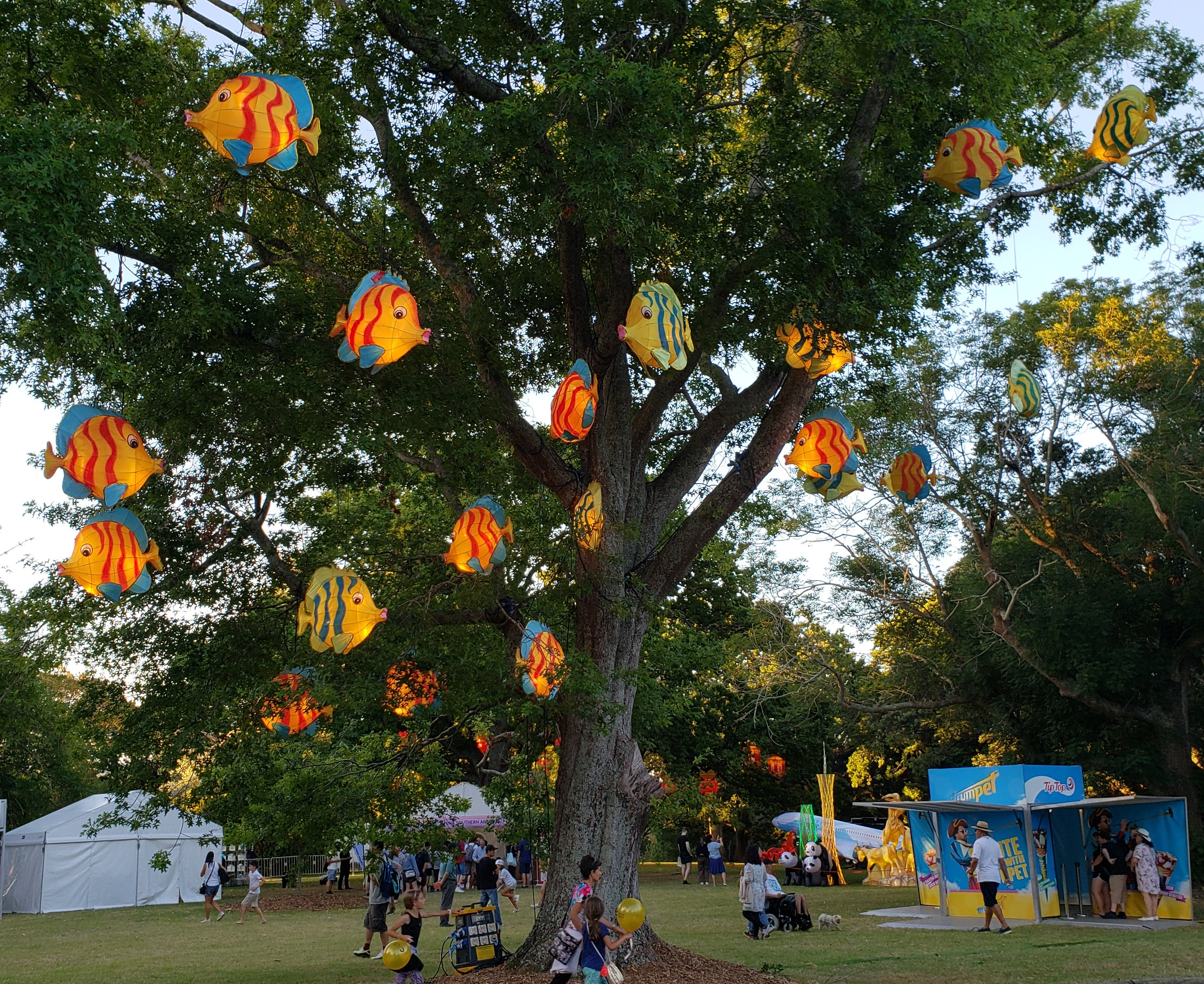
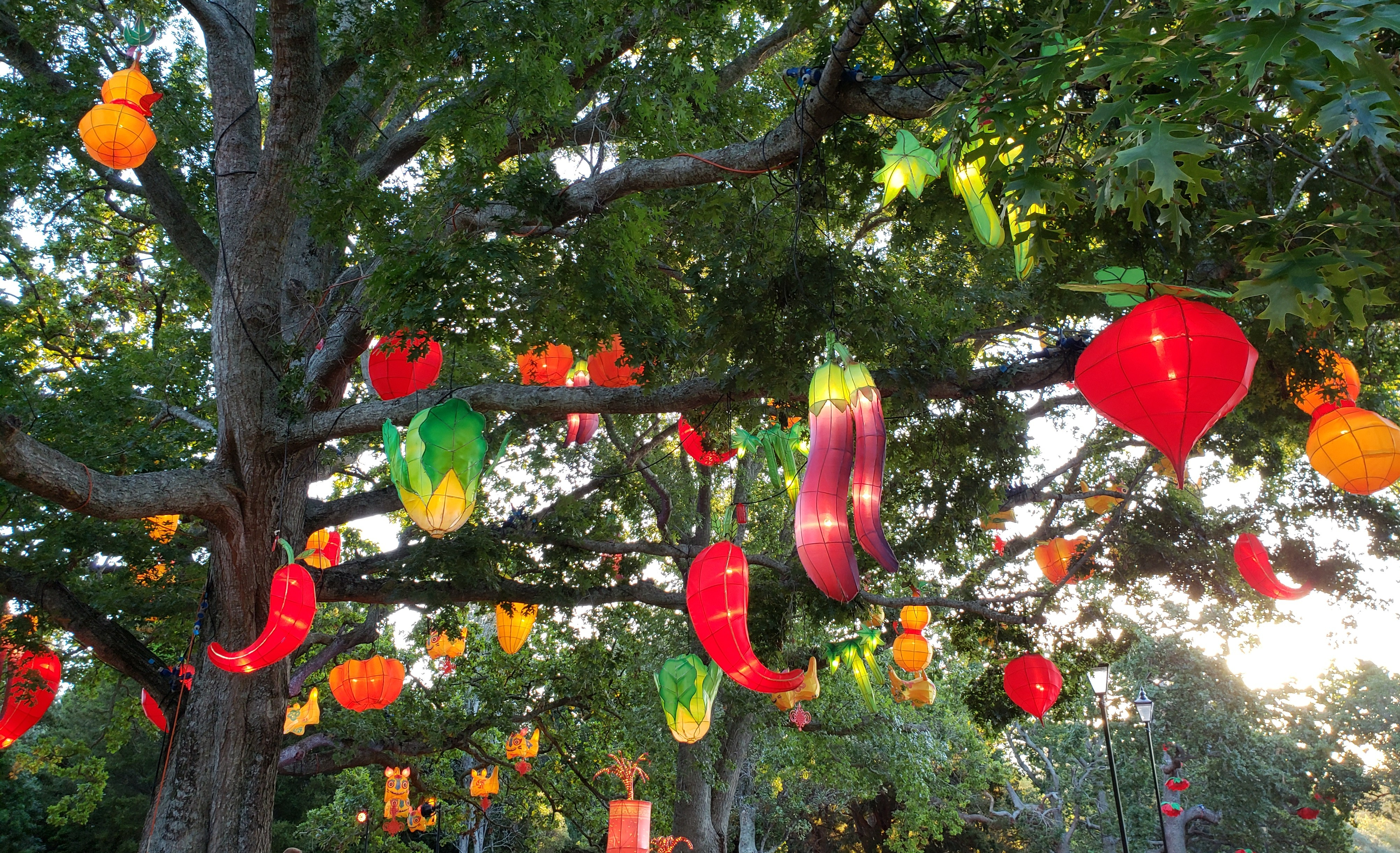
Other animals appeared in strange places, like these fish. If fish can swim in trees, can vegetables grow there, too?

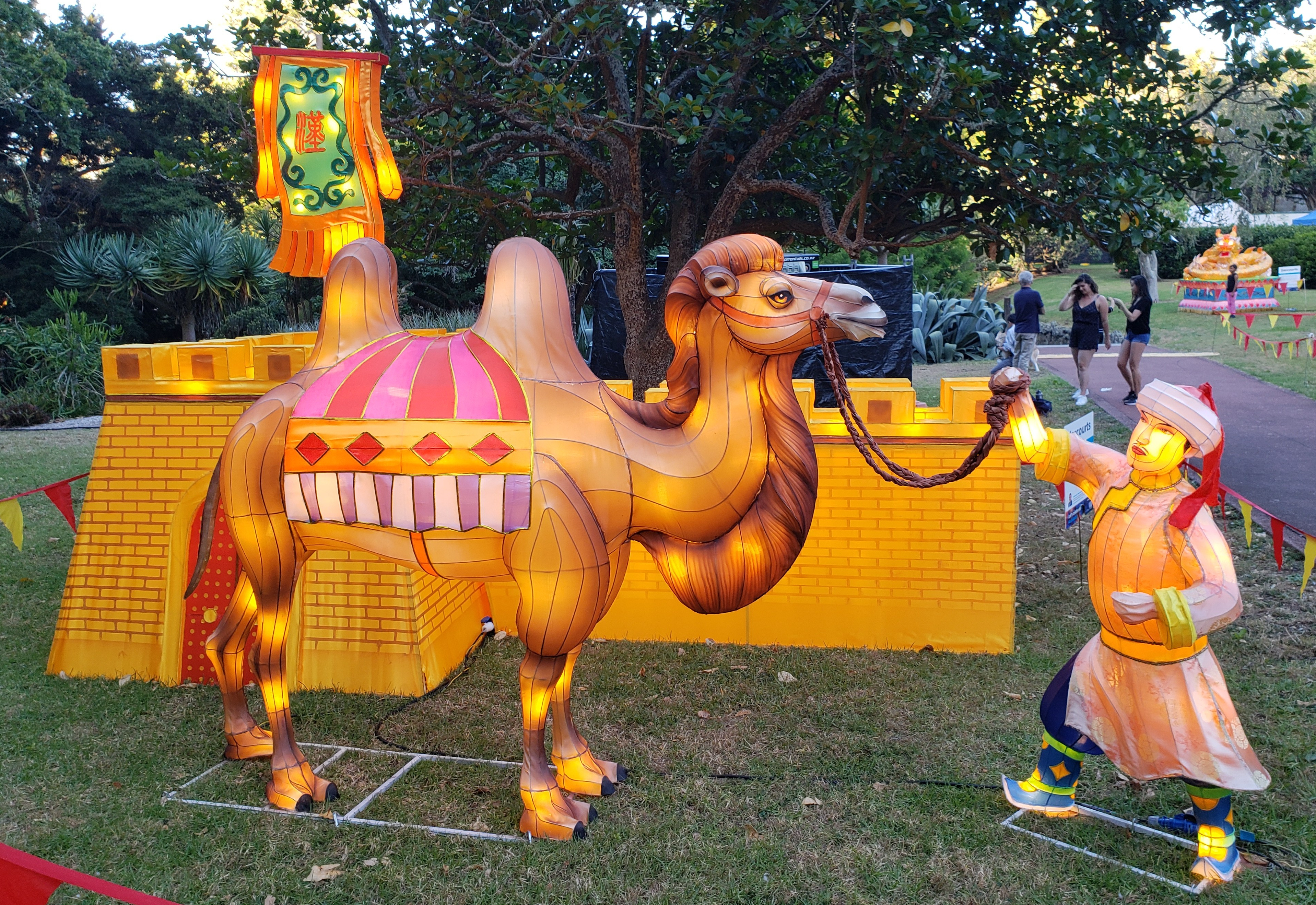
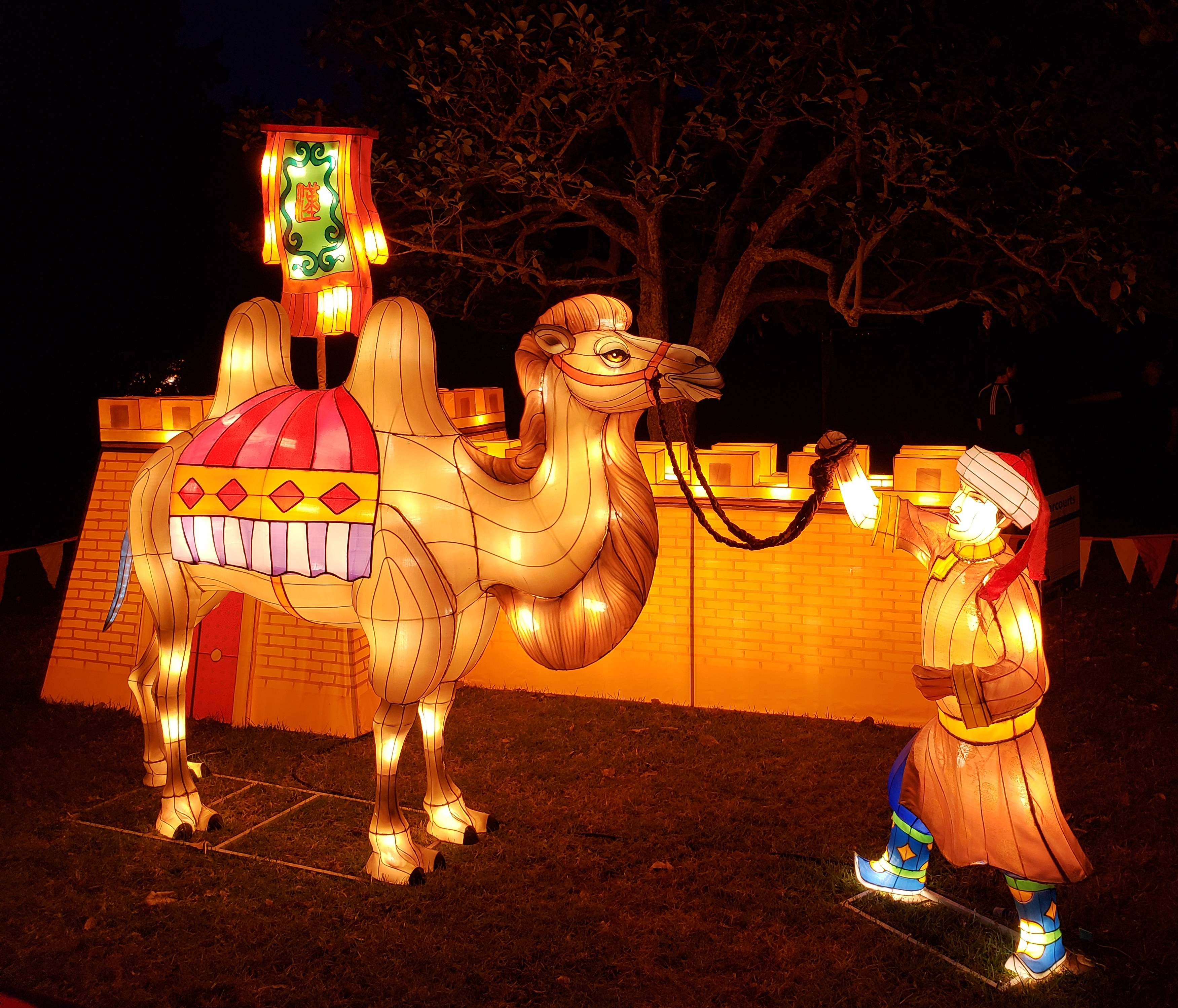
Now, before I use up all my size allowance on this one post, I’ll include some photos that I’m thinking about using in a comparison activity for the English curriculum. We arrived before sunset in order to beat the crowd; it worked. It was easy to walk around, but then the generators were not on, so the lanterns were not “lit.” Here are a few photos from both times–before the sun was down and after the lanterns turned on. First, a camel in front of the Great Wall of China.

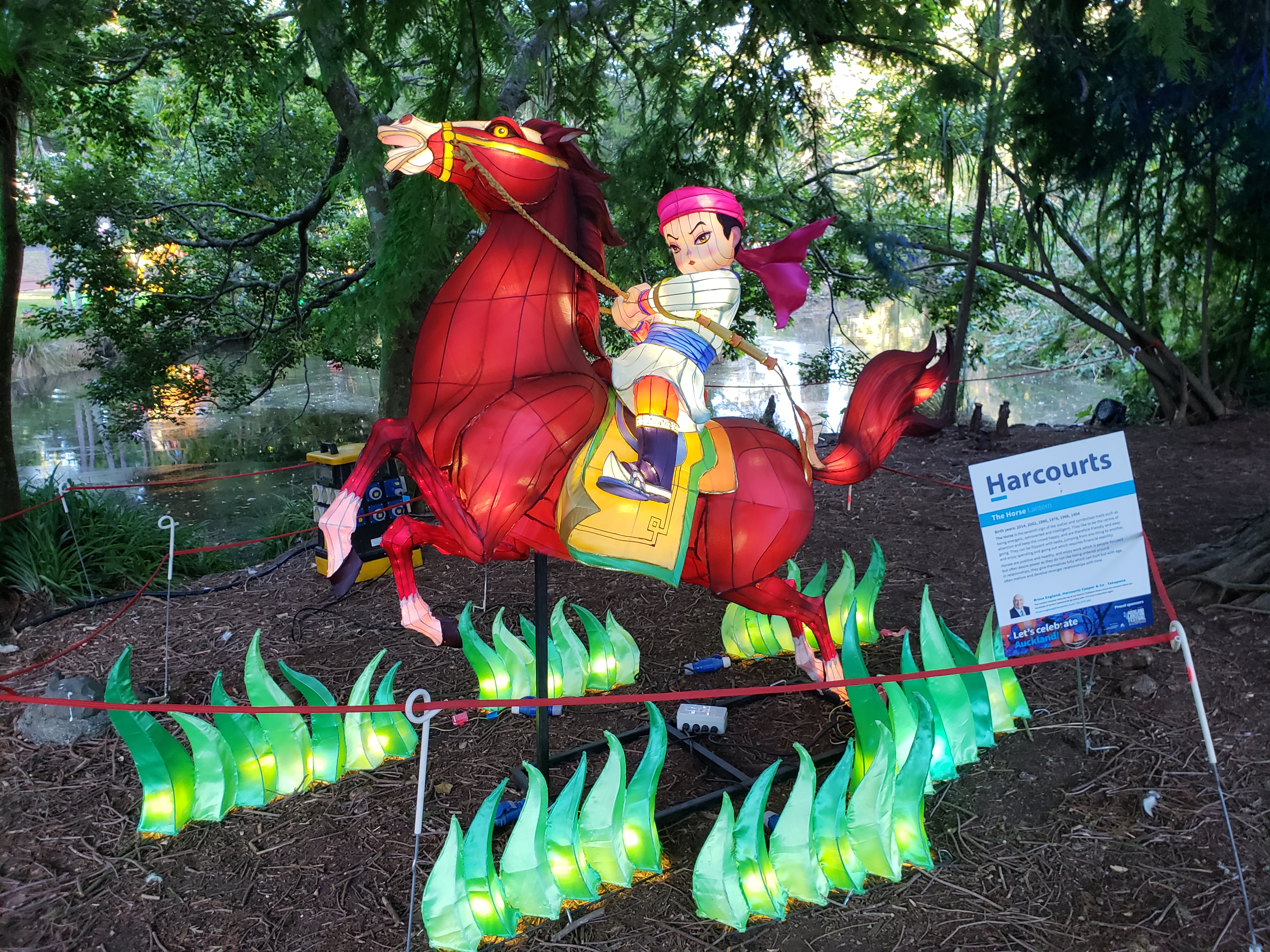
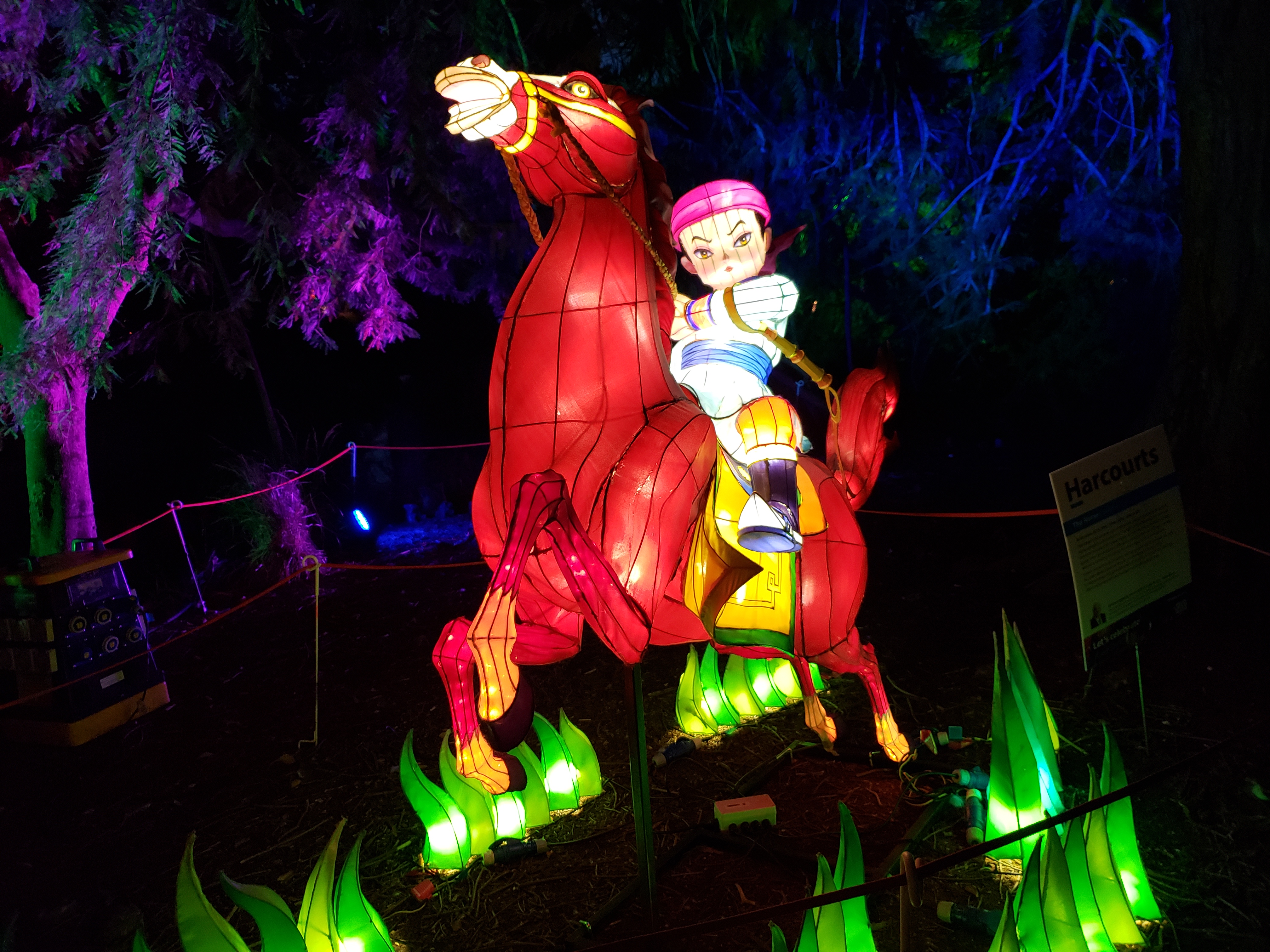
Another choice, with my birth year animal, the horse.

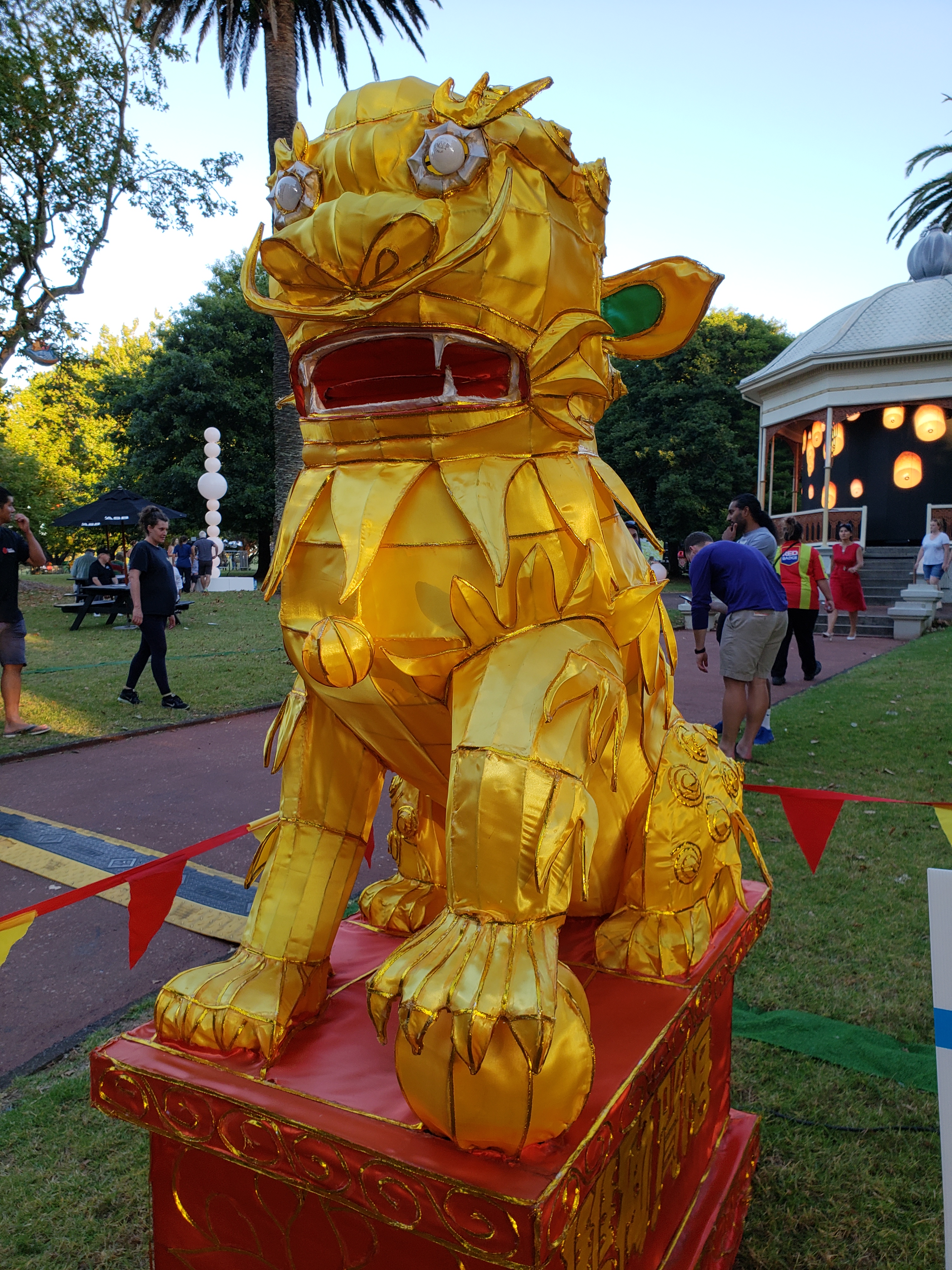
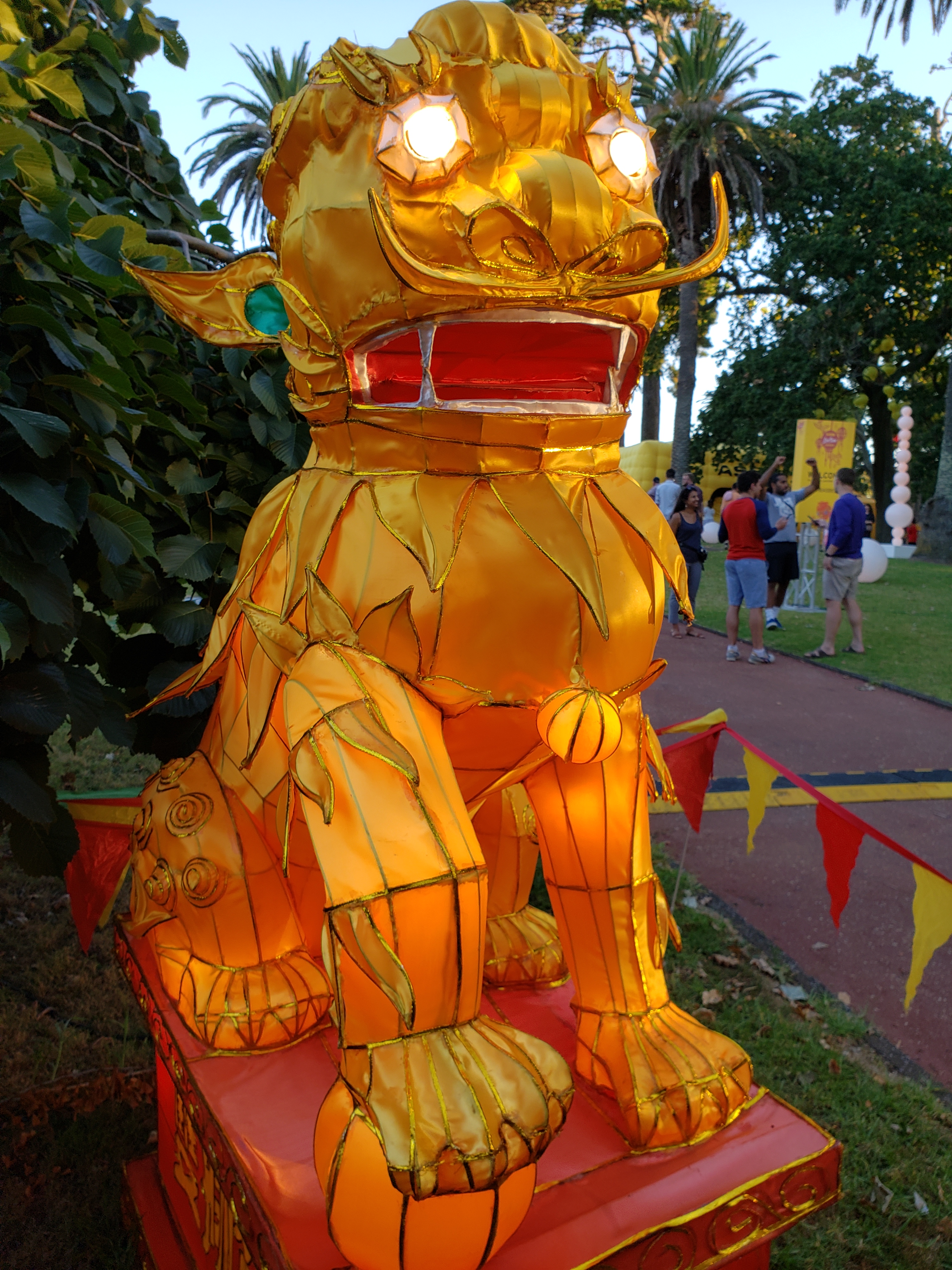
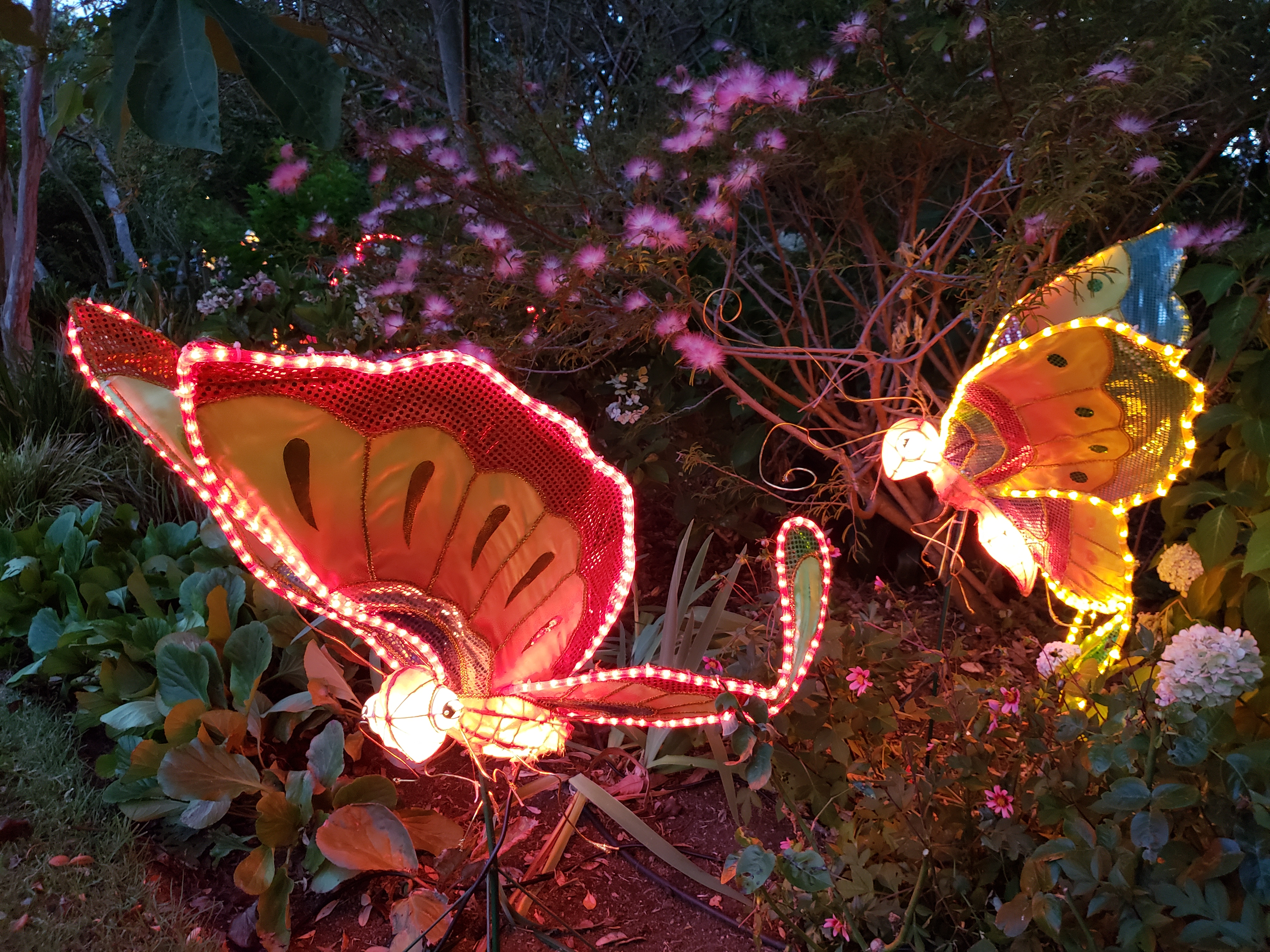
Here are some royal lions, guarding the palace. I noticed a worker turning the generators on just after I took the photo on the left. After the lions, there are two photos of a few of the many butterflies in the bushes.

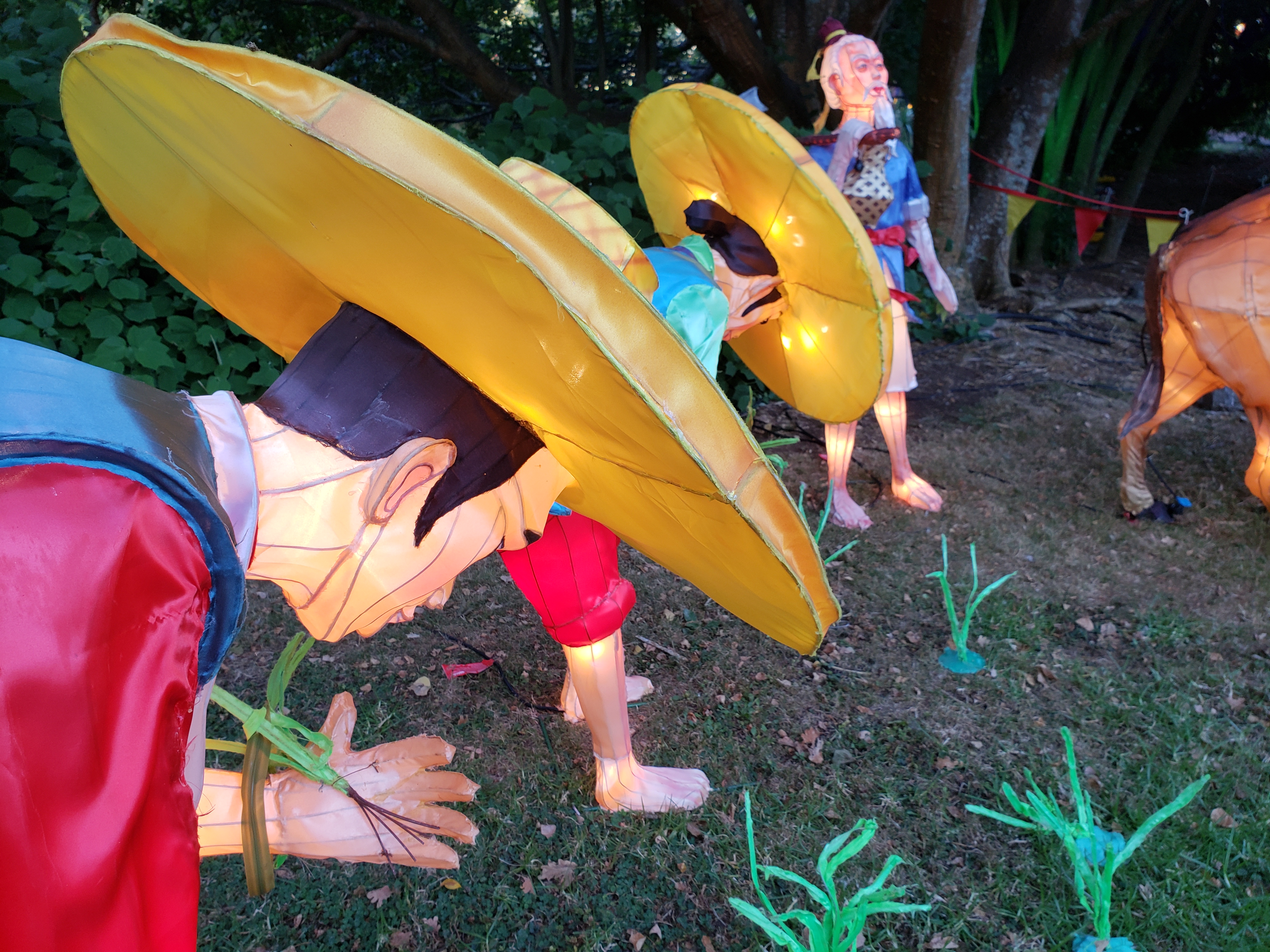
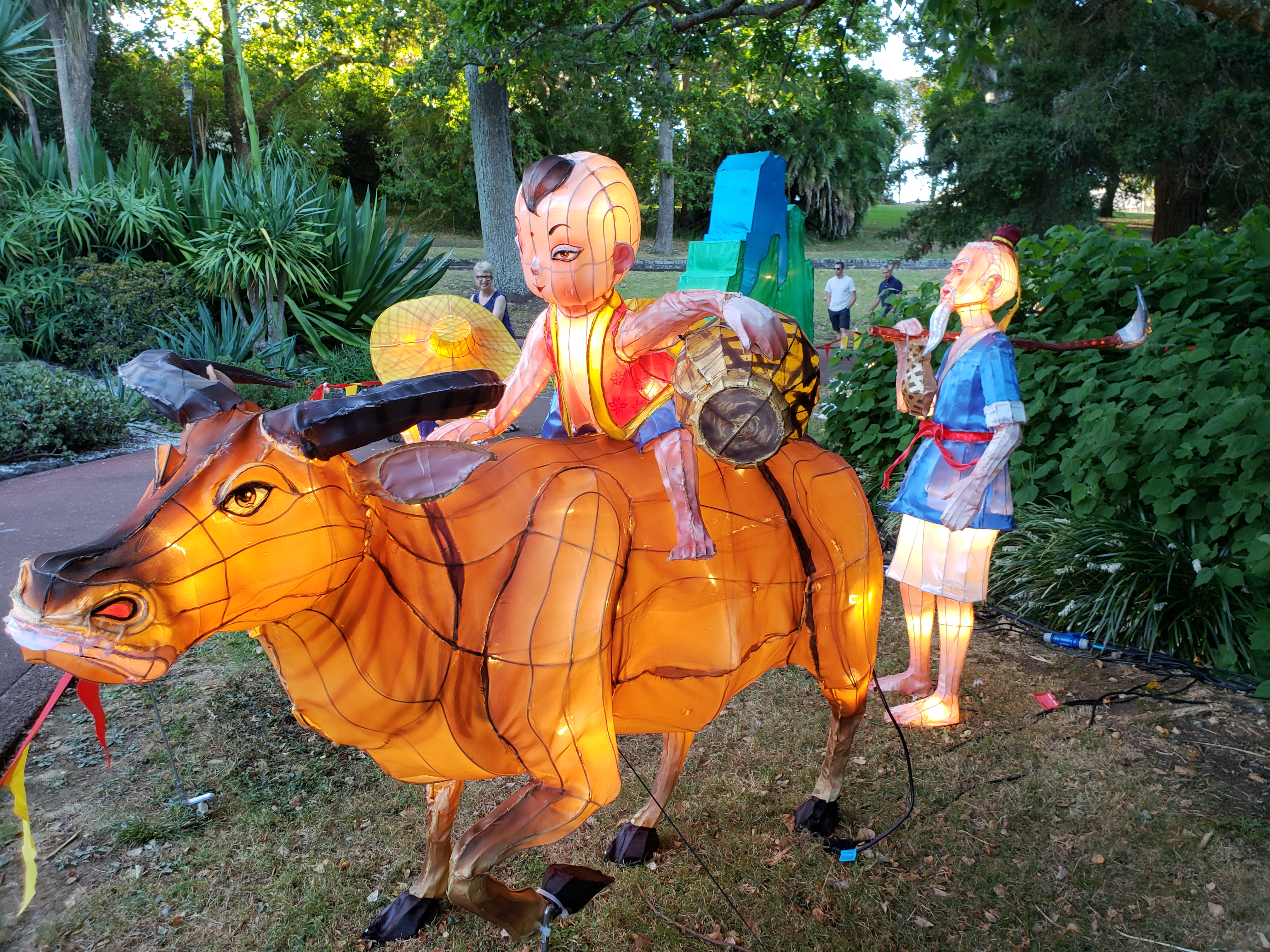
Finally, a few more wonderful lanterns I didn’t want to leave out. I hope you are as impressed as I was with the artistic quality of these Chinese lanterns. Planting rice, with the small boy on the water buffalo reminded me of my time in the Philippines on my first mission. (I even rode a water buffalo once for a few minutes.)

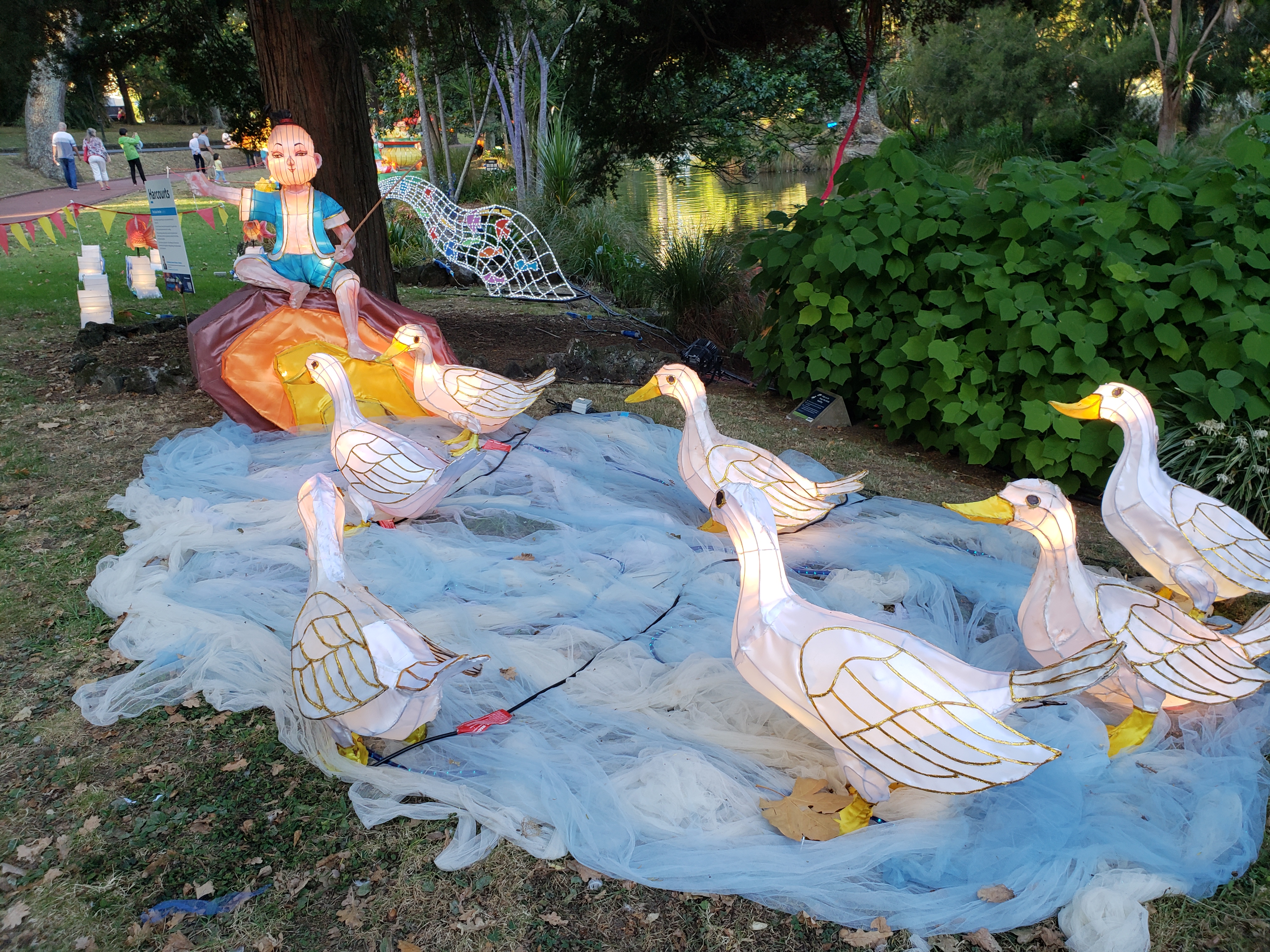
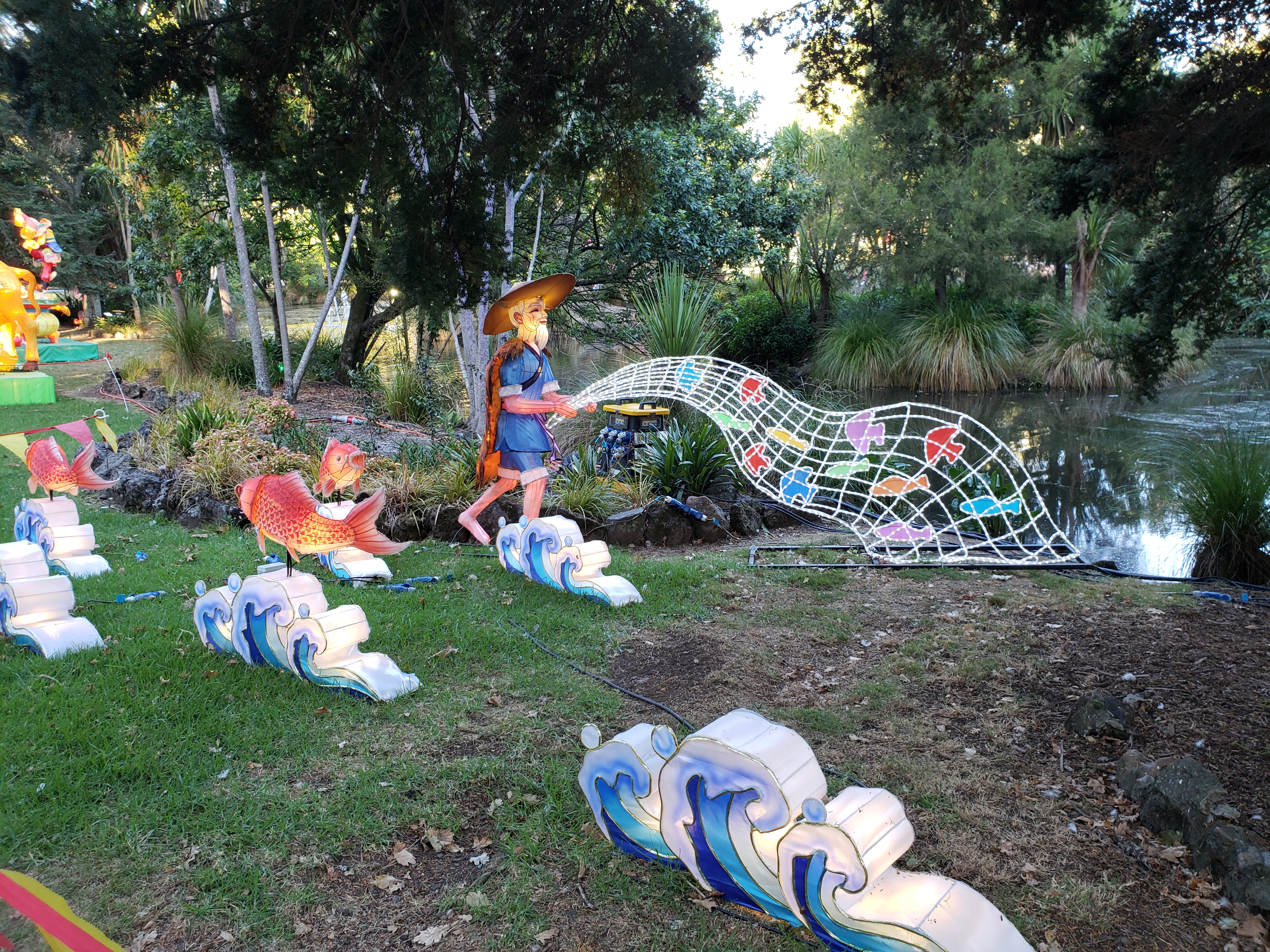
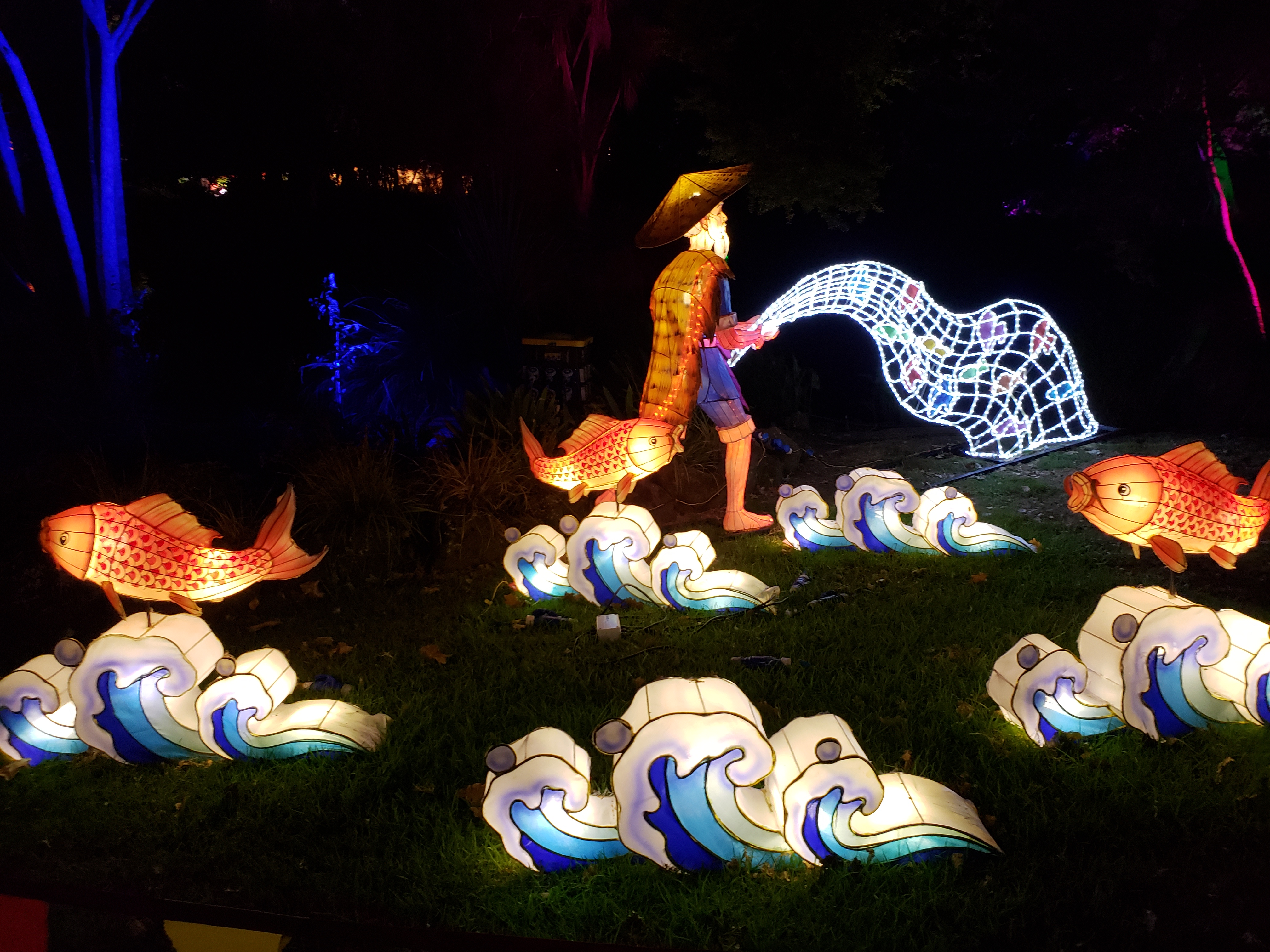
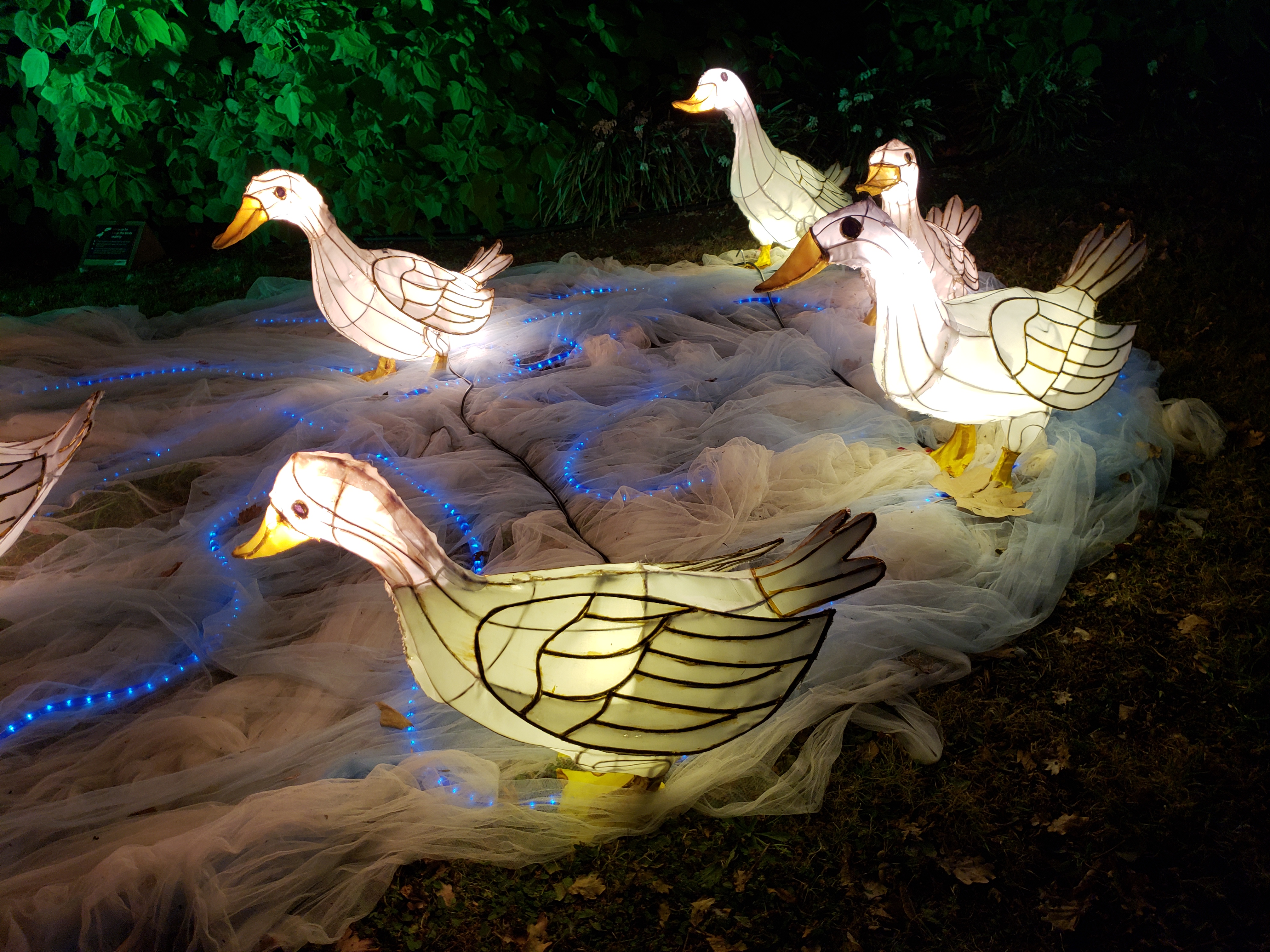
A duck herder and a fisherman in this set, both before and after dark. (Again, click to enlarge.)

My favorite, the swans!

The swans in front of Buddha

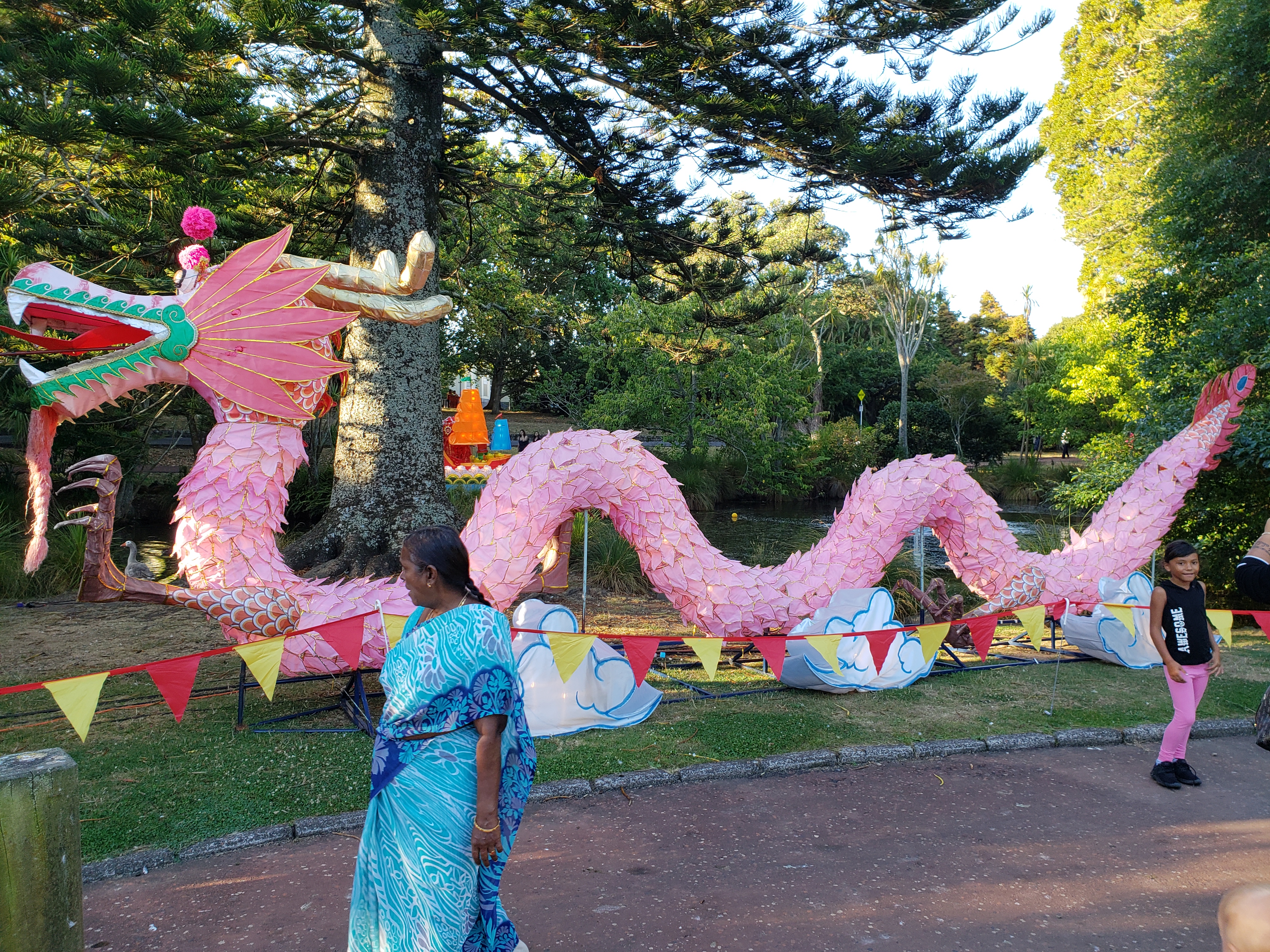
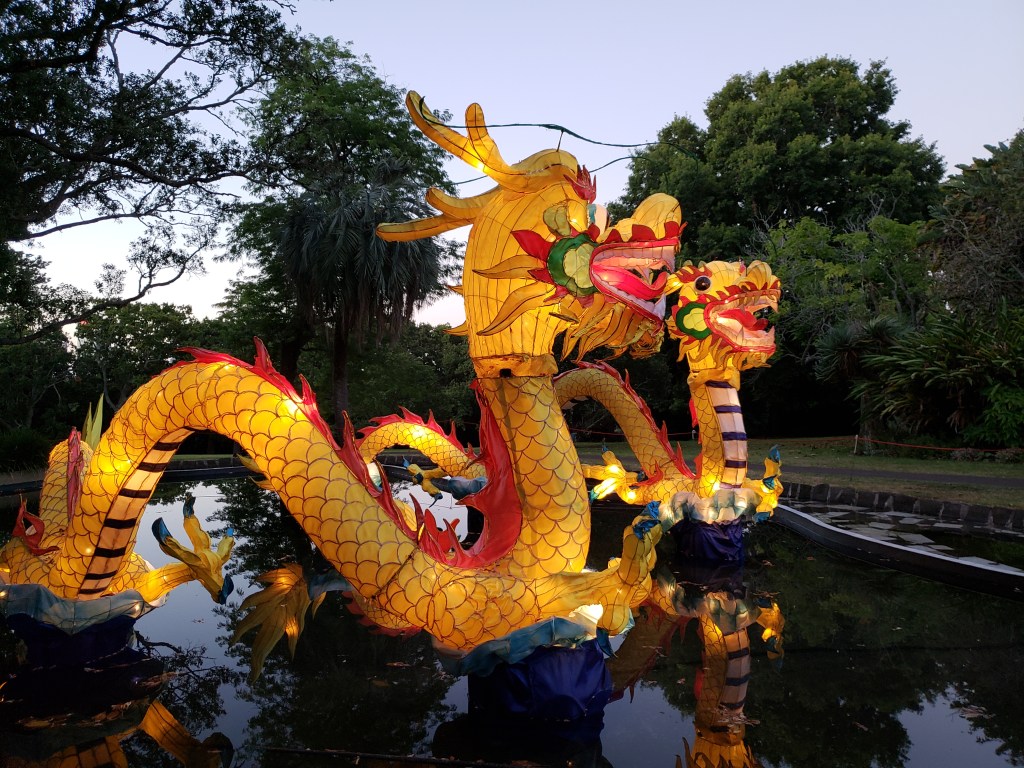
But what is a Chinese festival without the dragons? I took a video of these because they were moving, but somehow didn’t get the video transferred to my computer from my phone. Enjoy the still photo.

Happy Chinese New Year!

A return to Samoa after nearly 40 years

The last week of January found me heading to Samoa after many, many years. You can suppose that I was excited to be returning.

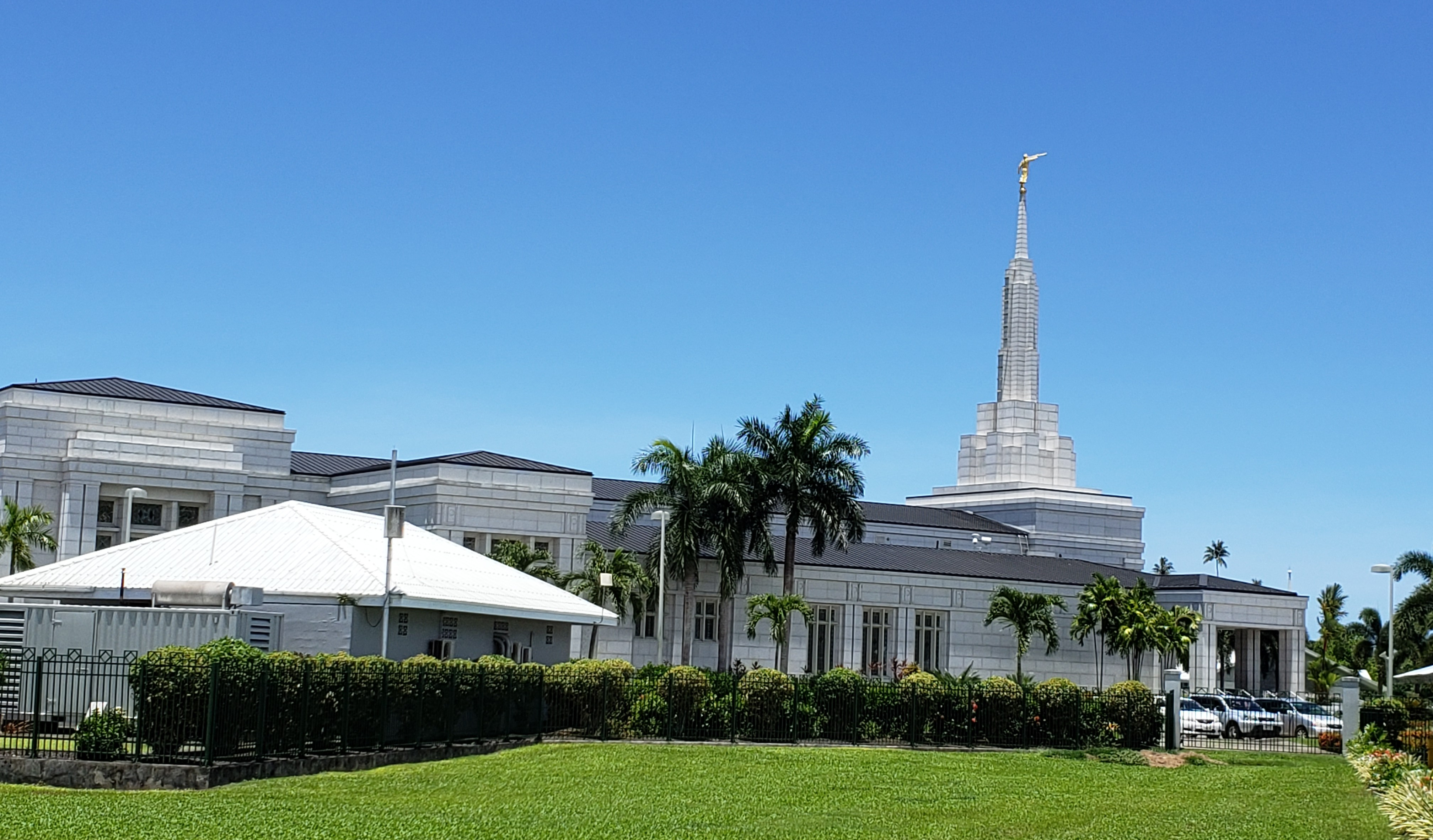
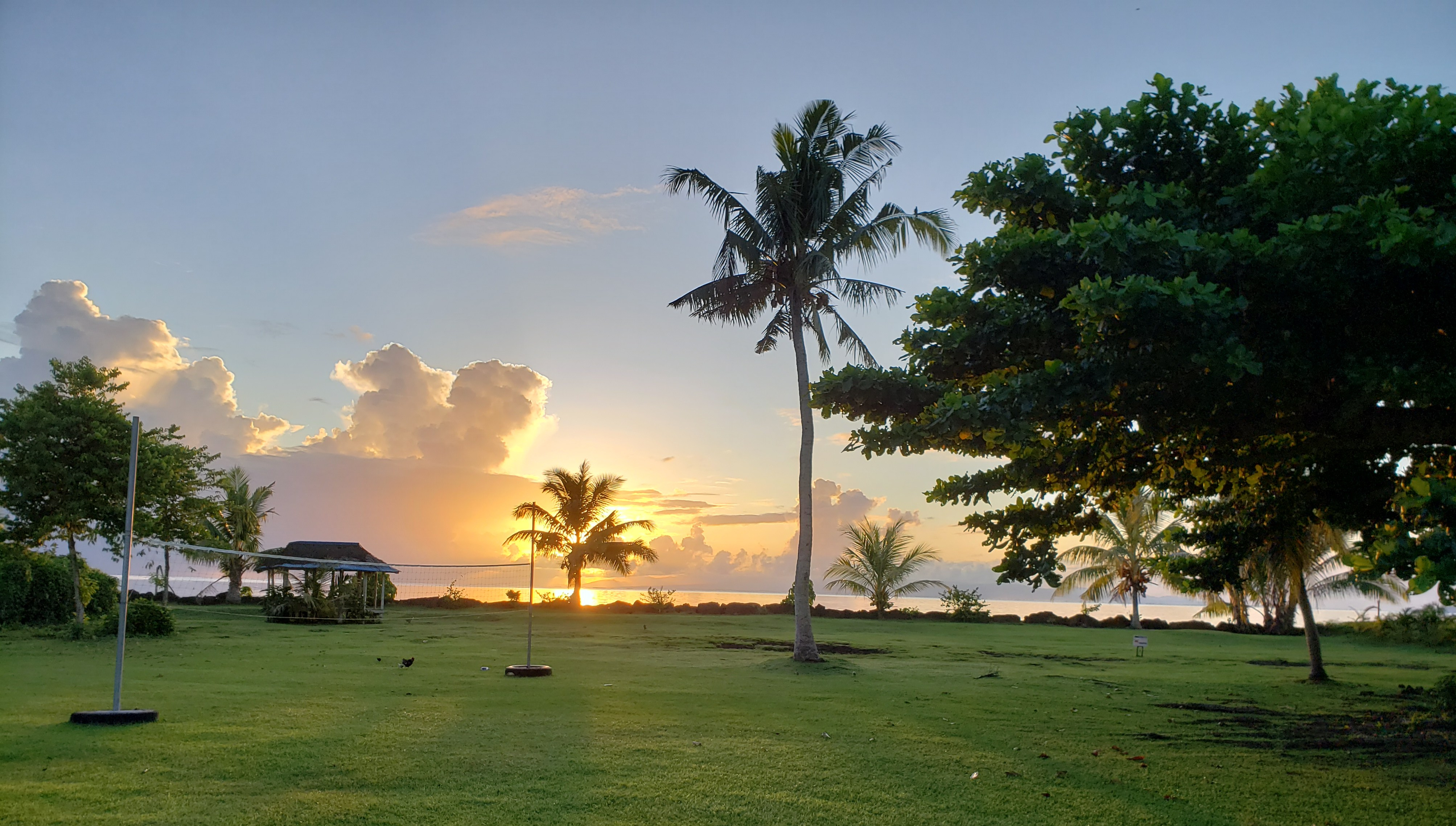
Samoa was lovely and beautiful, if a bit hot. If you don’t think so, then look at these photos. After the view of the temple from the grounds of the Church School at Pesega (above), I’ll start with a photo of a sunrise one morning. We were staying at a small resort near the school called the Savai’ian (on the island of Savai’i).

I suppose I should try for some chronology. We arrived Sunday evening and spent Monday at Pesega Middle School teachers pre-service meetings. Pesega is located in Apia on Upolu. For some reason, I didn’t get my camera out there to take any photos. The teachers and school leaders had some good discussions of test data and other current needs in the school. I did some training on the new resources that were coming soon (perhaps they are sitting on the dock?). These are mostly books we have ordered for the students and teachers–English graded readers, dictionaries, and so forth.

Leaving port on Upolu, Samoa

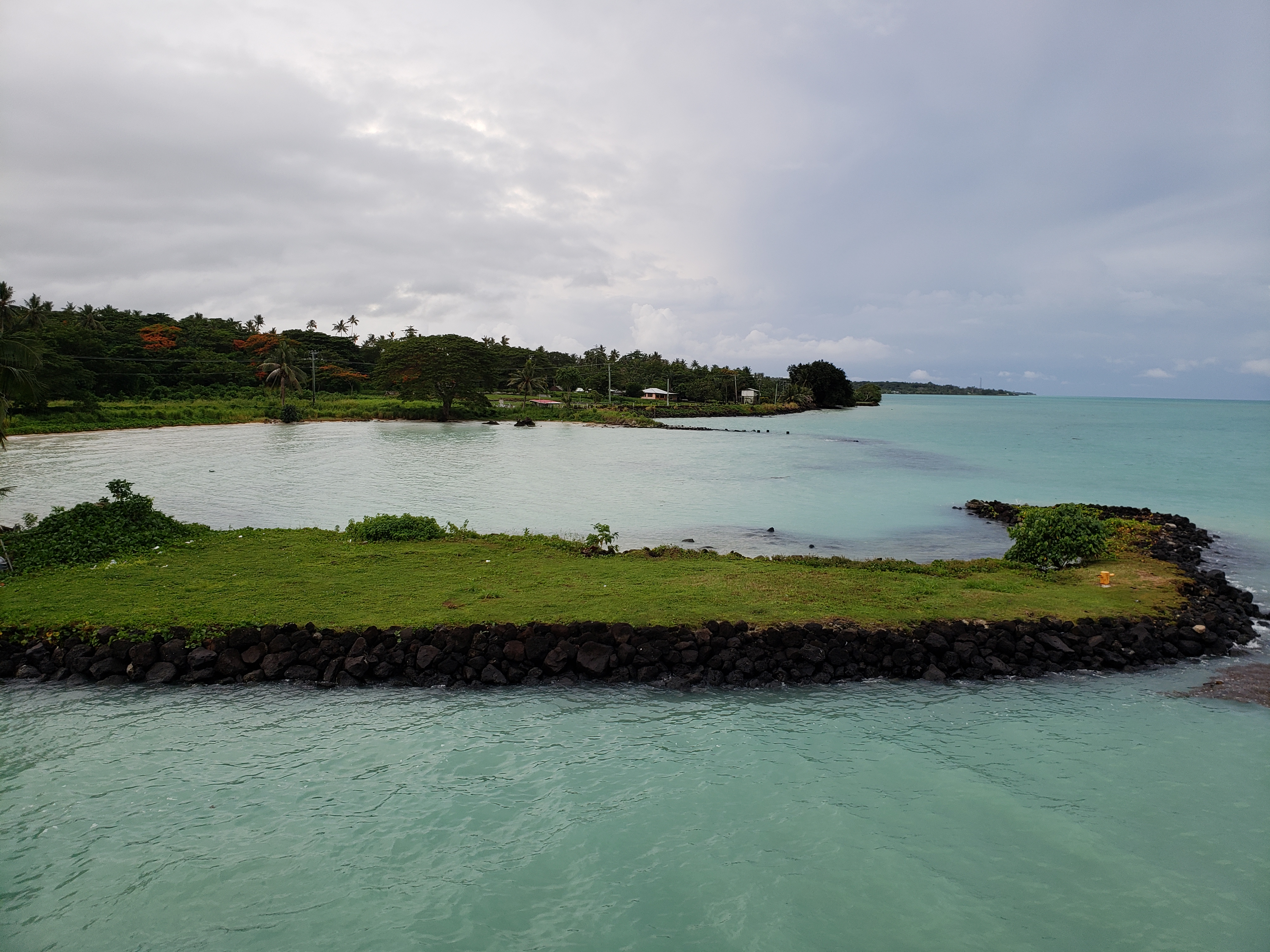
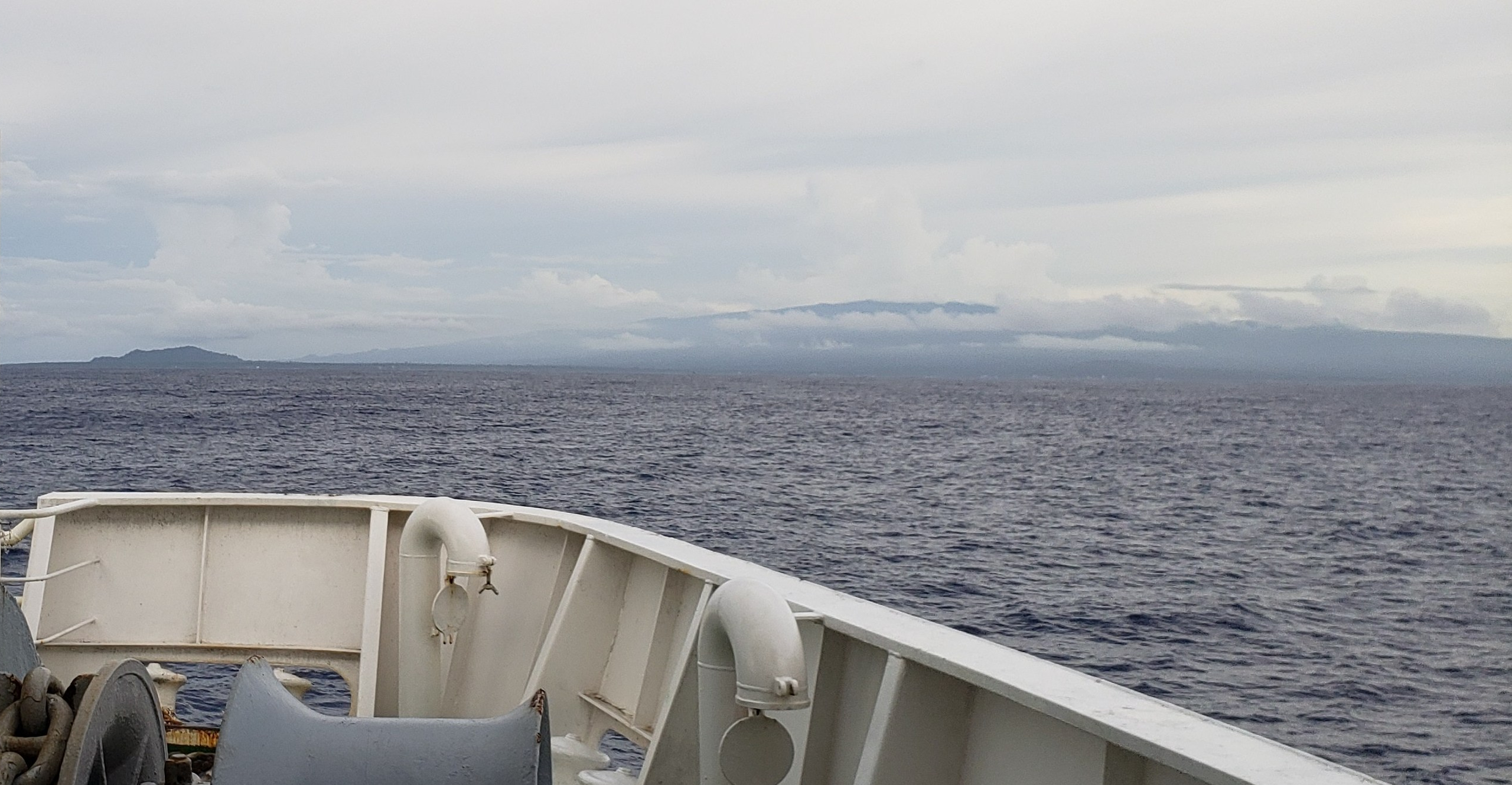
As we left of Upolu for Savai’i on Tuesday morning, I took this photo on the left. The color of the ocean was stunning.

Savai’i is the land mass on the right covered in some clouds.

In the the next photo, the island of Savai’i can be seen on the horizon. It is the land on the horizon, mostly covered with clouds. The ferry crossing between Upolu and Savai’i took about an hour.

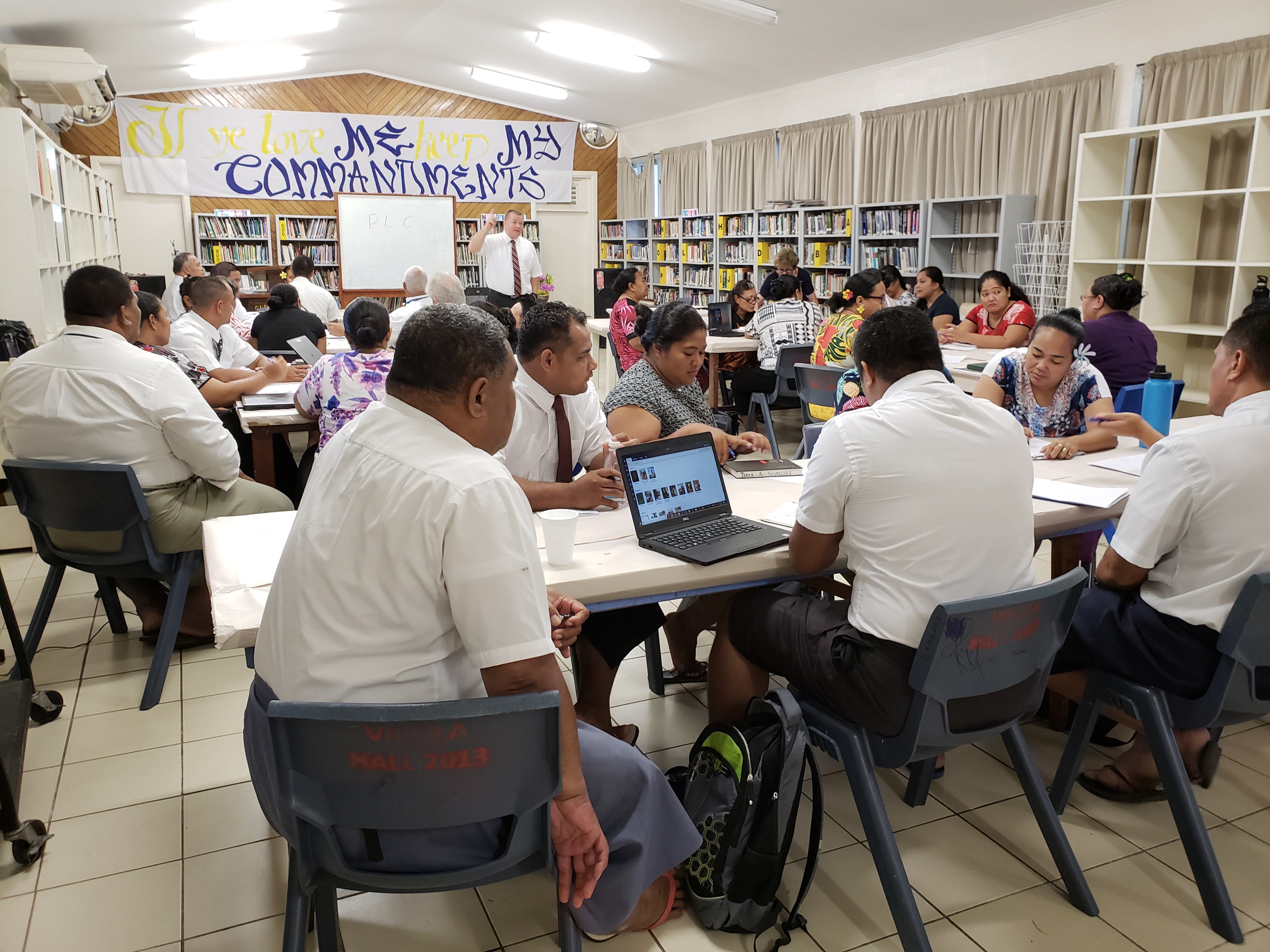
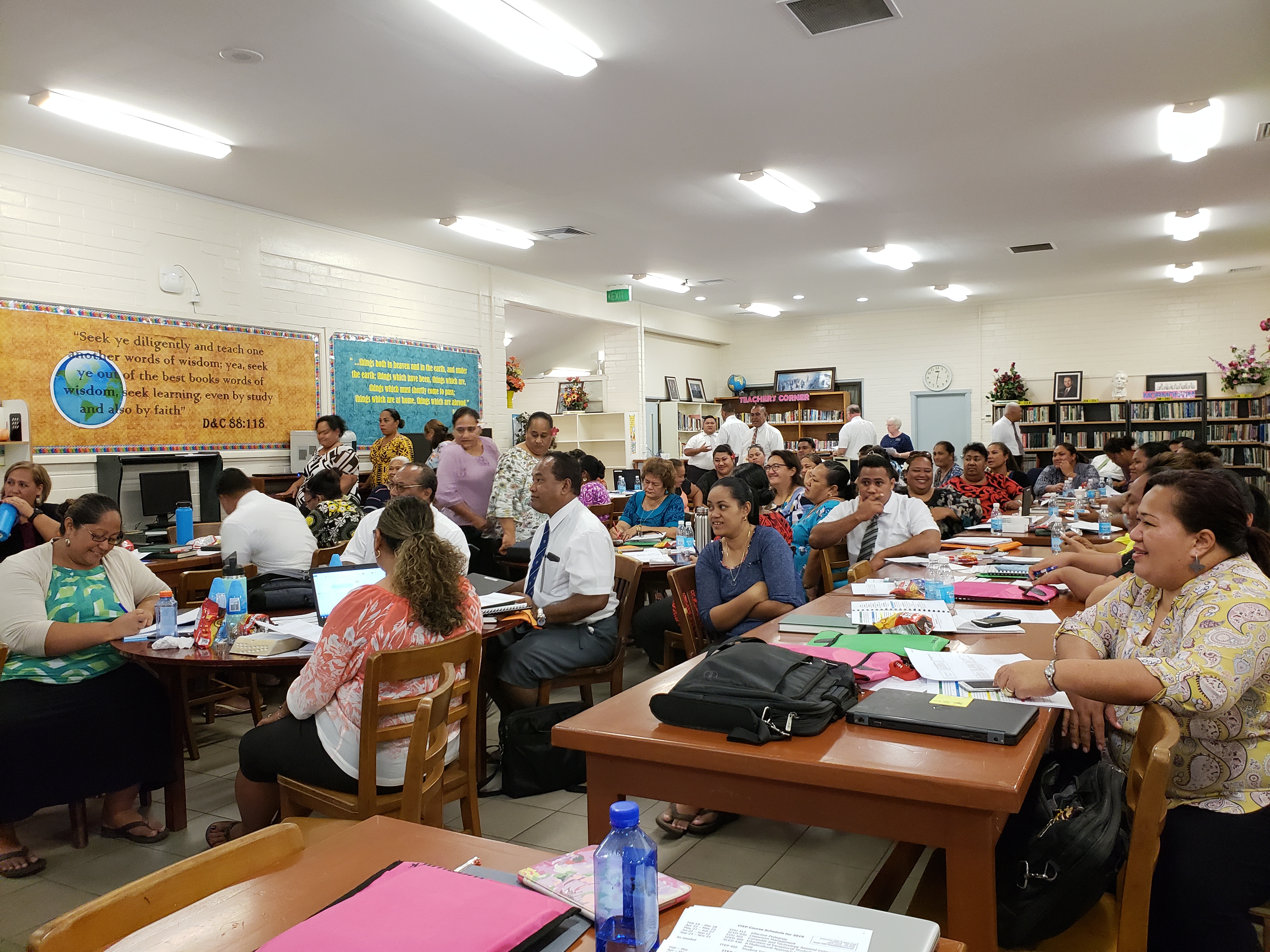
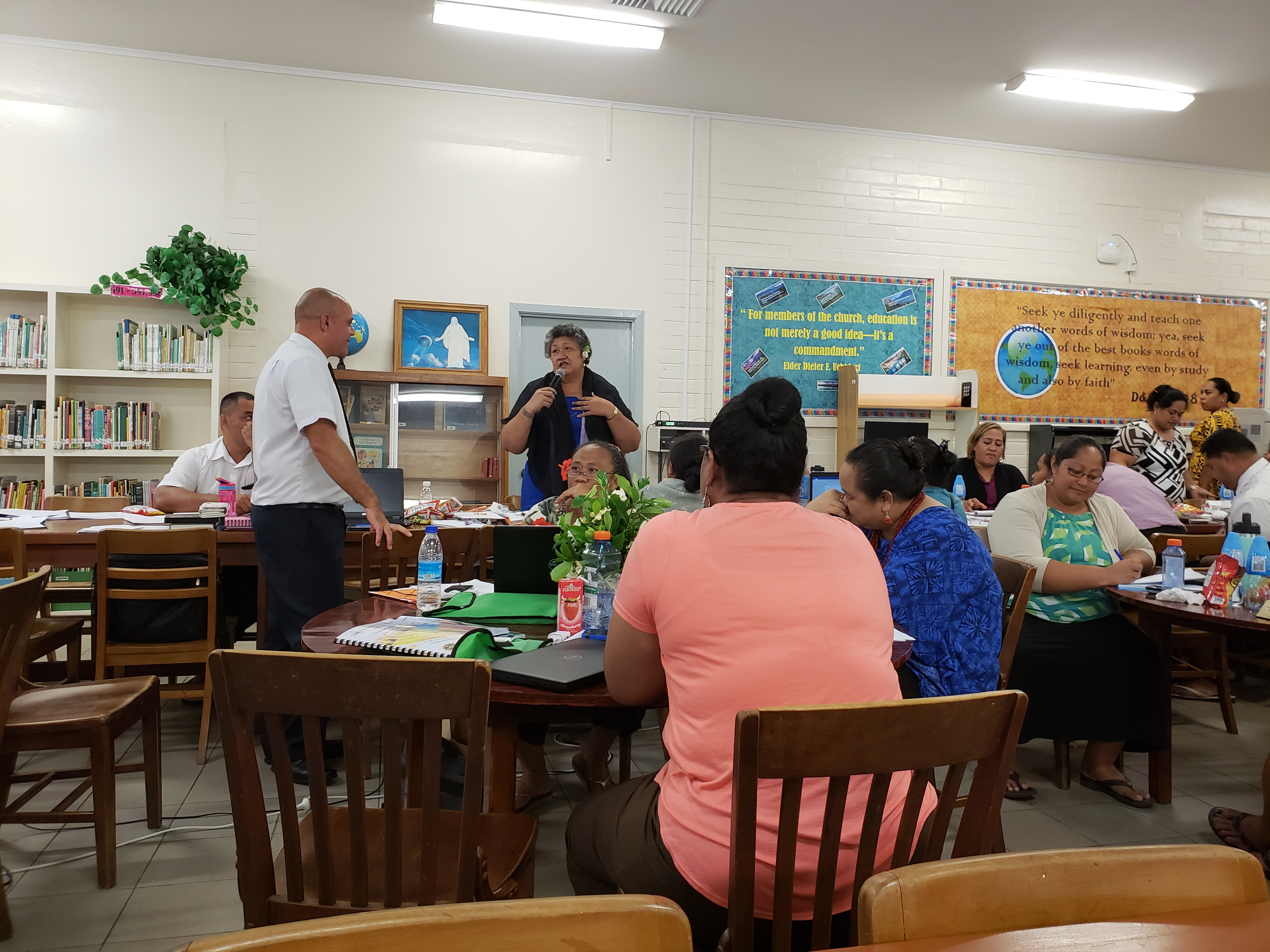
As part of the trip to Samoa, the team from the Pacific Area Office both participated in and led training sessions. Here are some photos of the teachers at Vaiola at one of their in-service gatherings. The room is the school library.

Teachers discussing together in academic teams at the in-service training at Vaiola

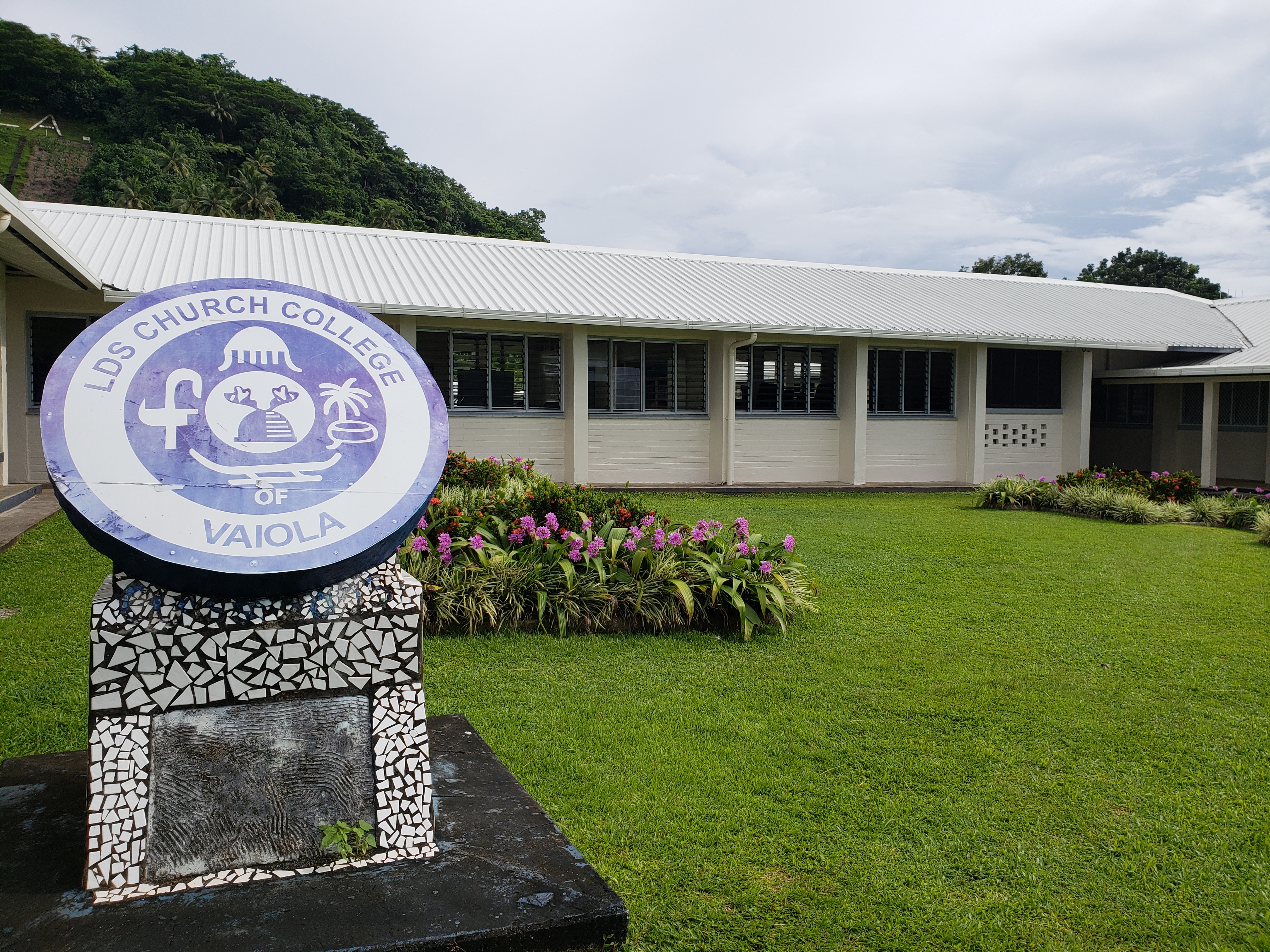
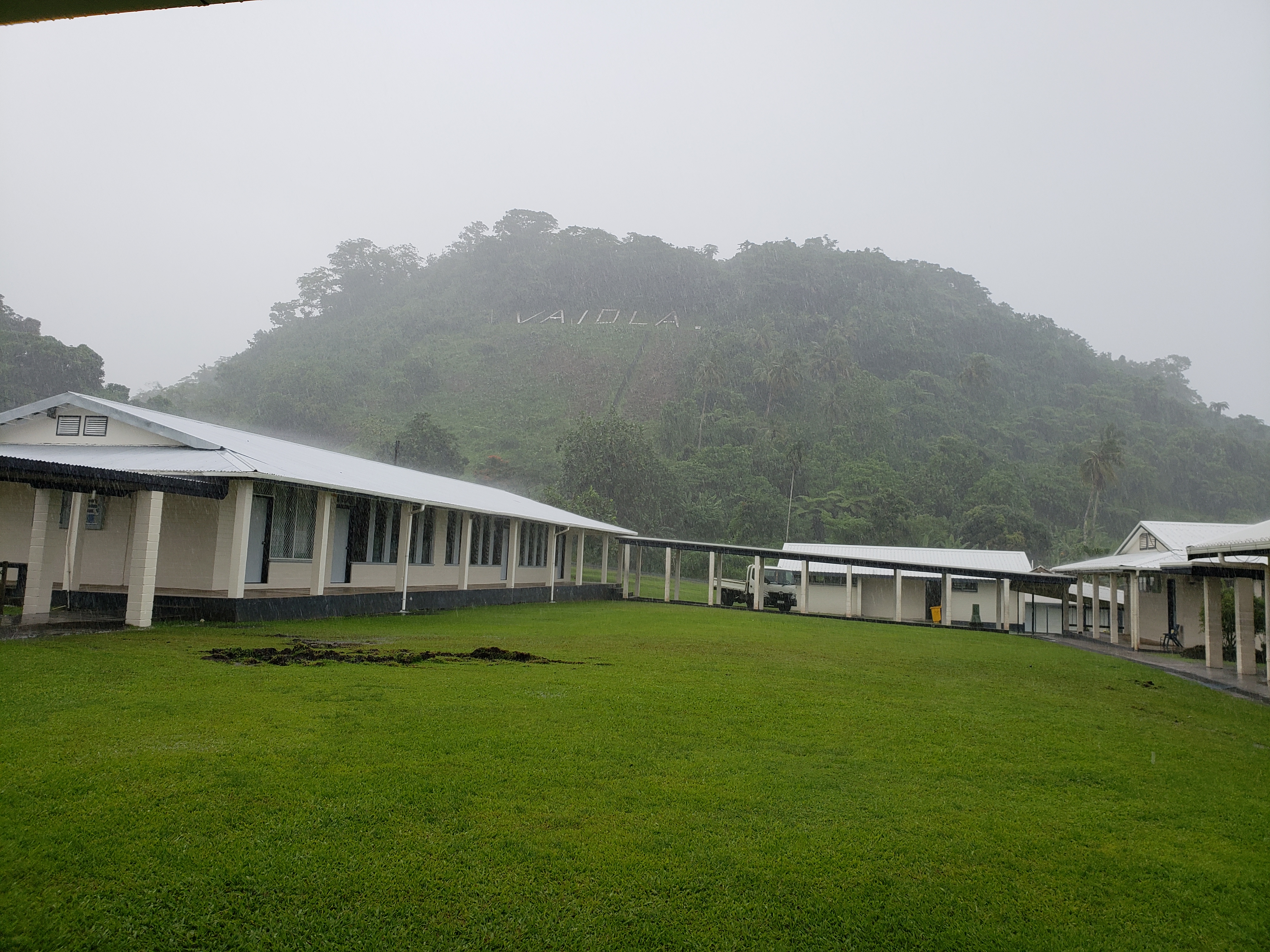
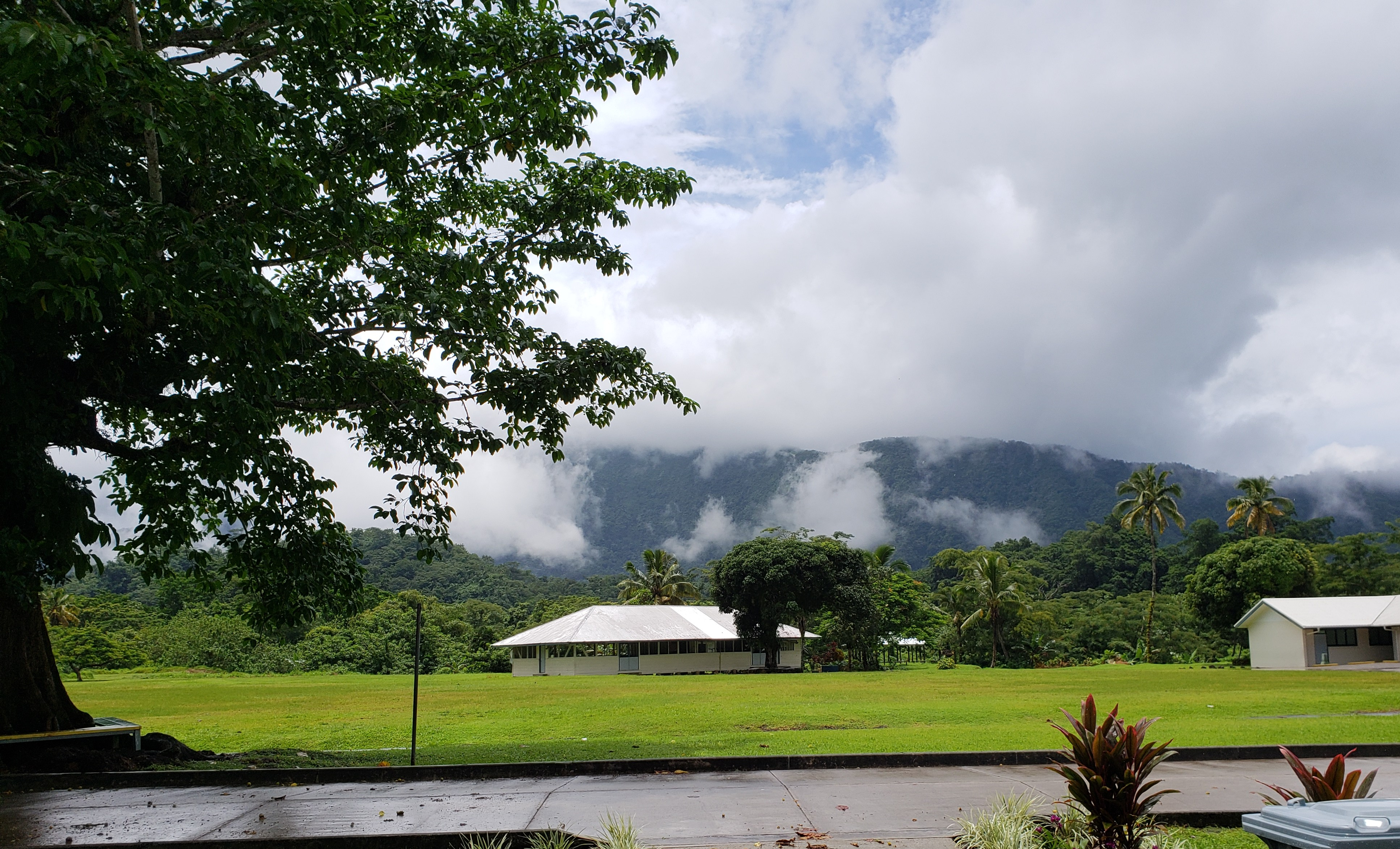
Above are some photos of the outside of the Church Schools in Vaiola on the island of Savai’i. In the photo on the right, the hill behind the buildings has a nice sign with the name Vaiola spelled out. There are over 100 stairs up to the sign and I have heard the view from up there is magnificent. We all planned to hike up there before we left, but as you might be able to tell from the photo, it was raining very, very hard when we got out of our training session. We didn’t climb the stairs!

Pesega College with our teachers (below)

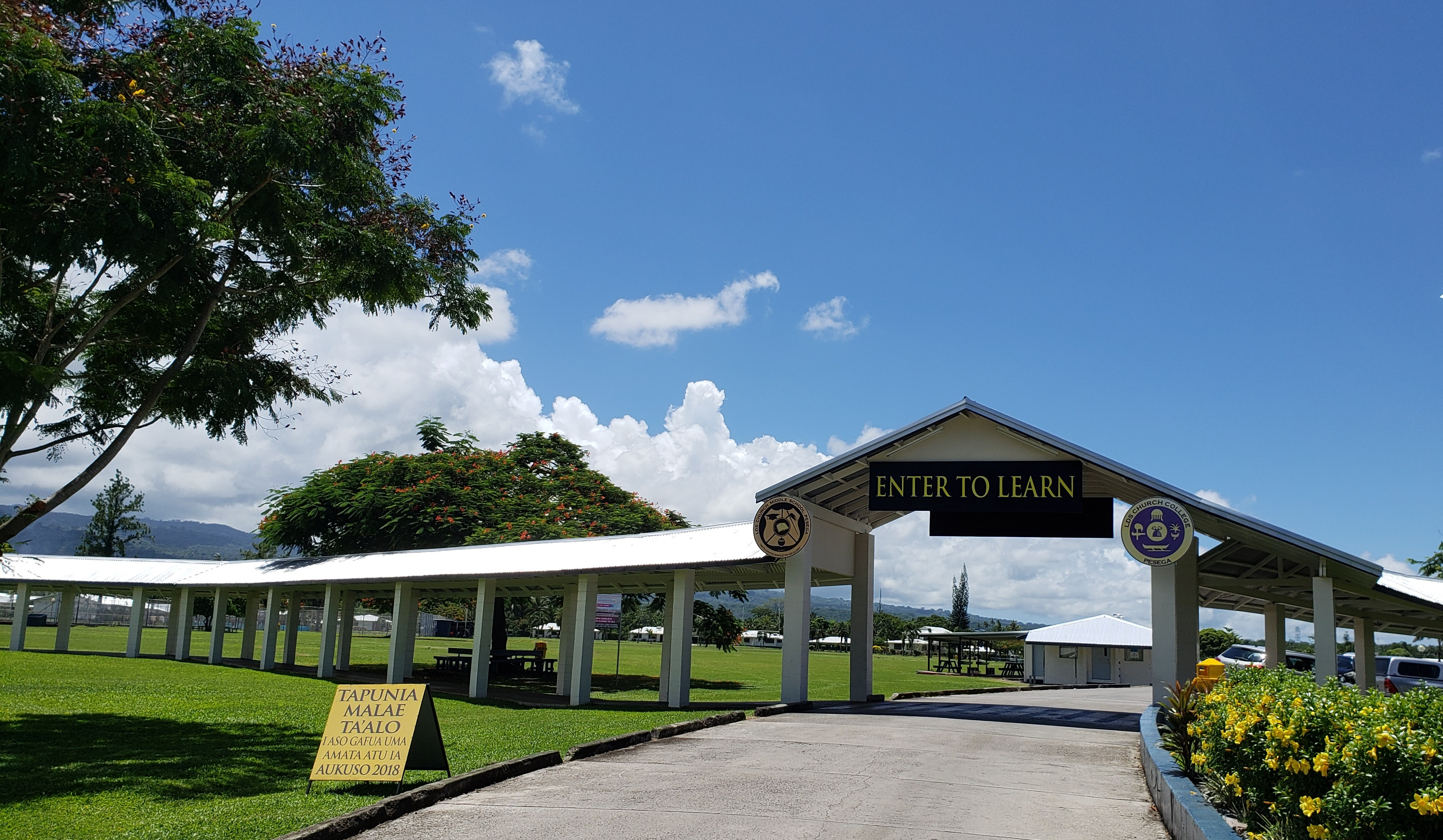
Above are some scenes from Pesega, the church schools near the temple in Apia. They have the typical “Enter to Learn, Go Forth to Serve” that is on many of the Church Schools, including the campuses of BYU. In the photo on the right, Jonathan Warwick is conducting some training. He is the employee over curriculum and instruction for the Church Schools whom I work with on a daily basis.

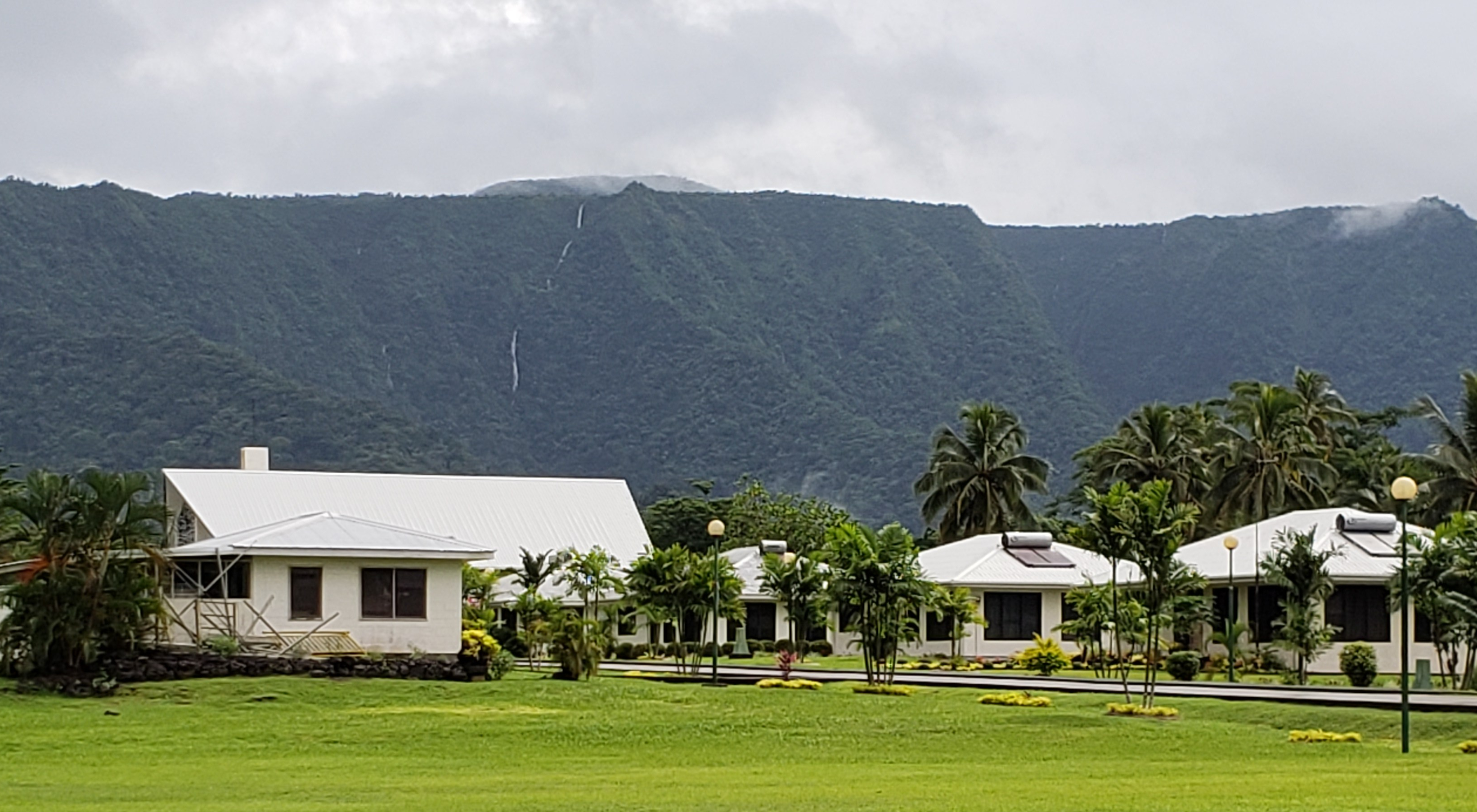
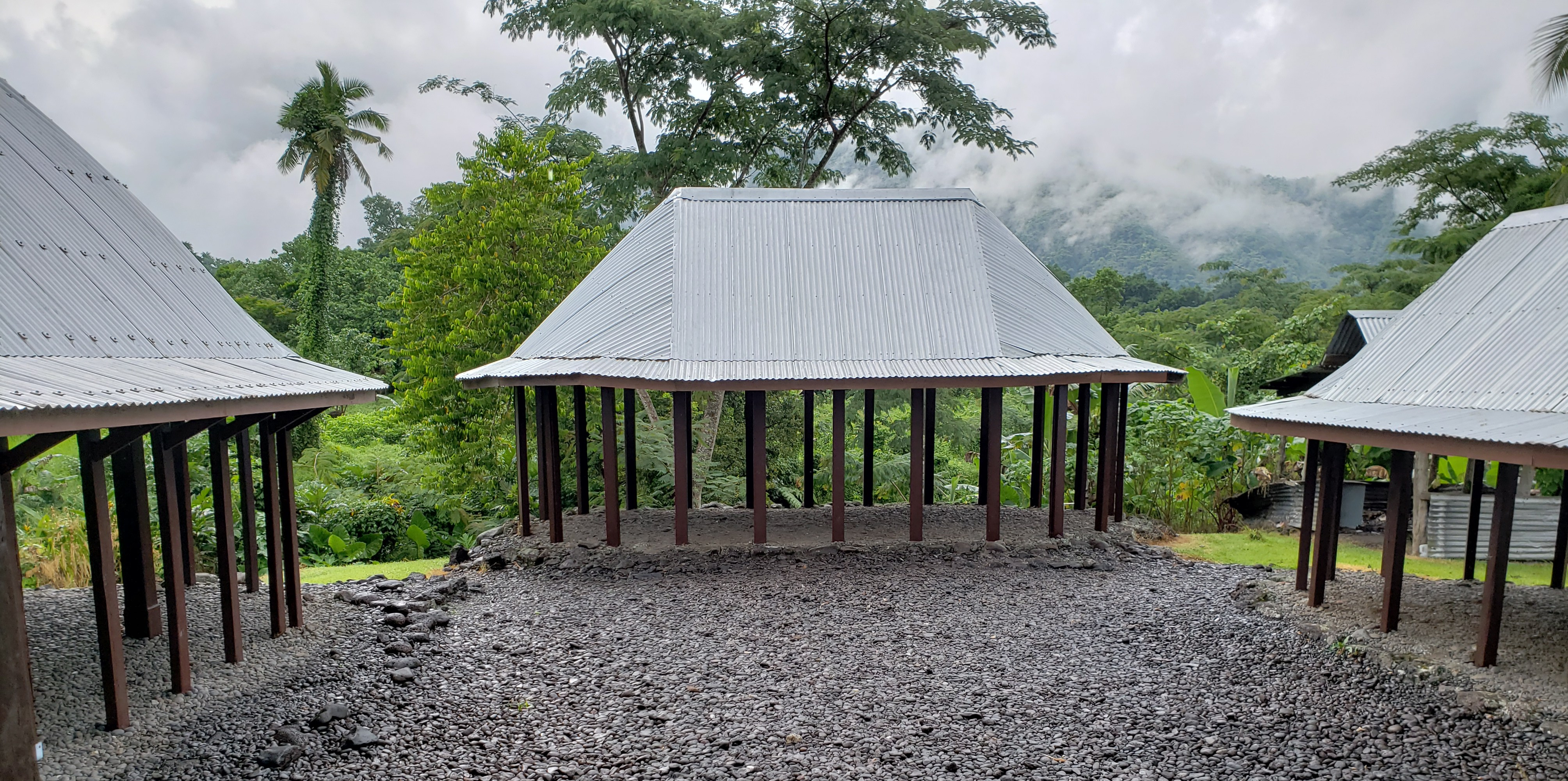
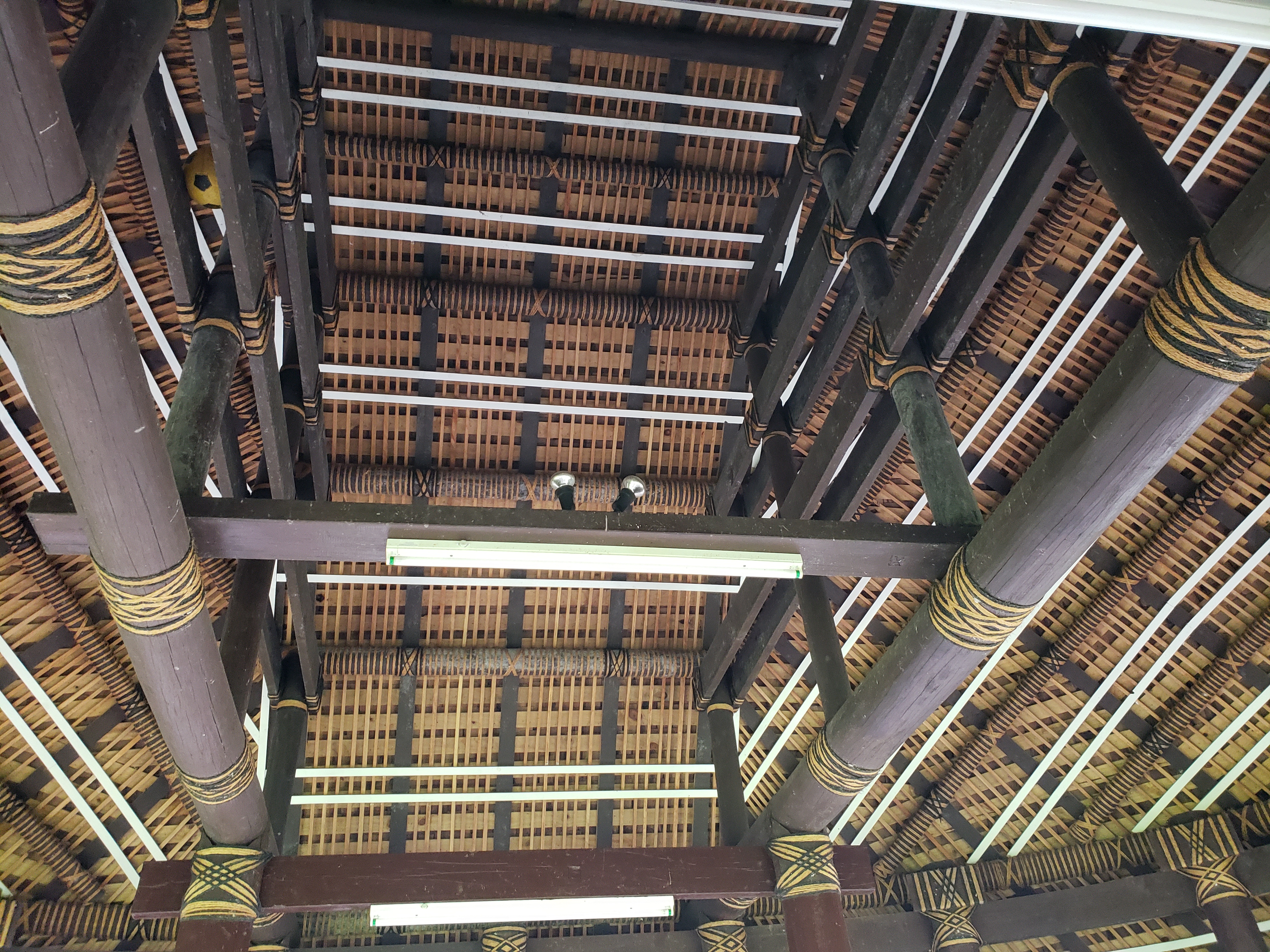
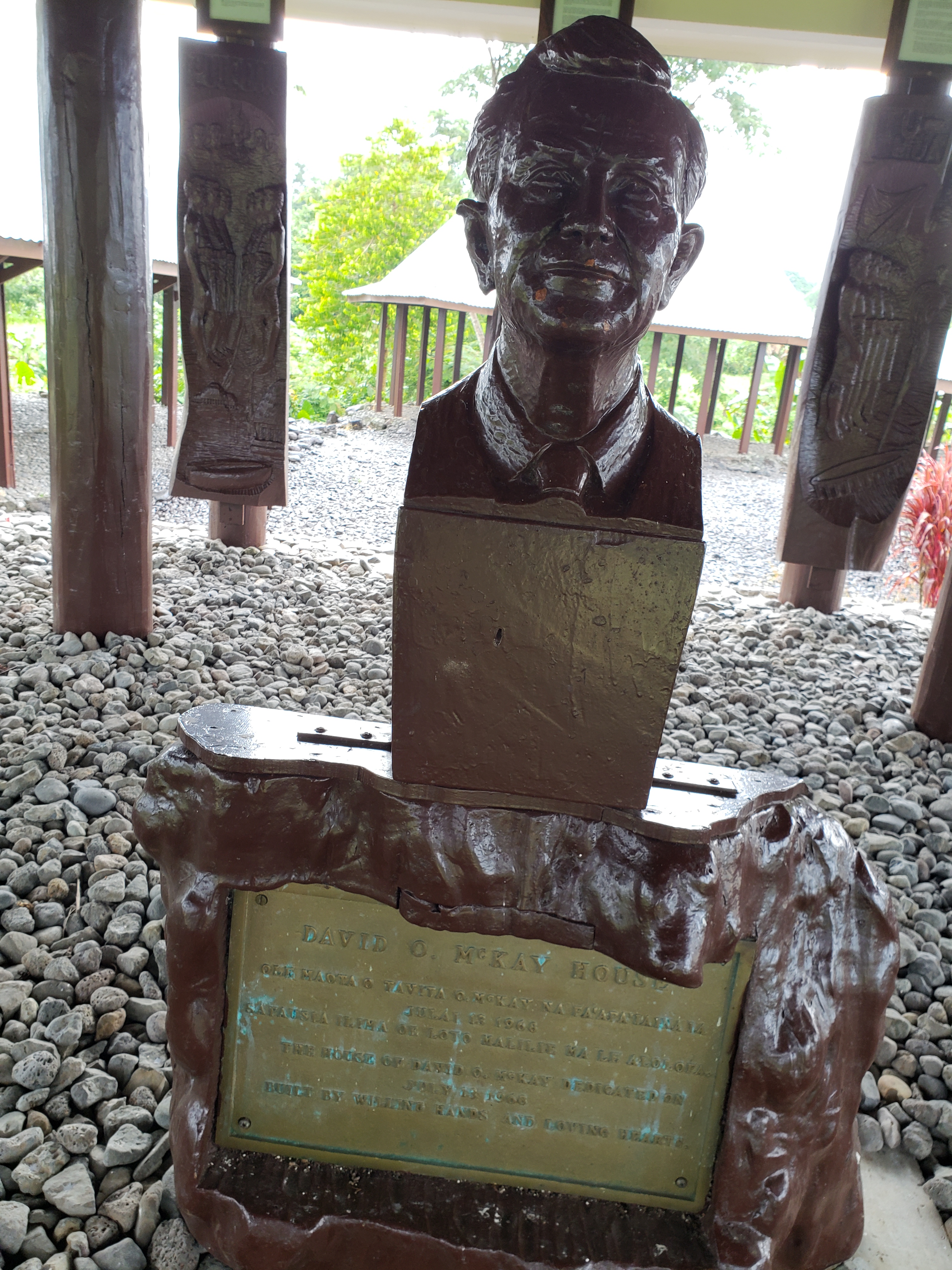
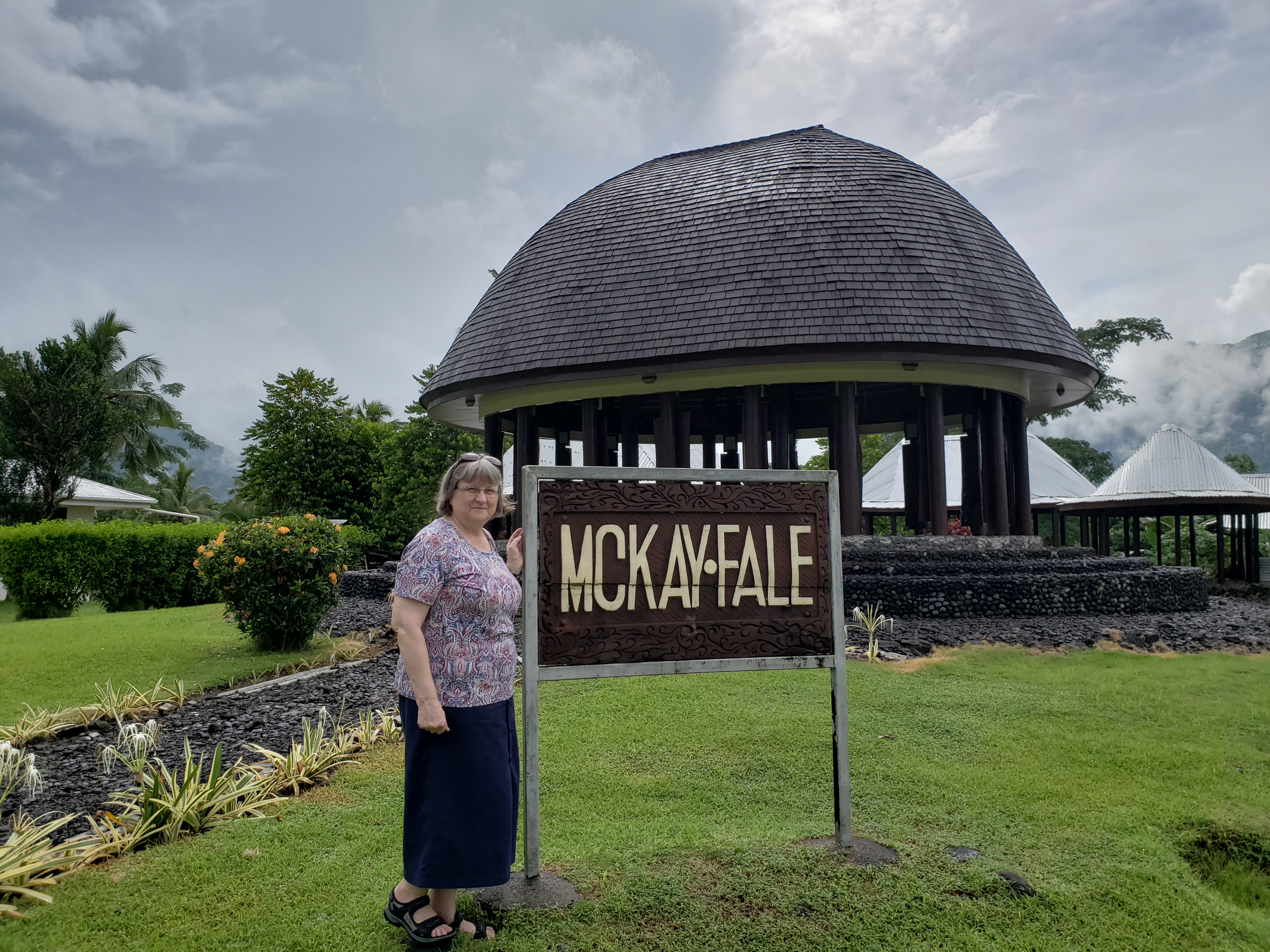
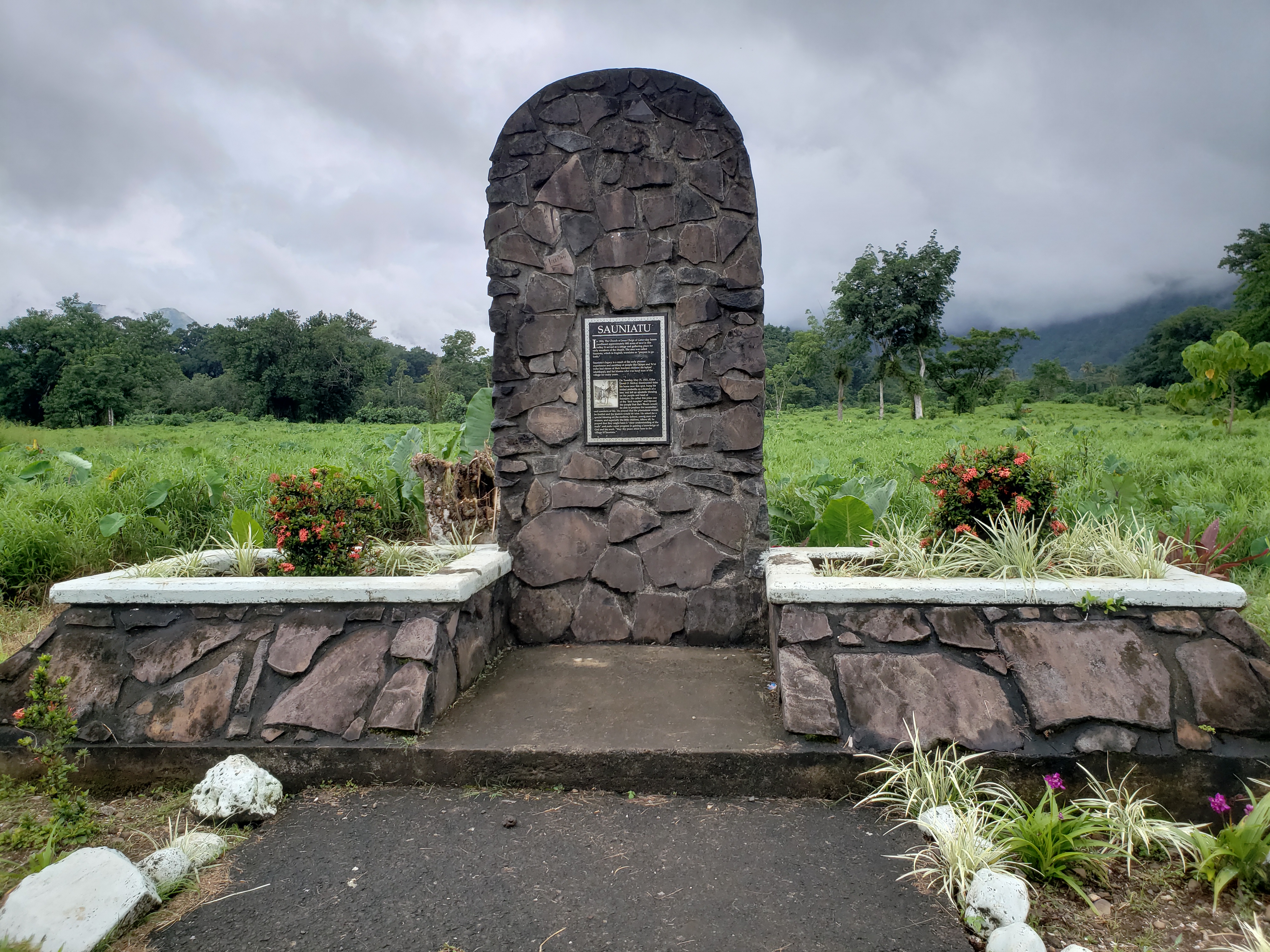
Finally, after hearing about another place in Samoa for many, many years, I made it there–to lovely Sauniatu. President McKay visited here many years ago (1921). He loved the place, called it one of the “first temples”, and blessed the people that lived there. As you can see, the place is beautiful, spectacularly so. Enjoy a few photos. It was hard to only chose a few. The first row are campus shots. Notice the waterfall down the cliff behind the buildings, which appeared after another hard rain. Also, notice how they have decorated the flower beds with coconut husks.

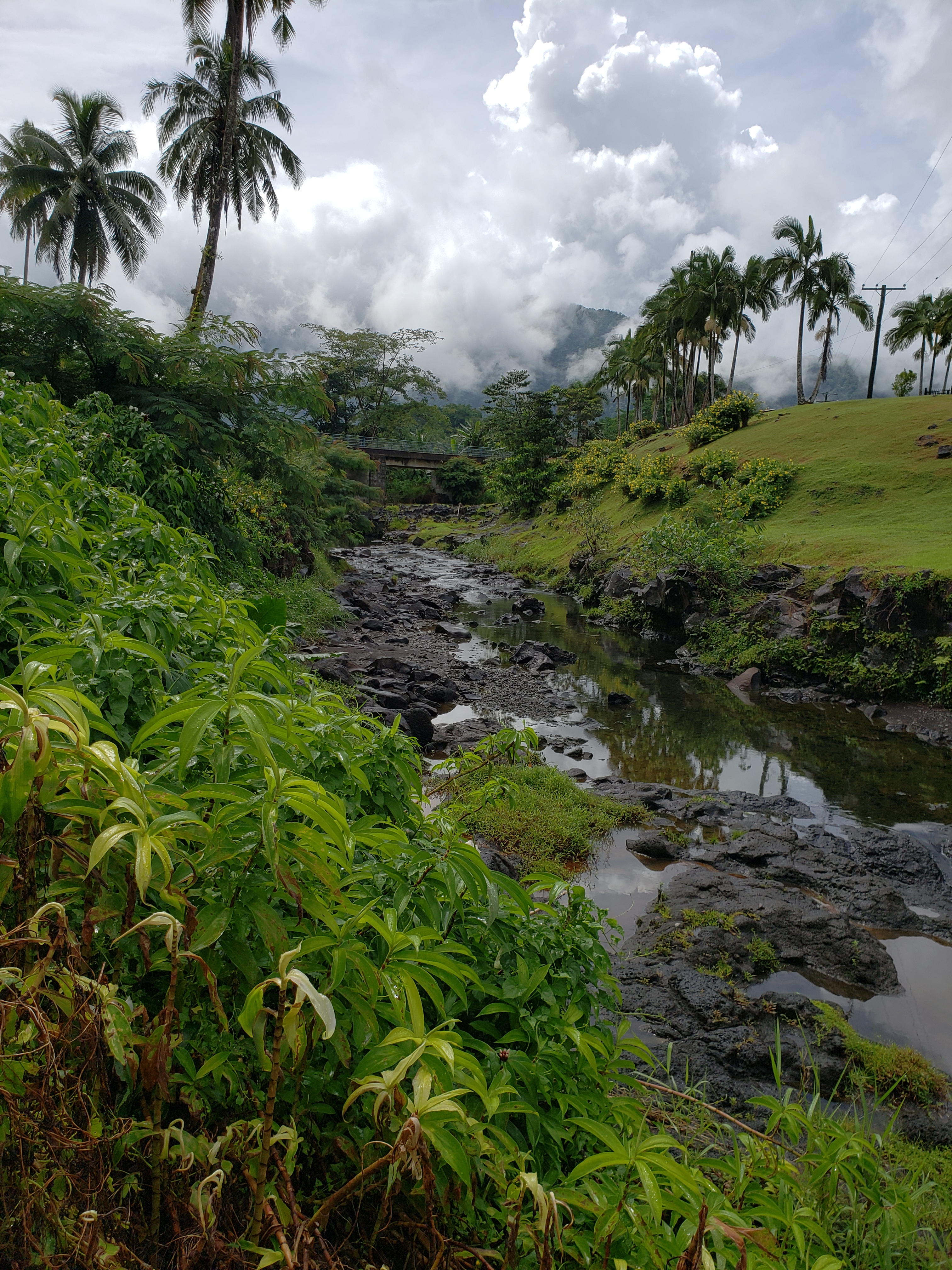
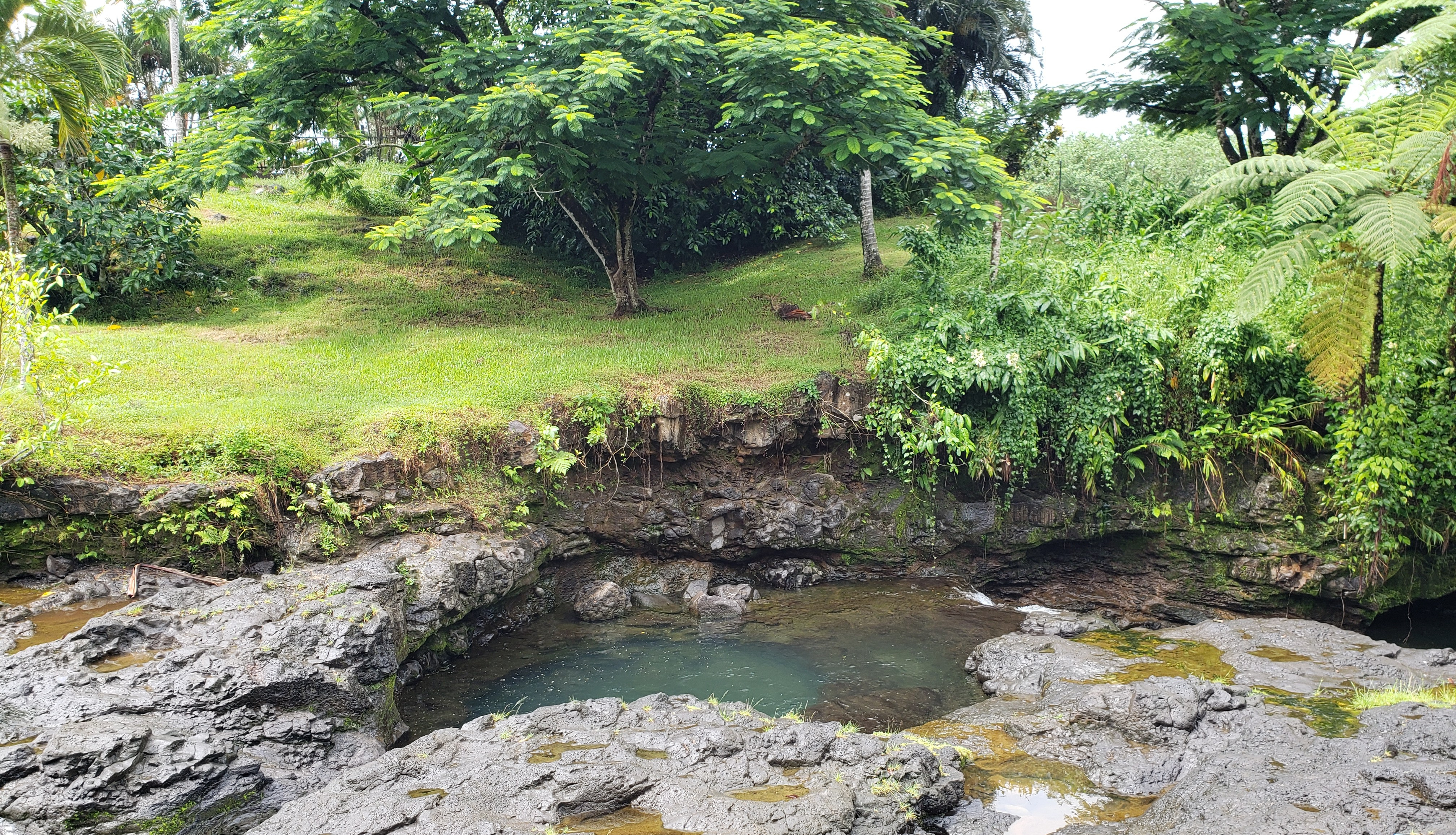
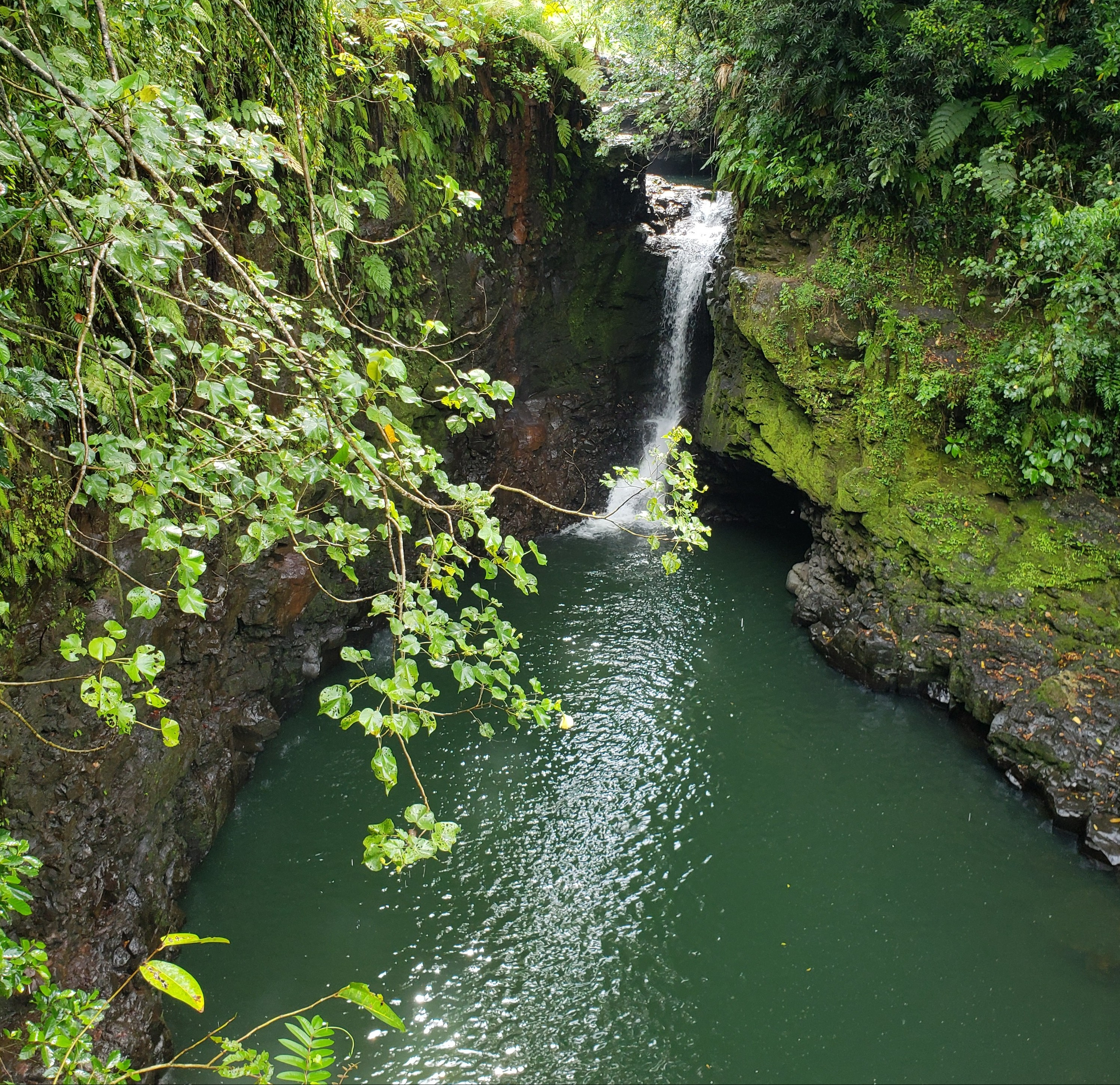
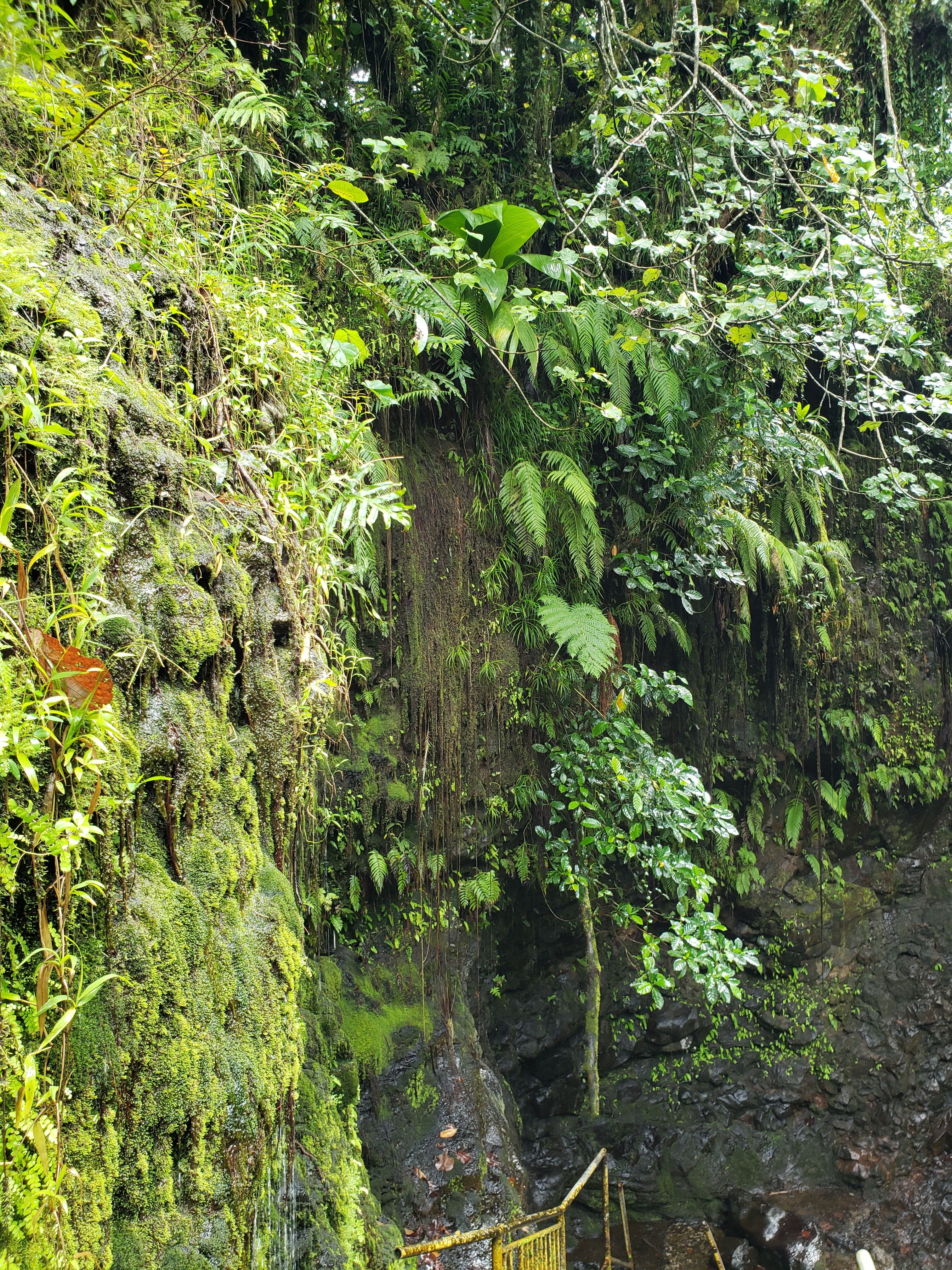
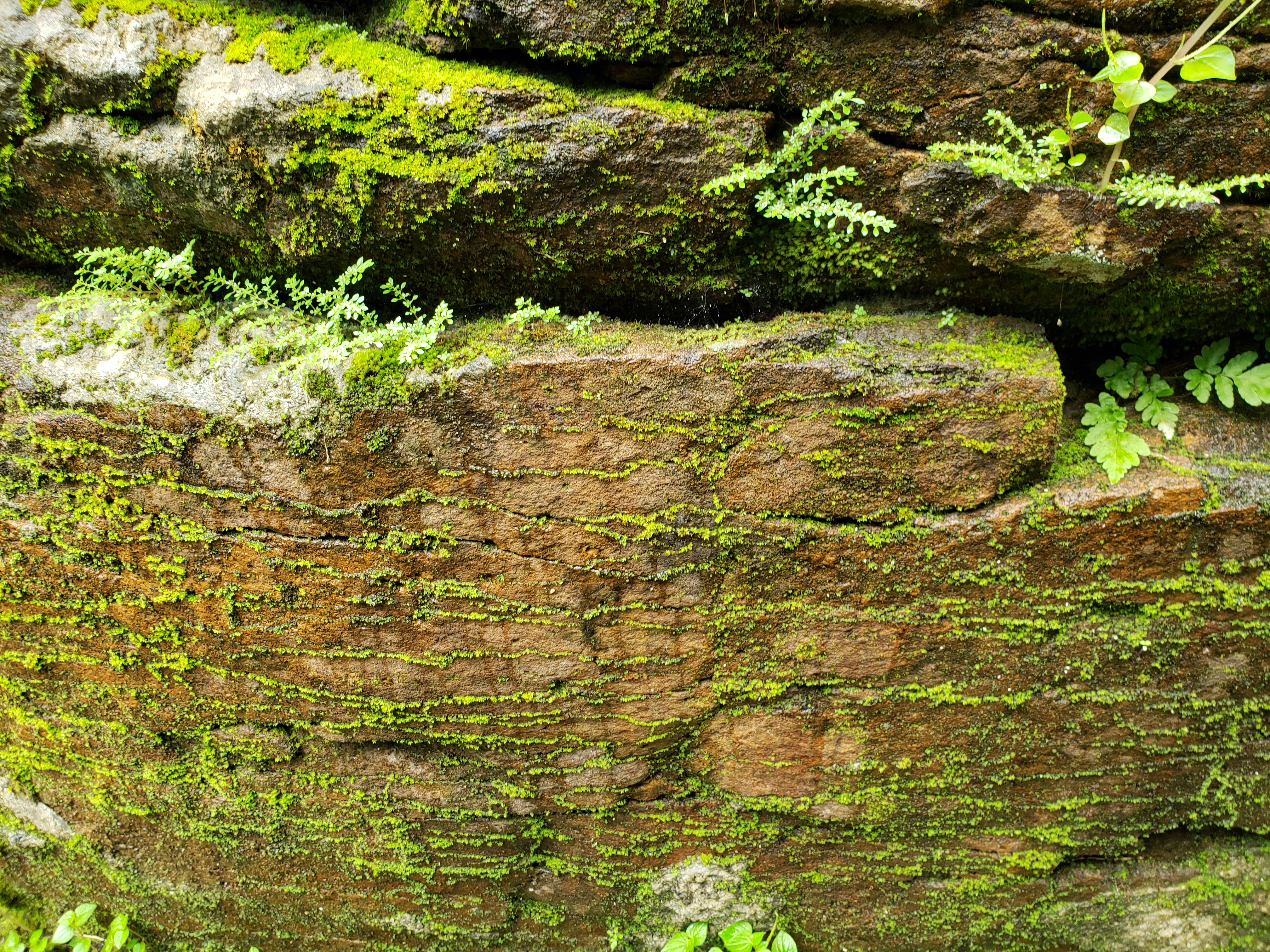
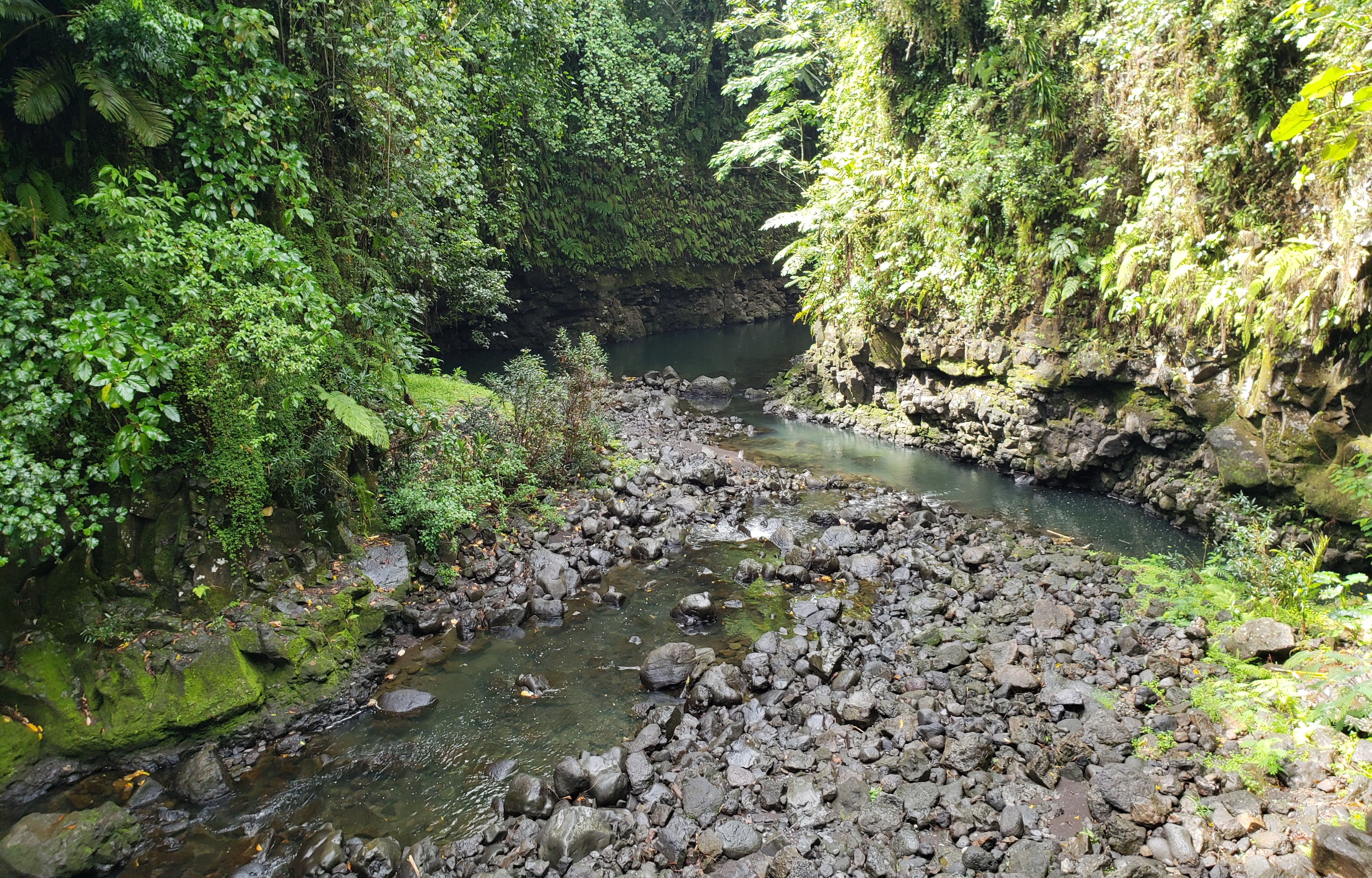
I’ll end with photos of the stream that runs through one part of the village. On the upper part of the stream (nearer the school buildings) is one of the bathing pools. A little farther down, there is a nice waterfall. The rock face is covered in green plants and moss, too.

The stream at Sauniatu
Bathing pool for women (used in “olden” days)
Waterfall at Sauniatu
Downstream from the waterfall at Sauniatu
Memorial to the visit of David O. McKay in 1921

A gannet colony

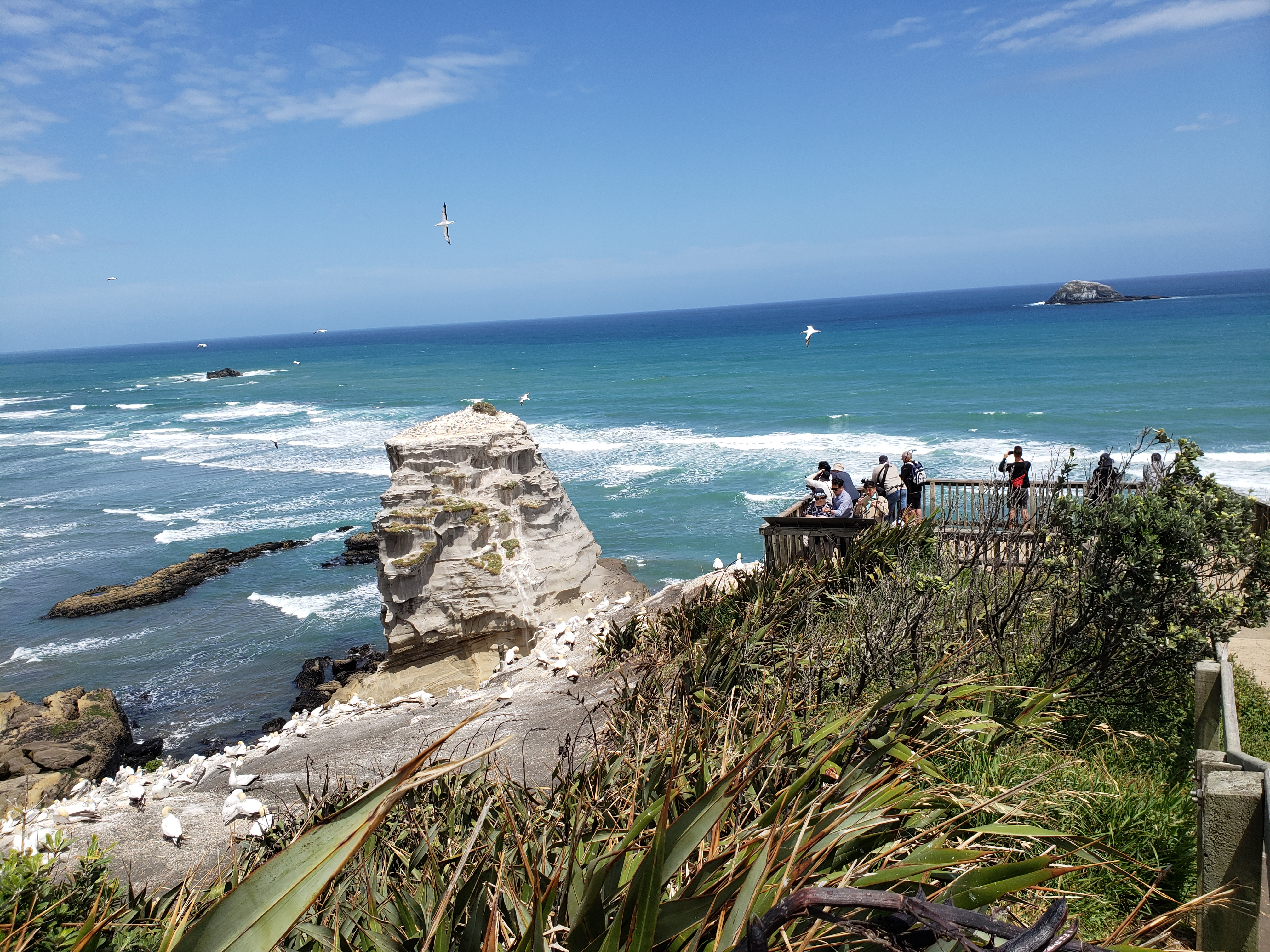
In several places in New Zealand, gannets come to breed and spend the summer months in a cooler clime before they return to Australia for winter. Last Saturday, we went to visit the colony at Muriwai.

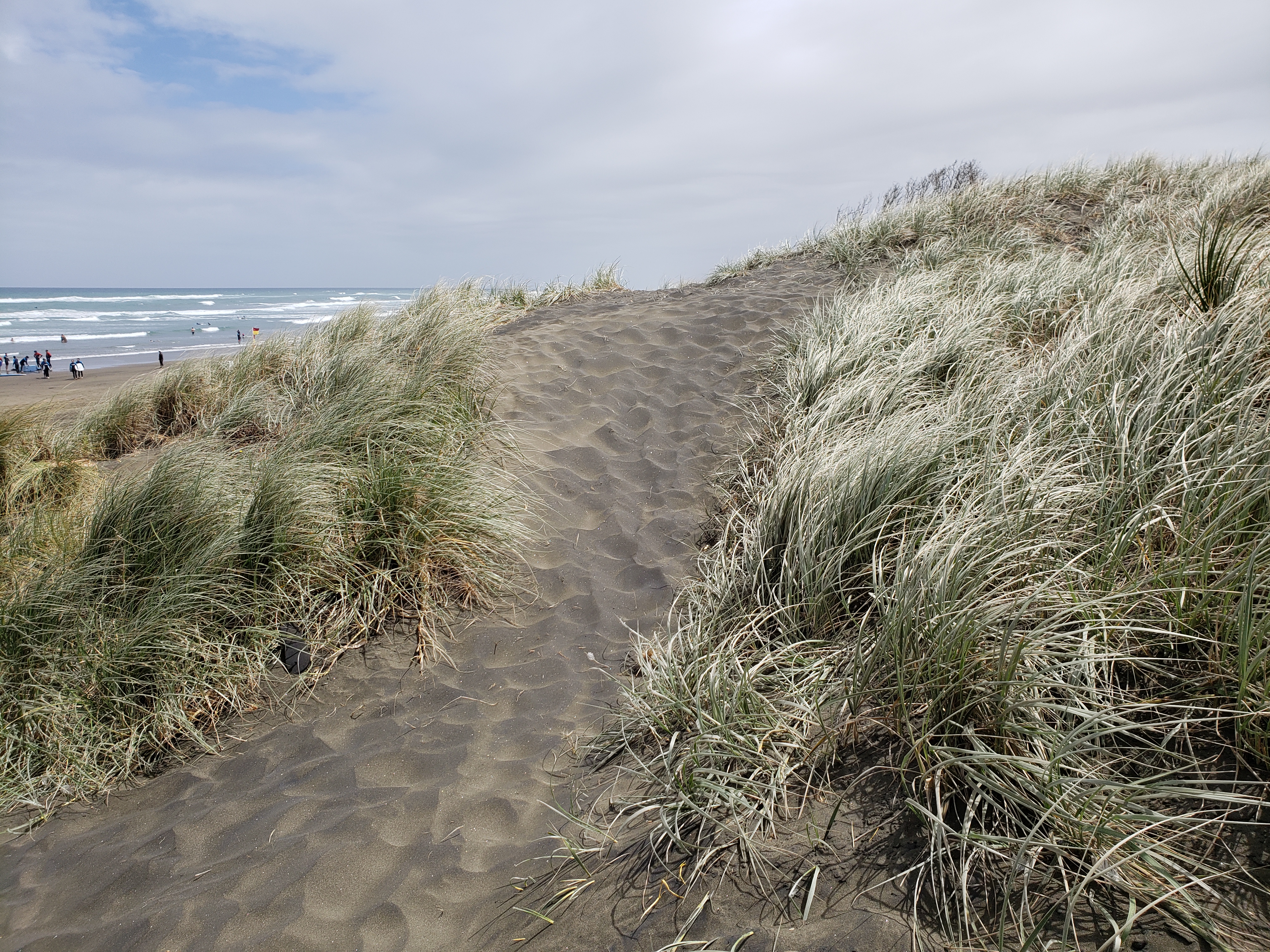
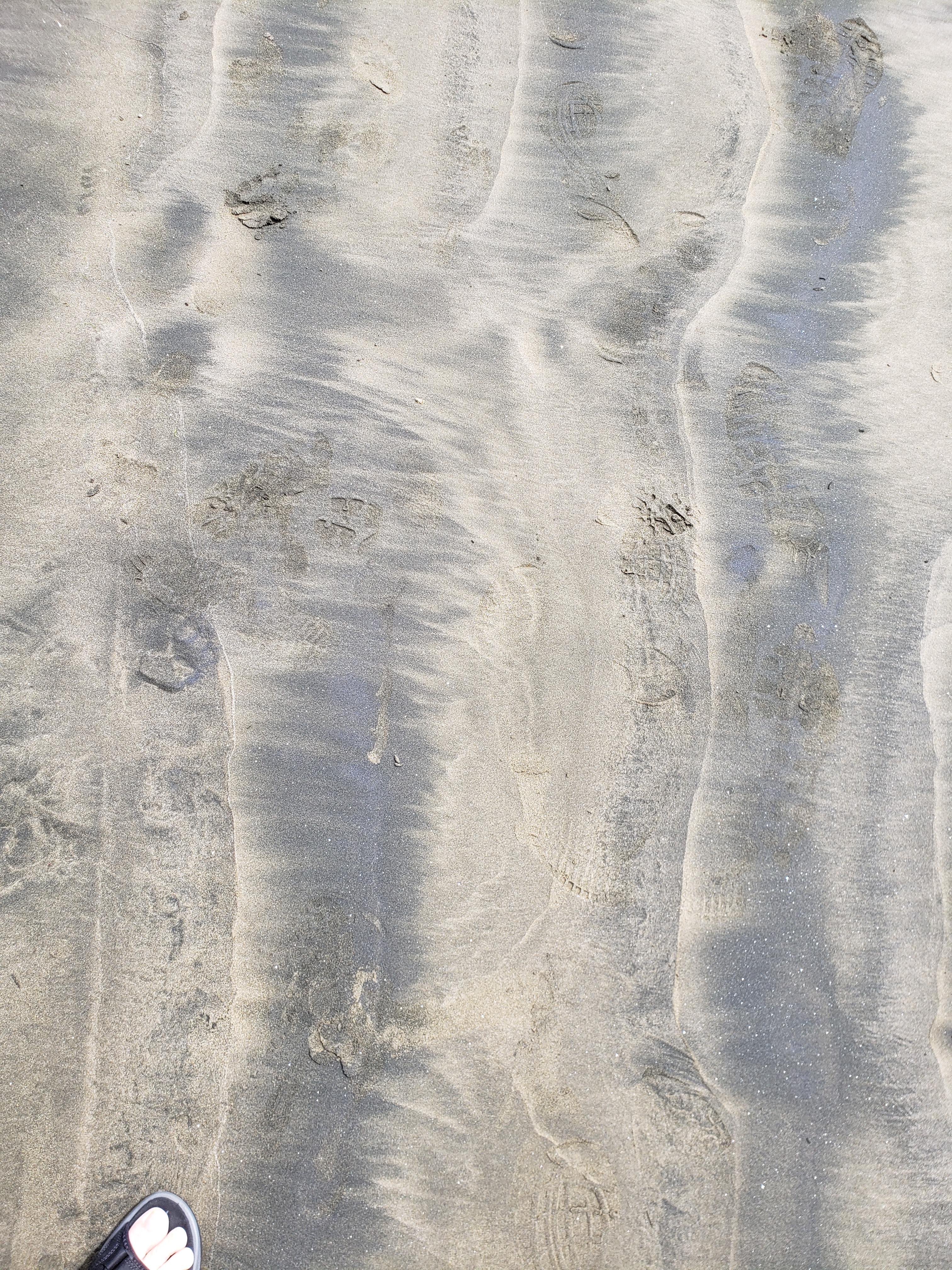
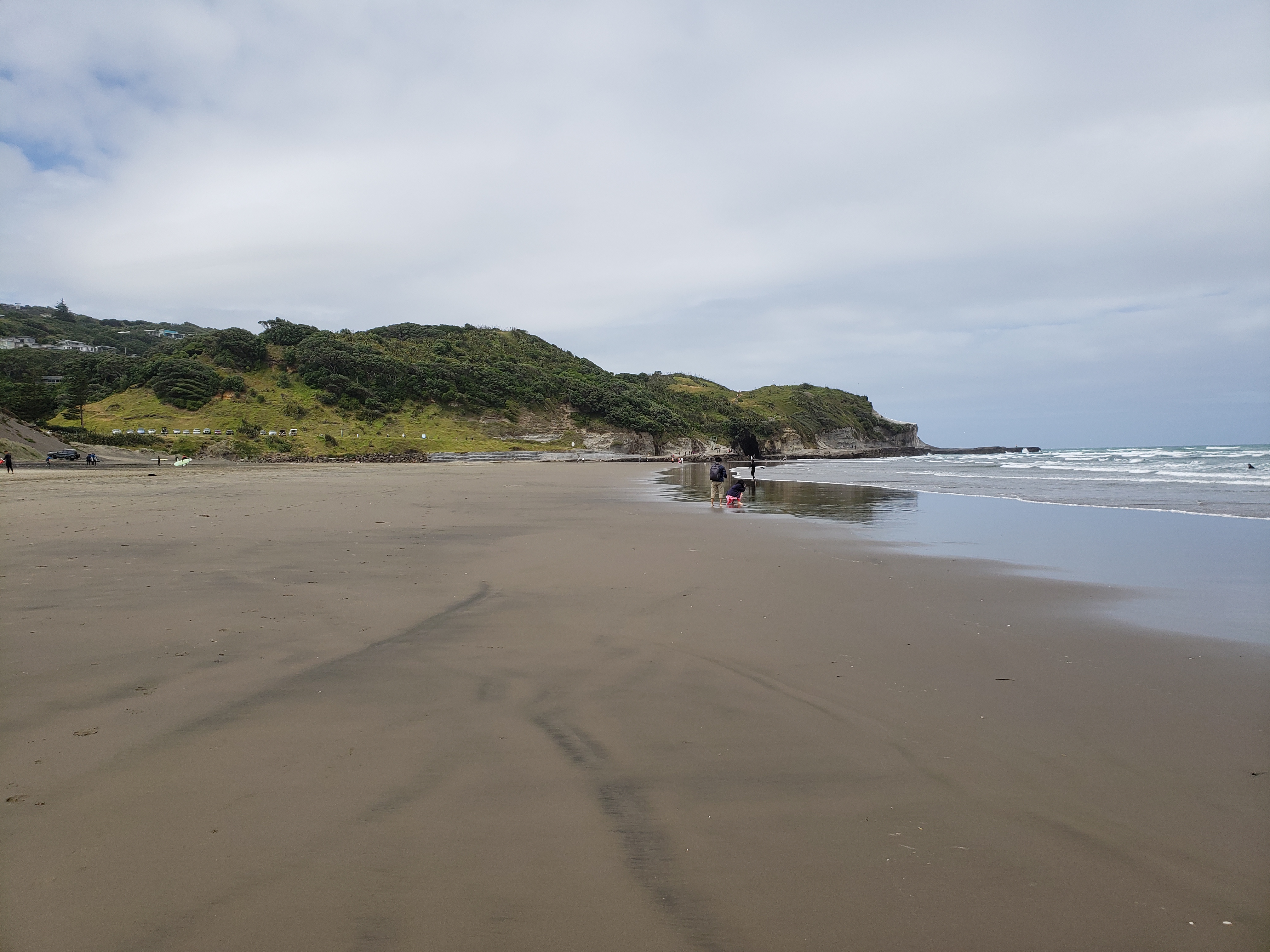
First we stopped at the black sand beach. Okay, it was not as black as some I’ve been on before, but these photos were taken at noon which shows the reflection of the sun. The beach doesn’t look very black at all. From higher up, with a photo I took later, it looks a little darker.

While we didn’t spend much time right at the beach, we did spend a couple of hours with the birds. The panoramic photo below is a first view from up above the colony as we approached.

View at Muriwai (approaching gannet colony)

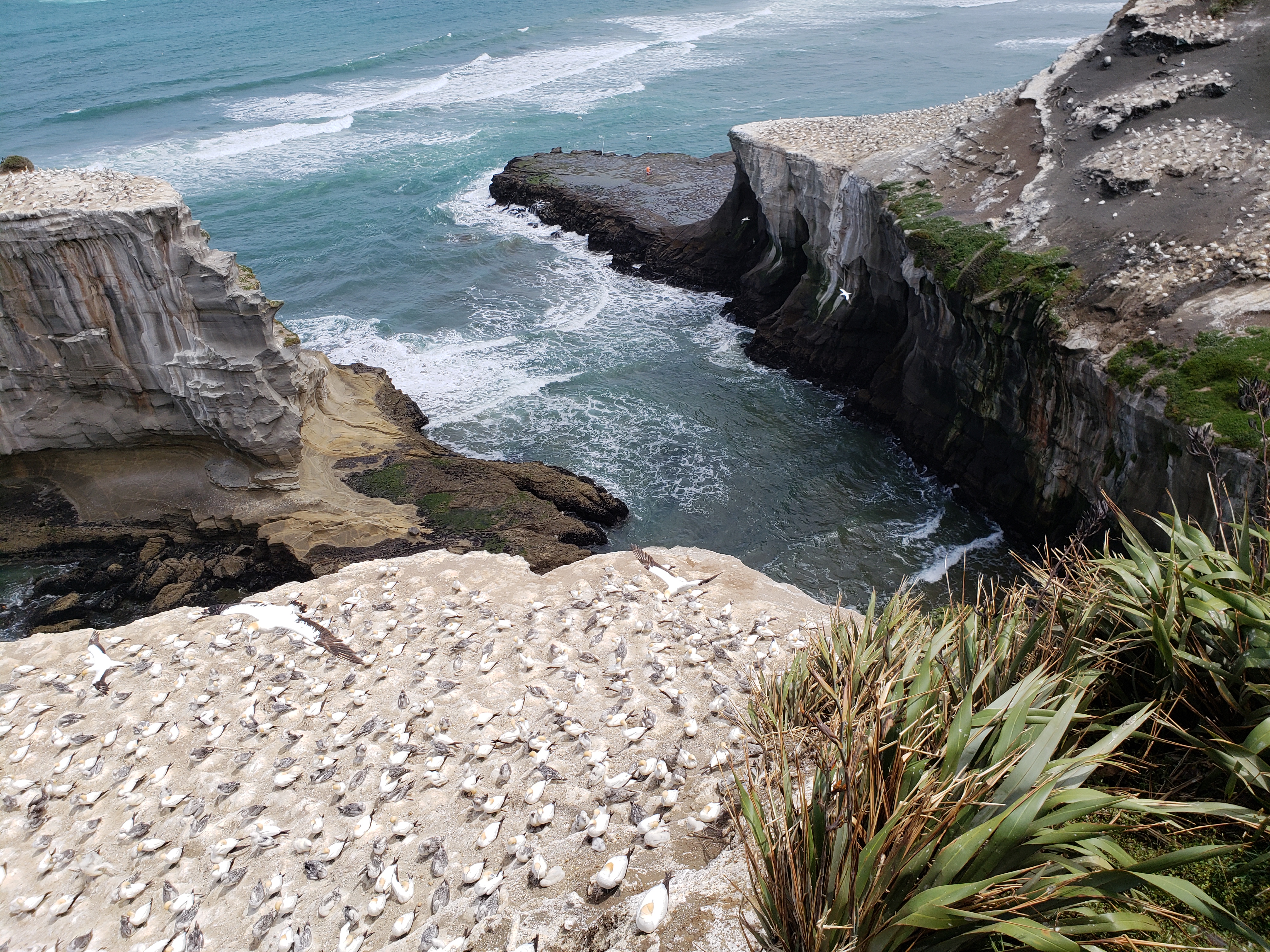
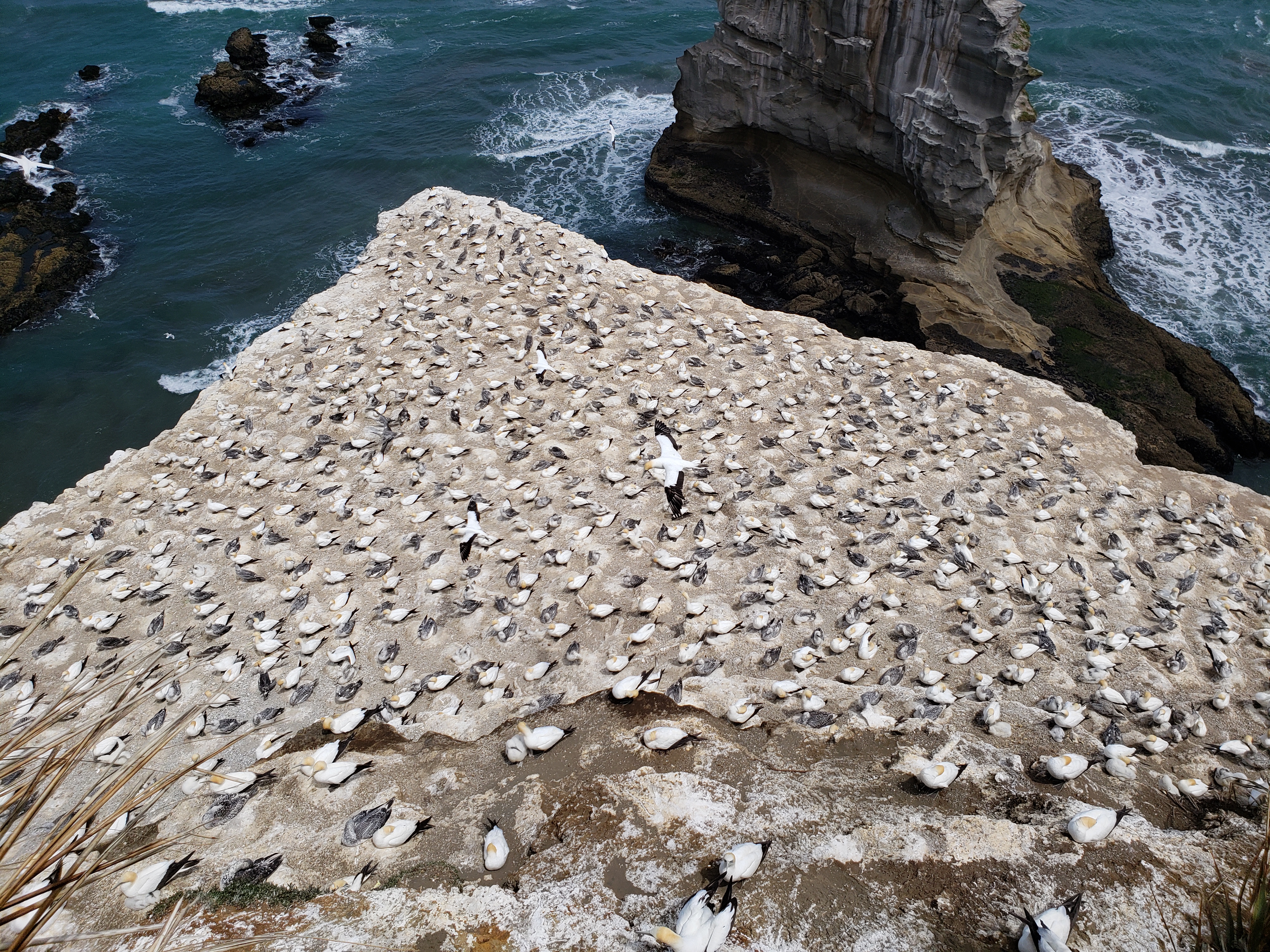
Thousands and thousands of birds were on the rocks and cliffs and in the air. Notice how many were nesting on each of the three sites in the photo below.

Here is a closer shot of the number of birds. All those white spots are adult birds (the babies are harder to see from this distance).

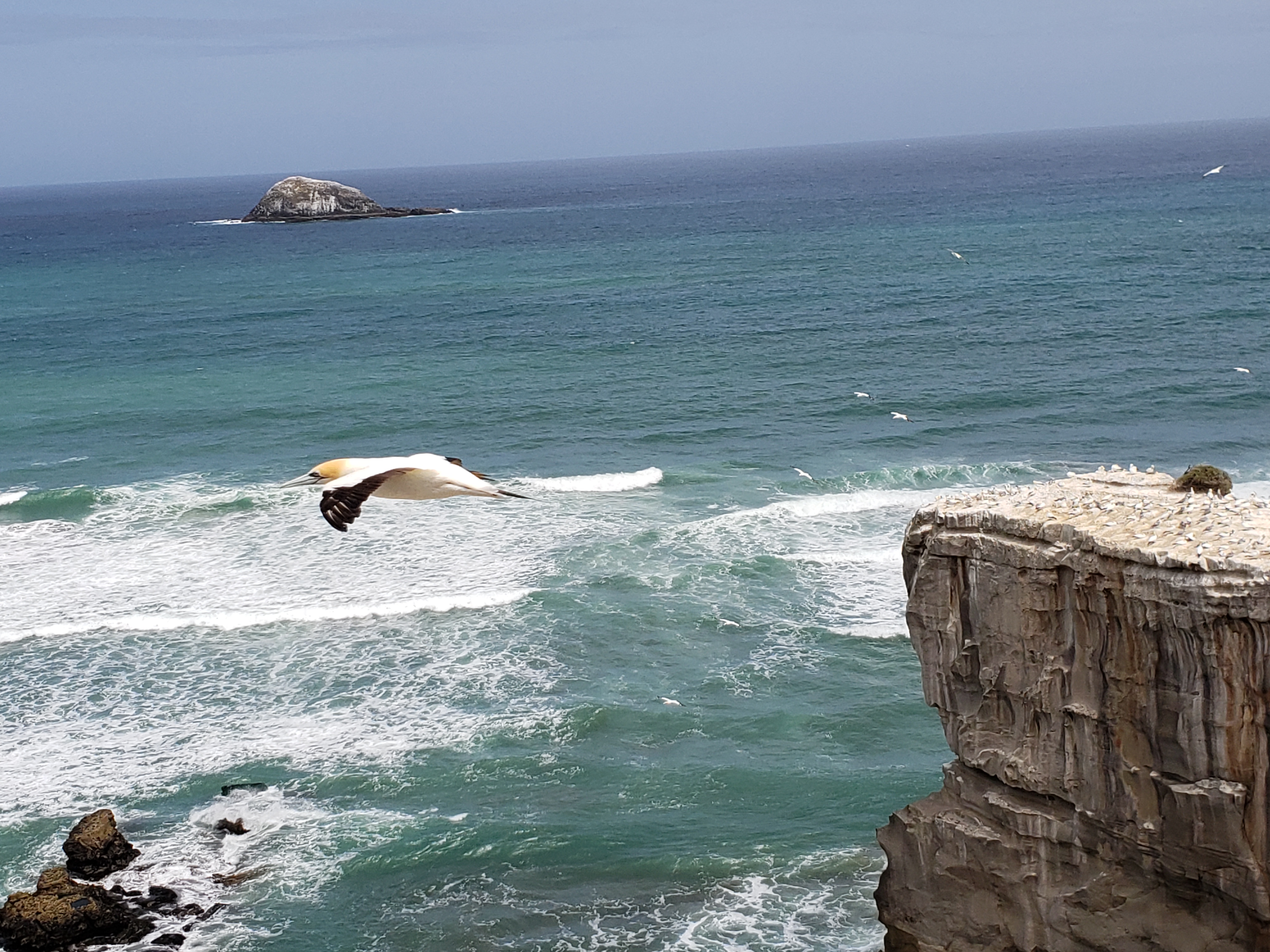
It was fun to try and catch some birds in flight. Mostly they made small dots on the camera, but I did get a few in full flight. The wing span is about 2 meters.

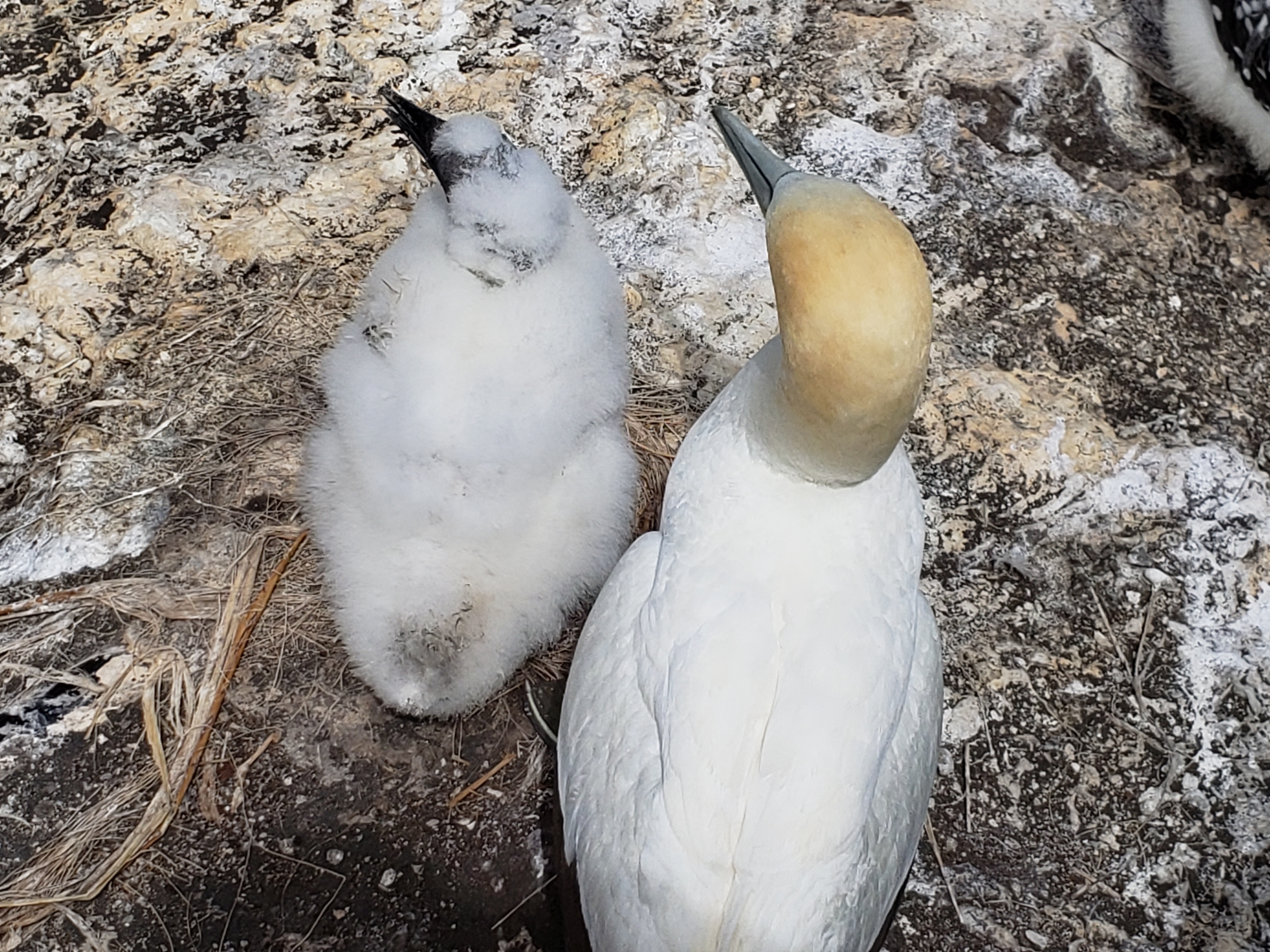
Adult gannet with a fairly new young one

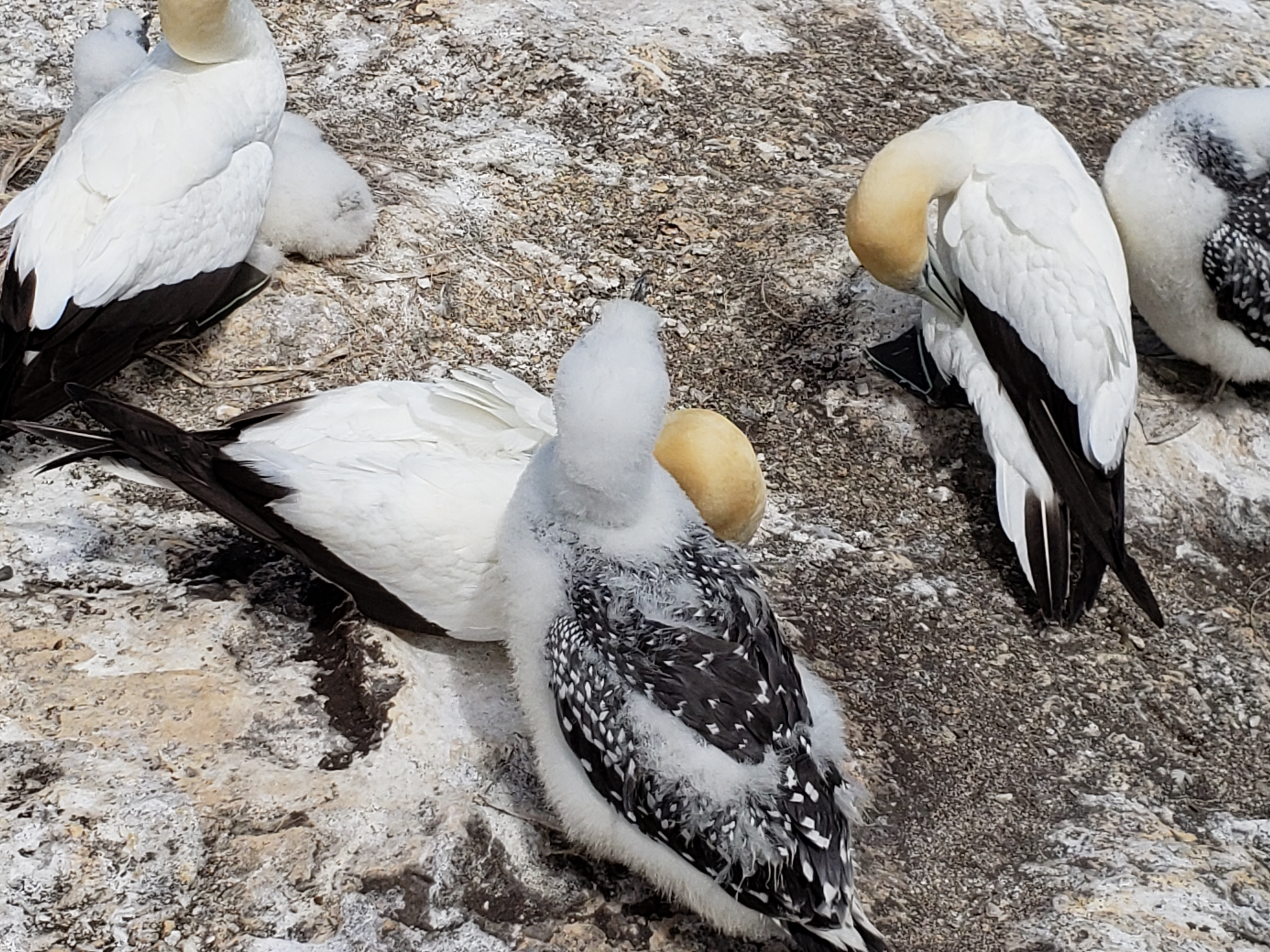
The colony had adult birds (with mostly white wings except for the tips), juveniles (with mostly dark wings), and young birds with white fluff.

It was a wondrous site (a bit smelly when you got directly down wind…before I could stand to eat lunch I had to wash off my face, lips, and hands!)

All together a beautiful site and a wonderful place to be. Here is one last view of the Muriwai beach and gannet colony.

Okay, I couldn’t do just one more. Here is another one.

[Update: Decided to add a video from the gannet colony]

Dome, a “symbol of heaven”

There are many domes all over Italy (and other parts of Europe that I visited), and I collected a rather large set of photos. Later I found this word origin information from the Oxford English Dictionary (OED):

Dome, “Etymology: …apparently directly < Latin domus house, home; in other senses, …< Italian duomo house, house of God, ‘chiefe Church or Cathedrall Church in a citie’ (Florio), high cupola, dome (as a distinguishing feature of Italian cathedrals) < Latin domus house.

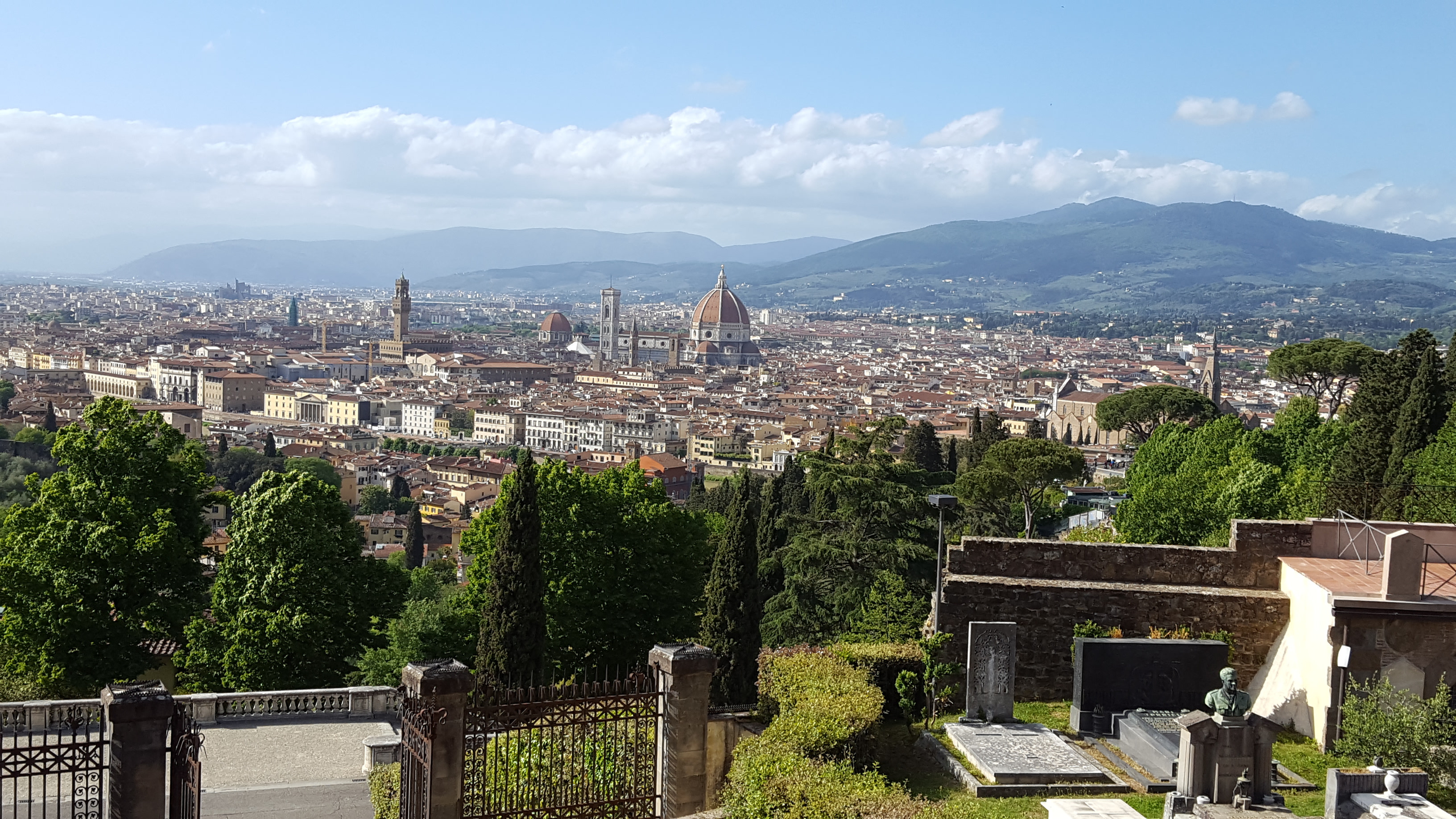
20160427_165603

I will start a review of a variety of domes with a view of the city of Florence, where the dome of the main cathedral, appropriately (according to the OED) called the Duomo, dominates the skyline. The photo above was taken from a hill above the city of Florence from the church called San Miniato al Monte.

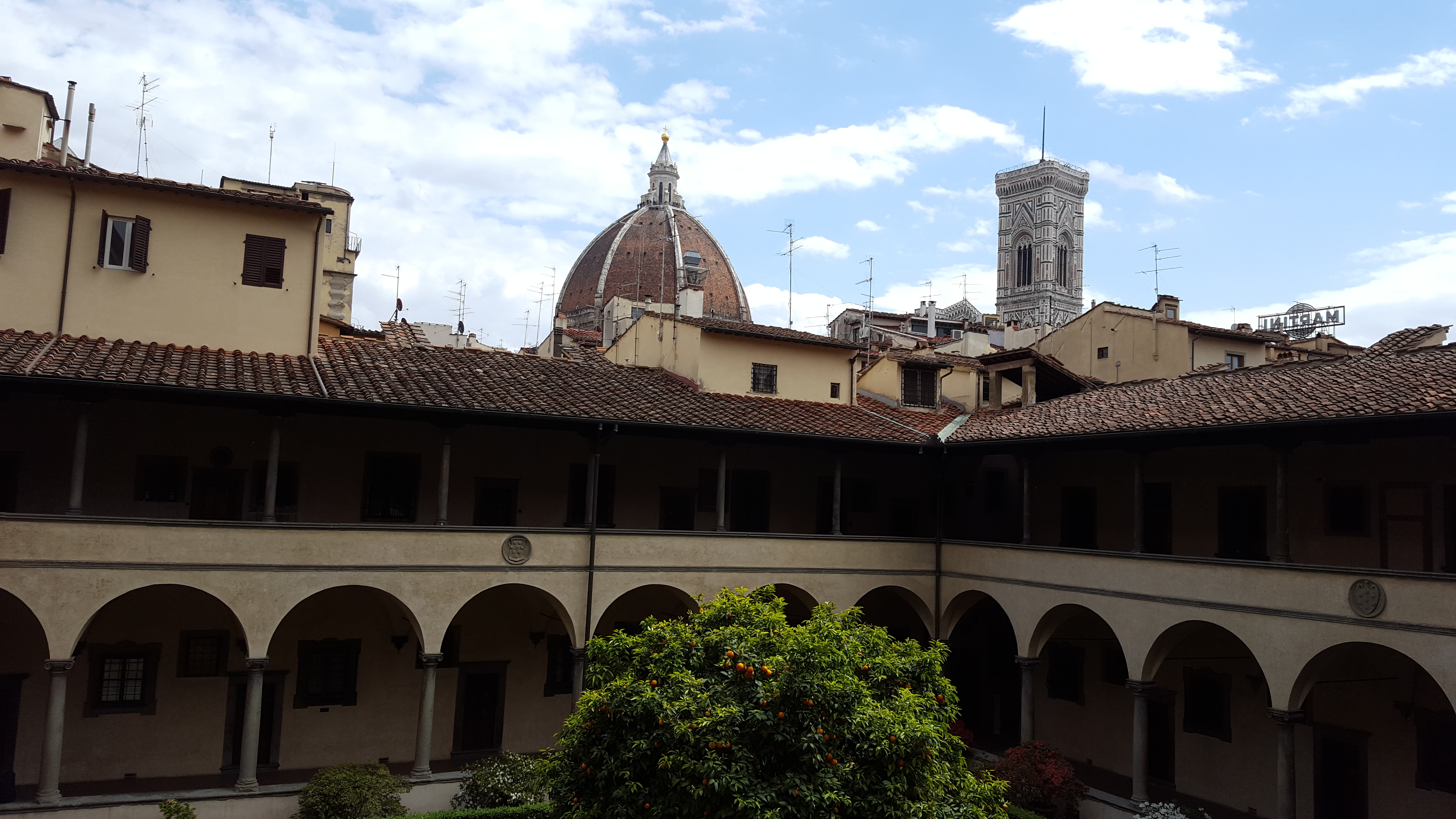
20160426_133128.jpg

As you can see, even within the city, the Duomo can be seen. This second photo is from the cloisters of San Lorenzo, a church near the Duomo.

Learning about the building of the dome structure itself in the Duomo is fascinating. For many years, the area for the dome was open to the skies. Architects of the time were unsure how to enclose such a large space.

20160418_122439

For some excellent information on this, visit this National Geographic site:

National Geographic information on construction of Duomo dome

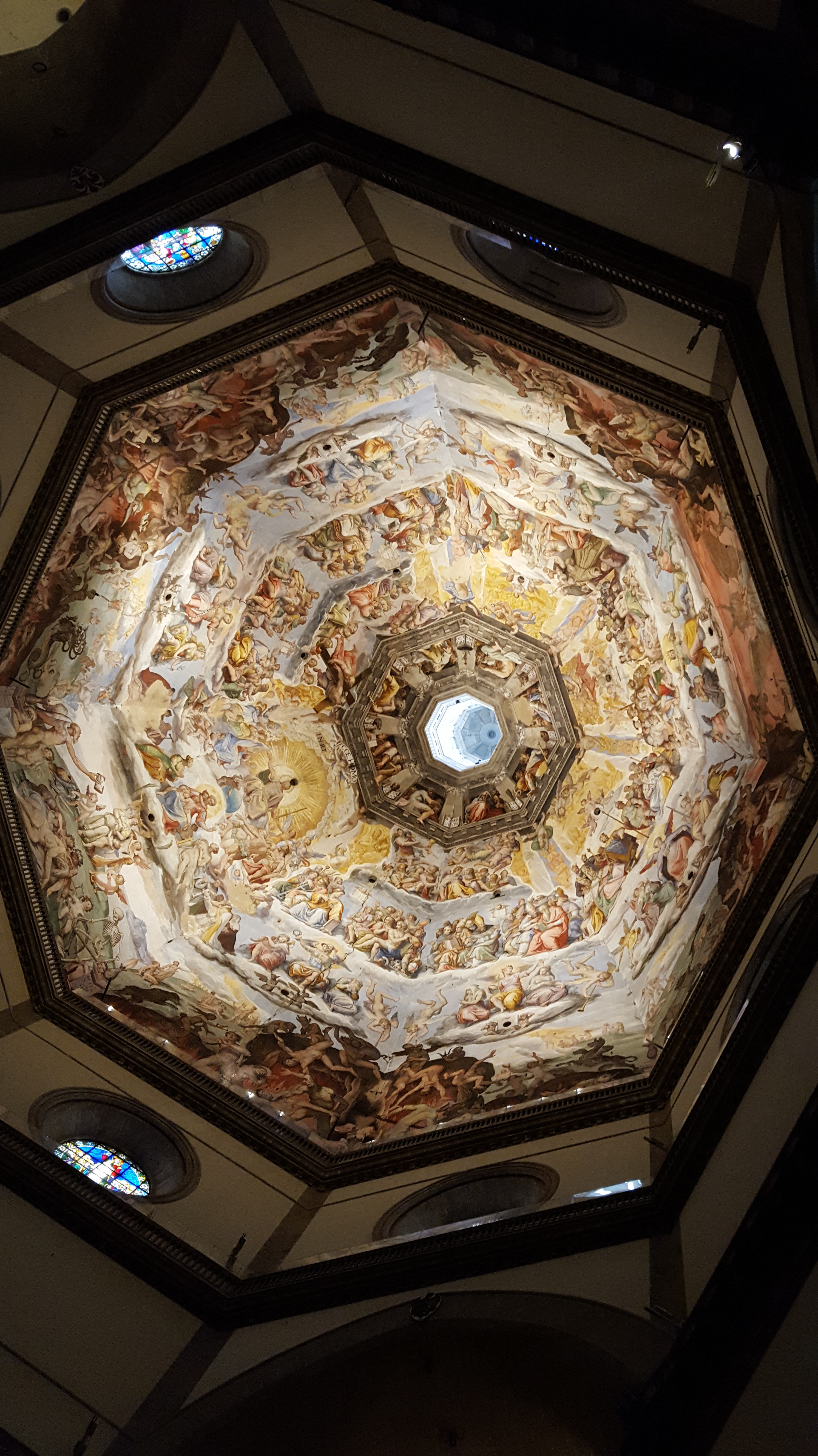
The inside of the dome is covered in art.

20160426_114251

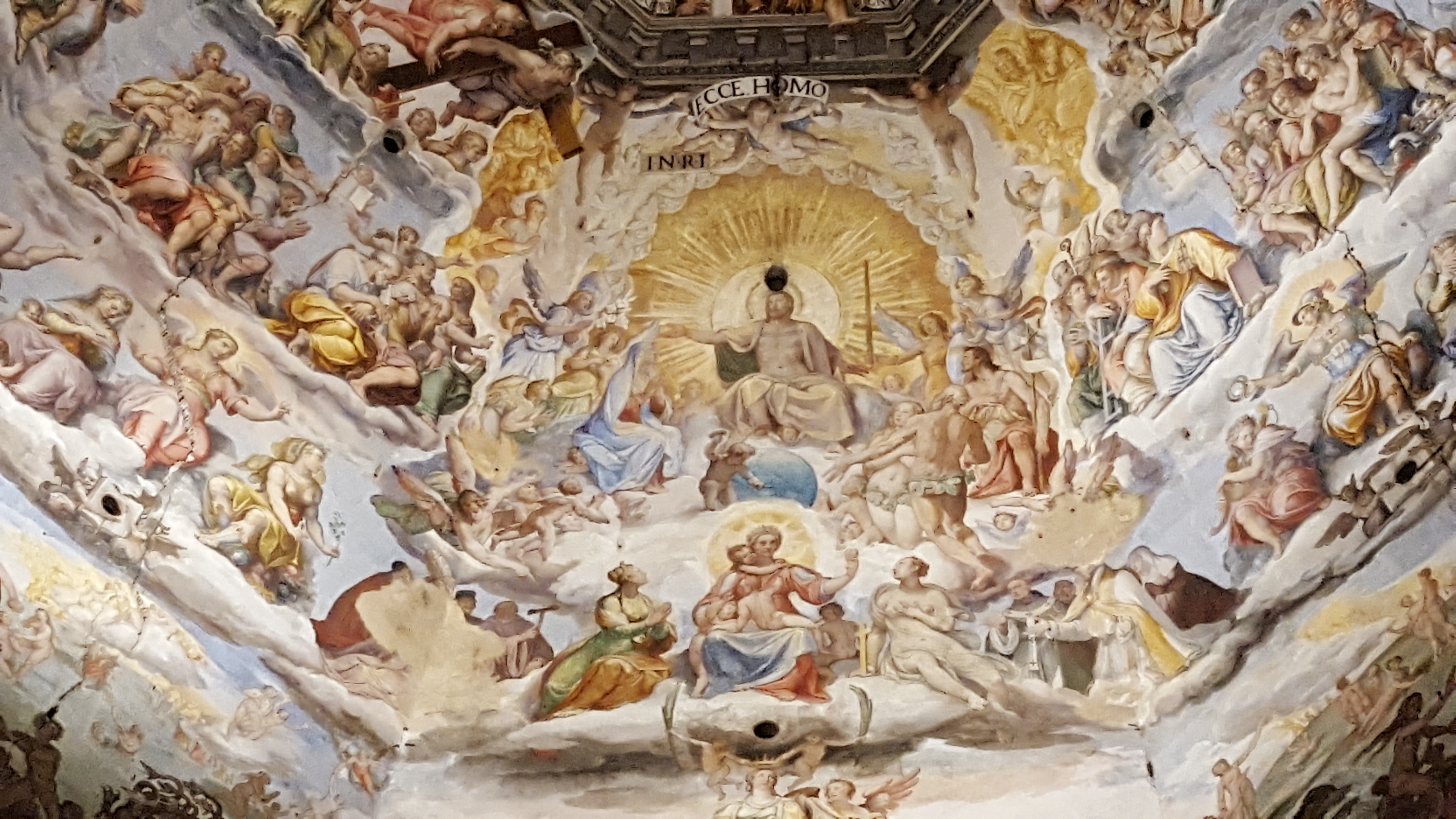
A close up of the throne of God in the Duomo dome.

20160426_114318

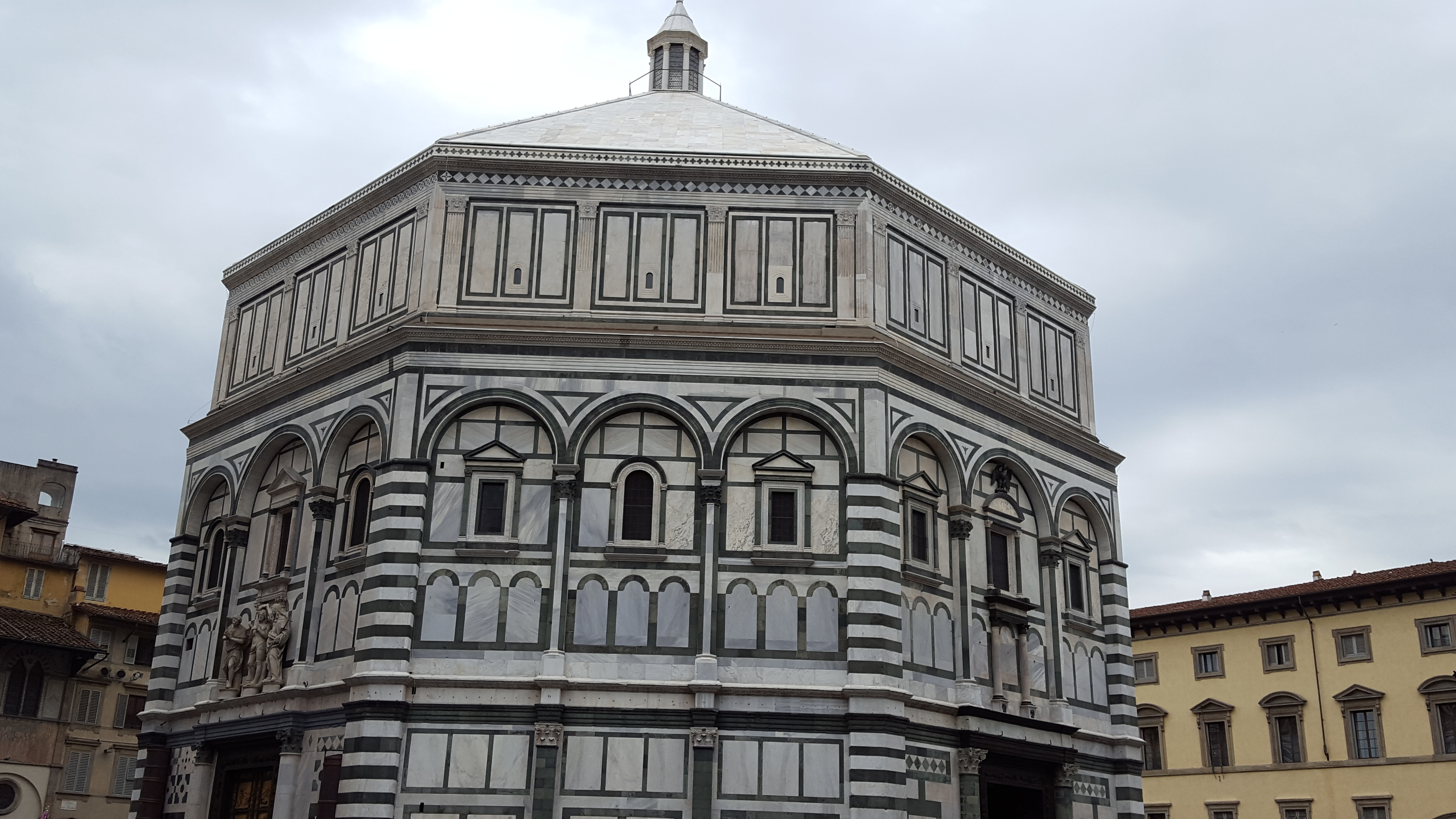
Other buildings in Florence also used the dome structure. Just across the piazza at the front of the Duomo is the Baptistery of Saint John, one of the oldest buildings in Florence (constructed between 1059 and 1128).

20160426_112134

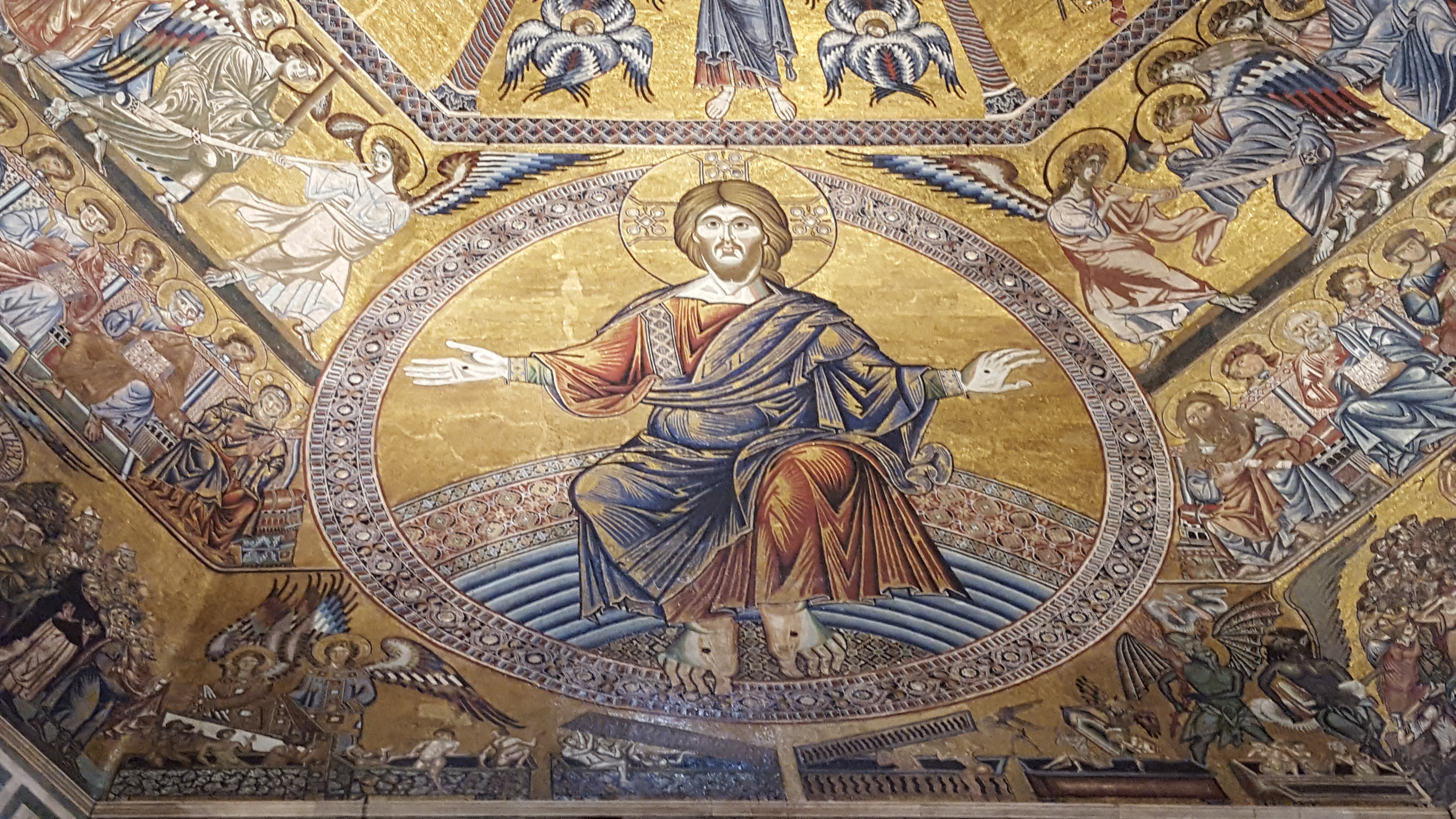
The Baptistery dome is spectacular.

With a closer look at the details.

One of the oldest domes in continuous use, the Pantheon, is in Rome.

Also in Rome, Saint Peters Basilica also has a well-recognized dome.

Domes, of course, appear in many other place in my travels in Europe, as in the example below of St. Peter’s in Vienna. It was the first structure with a dome in that city.

The dome in St. Michael’s Crypt in Vienna…

From a church in Sanary-sur-Mer in France…

Some domes in Dubrovnik, Croatia…

To conclude, I want to point you to a quote from a book by Ross King (2013) called Brunelleschi’s Dome: How a Renaissance Genius Reinvented Architecture.  King is writing about the complex design developed by Brunelleschi as he built the Duomo in Florence. A contemporary of Brunelleschi wrote the the dome was built “circle by circle.” King then writes that the

“description of the dome having been built “circle by circle” is not only a reference to the method of bricklaying or the series of ascending circles that compose the two shells. It is also an illusion to the Divine Comedy, where Dante uses this exact same phrases–di giro in giro–to  describe paradise,  which is envisioned as a series of nine concentric circles…and the domes have always been conventional symbol of heaven. In both Eastern and Western art the ceilings of the most revered shelters have been associated with the heavens, visions of which have  therefore  often been executed on their surfaces in paintings or mosaics. Persian domes were said to express the flight of the soul from man to God.”

May these domes remind you of the heavens, with a repeat photo of the Baptistery dome in Florence.

20160426_123938

Vienna, lovely Vienna

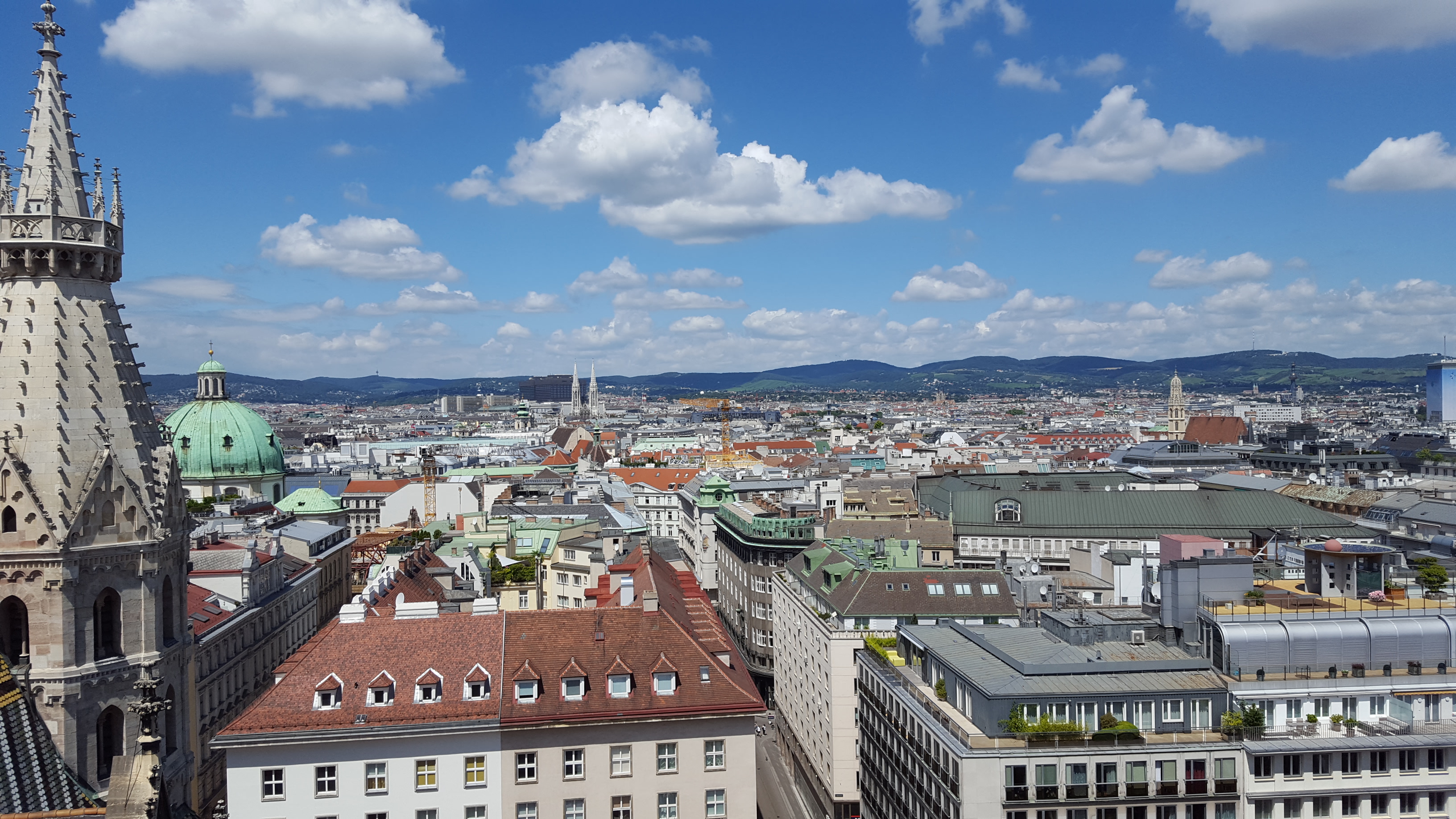
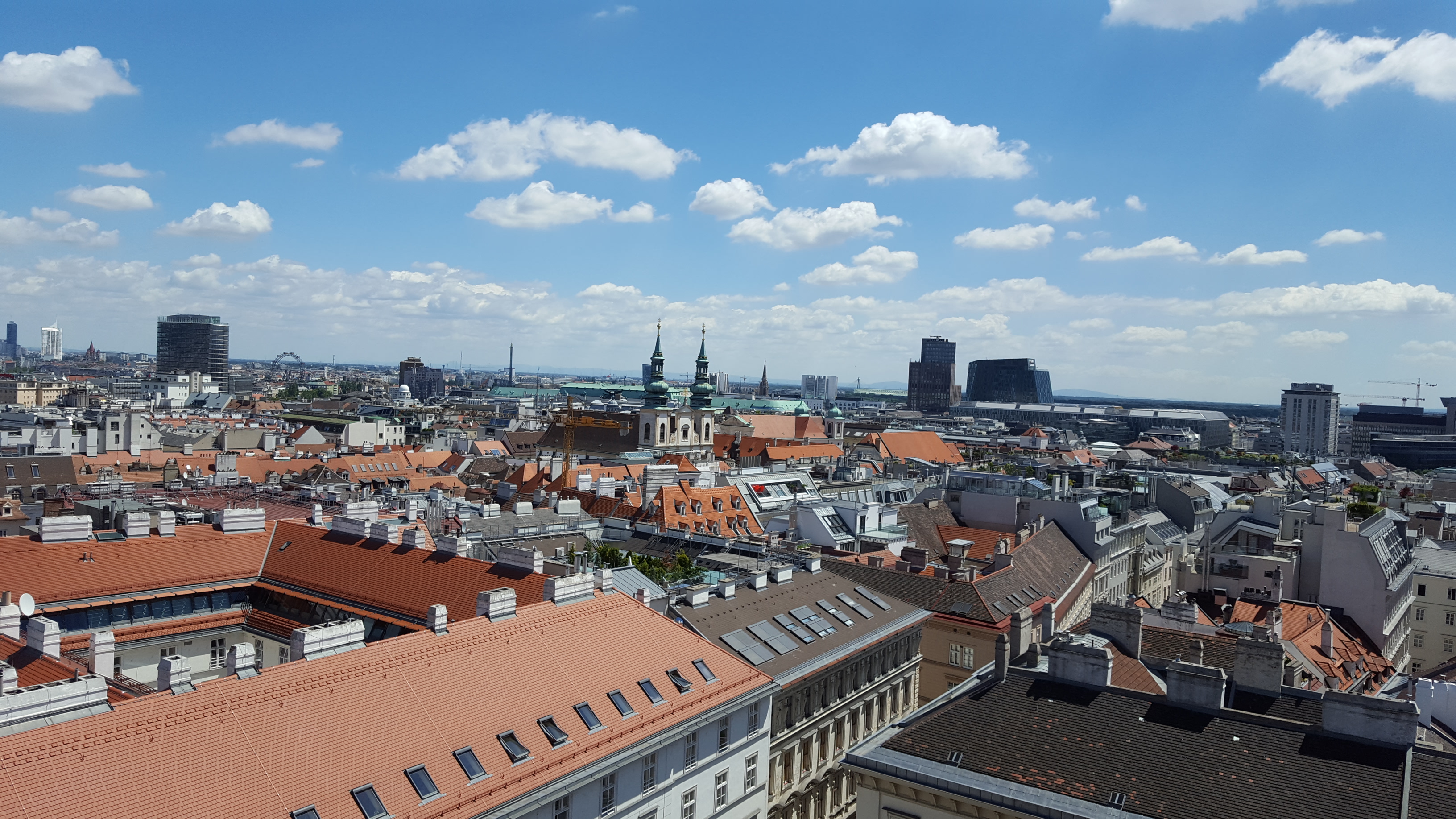
Vienna is a lovely city. This post features a few “city-scapes” of Vienna from the visit Stephanie and I made in early July. An additional post will highlight some of the wonders in the museums. First, from one of the bell towers of St. Stephen’s Cathedral, here are a couple of views of the city of Vienna.

20160704_12021820160704_115855

Before the concert, we also had a bit of time to see parts of Vienna, including some city squares and famous churches.

The churches, as in most European cities, are historical beauties and worth a visit. First, the famous St. Stephen’s Cathedral, which one Website claims is the symbol of Vienna. The first photos are of a bronze model outside the church (since I could not get a good view of the entire church from the ground).

The actual cathedral pictures I took that day show dramatic Romanesque and Gothic features in the architecture.

The roof was a multicolored design (which doesn’t show all that well in the photo above, but I was able to get a better shot from the bell tower.) The design includes the coat of arms for the city of Vienna shown in the photo on the bottom left.

St. Stephan also has multiple bells in the bell towers, the largest of which (and the only one I saw) was the Pemmerin.  The sign says it was cast from Turkish cannons in 1711.

20160704_114756


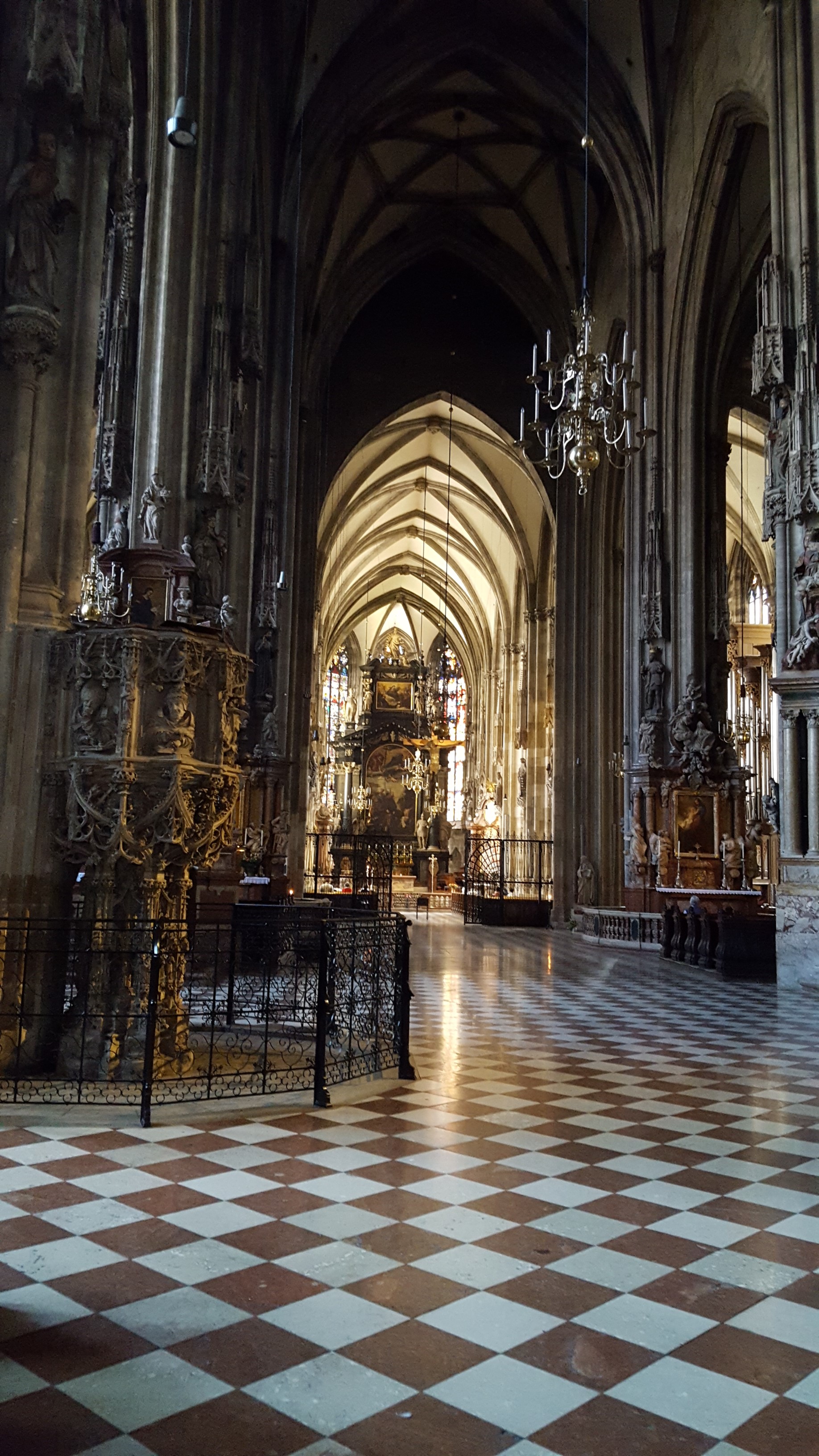
I only have a few photos from inside the church, so I selected just one to give you an idea.


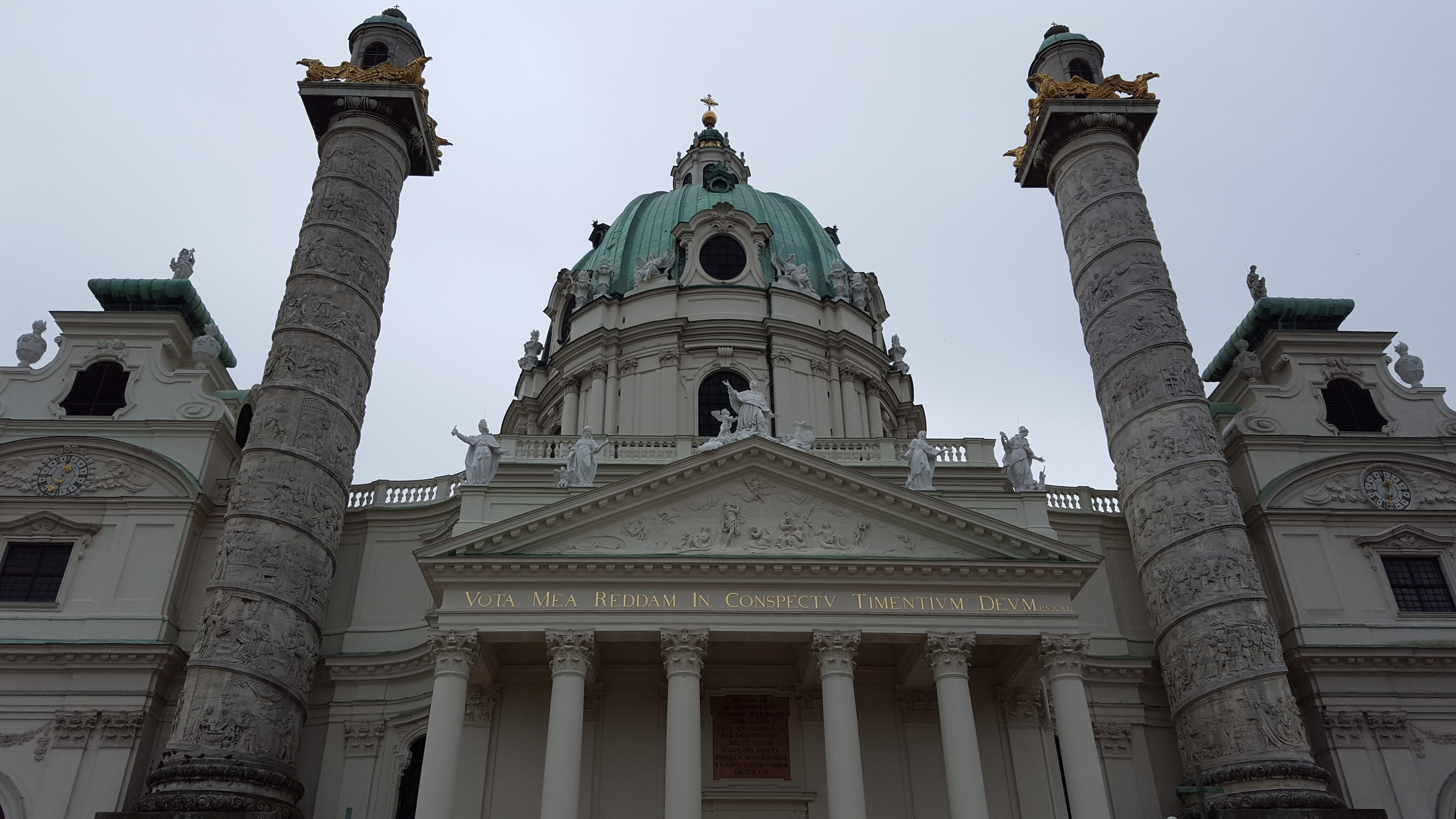
As we walked the first night to find our way around the city, we discovered how close we were to the beautiful Karl’s Church (Karlskirche), the large Baroque church near the city center.

20160703_123305

Vienna is a classical music city, with statues and plaques honoring many great composers. Here are just a few-Beethoven (with a cardboard sign around his neck that kept blowing in the wind so we couldn’t read it), Mozart (with a treble clef of flowers), Chopin, and non-musician Goethe whose poetry was set to music by many composers.

It was pleasant just to stroll the streets, as Stephanie and I found out as we took a 45 minute walk to church on Sunday. It was a wonderful way to get to church.

We walked past this community garden,

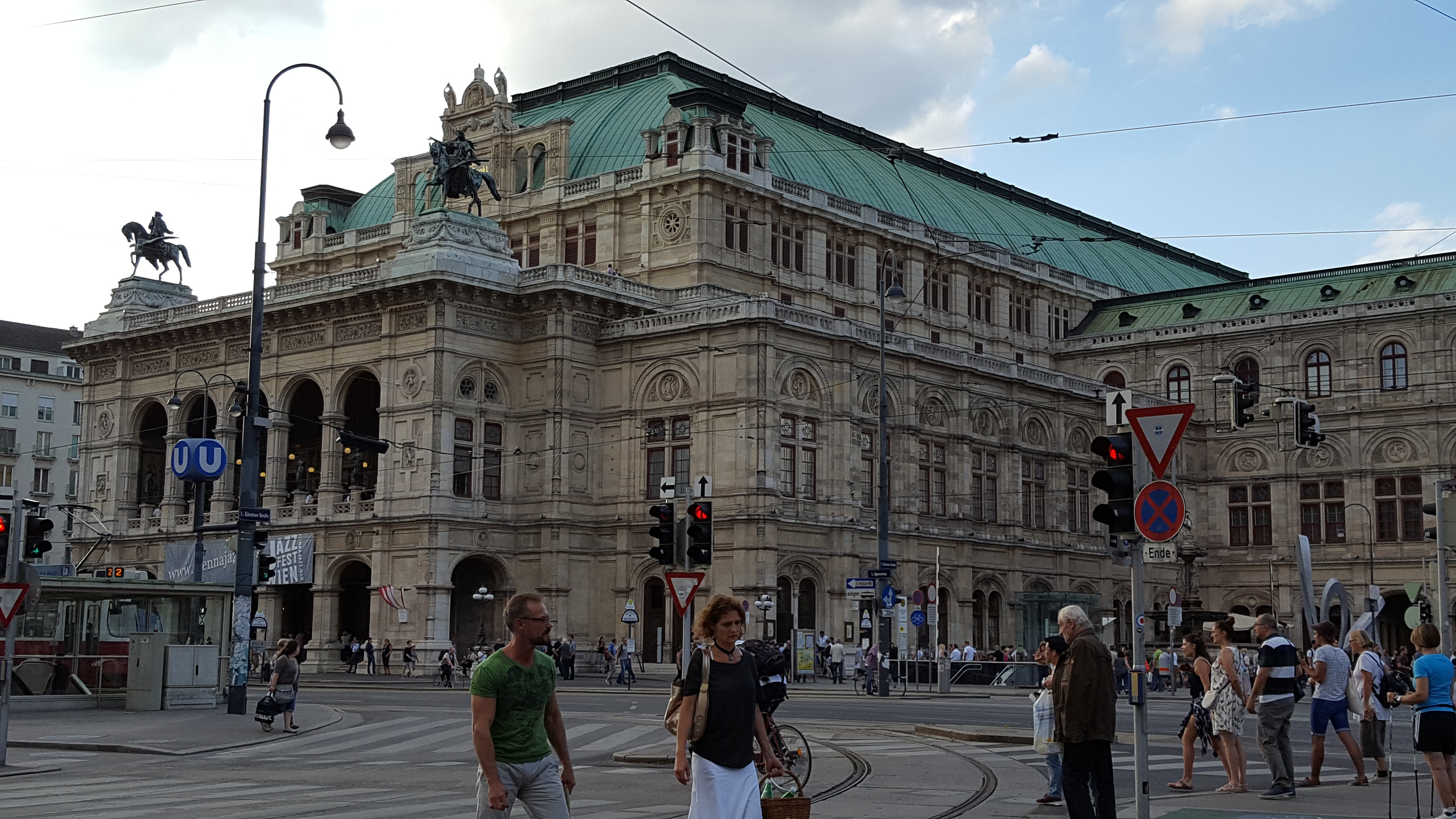
the famous opera house, and

20160704_191017

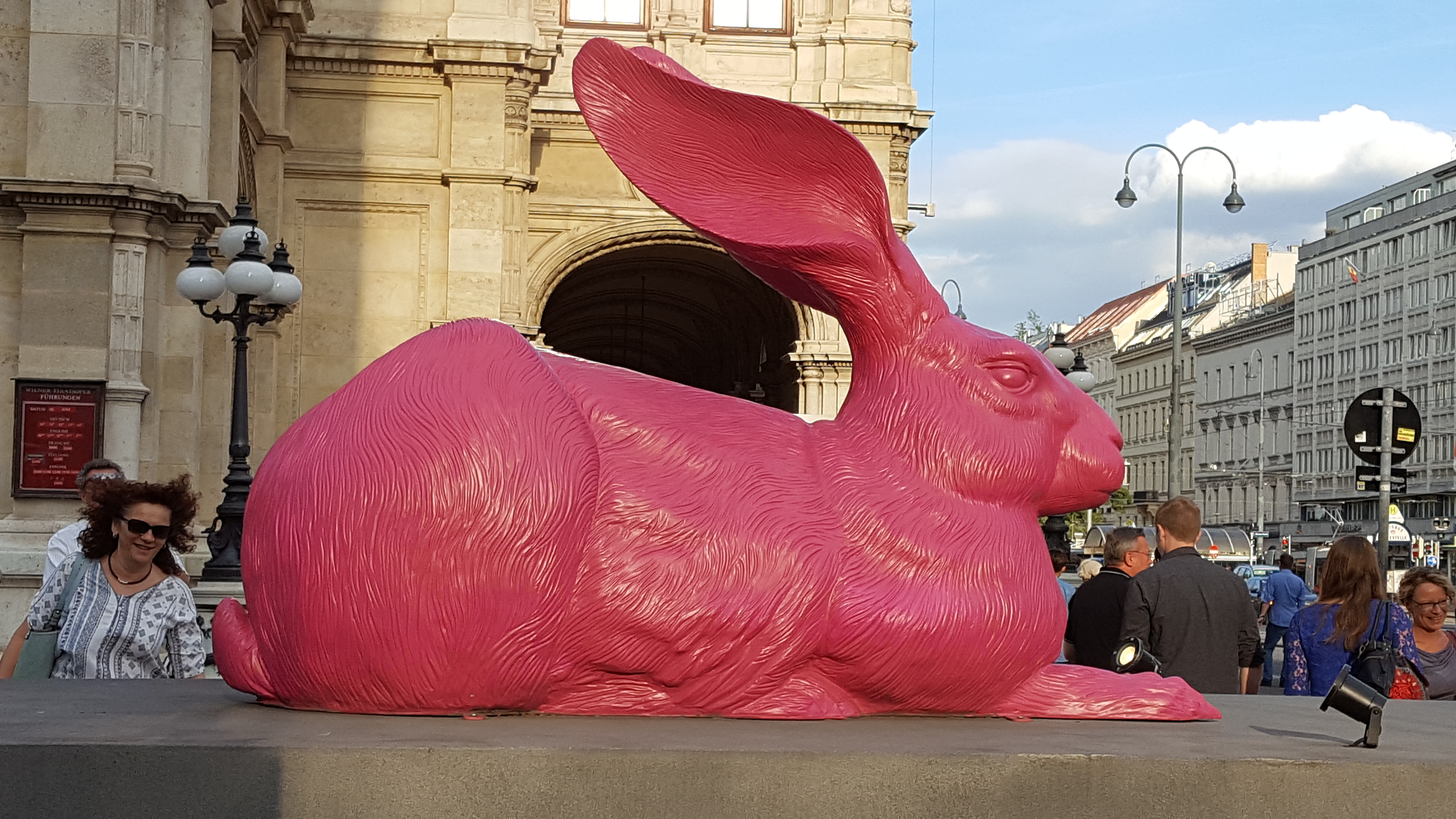
this new statue (by some famous artist we were told)!!!

20160704_190419

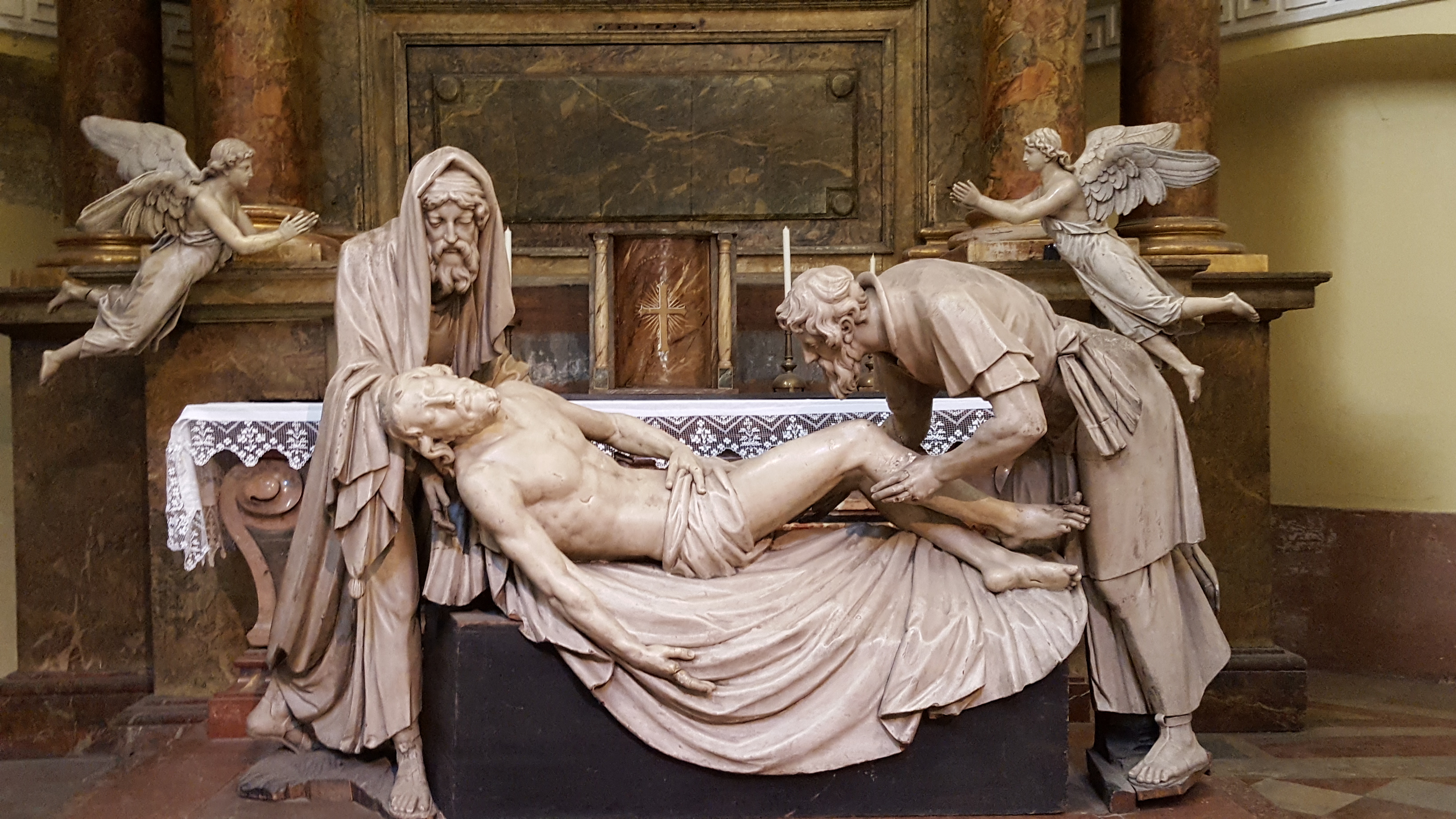
In my tastes, the pink rabbit is not nearly as wonderful as this statue of the Entombment of Christ by Franz Kässmann in St. Michael’s Church near the gate to the Hapsburg Imperial Palace.

20160704_131729

More photos from St. Michael’s Church for you to enjoy. This church had beautiful wrought iron work all though the building and grounds. It made me notice it in other places in Vienna. (I think it deserves a post of its own, so you’ll have to wait to see it.)

Finally, we greatly enjoyed attending the English speaking ward in Vienna, and, among the many visitors that Sunday, found some friends of Margaret and Craig from Houston (the world is small and full of friends).

The beautiful flowers kept my camera busy here, too.

Money in the Zuckermann Museum

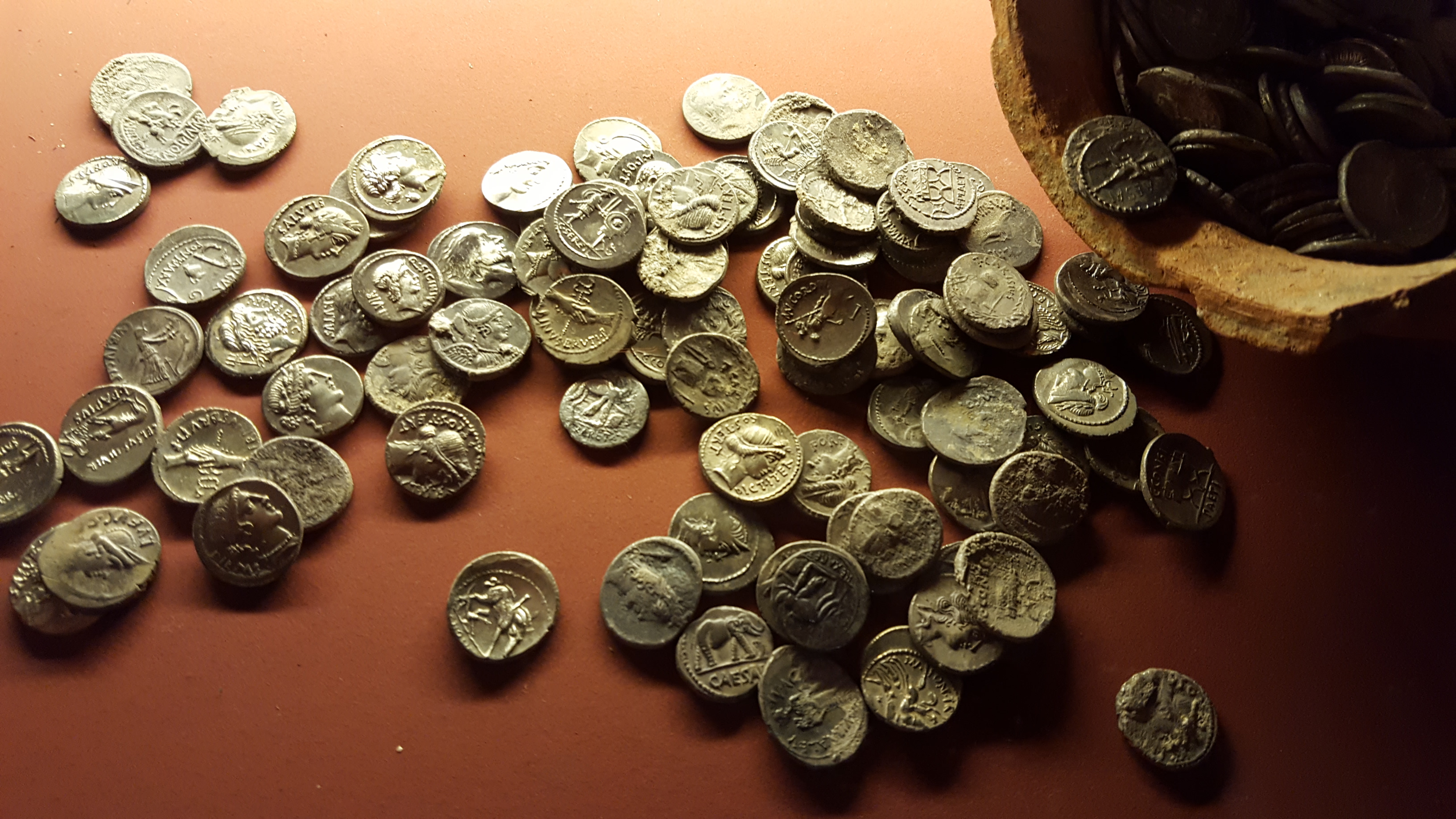
As mentioned in a earlier post (before I came home), the Zuckermann Museum, part of the Civic Museums of Padua, had a collection of early coins. They arranged these coins somewhat within historical order, so that the development of the use of money could be observed.

20160518_174604

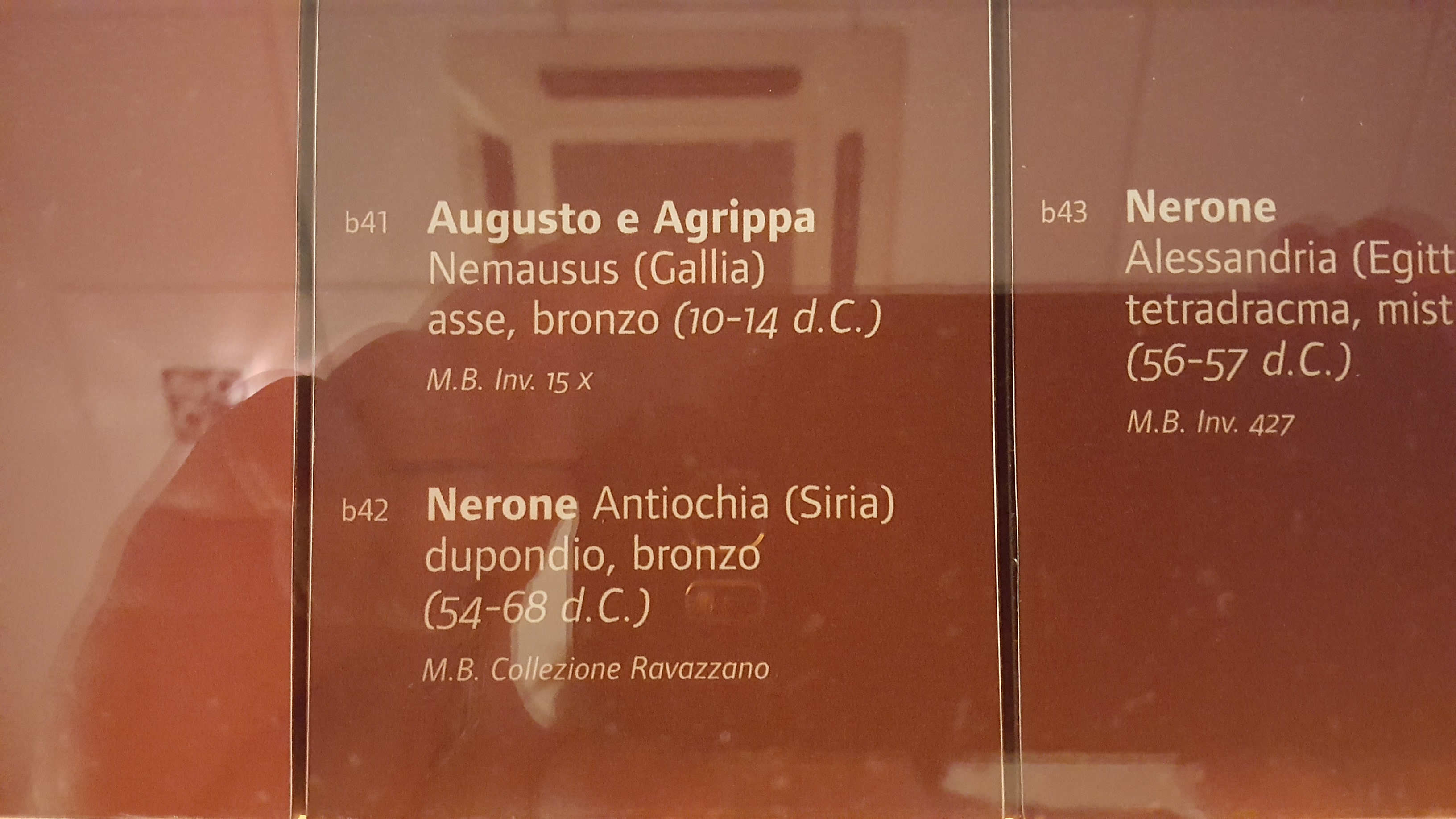
I tried to remember to also take a photo of the information sign on the coins, but I didn’t always remember or take them in order. Still, here is a brief selection of historical coins for those of you that might be interested.

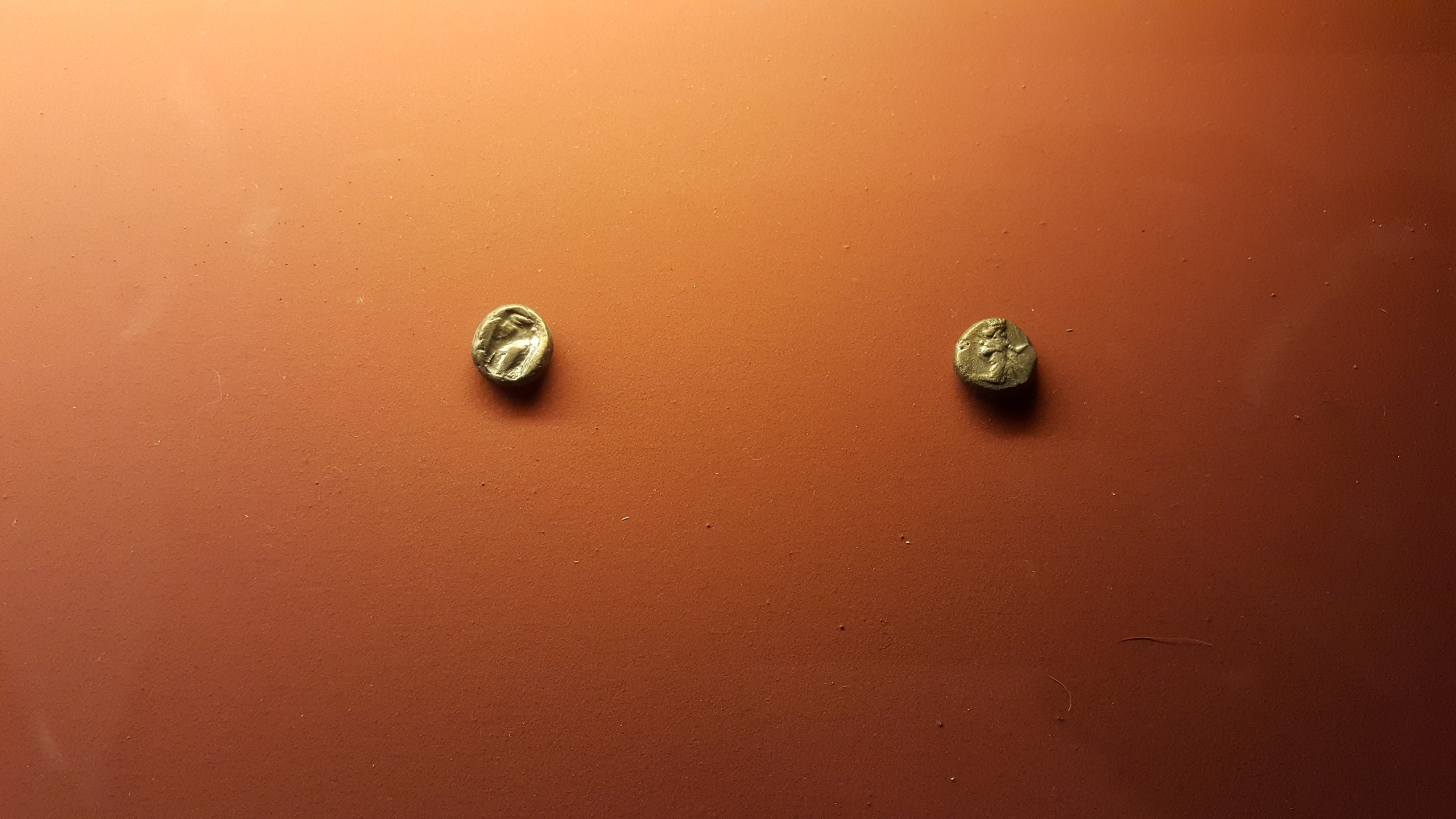
The earliest coins that were in the collection at the Zuckermann Museum in Padua were these two coins from the reign of Darius I (521-486 BC).

Darius

The museum also had on display a coin press. The press is a modern reproduction of one in use in Italy between 1355 and 1388.

In addition to the coins, they also showed some examples of the introduction of bank notes, which the sign in the museum claimed started in 1661 in Sweden.

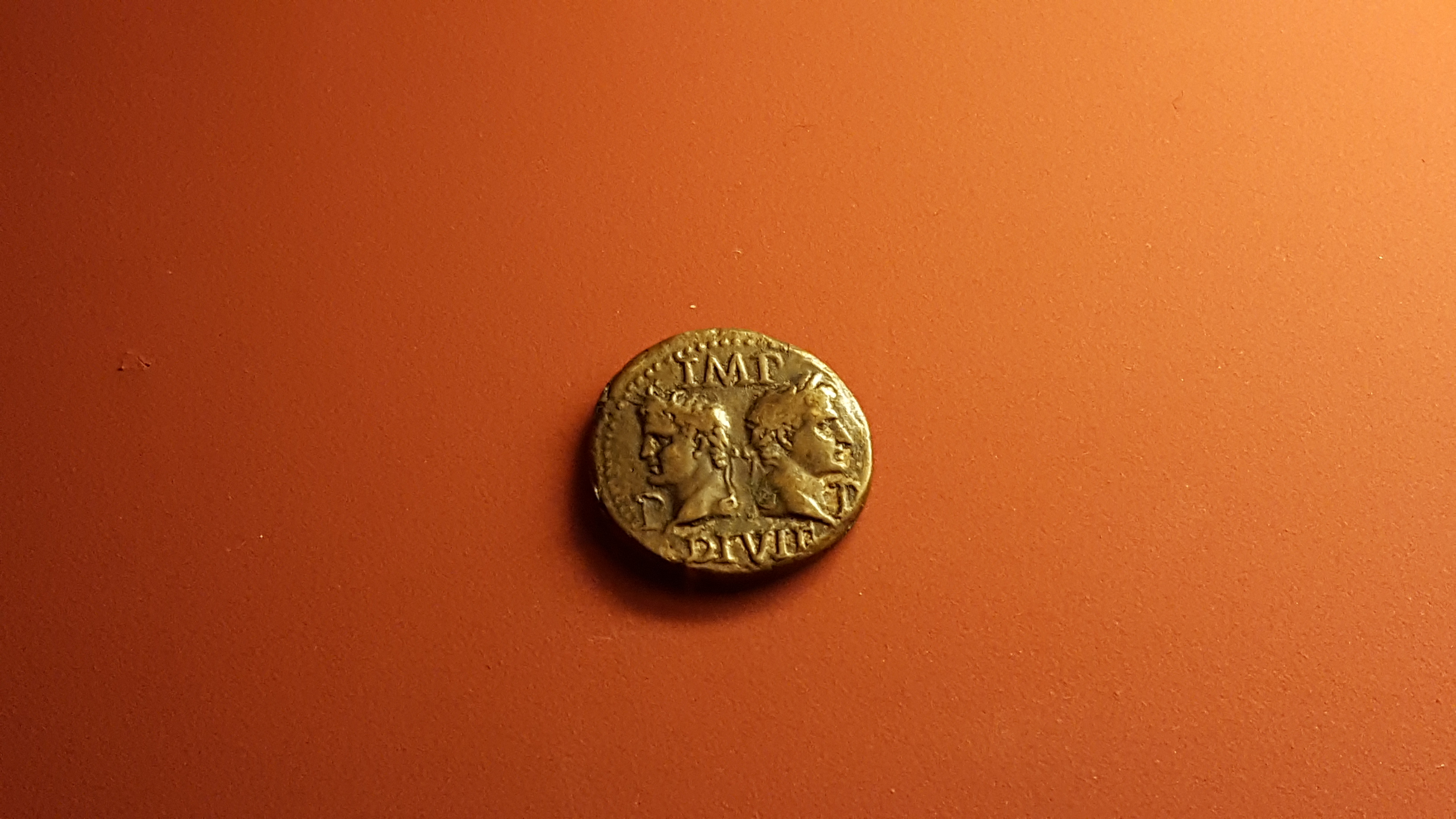
The most impressive coin to me in the end was one which I missed on my first turn through the cabinets of coins. My niece Lisa brought it to my attention. The coin below had a sign saying it was from the time of the rule of Augustus and Agrippa’s between 10-14 BC.

20160518_174918

20160518_174929

Lisa pointed out that people living at the time of Christ might have seen such coins.

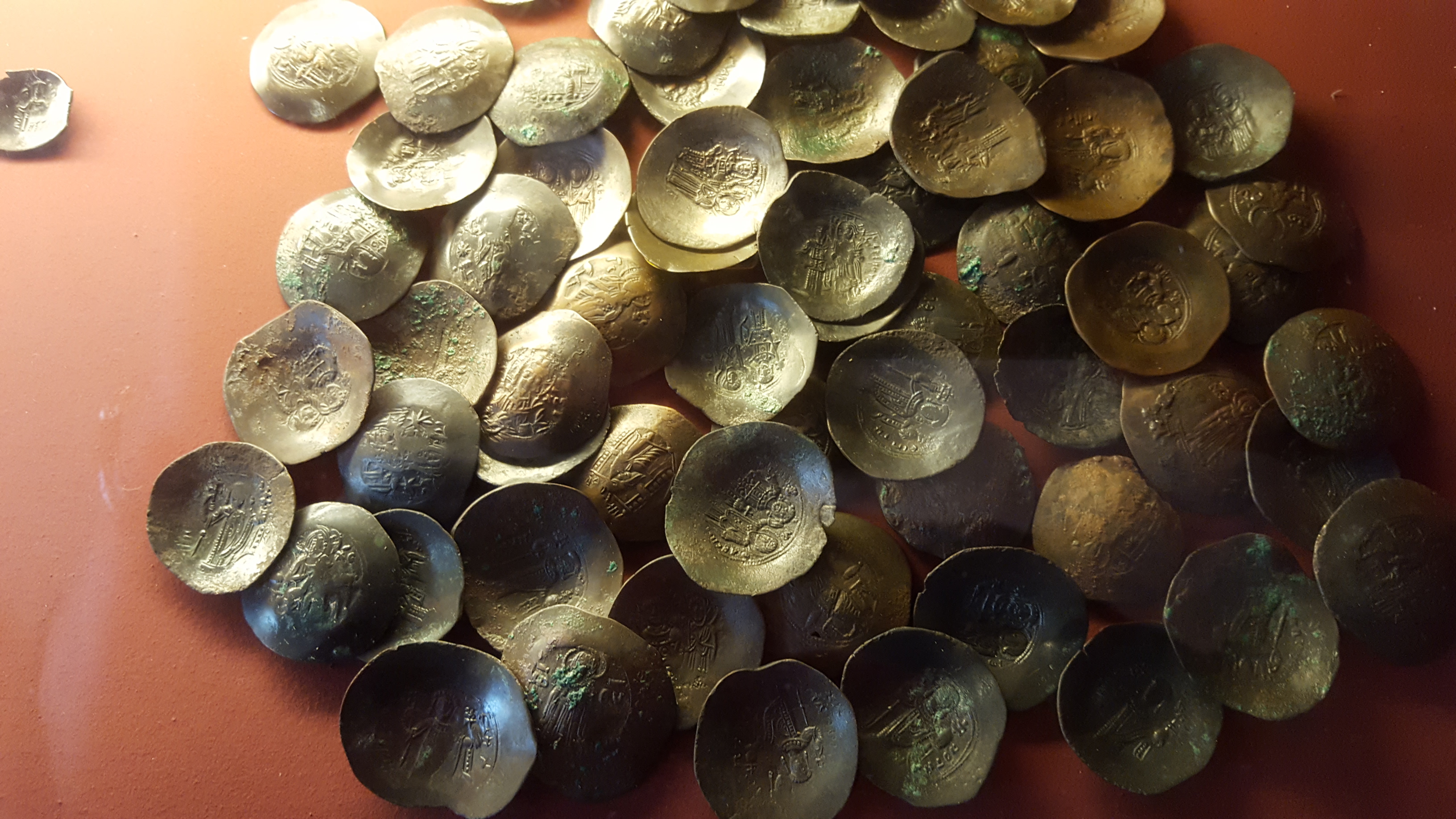
Ah, money! Haven’t we always wanted money in some form? (below) Byzantium coins from around the 6th century.

20160518_174820

Corinth

After these things Paul departed from Athens, and came to Corinth” (Acts 18:1).

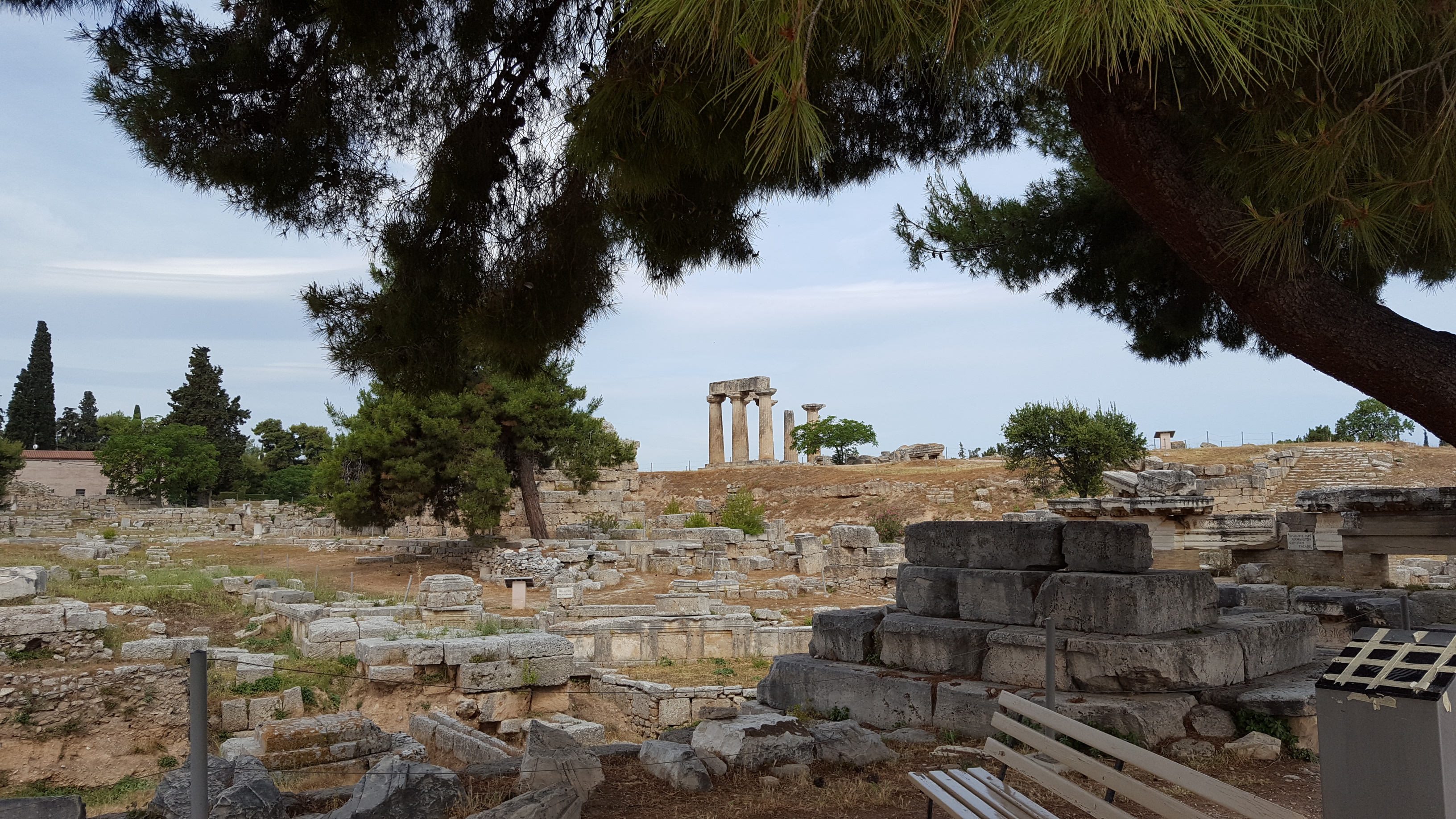
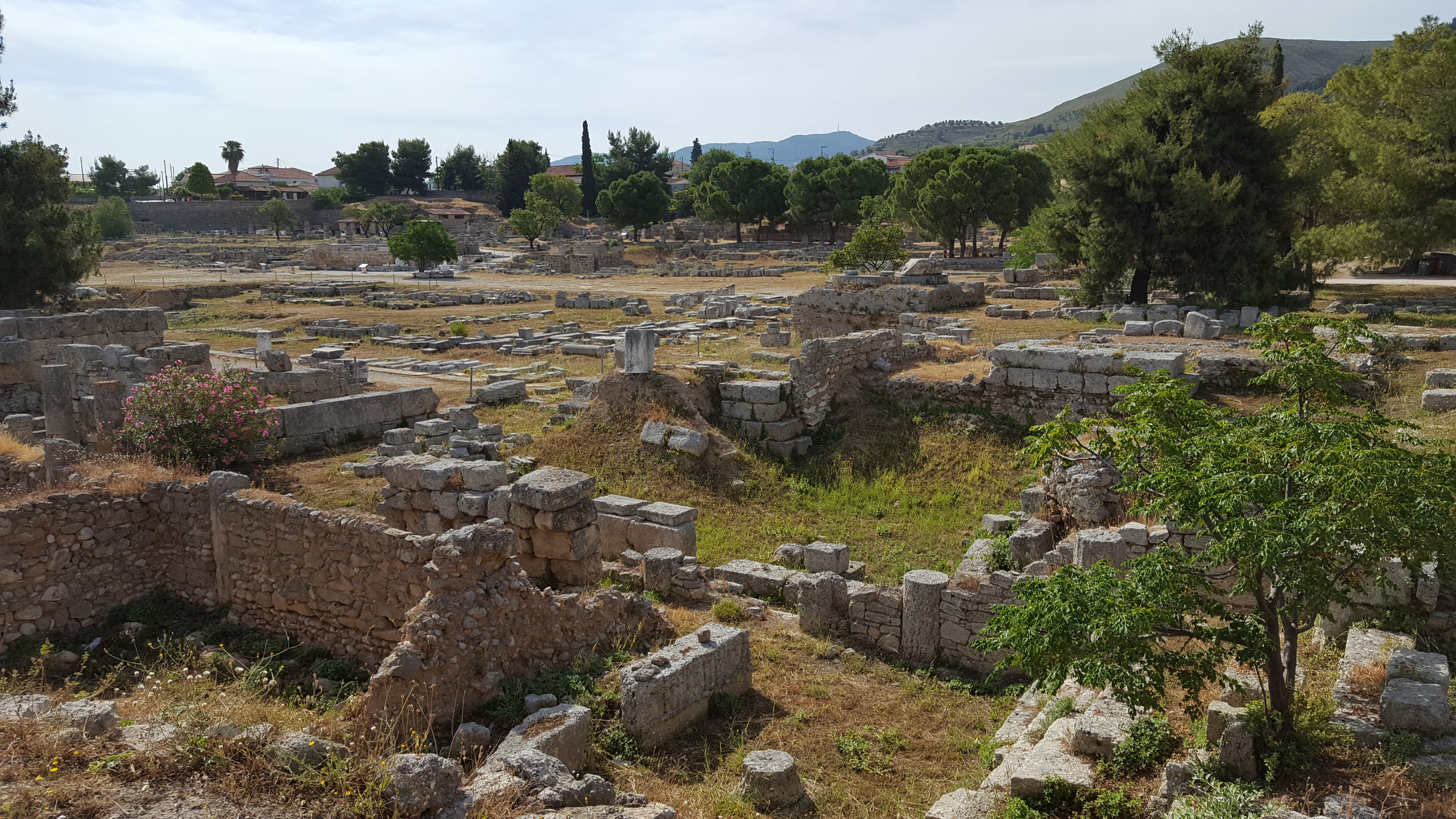
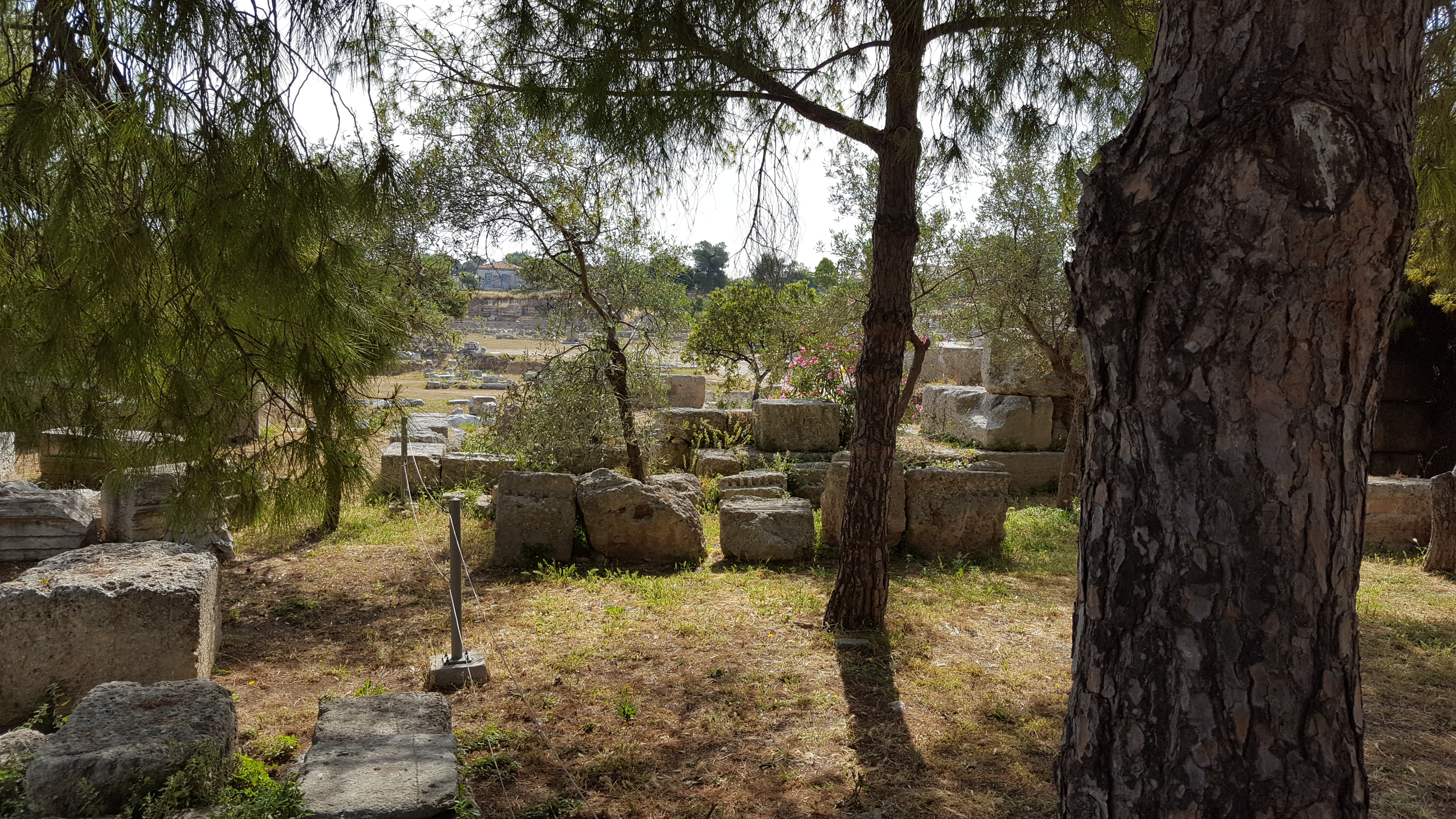
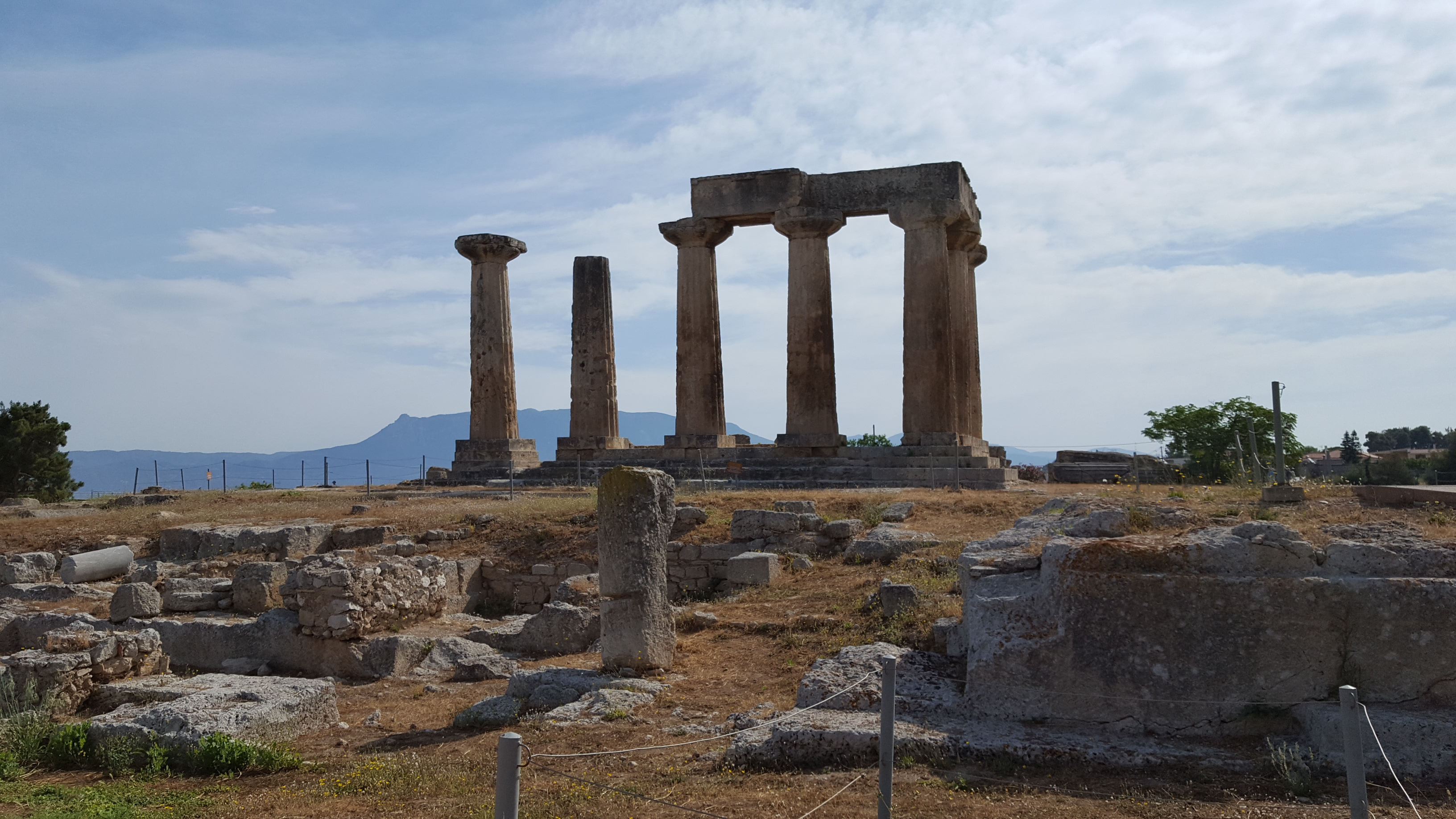
20160524_092058Corinth has been inhabited for more than 5,000 years. Much of the ancient Greek city was destroyed and rebuilt by the Romans, the city where Paul would have lived (about 51-52 AD). Paul stayed in Corinth nearly 2 years.

20160524_085137

While in Corinth, Paul was accused before the Gallio, proconsul of Achaia (Act 18: 12). The Bema (photos below) was the rostrum or platform for public hearings, celebrations and judgment, and tradition gives this as the site of the trial. Archaeologists have uncovered or rebuilt part of the Bema. In the Byzantine period, a church was constructed on this site. You can see a cross on one of the stones in the top right photo (if you enlarge it).

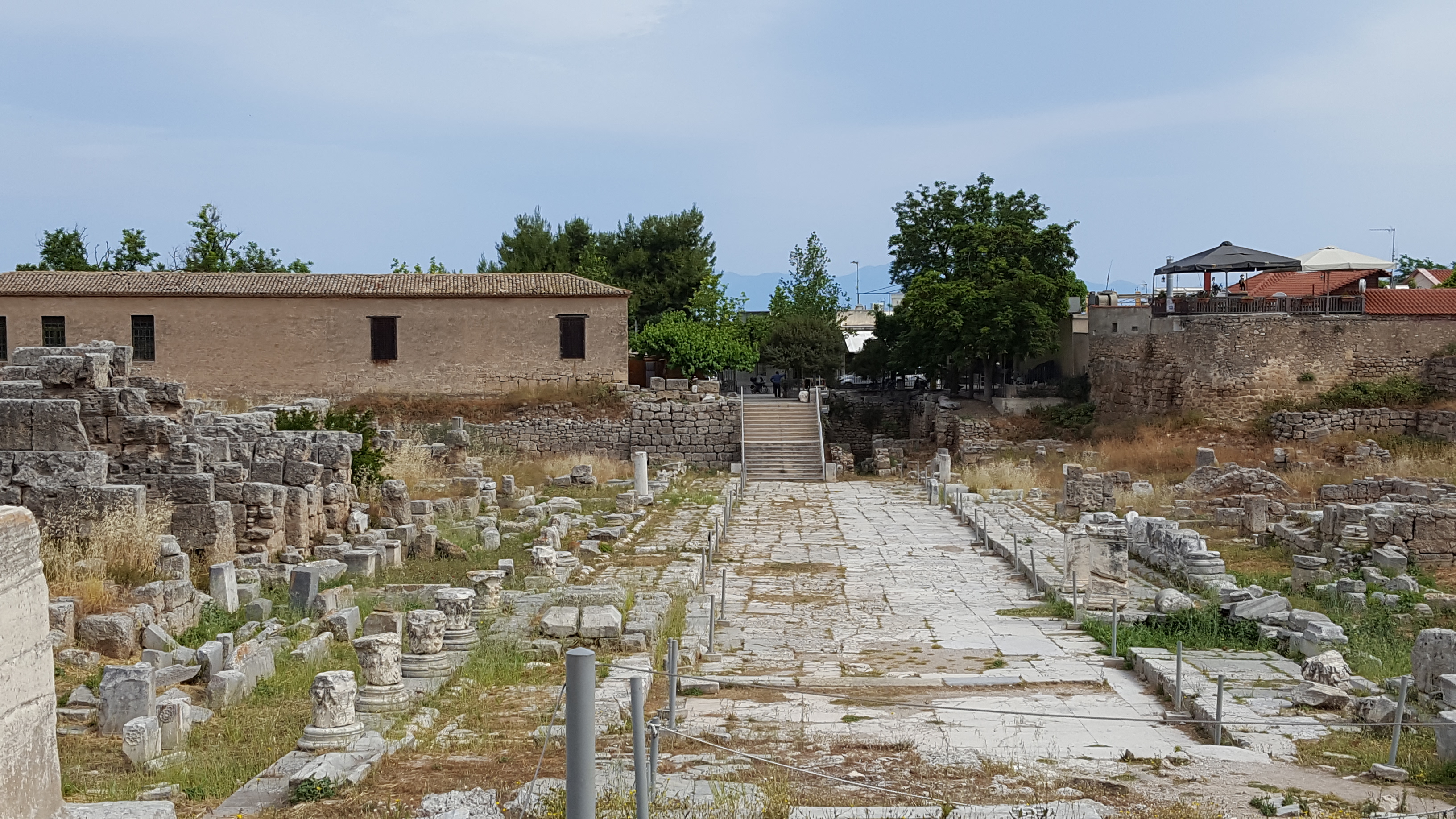
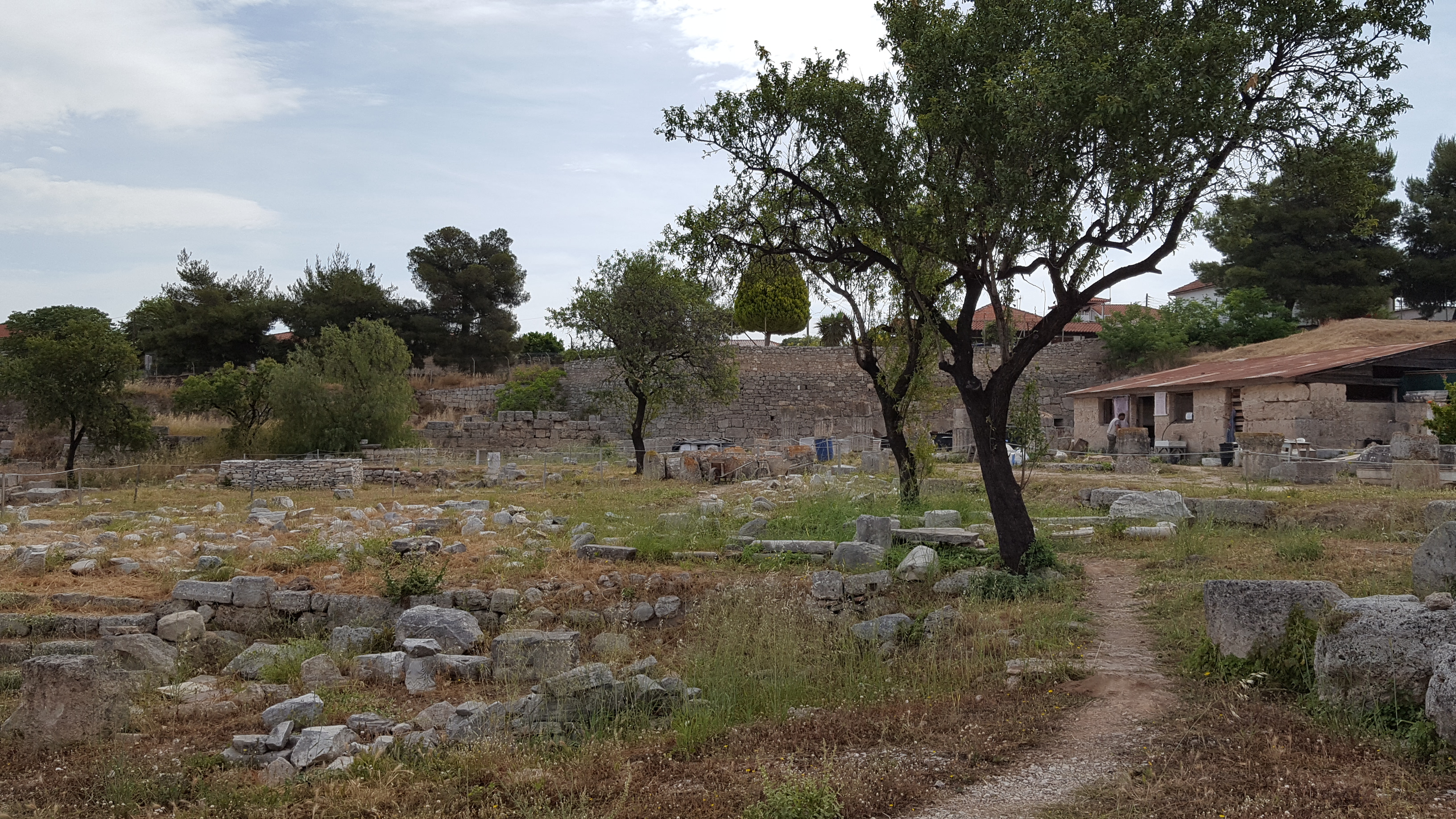
Since Corinth was a busy international seaport, the main market street (Lechaion Road) would have been an active, busy place. Individual market stalls and houses, as well as the gutters for the streets and public toilets are visible (more visible in person than in my photos, but still there nonetheless, I promise!)

20160524_092248

Greece was much more desert-like than I expected (being an Arizona native), so Corinth must have had access to water to support life for so many thousand years. The ancient fountain of  Peirene (photos below) was uncovered by archaeologist more than 100 years ago.

Some photos I took of the information signs at the site show what the buildings around the fountain looked like during excavations in 1899 (photo on left) and what the Greek and Roman structures built around the Peirene Fountain might have looked like (top and bottom on the right respectively).

A small museum was located on the site. One rather humorous display, as told by the guide, is the mass produced statues in a courtyard. She claimed only the Romans did this–prepared bodies  for the addition of head and hands; when a statue was requested, hands were added to the body by sticking a pipe into the hole in the arms. A head, carved for the person for which the statue was ordered was then placed on the neck. Mass produced statues by the Romans, not damage caused by the ravages of time, those headless statues!

Paul preached first in the synagogue in Corinth before he turned to doing missionary work mostly among the Greeks. In the museum are two stones, one showing the beginning of the word “Heb” (Hebrew) and another with three menorah. evidence of Jewish life anciently.

With a photo such as below, you can image how a city might have looked at the height of its prosperity in Roman times.

20160524_085253Corinth is an ancient, thought-producing place to visit.

20160524_084612.jpg

20160524_091256

As an after thought, there seemed to be an abundance of dogs among the ruins, rather unconcerned by the tourist walking near by.

Ha!

A one-day visit to Montenegro

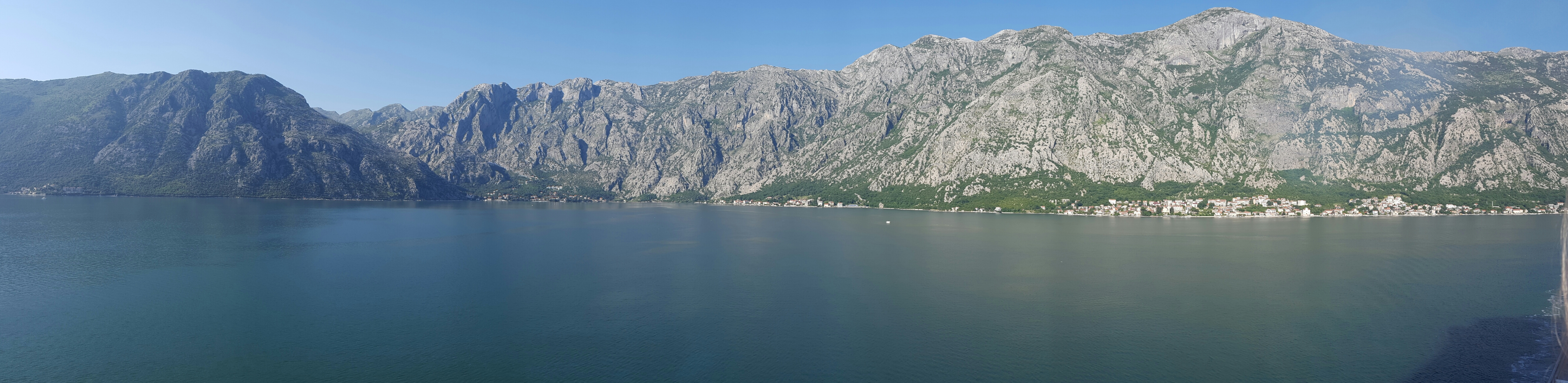
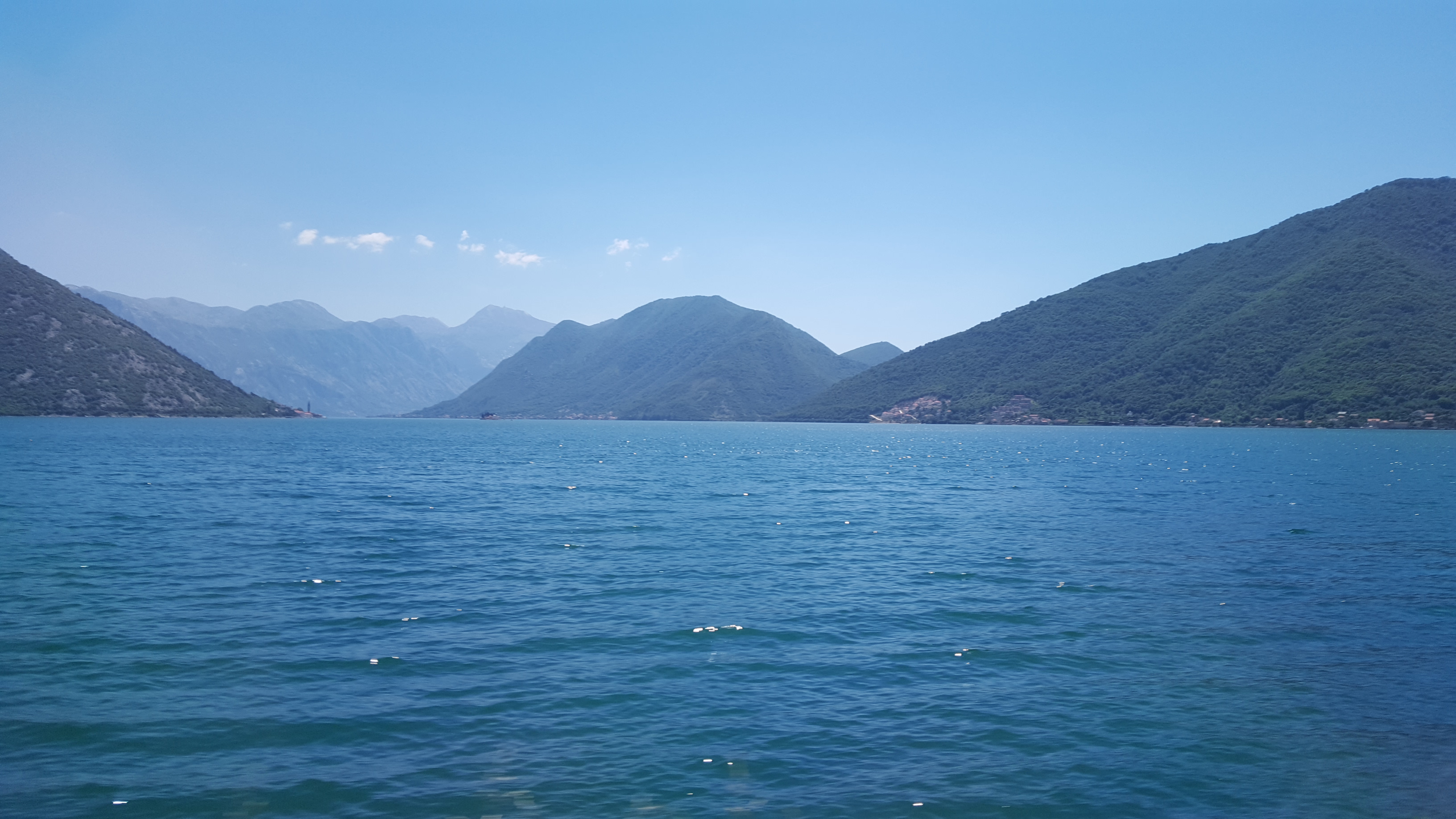
As mentioned in the overview post on the cruise back in June, we stopped at Kotor in Montenegro. As I was doing a bit of reading to refresh my memory today, I saw a post that claimed Kotor is the most beautiful city in Europe; it is a UNESCO World Heritage site, and deserves to be,  I must say. Take a look. The first photo is a panoramic part of the Bay of Kotor.

20160818_134353 crop


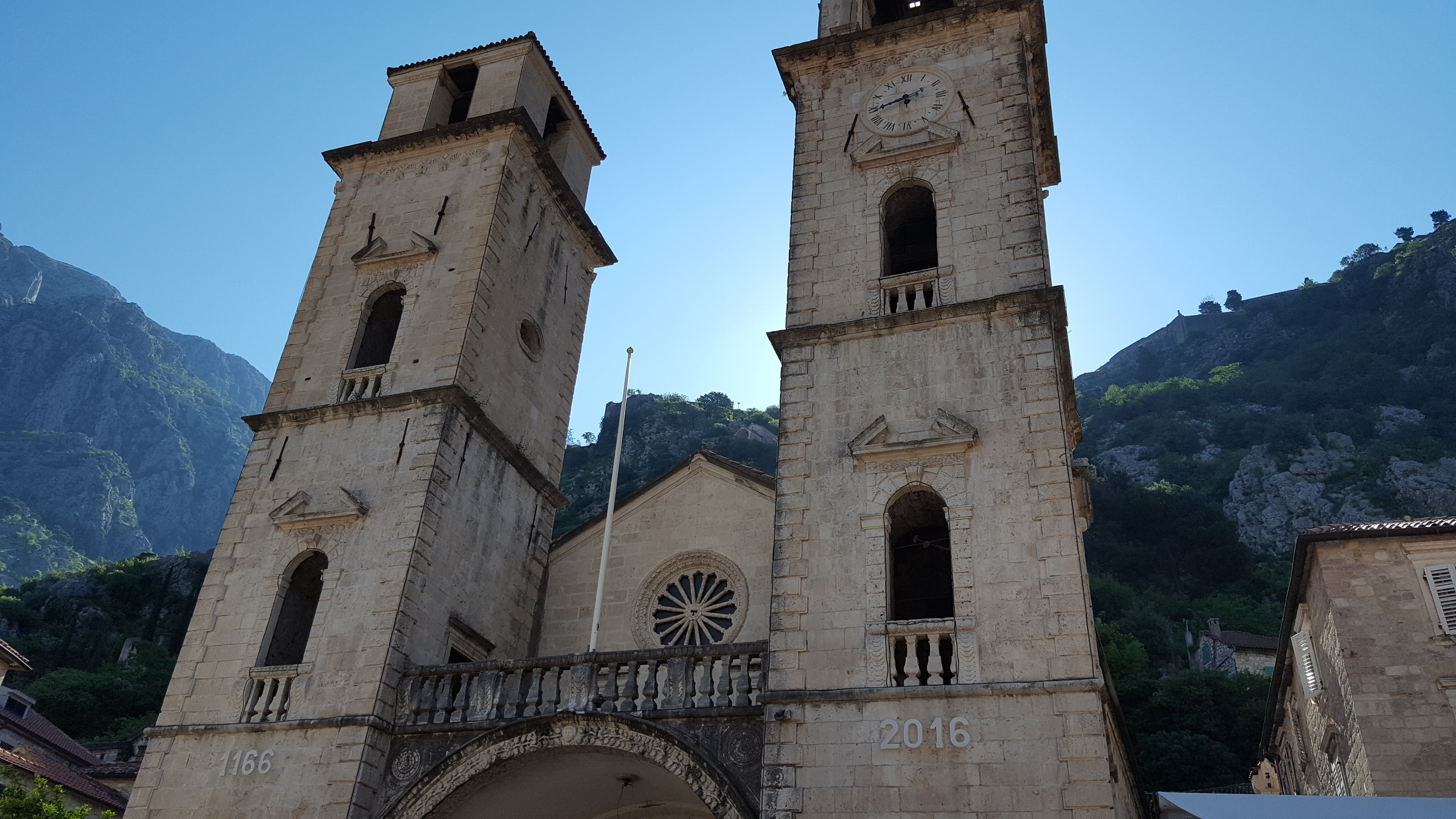
Take another look at some features of the city of Kotor, starting with one of the old churches. Can you see the date on the left tower (1166)?

20160522_084535Part of the striking nature of the town is the mountains that surround it in the back, which you can see behind the church towers, along with the water in the front. The mountains were used for defense, with fortifications built along the ridge. There are over a thousand steps if you want to climb to the top.The town also had moats and walls at sea level.

In the early days (starting in the 7th Century), Kotor was part of the Republic of Venice. Some remnants remain from that time, including the symbols on the flag.

The town had the narrow streets of so many medieval towns.

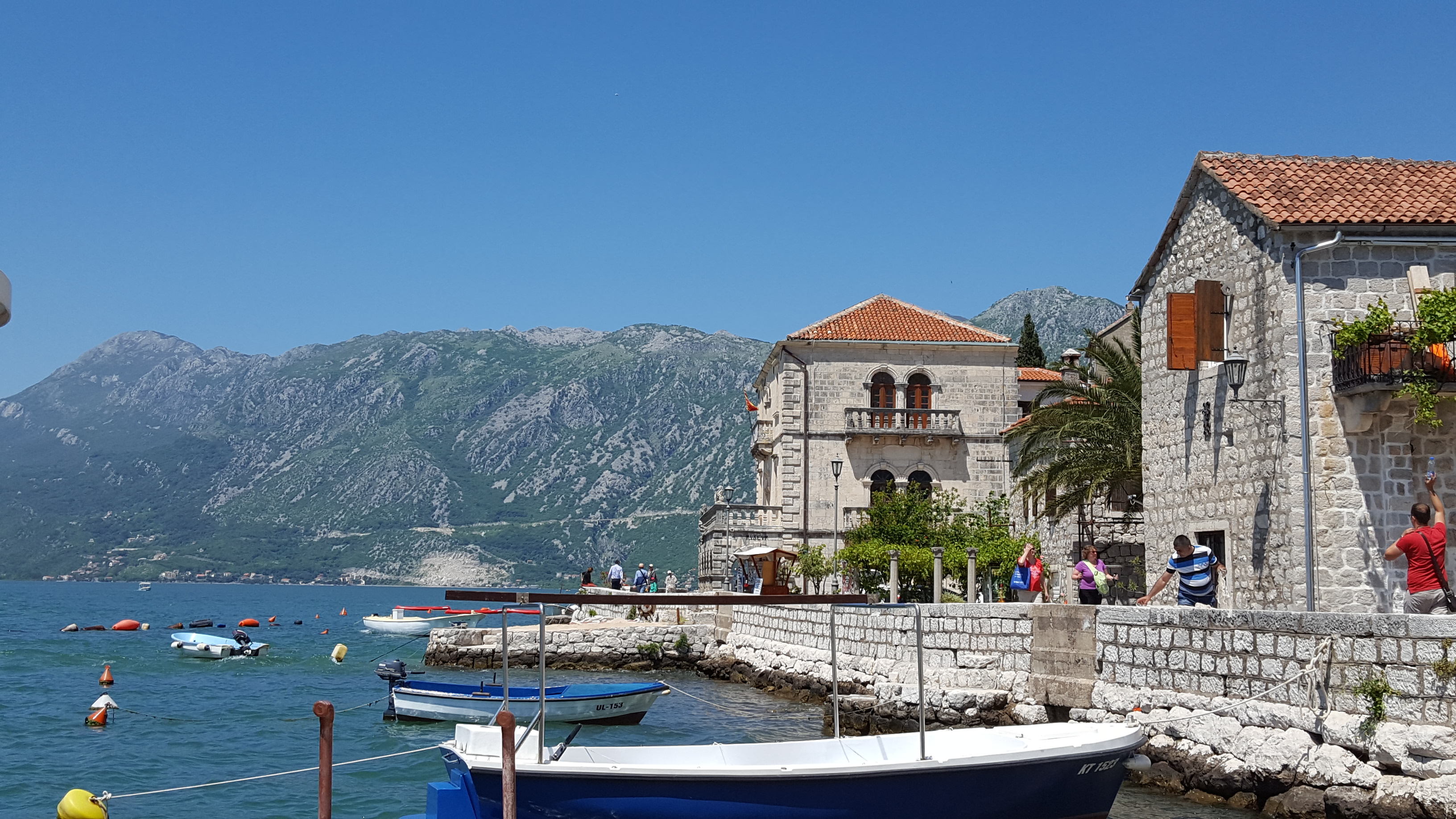
We took a bus to another area where we caught a ferry out to an artificial island created over many hundreds of years. The island was made by throwing rocks and wrecked ships into the bay. (Photo is of the dock area where we caught a boat out to the island.)
20160522_114651

I managed to sit by a break in the railing on the boat ride to and from the island and took photos coming and going, beautiful all the way. The island with the church has a neighboring island with a monastery (not open to the public), third photo from left.

The church, Our Lady of the Rocks, was first built on this artificial island about 1452, but has been rebuilt a couple of times. It was dedicated to the safety of sailors. You can see some from the tour group listening to the guide in one photo.

The inside of Our Lady of the Rocks Chapel had beautiful paintings and marble alter, but also had gifts from brides (second photo from left) who chose to be married in this church and silver votive tablets from sailors and their families (fourth photo on right).

20160522_111926


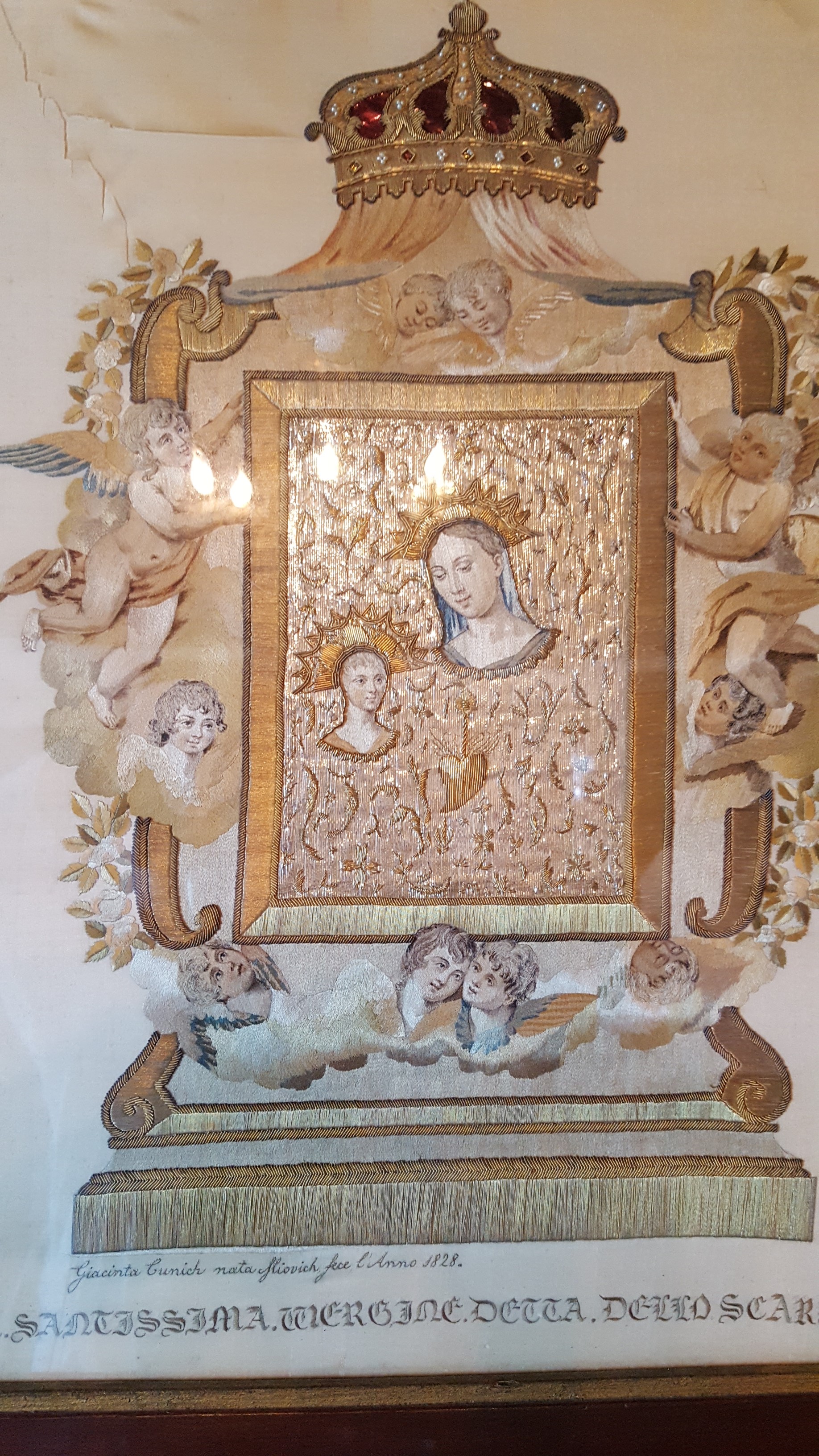
A unique  item was a tapestry with gold and silver threads. The woman who made (it took her 25 years) used hair from her own head for the hair of the Virgin Mary.


We also went to another town, Badva. You can see our guide in the red shirt in the bottom right photo, a young graduate of a university tourism program. He was excellent.

We shortened the journey back to Kotor and our cruise ship by putting the bus on a ferry along with cars and people who were walking (you can ride on the ferry for free is you are walking). I enjoyed getting off the bus during the ride across the bay and snapping a few photos (for a future book on transportation?).

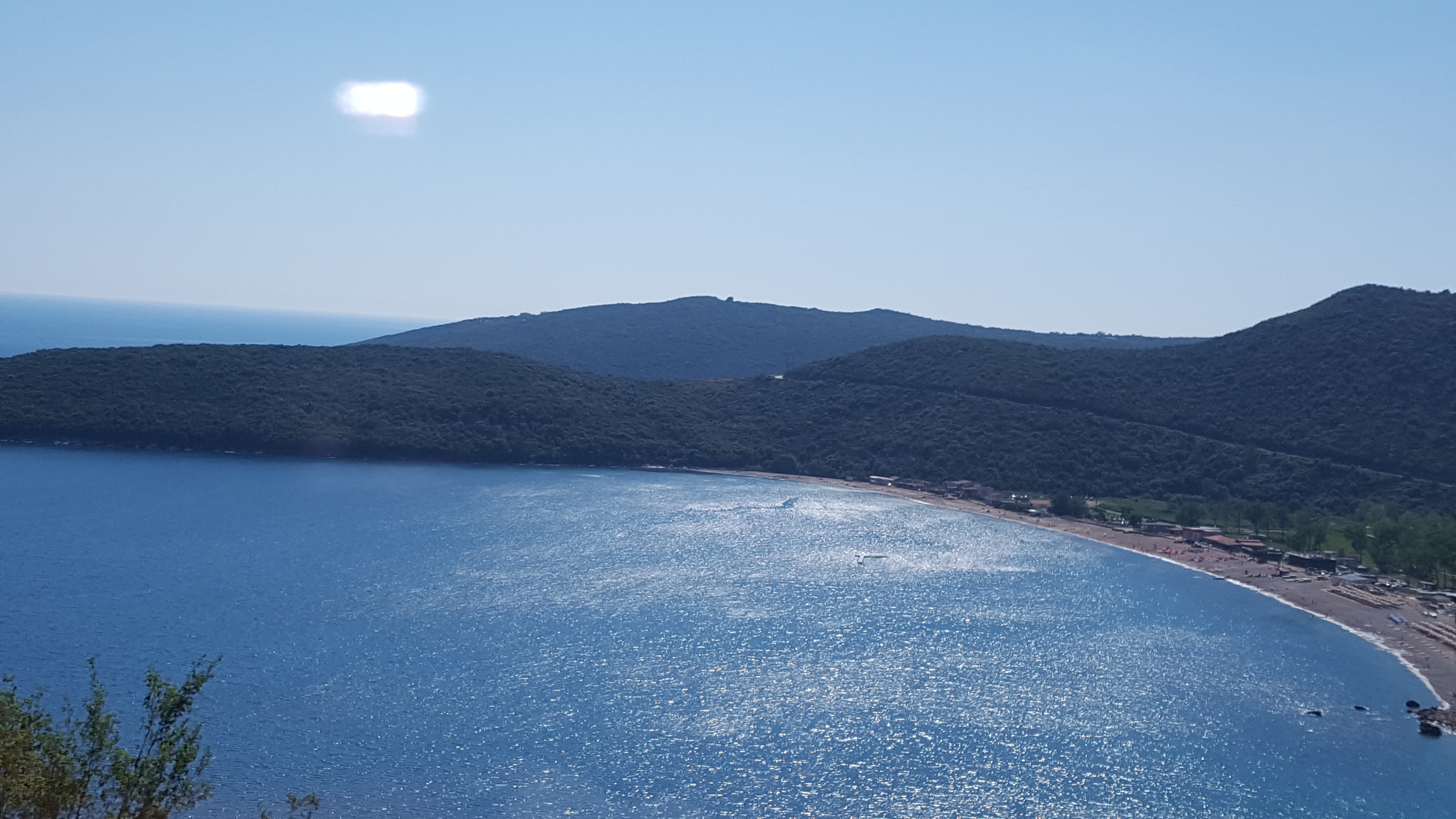
But the drive also produced some beautiful photos.

20160522_154914When I saw on the map the complex shape of the bay, I determined I was going to the top deck of the cruise ship to watch our departure (since I had missed the arrival during the night). 20160522_091812_001

We were helped out by pilots in guide boats (according to a member of the crew).


I never did find out if the helicopter was also helping to guide us out.

So beautiful!

20160522_120739

(The cities sported flowers, too; did you think I would forget?)

20160522_09430220160522_094402


Canal on the Isthmus of Corinth, Greece

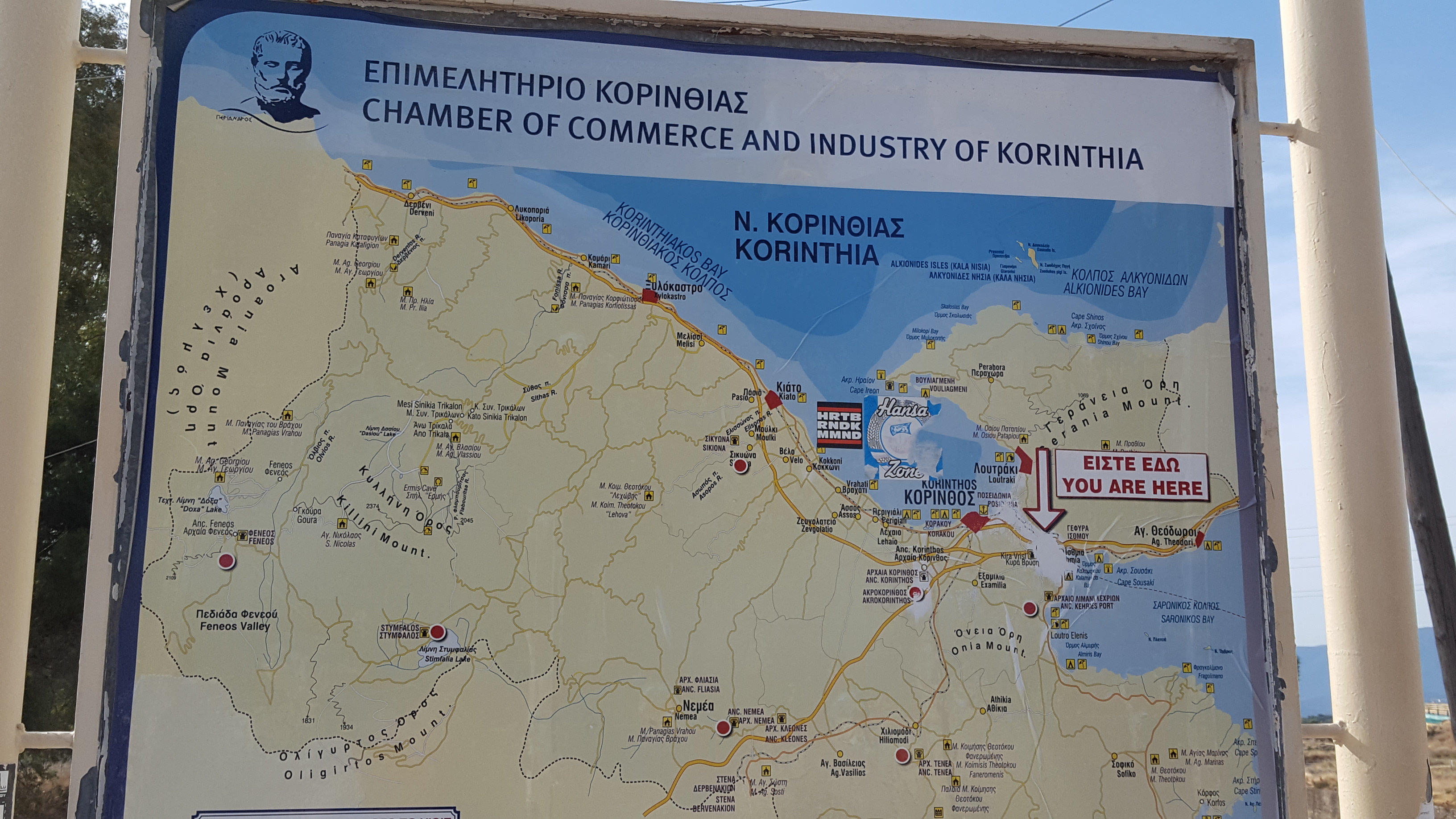
This might be a brief post, but during a stop in Greece on the cruise, and on our way to visit the ruins of ancient Corinth, we stopped to see a canal which was dug through the Isthmus of Corinth. Below is a photo of a map displayed at the site which can give you an idea of the shape of the Corinthian Isthmus (at the “you are here” spot on the map). This helped me understand why it would have been desirable to build a canal through this area and shave off days of sailing between the Gulf of Corinth and the Gulf in the Aegean Sea. The canal is a little over four miles long.

20160524_075620

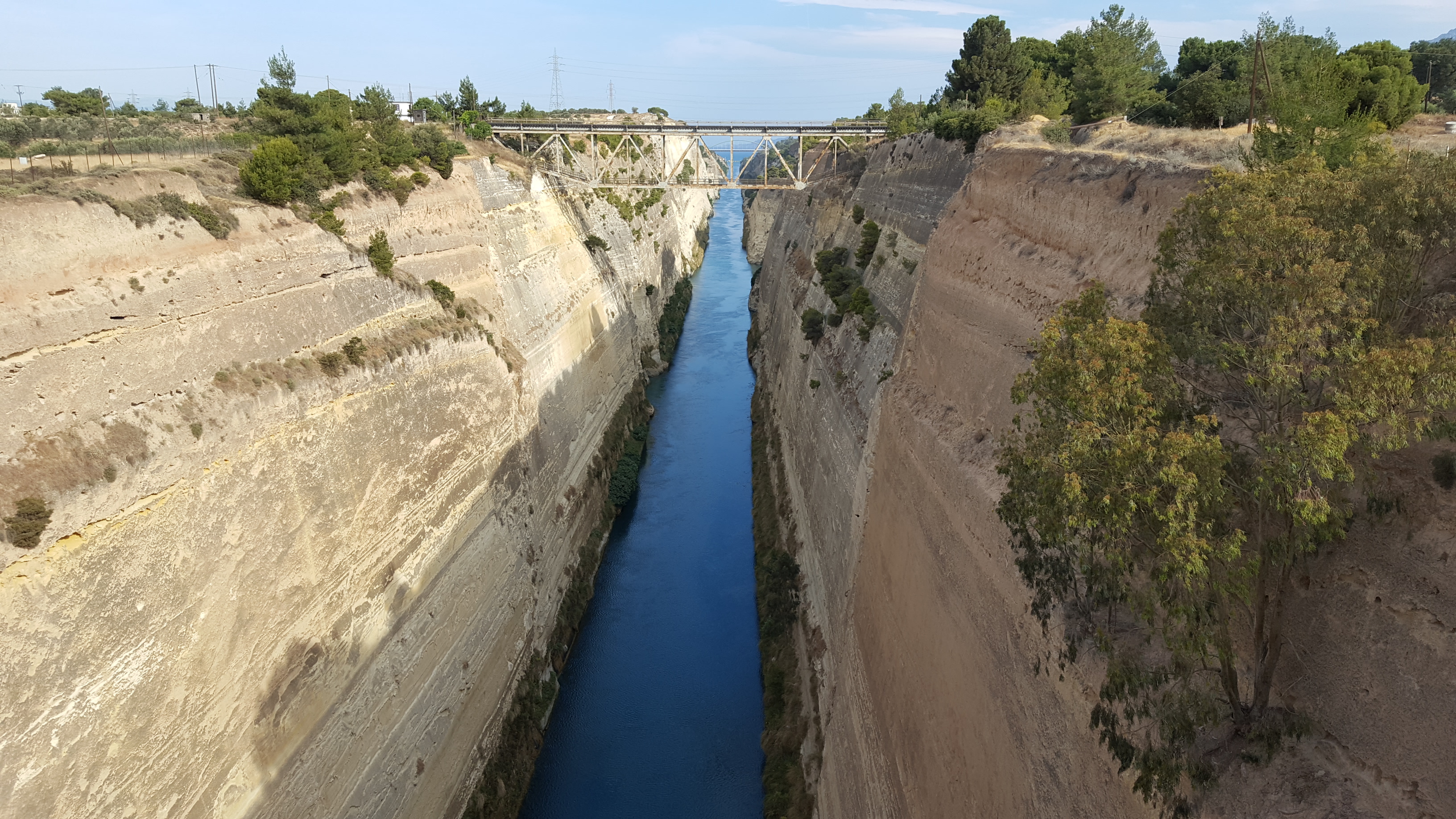
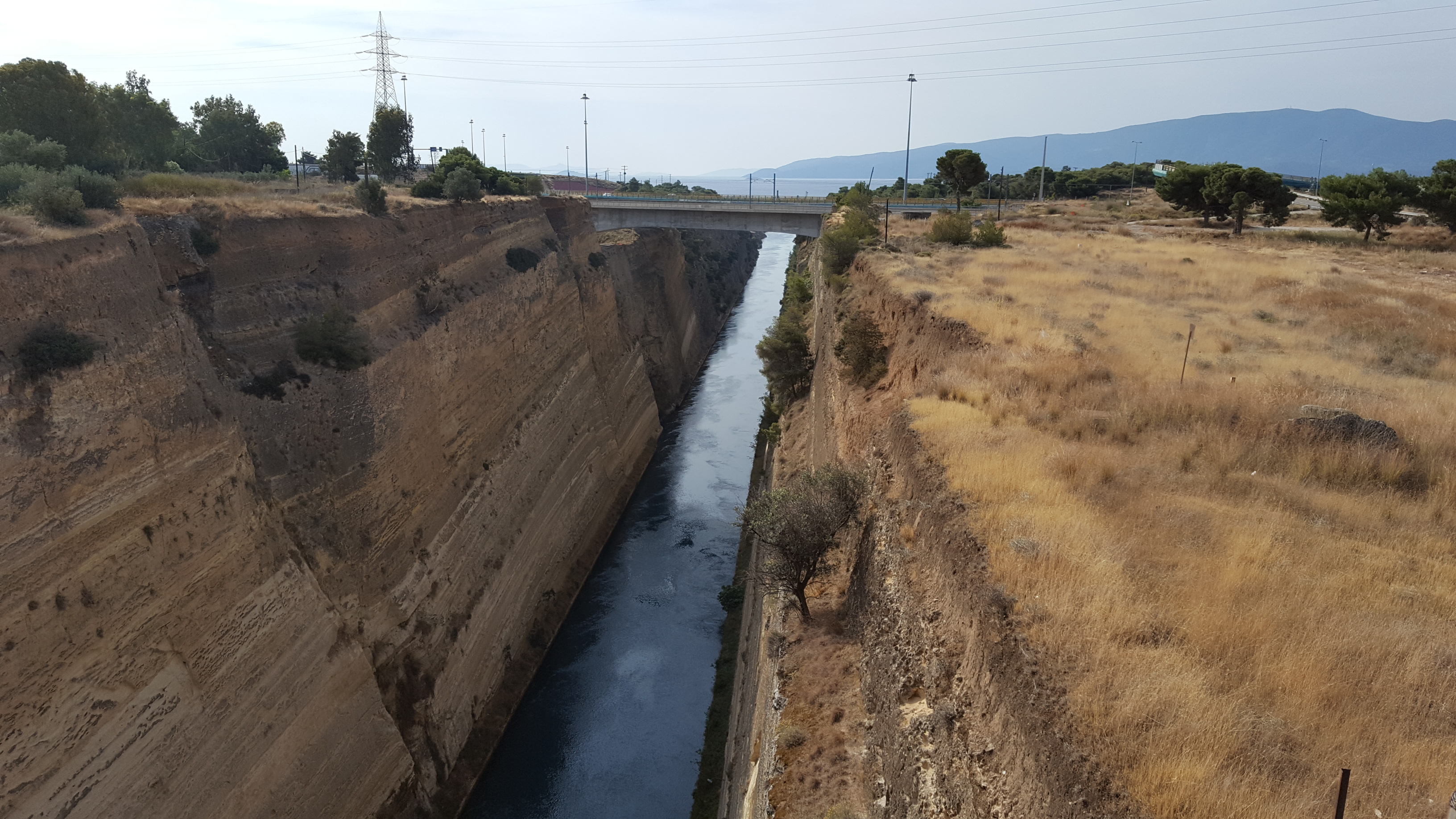
The canal was contemplated in ancient times (as early as the 7th Century BC) and an attempt was actually started in the first century AD. However, the canal you see in my photos was not started until 1881. The two photos below look in opposite directions at the canal and were taken from the modern bridge used by road traffic crossing the canal. The top photo is facing north and the bottom facing south. You can see from the map we were near the center of the Isthmus.

20160524_07491720160524_075359

The canal is quite narrow at the bottom (70 feet) and cannot be used by most modern ships. The walls were cut quite straight and after construction did collapse a few times.

At one of the shops near the bridge, I saw some posters showing boats on the canal. The photo on the left was what they think the older ships looked like and the one on the right shows modern tourist ships passing through the canal. (These are photos of posters in a store.)
We stopped to see the canal on our way to the site of ancient Corinth. On our way back towards Athens after our morning at the ruins, we stopped for lunch at a restaurant on the canal. Scenic, no?

20160524_111415

We dropped down near the water, and, although promised that we might see the bridge lift to let one of the tourist boats through, alas, all was quiet while we were there.

We enjoyed good food and a lovely view (although I enjoyed eating the food so much I didn’t stop to take a picture of it).

I got a shot of some men fishing just below the restaurant, along with a Greek flag flying near our tables, and, again, lovely flowers, brilliant in the sunshine.

So many places full of beauty in the world and so much history to learn!