Padua, the Scrovegni Chapel

20160518_162338.jpg

A favorite part of our visit to Padua was a tour of the Scrovegni Chapel. The walls of this small chapel are covered in frescoes by Giotto, painted between 1303 and 1305. Wikipedia  (the source of all information these days) calls the frescoes in this Chapel one of the most important examples of Western art.

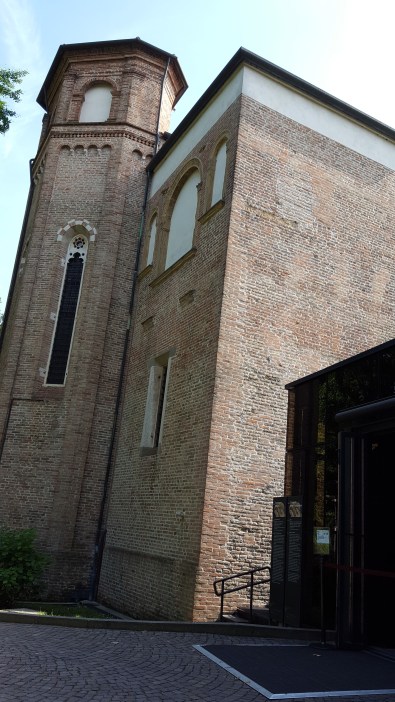
The dark colored door to the right in this photo led to a room where we viewed an introductory video on the Chapel, but it was also designed to allow us to “dry out” (humidity control) while we waited for our turn to enter the Chapel.

All visits to the Chapel were carefully timed and regulated, and we only got a few minutes to be in the Chapel.

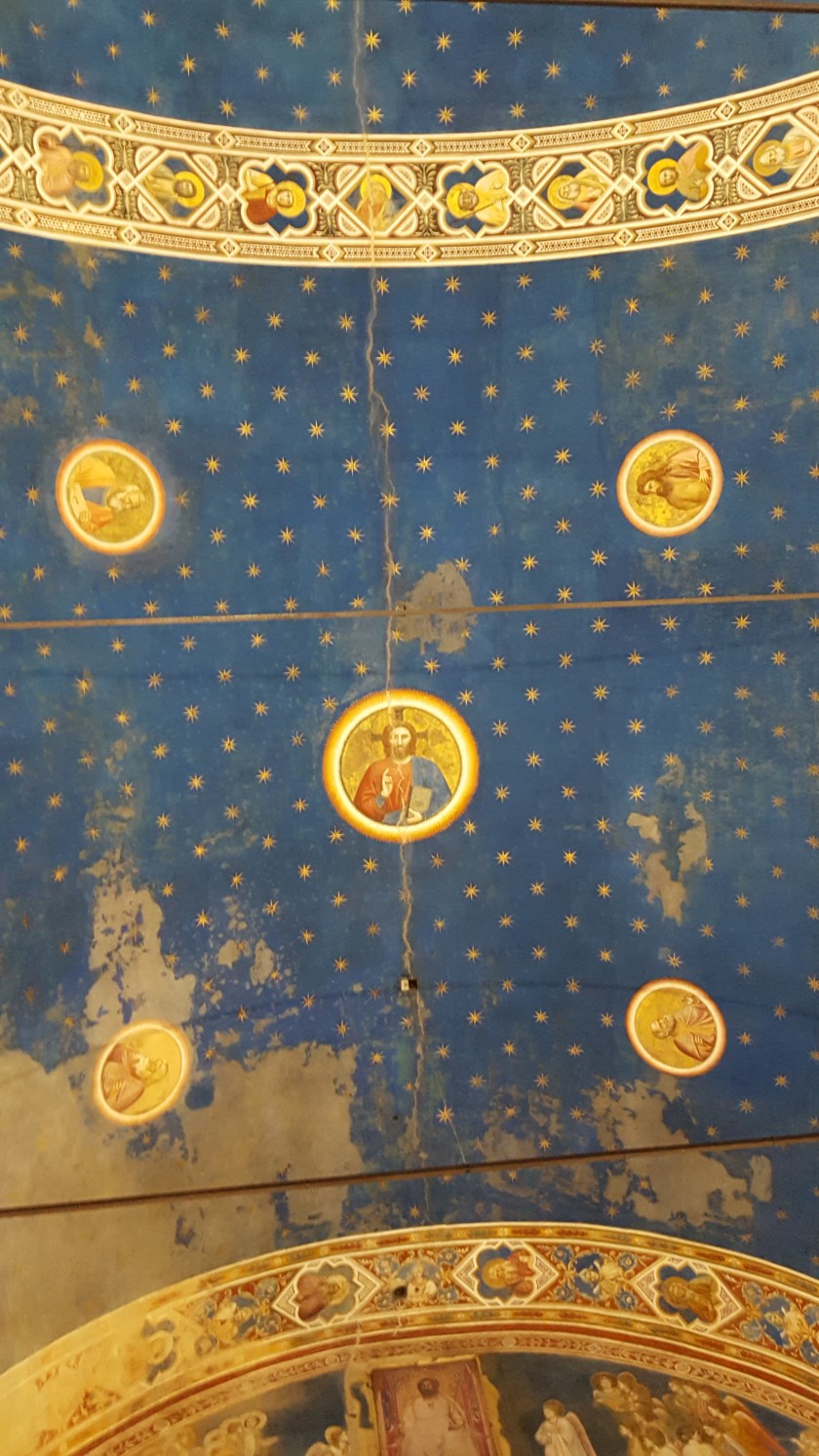
Hence, I’m highly disappointed in the photos I got, since they don’t give you the full sense of the Chapel. (I invite you to hunt for some other photos on the Internet to better see the Chapel.) For example, the entire Chapel seems covered in a deep blue color, like this photo I took of the ceiling. You will notice that most of my photos lack evidence of this vivid blue background color.
20160518_165729

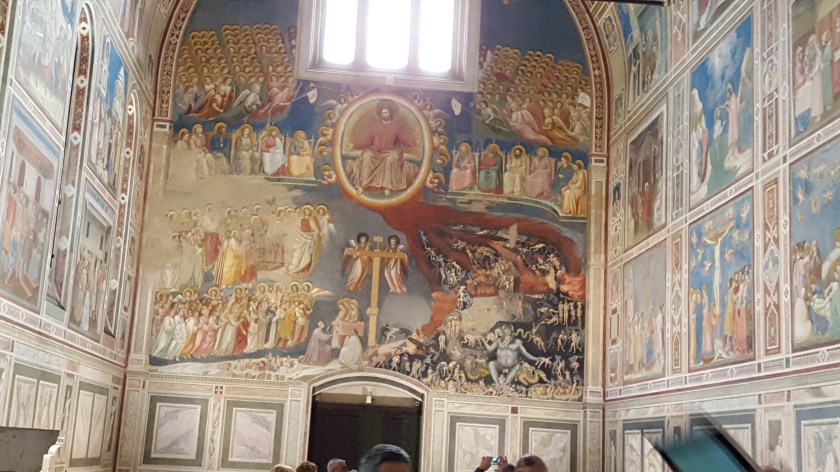
On the back wall  of the room is a fresco of the final judgment, with Christ on His throne (just under the window) with the righteous souls on His right hand and sinners on His left.
20160518_170012

The paintings on the side walls, in three tiers, featured the life of Mary and the life of Christ. I took several close-up shots of the frescoes on the life of Christ in the short time we had in the room. In the first examples, you can see the Last Supper (on the left) and the day of Pentecost (on the right).

Christ washing the feet of his apostles…

20160518_165744

Christ appearing to Mary after His resurrection (left) and His ascension into Heaven (right). Click to enlarge.

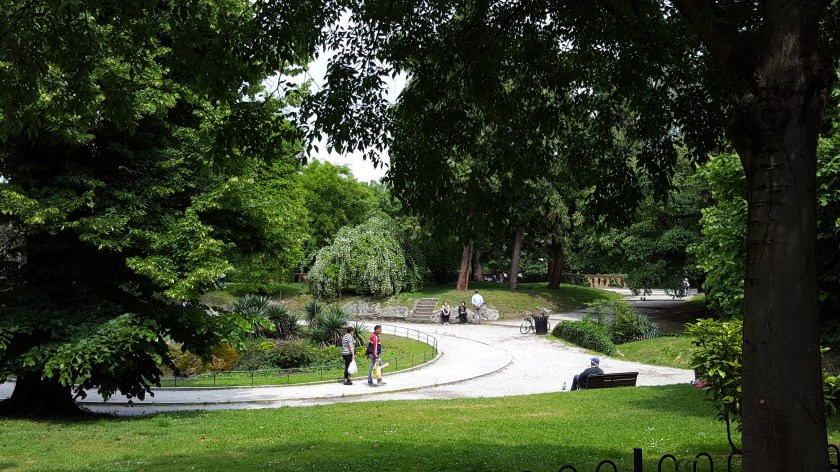
Right next to the Scrovegni Chapel is a lovely city park.
20160518_141121

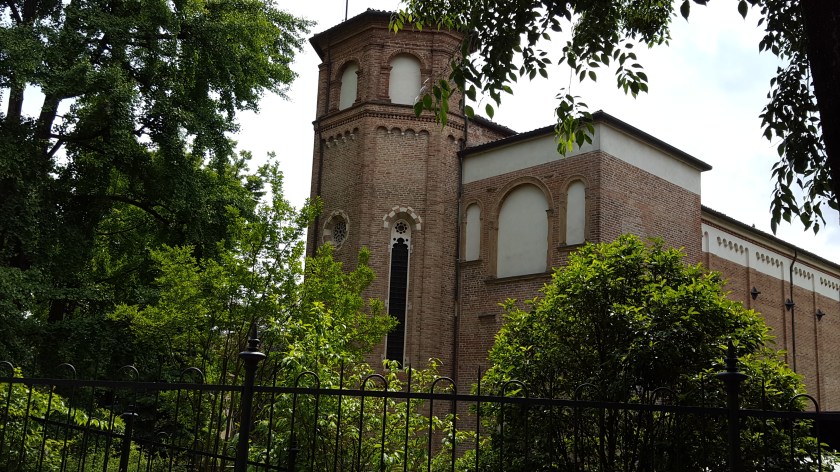
With another view of the Chapel from the park.
20160518_141210

Transportation 1: Naples

Part of the fun of traveling in a new place is  figuring out how to get around. Public transportation is  good and we used a wide variety throughout our visit to Italy. All this made me decide transportation might make a good topic for ESL Readers. To show you, here are some examples from Naples, starting with walking, cars and a multitude of motorcycles and scooters.

Although most of the streets in Naples are narrow (like the photos above), the city has a few nice walking streets, one of which fronts the Bay of Naples (good place for posing, with Mt. Vesuvius in the background).

20160410_184103

Most people were walking on this broad street on the bay, but there were alternate means of transport. You could wheel yourself, pedal a bike, or take a boat! I’m sure the person in the wheelchair was happy to have such a good road for her transportation needs. Some people must take the boats out for sea adventures, but alas, we didn’t.

The boats in the harbor do make a beautiful sight at the end of the day, though.

20160410_190942

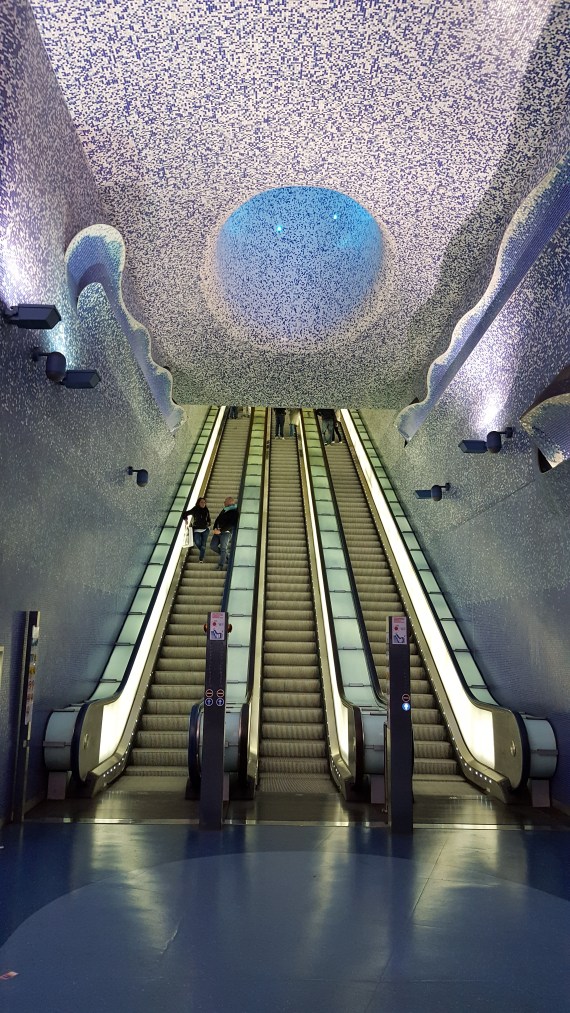
For a look at another type of transportation, Naples has some award winning Metro (subway) stations, decorated with art from contemporary artists and architects. Here is one in “metal shine” (my name for it).

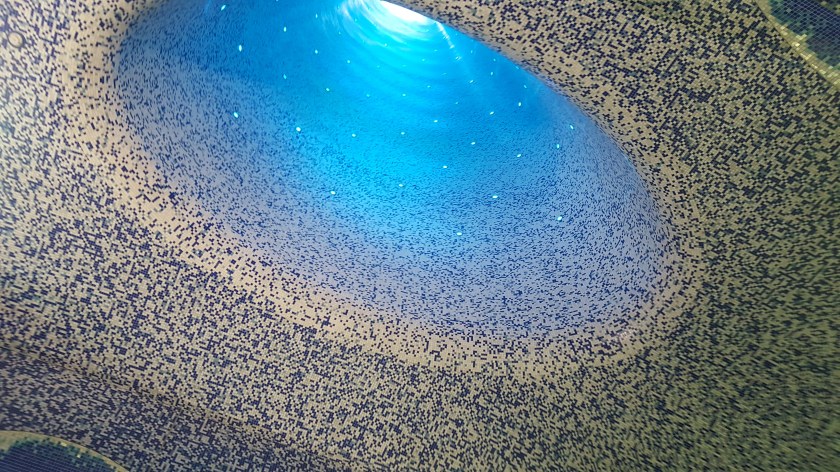
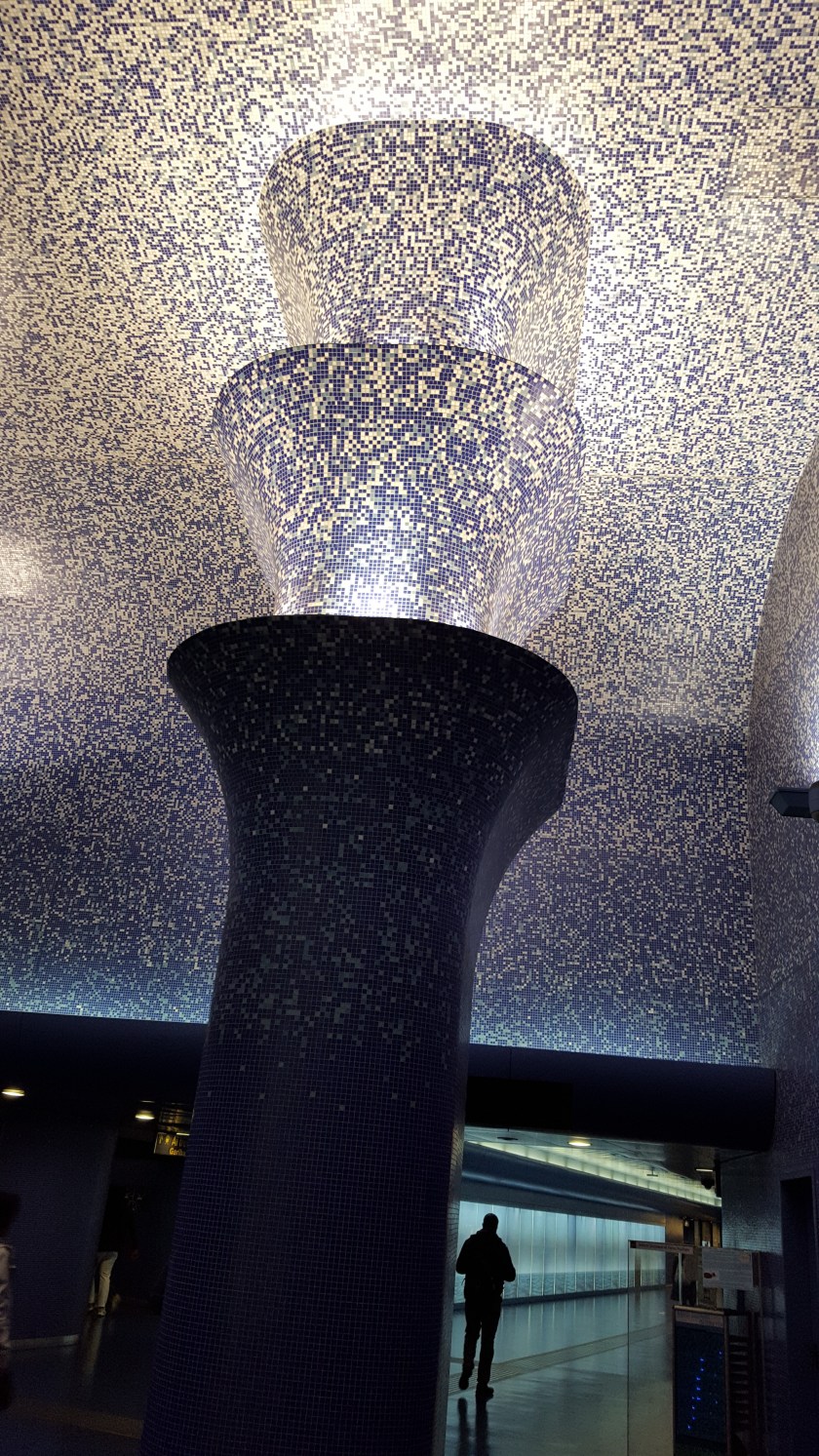
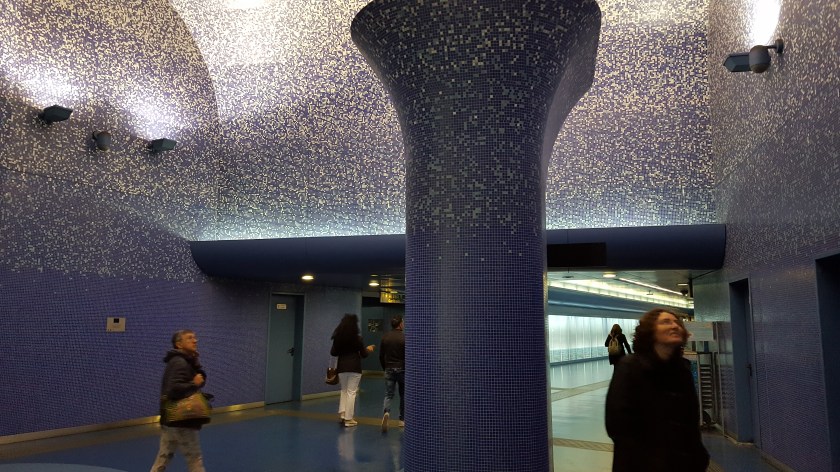
Second, here is the Toledo Street station, voted most beautiful in Europe (by somebody). My reading of the art of this station is that first you start with murals reminding everyone of a war or revolution (top left). Why? (I don’t know). The look soon changes, however, to colors that represent the land and sun (to me).

But as you leave the land and descend down (to the tracks), the golden color of the sun and land disappears and your path takes you along the edge of water.

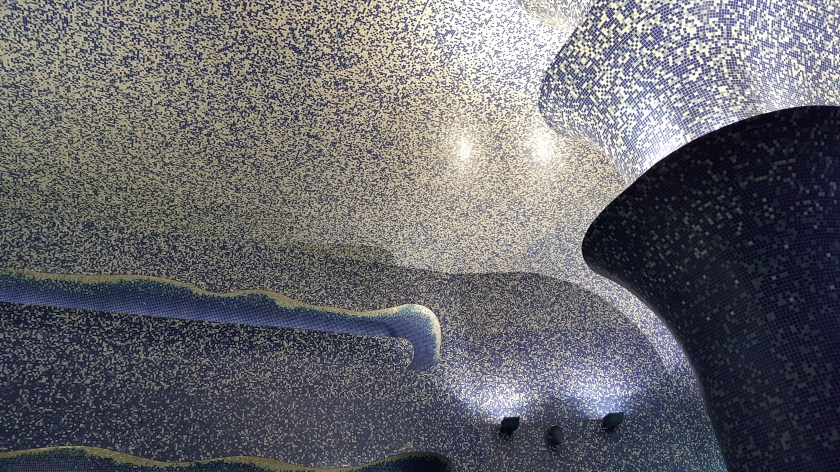
Then the descent takes you to the realms underneath the water–to find this!!

20160410_133152

20160410_13321420160410_13311820160410_133113

20160410_133127

While emerged in the sea, you have underwater sounds to accompany your journey, strange pings and bongs. A most unusual station, with beautiful blue everywhere.

After that beautiful station, there is this inexplicable station with shoes, guns, and train rails???

Along with “normal” transport like buses, taxis, and trains, we also rode the funicular up to a hilltop to get a view of the city.

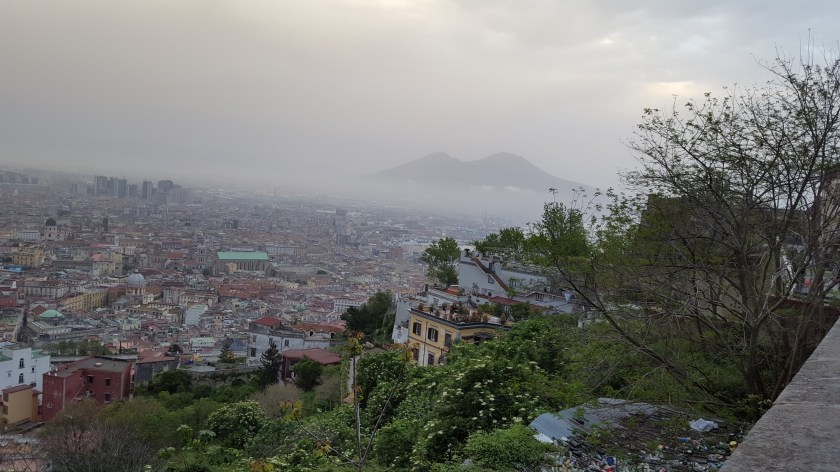
Although it was a hazy day, we got this view of Naples, with Vesuvius in the clouds in the background.

20160413_191012

Another photo shows more of the buildings near the base of the hill and you can see the yellow and red color of much of Naples.

20160413_191830

Transportation adventures in Naples.


Markets, French and otherwise

20160530_100454

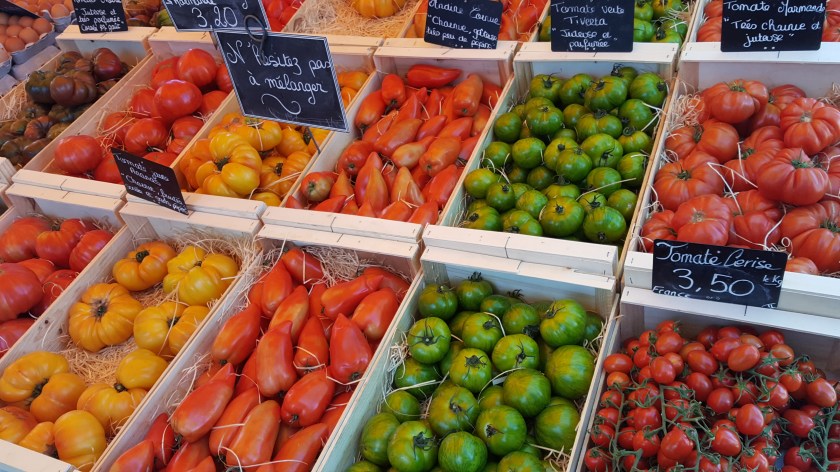
In quite a number of places, we found wonderful food markets (mostly in the open air). The photo above was taken in France in a sea town called Sanary-sur-Mer. Just to show how inviting the food looked, here are a few more photos from that market. I wanted to buy some of everything, but we couldn’t take it back to the cruise ship.

In addition to the fruit and vegetables, they had olives, spices, and, if you can read the signs, a couple of kinds of gluten-free macaroons mixed in with a wide array of French pastries.

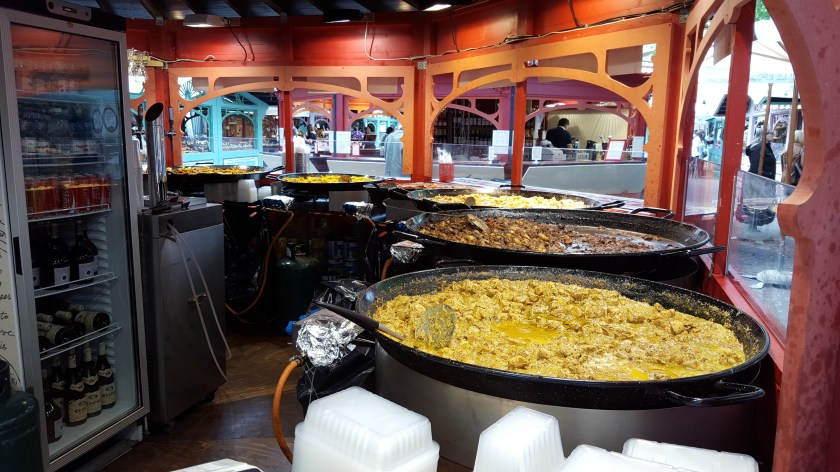
We found another lovely market in Padua, Italy, which we discovered was a French market! That is, it was a place in Padua to buy French food and French products. Look what you can buy in this market. (Okay, I can only show you a few photos). The second set of photos  of bread and sausage were taken by Gael.

One of the best parts of this French market in Padua was the hot food I was able to buy and eat. Look how the dishes are cooked–in huge vats in front of us!

20160518_143430

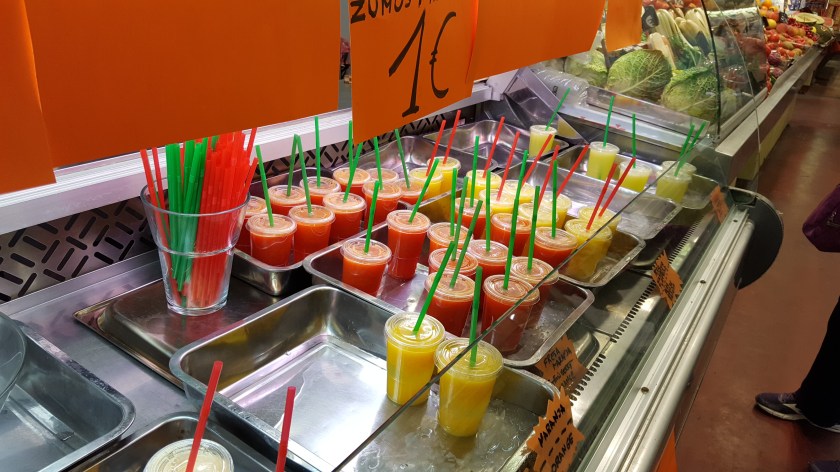
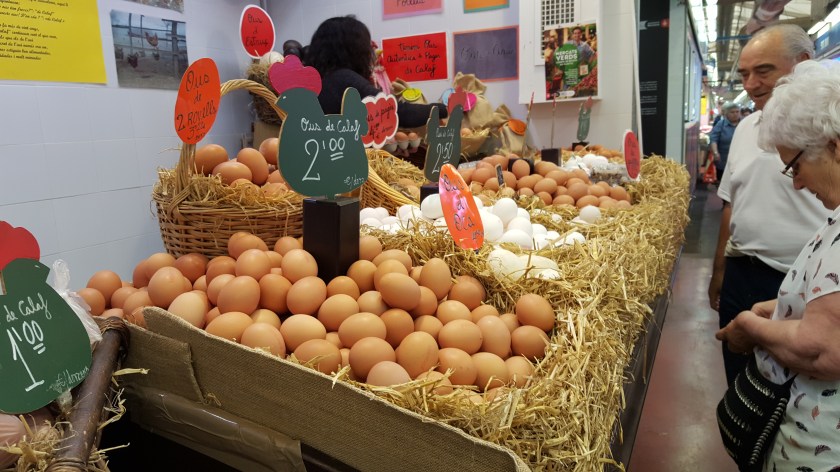
In Barcelona at the Sant Antoni Market we found, among other things, these fresh fruit drinks. Notice the price. We each bought more than one, of course. The eggs (photo below) were piled high for–anyone to knock off the table? The sellers and buyers seem unconcerned.

20160601_11115620160601_111903

They sold many items besides food in Sant Antoni market in Barcelona. The regular market site was being refurbished and so the goods were housed in temporary quarters, but it was still a very fun market.

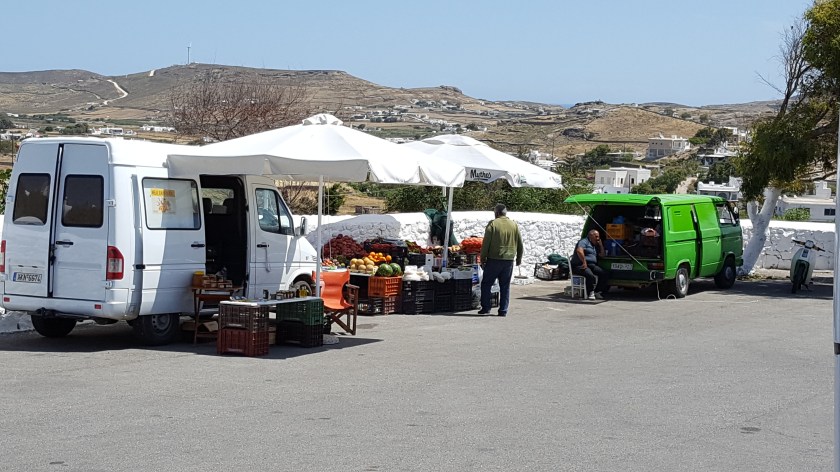
Some times the markets don’t have a dedicated space or buildings, but are in carts, on boxes outside stores, or from trucks, like these in Greece on the island of Mykonos.

20160525_104159

I actually saw fruit trucks all over, but didn’t get many pictures because I was buzzing by fast in a car or train.

I particularly enjoy the fruit and vegetables markets, including the one on the left which was nearly under my apartment in Naples. It was hard to get a good picture with the awning nearly always up. It is not always fruit and vegetables in the markets, though, as you would know. Sometimes it is a fish market (also in Naples).

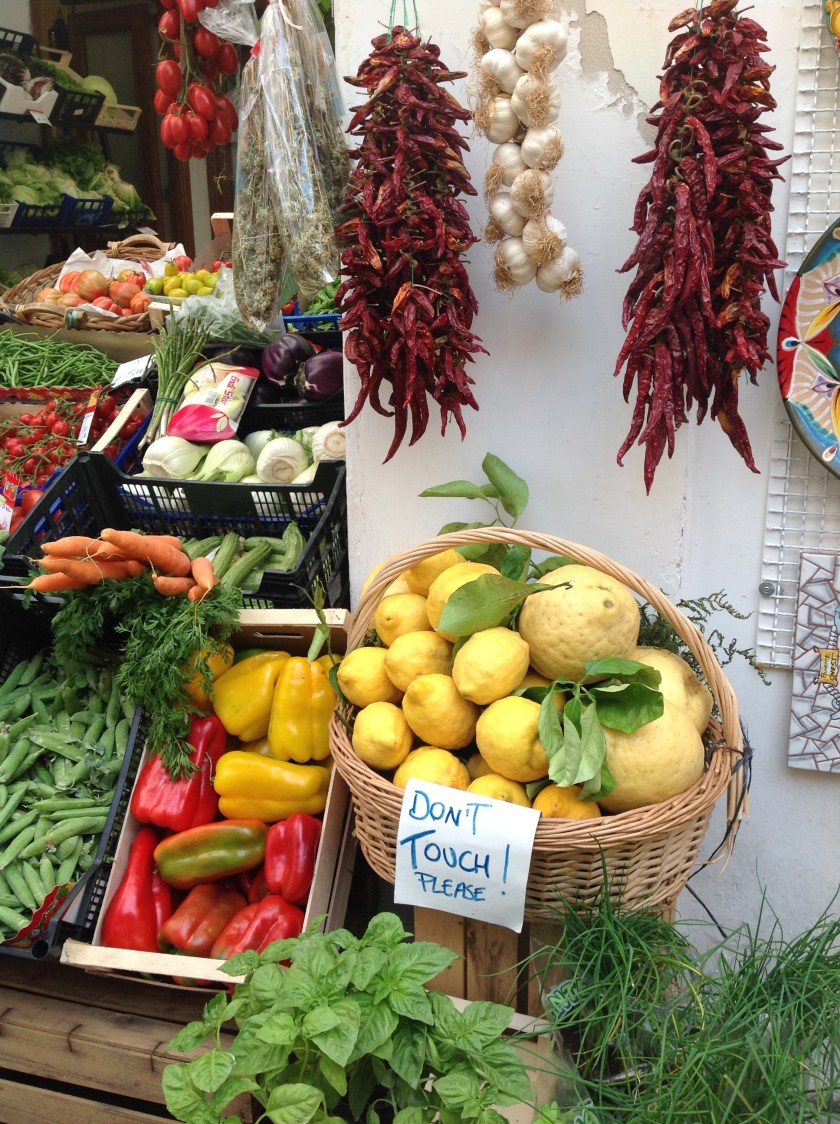
Although fish markets are interesting (and smelly), I’ll end with our visit to Almalfi, Italy, where fruit and vegetables sellers line the streets with wares arranged artistically to attract us buyers.

Although we didn’t seem to get a photo, the Almafi region in southern Italy is famous for lemons and has some lemons that are huge, nearly the size of pomelo or small cantaloupes.

To me, in addition to enjoying the great taste of the things I bought, the presentation of the food in these markets makes beautiful art. I’ll end with some excellent photos by Gael of a market in Almalfi. Good enough for still-life paintings, eh?

IMG_3444IMG_3447IMG_3445

What to come shopping with us?


Cats!

[Updated July 13 with more cats. See end of post.]

While I started adding cats to other posts, cats that haunted the ruins of Benevento and Herculaneum, for example, I thought I might as well post a collector page of cats–just for fun. Cats across the countries I have visited! Aren’t you thrilled?

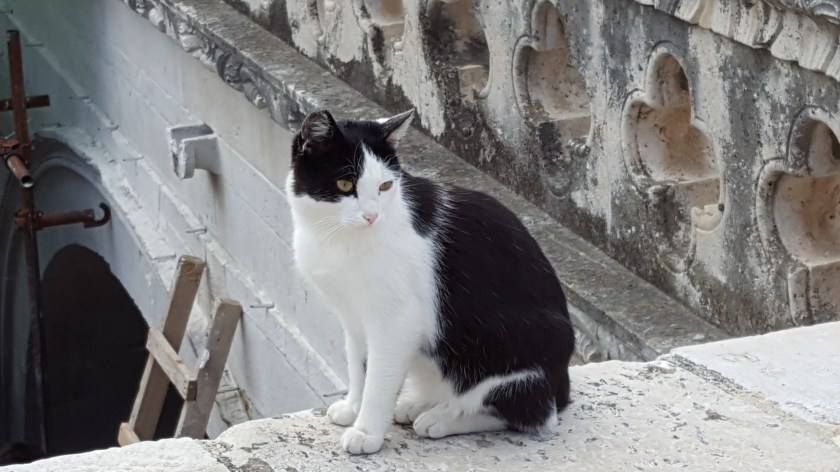
First is the guard cat of the old (fortress) city of Dubrovnik, Croatia (or does she/he look too sweet to be a guard cat?)

20160521_084120

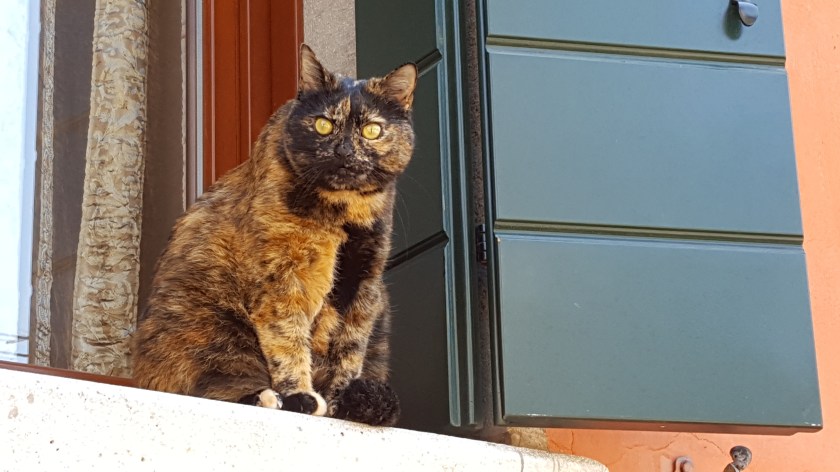
Then, there was the fierce cat of Venice–look at those eyes. When I got closer to get a better photo, Gato di Venezia hissed loudly at me. Watch out!

20160517_115523

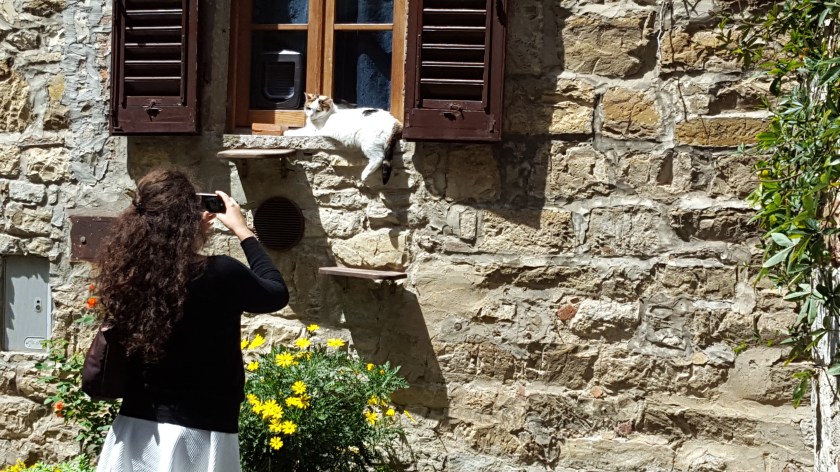
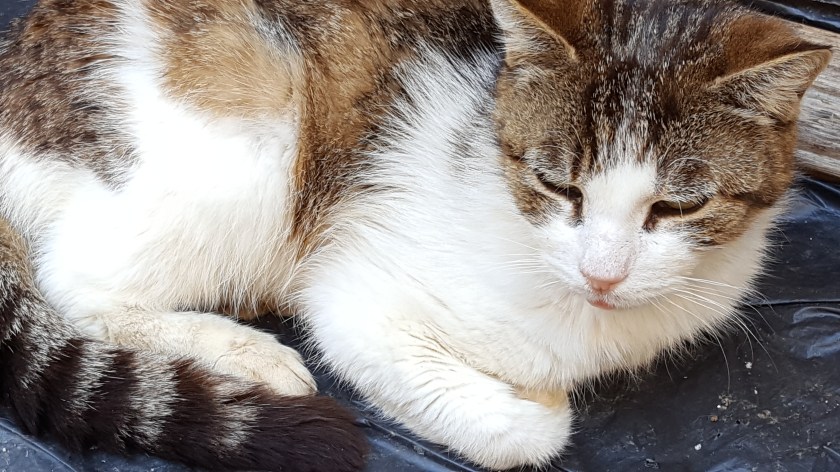
I was not the only one taking pictures of cats. When I raised my camera to take a picture of this cat in Montefioralle in Chianti, who was enjoying the warmth of the spring sun, someone stepped right in front of me and took a picture.

20160430_131457

I came back to that cat after being diverted to a picturesque courtyard and some flowers to get another shot–of a very sleepy cat. At least in this photo the eyes are open a little.

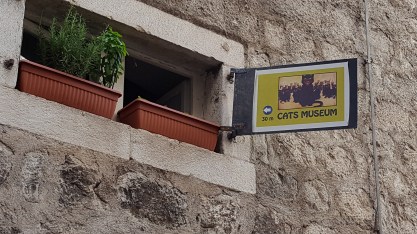
My best cat photo, as cats go, was in Koto, Montenegro, a cat resting comfortably very near a museum to cats! The cat did not seem to consider it might be stuffed someday to join the displays in the museum (although the museum was not part of our pre-arranged tour, so I have no idea what was in that cat museum).

20160522_09373220160522_093751

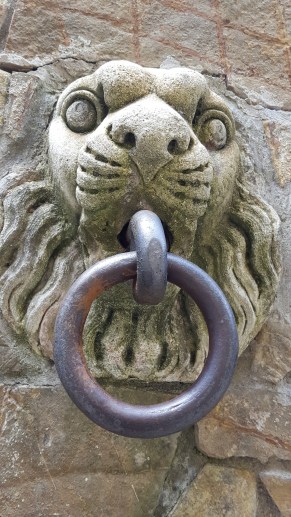
20160430_134637But there are other kinds of cats than just the domesticated type and I found them in several places. Take these, as examples:


First, a protector “cat” on the gate of the church in Montefioralle


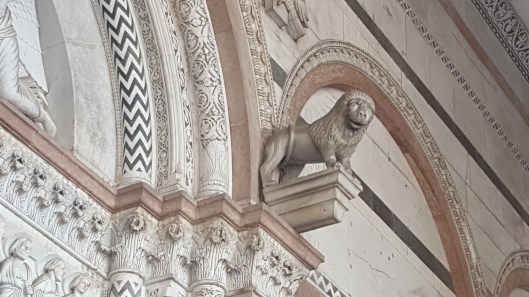
Or one standing guard at the cathedral in Lucca

20160425_114656


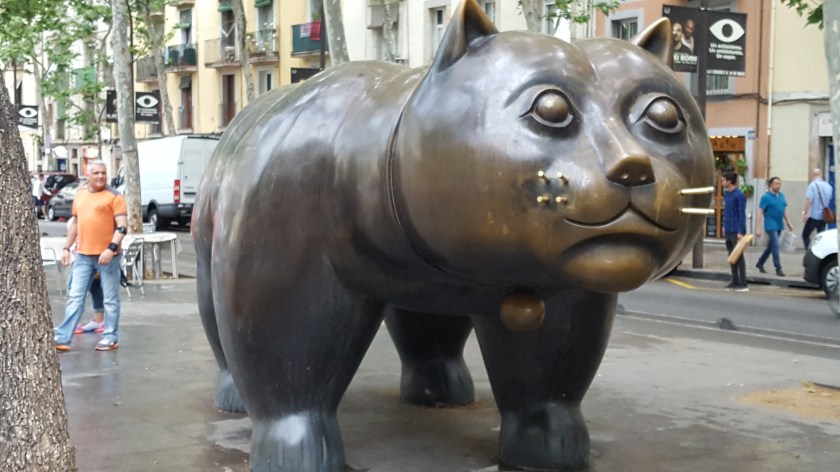
Or this gigantic cat in command of the famous Las Ramblas street in Barcelona.

20160531_192513

[Added July 13th.] I found more cats–from Egypt, preserved in the Neues Museum in Berlin. Cats from ancient days (date not clear on sign in museum).

(Still, a post on dogs sometime, anyone? Don’t hold your breath.)


For the musicians among family and friends

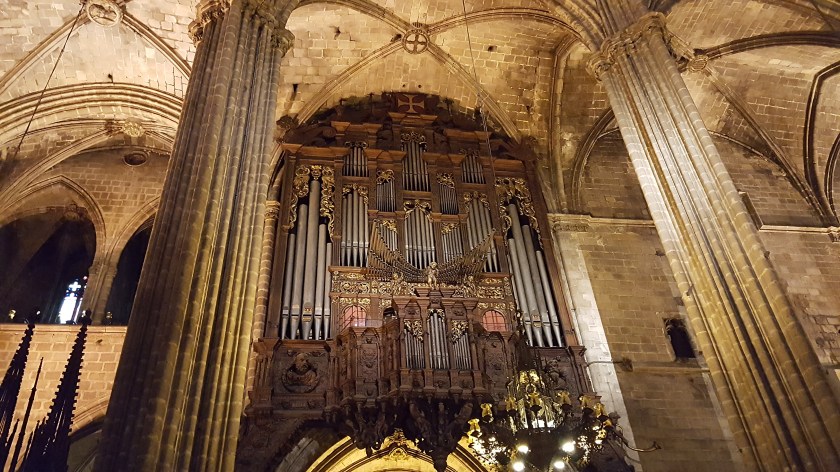
If I can make a post for the freighters in my family, I thought I should do one for the musicians, too. Let’s start with the magnificent organs in some of the churches. The first photo is from the Santa Maria del Mar Cathedral in Barcelona.

20160531_182224

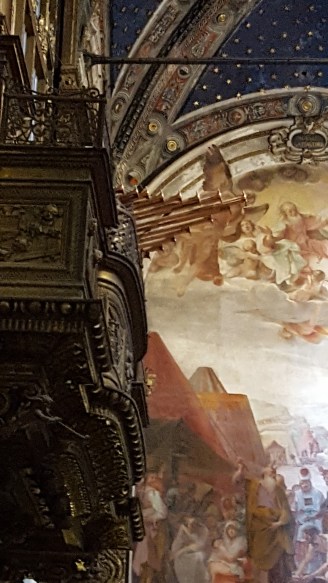
The second organ is in the Sienna Cathedral (with pipes on opposite walls, hence two photos). Notice that the pipes on the right have a great set of trumpets. I tried a second shot to highlight them, but it was hard to make the trumpets  show very well with the painted walls in the background (at bottom).

20160507_134730


20160428_135817


Because making music books was difficult and time consuming during medieval times, often only one or two books were created. Therefore, the church choir music was printed in very large books. The books were then placed on equally large stands, big enough so that all the singers could read from the same book. The music stand in the photo is from Santa Maria Novella Cathedral in Florence. You can judge the size of the stand by comparing it with the people in the photo.


Below are some examples of the music books from the Sienna Duomo. Again, you can gauge the size by comparing the book in the case with the woman standing at the left.

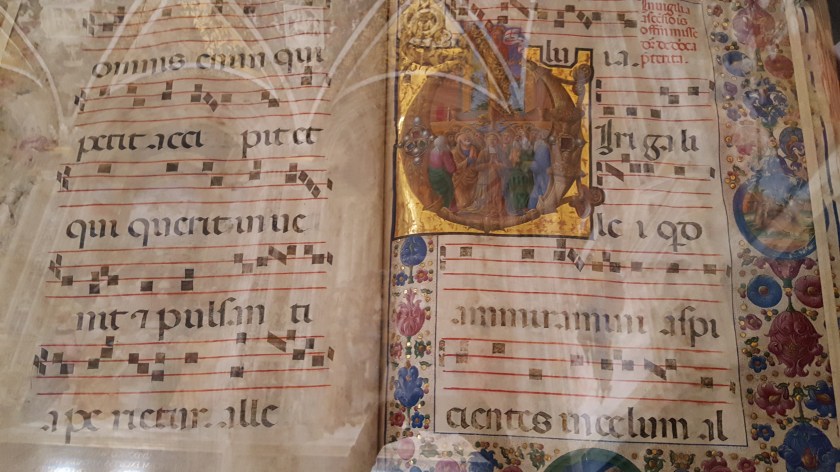
These music books were highly illustrated (and beautiful). Here is a larger picture of one of the books. The books were all protected by glass, as you can see in the photos. It was, therefore, hard to get a clear picture. Most of the pictures reflected the colorful ceiling paintings.

20160507_140204

Just to illustrate, in the photo (on the right) I deliberately tried to get the ceiling to reflect on the music. To help you see it, I’ve posted a picture of the ceiling by itself on the left (see how elaborately it was painted,) and then a close up of the book of music and the accompanying illustration. You can see the side arches of the ceiling showing in the glass over the music.(You may have to click on the photos to enlarge them enough to see it.)

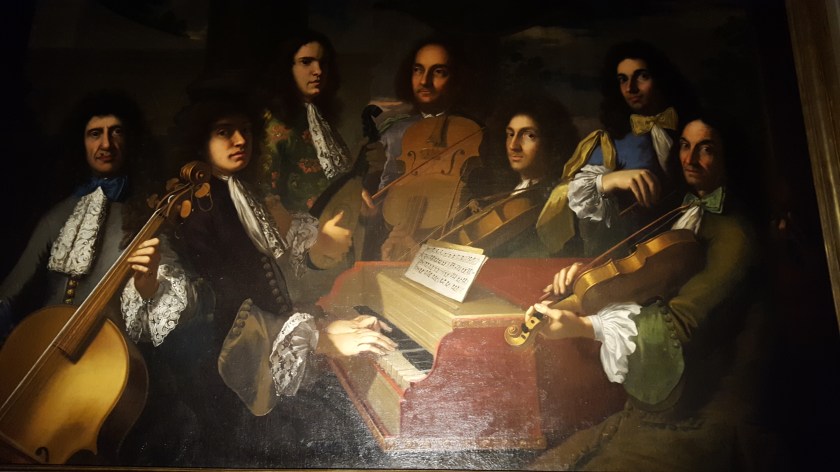
In many museums, some musical instruments were on display. First, the building housing the David (Galleria dell’ Accademia) also previously held the Academy of Fine Arts. A collection of musical instruments belonging to the Academy were on exhibit. The musical instruments were from the”Granducal  Collection.” Along with the instruments, a painting, Musicians of Grand Prince Ferdinando (about 1685), was displayed, which set the style and time frame for the instruments, I thought.

20160428_162353

(Left to right, top to bottom)
Stradivari Violin, 1716; Piano-guitar, 1793; Brass instruments, early 1800s
Collection of woodwinds, 1800s; Percussion, mostly 1800s

The Academy also had an  amazing keyboard collection; I’ll post only a few examples, but notice the first keyboard with the soundboard sticking straight up perpendicular to the keys!

Finally, the Palazzo Zuckerman Archaeological Museum in Padua also had some musical instruments.

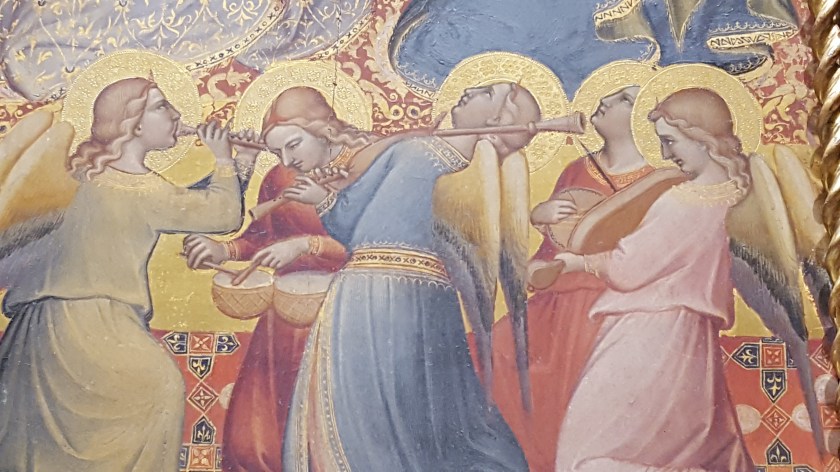
Not to be forgotten, though, as a postscript, are paintings of musicians…this one of angels in paradise playing songs of praise, from the Medici Chapels in Florence.

20160428_165428_001


For the freighters in the family

While we were on the tour of the Carrara quarry, we were able to see some of the effort it took to move these massive blocks of stone. Waiting for the tour to the quarry itself, we watched them load this truck

Along the main road were several marble yards. I don’t have great photos because I took them from the window of our van, but you can see the amount of stone stored in the yards, stone that made it down to these yards on those trucks, a few blocks  at a time.

Later, at another yard where artists were working on marble pieces that had been commissioned, we saw them using this crane for loading a truck.

I can even try to see if the video will load and face the right direction.

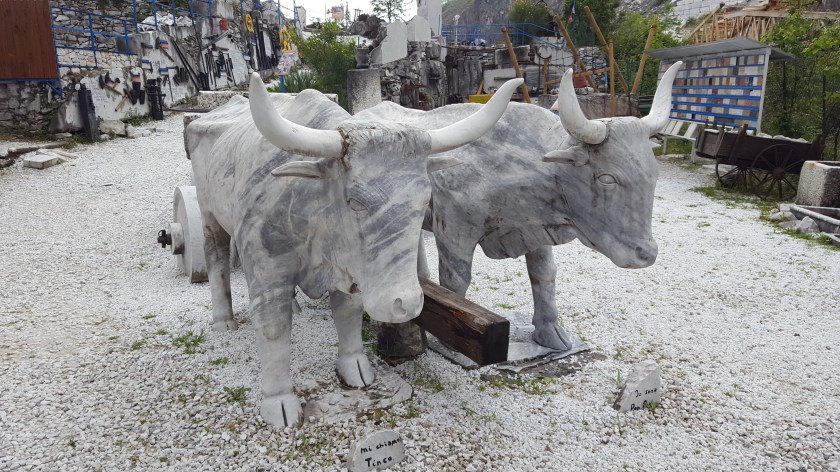
Image moving this stone 500 or, especially, 2000 years ago!  These marble oxen were part of the museum, Cava Museo, at the quarry. I’m sure animal power played an important role in those days.

20160513_132630

How did they get that massive stone Michelangelo used to sculpt the David down the mountain and 60 miles to Florence?

20160428_154600


Note: If you are interested, the tour of the Carrara marble quarry was put together by Heather Evertsen of Europa Vita. You can contact her at: http://www.europavita.us/.


Using Carrara Marble

Many famous buildings and statues have been made from the spectacular stone, Carrara marble, which I saw at the quarry (previous post). Seeing the source of the stone in the quarry was a high point of my time in Florence and now I enjoy things made from this stone even more than I did before.

20160513_143120

A few of the famous buildings and statues built of Carrara marble that I have actually seen on this trip, lucky me, are in Rome. The oldest of the buildings that I saw (that sources say use Carrara marble) was the Pantheon in Rome. I’m not sure where Carrara marble is used because much of the marble from the outside is missing and in the inside there is plenty of non-white stone (which is therefore, not Carrara marble).

Another very old example is the Column of Marcus Aurelius (which was modeled after the Trajan Column, which I don’t think I saw during my brief visits to Rome). The Column of Marcus Aurelius was built between 176-193 A.D.

In the  city of Sienna, the Duomo di Sienna, built between 1215 and 1263 had white marble mixed with other colors, primarily green. These different colors of marble were used both inside and out.

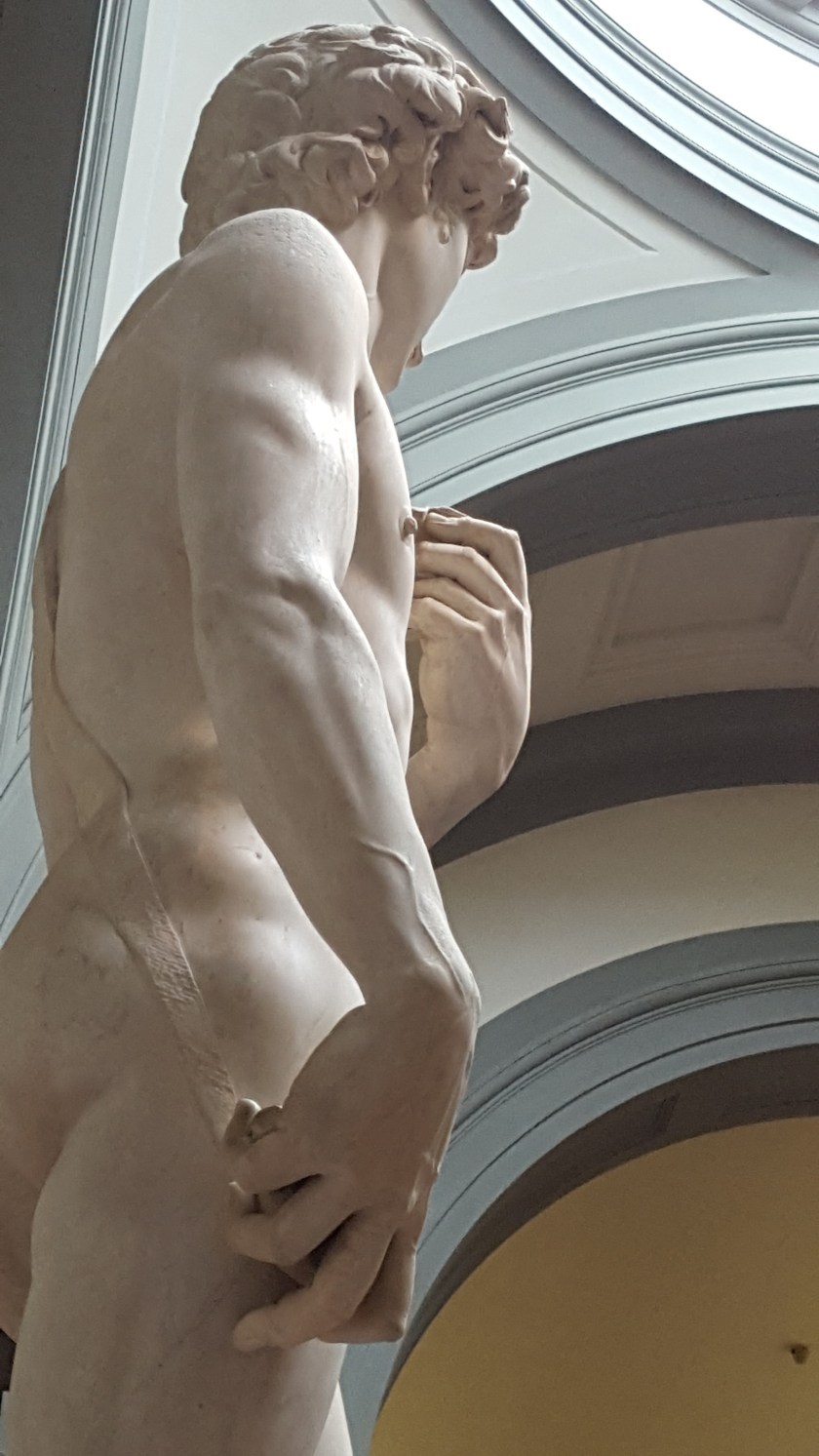
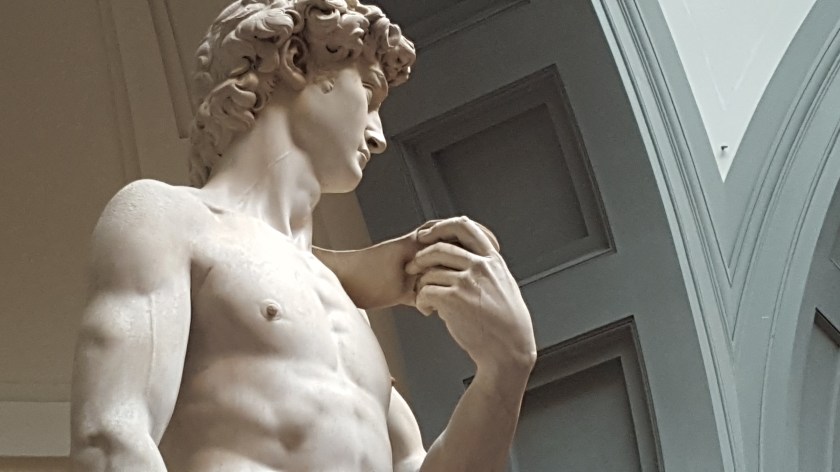
Perhaps the most famous story of the use of Carrara marble is the huge block Michelangelo inherited from other artists who started but did not complete a statue from the huge piece of stone. Michelangelo used the block to create David.

20160428_154639

20160528_120758

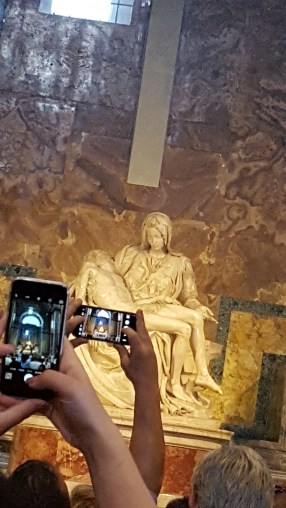
Michelangelo also used the same type of marble to sculpt Pietà, created between 1498-99, located in St. Peter’s Basilica in Rome. I tried to get a good picture, but it was hard because everyone was trying to do the same thing–all 35,000 of us (okay, that many people come each day so they weren’t all there when I was there, but it was certainly crowded.)

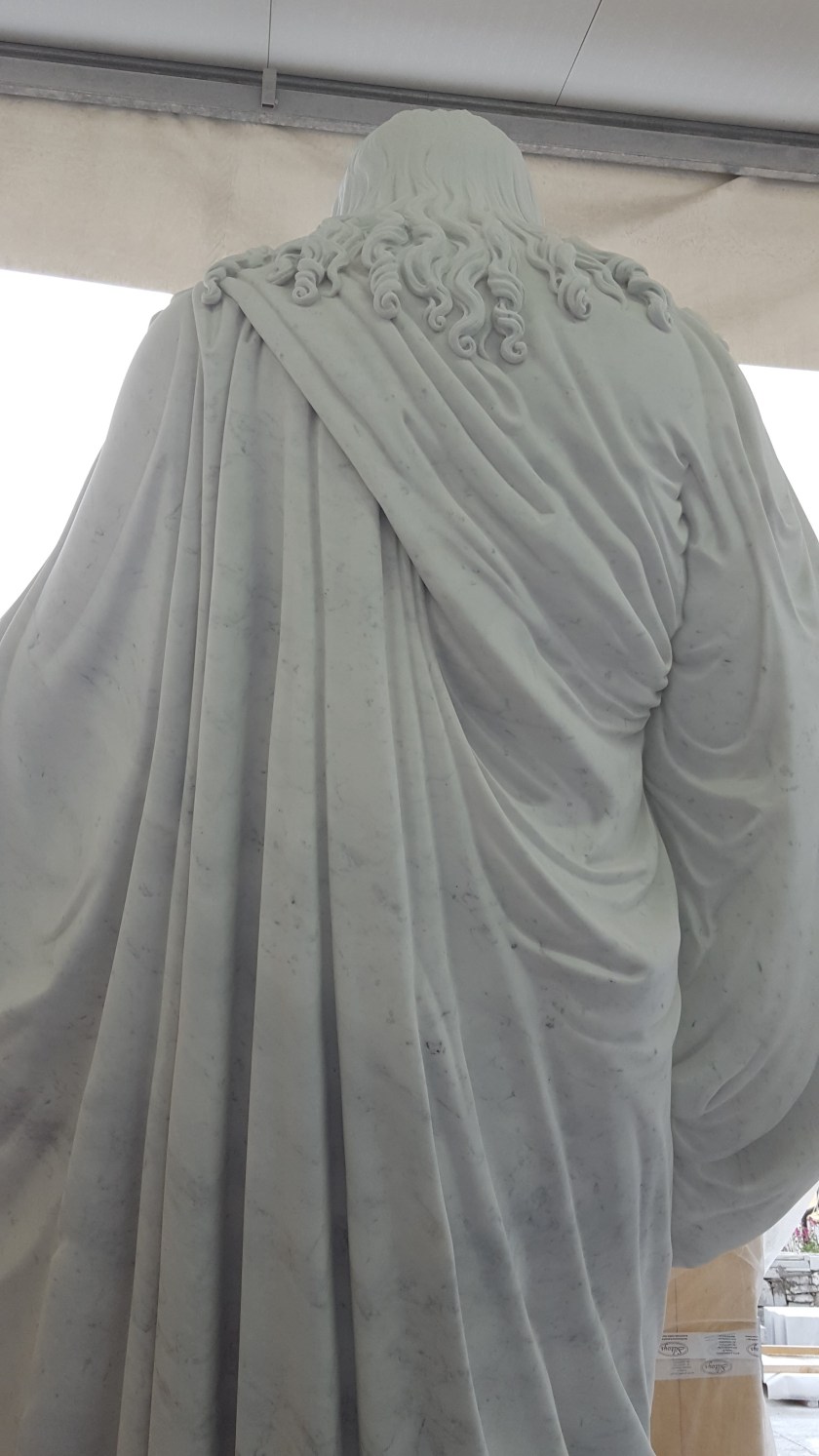
The Christus and the Twelve Apostles, carved by Bertel Thorvaldsen, also used Carrara marble. The LDS Church has commissioned a copy of these statutes for the Visitor’s Center at the Rome Temple.The Christus was still on the lot at the quarry, so we were able to see it up close.

Because of the position where the statue was stored, with a packing box of some type in front, it was hard to get a full photo. However, I loved this view from the back.

20160513_145244

Life-size copies of the Thorvaldsen Twelve Apostles were also still in another building off-site from the quarry, waiting for the Visitor’s Center to be finished. Peter is in the middle photo; you can tell because of the keys he holds.

Remember, if you are interested, this tour was put together by Heather Evertsen of Europa Vita. You can contact her at: http://www.europavita.us/. The specialty tour of the quarry is at: http://www.europavita.us/classic-carrara/.

Carrara Marble Quarry

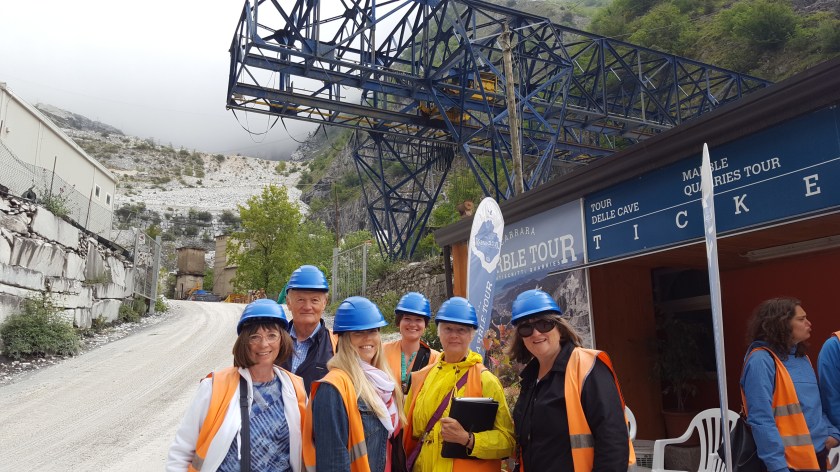
As mentioned in an earlier post, we were able to take a tour to the Carrara marble quarry. The tour was organized by Heather Evertsen of Europa Vita (contact information below).

20160513_134059

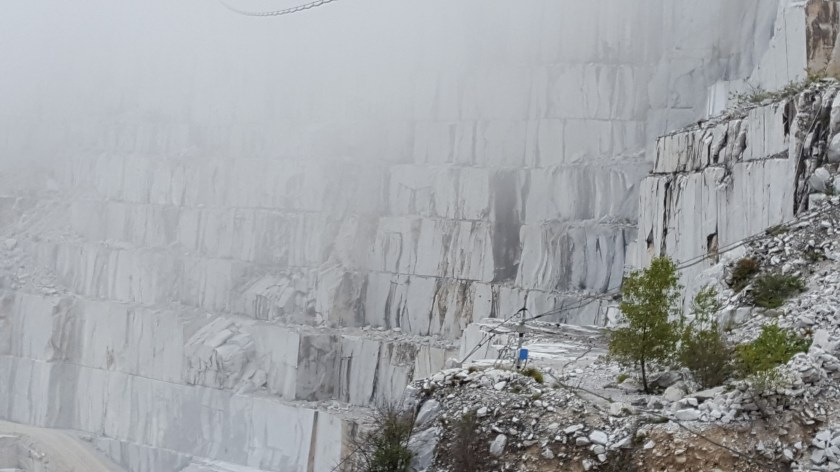
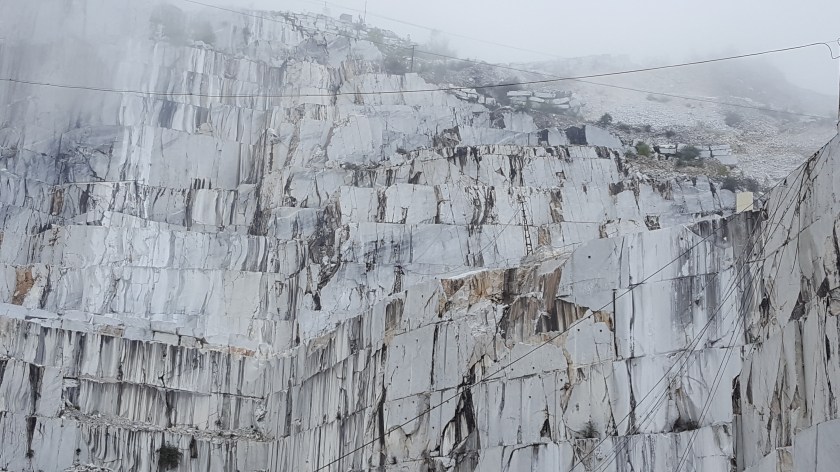
The mountains in the area are all marble, and the guide on the tour told us the marble ran more than two miles below sea level. Perhaps you can see from the photos below a bit of the size of the mountain where our quarry was located. One photo is looking up toward part of the quarry and mountain and one photo is looking from up near the top of quarry down  toward the sea beyond Pisa.

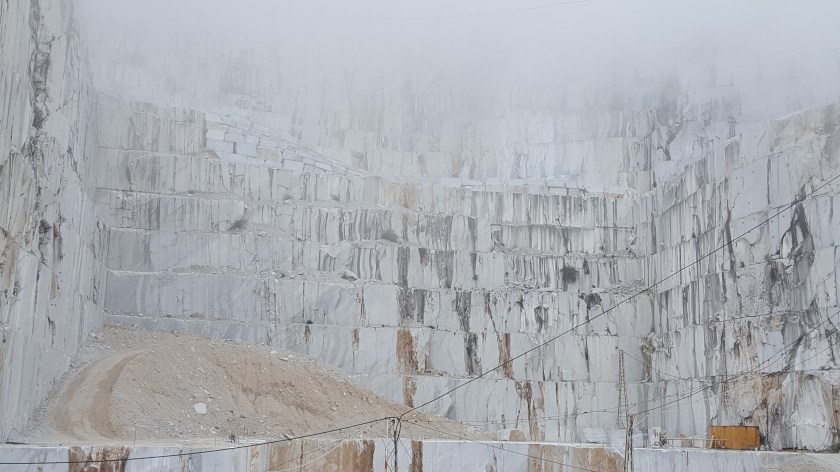
It was a foggy day, so the pictures are embellished with white cloud on white stone, but you can get a sense for how massive the marble formation is.

20160513_135804

The lines on the face are cut marks. They cut massive blocks out of the cliff face, one row at a time.

20160513_135815

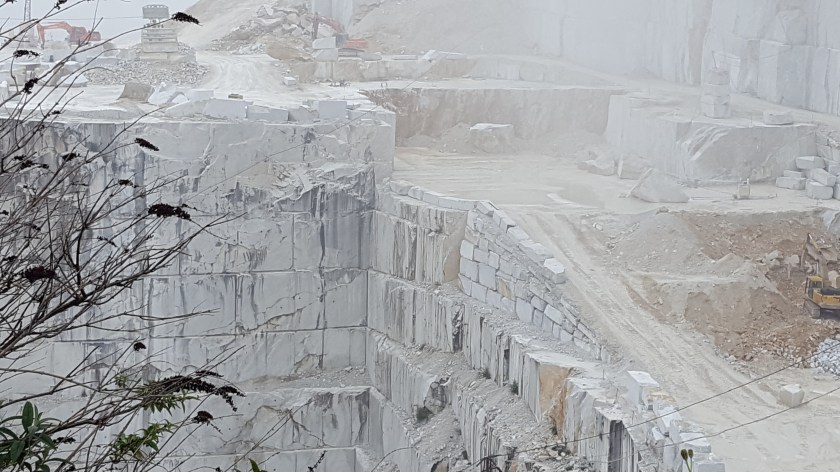
In the photo on the left, you can see the saw and water supply used to make the first cuts on the stone (the fog lifted a bit and I got a slightly clearer photo). After the blocks are on the quarry floor, they are cut into smaller pieces that will fit on the trucks hauling them down the mountain.

Some well cut stones can be seen in the quarry yard at the bottom, but they also used marble stones to build up the strength of the road. Can you imagine marble roads?

At the point where we picked up the tour into the quarry, they had a couple of stores and a small museum. I resisted buying anything at the stores because my suitcases were full, but enjoyed the museum, including a board that shows the color of marble from around the world. (All the marble at Carrara is white.) I had to take three pictures to get all of the colors in!

Included at the museum were these marble tributes to quarry workers.

Magnificent place! Visit someday (see contact information below for Europa Vaita).

20160513_14164820160513_141856

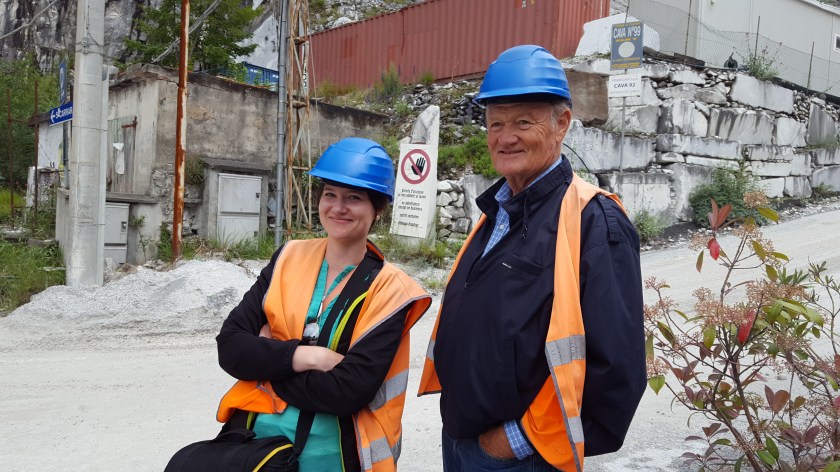
One last photo of my brother, Keith, and his daughter, Lisa, on the tour.

20160513_134159

Contact Information:

Heather Eversten, Europa Vita: http://www.europavita.us/)
See the specialty tour at: http://www.europavita.us/classic-carrara/


Wisteria, across Italy

Because I arrived in Spring, I started taking photos of beautiful flowers (as you have seen). One flower seemed to be in a lot of locations–wisteria. In our first apartment in Florence we had wisteria growing all across our patio (which we didn’t use because of the mosquitoes, but the flowers were nice).

When more people arrived to join me, we moved to the Tower House in San Donato in Colina (a small town a little south of Florence).  Once again, the wisteria welcomed us to the house, hanging over the front door.

During our walk to the childhood home of Leonardo di Vinci, we saw a house with a pleasant, flower-laden yard which included nice wisteria.

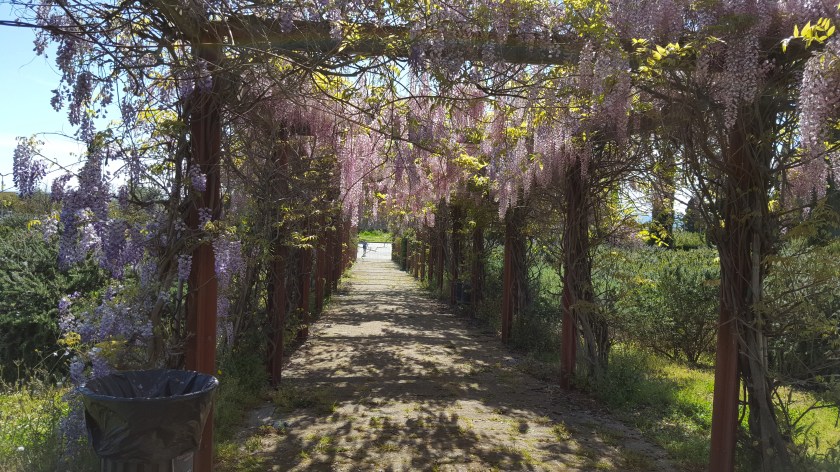
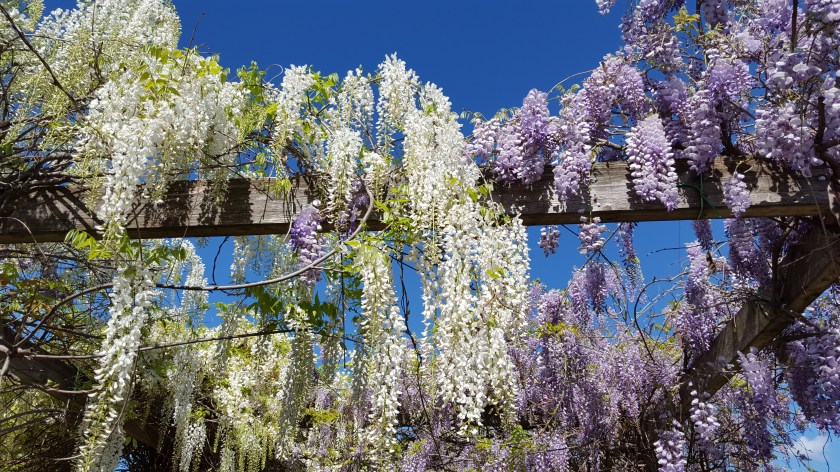
But the best ones were just outside the archaeological site of Herculaneum. They had a mix of white and purple, growing on an arbor built for them.

20160411_154312

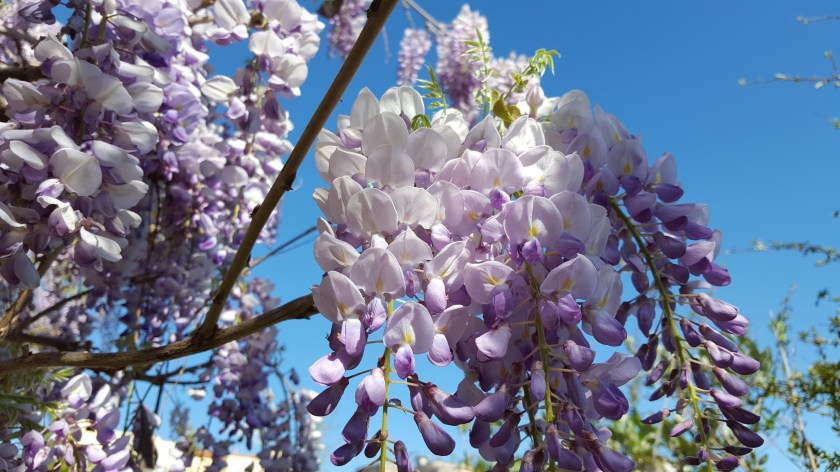
Enjoy a few photos of these flowers (although I could post a large number of them).

Lovely smell (if you could only be there) to all these flowers.

20160411_154237

20160411_154218

(another catch-up post from earlier in the trip)


Florence, the ceilings

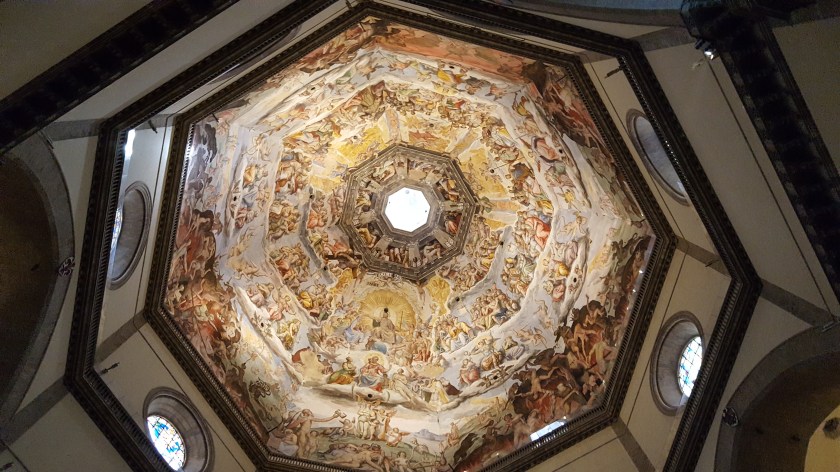
The ceilings….amazing! For this post, I will use some examples just from Florence and not other places I’ve been (since I started this post while still in Florence and am finally finishing it in Arizona). These ceilings will give you a sense of some of the different ceiling styles in the Renaissance. First, the wonderful and amazing dome in the Duomo.

20160418_124705

By the way, for a good read, try learning about Filippo Brunelleschi and the building of the dome on the Duomo. It is an amazing architectural achievement for the mid 1400s. Perhaps I’ll post more on the Duomo as a whole and the building of the dome in particular.

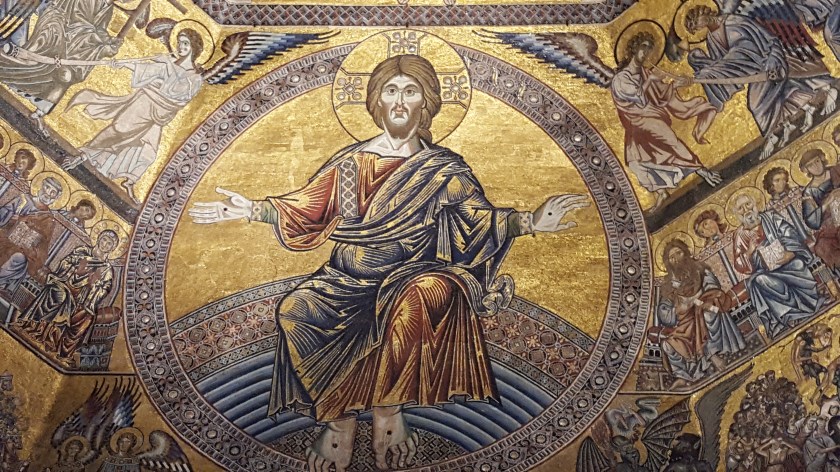
Right next door in the Baptistery (an older building than the Duomo) is this ceiling. This photo is a small section of the entire dome, showing Christ on His throne of judgment.

20160426_122950

Here is a larger photo of the Baptistery Dome.

20160426_123056

The Palazzo Vechio, city hall for Florence, had a number of ceilings worth noting. First, the main meeting room, still in use today (and shown in the photo on the left), had a large ceiling entirely covered in paintings.. The photo on the right is a small section of the ceiling, it being rather hard to get a shot of the entirety.

The Palazzo Vechio also had other interesting ceilings, but not all were the more common paintings of people and animals, as these two rooms below show.

The Pitti Palace had a series of impressive ceilings and domes, with every surface covered with sculptures, paintings, or carvings. Here are a couple of photos of some of the detail and then a larger shot from the Pitti Palace.

This ceiling (still Pitti Palace) is not really as high as it looks–it is painted to look like it has another floor. Can you see the “person” up on the balcony looking over the edge?

20160427_145708

The Medici Chapels had the same impressive work on the ceilings (and the walls and floor, of course) as in the photo on the left, but one of the rooms (of this mausoleum) with wonderful carving from Michelangelo had a plain dome (photo on the right). It was rather a peaceful change and let the attention rest on the sculptures.

After all the ceilings covered in paint or frescoes, to see a carved wood was also a welcome change. With two examples, first is this ceiling in the library at San Lorenzo, which was designed by Michelangelo, and second is a ceilings in Santa Croce Church.

Santa Maria Novella had plainer ceilings in much of the building, but did have some painted ceilings in the Chapter Hall (note the painting of Christ rescuing Peter from the Sea of Galilee.)


20160428_142418

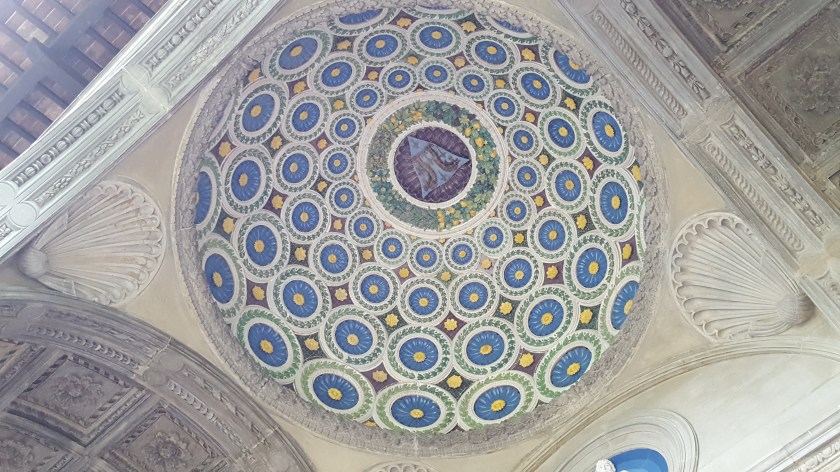
Finally, for an end to this post, a rather distinctive terracotta ceiling in Santa Croce, and in another room in Santa Croce, two angels to protect us on our way.20160426_162653